
Pipra punctata
Pipra punctata
Order: Passeriformes / Family: Pipridae
About the Pipra punctata
The Pipra punctata, commonly known as the spotted manakin, is an intriguing member of the family Pipridae. This small passerine bird is found primarily in the neotropics, with its range extending across parts of Central and South America. Its presence is most frequently recorded in countries such as Colombia, Ecuador, and Venezuela, where it inhabits the humid lowland forests and subtropical or tropical moist montane forests. The spotted manakin is recognized not only for its striking plumage but also for its vital ecological role in seed dispersal, contributing significantly to the biodiversity of its habitat. Its diet consists mainly of fruits, allowing it to act as a vector for plant reproduction. The species often frequents the forest understory, where its small size and agility enable it to navigate dense foliage with ease. During the breeding season, male spotted manakins engage in elaborate courtship displays known as lekking. These displays are characterized by complex dances and vocalizations intended to attract females. The lekking system underscores the species' reliance on social behaviors for reproductive success. Outside the breeding season, the spotted manakin exhibits less conspicuous behavior, often foraging in small mixed-species flocks, which can include other frugivorous birds. This behavior not only increases foraging efficiency but also provides a level of protection against predators. The Pipra punctata is an indicator species for the health of its habitat. Its presence often signals a well-preserved forest environment, as it thrives in areas with substantial canopy cover and minimal human disturbance. The species' sensitivity to habitat degradation makes it a focal point for conservation efforts in regions where deforestation poses significant threats to biodiversity. Understanding the ecological interactions of the spotted manakin helps underscore the importance of preserving neotropical forest ecosystems.
The Pipra punctata belongs to the family Pipridae, within the order Passeriformes. These birds typically live average 7 years, with a maximum recorded of 10 years.
How to Identify a Pipra punctata
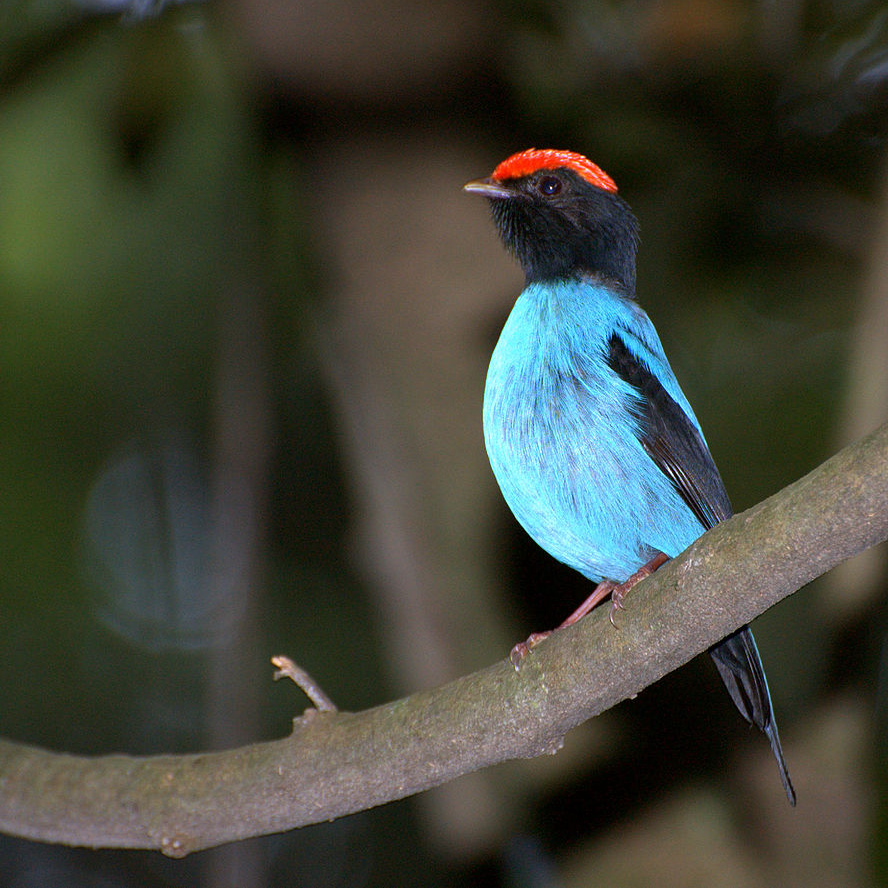
The spotted manakin, Pipra punctata, exhibits a vibrant plumage that makes identification relatively straightforward for experienced birders. Adult males are particularly striking, featuring a rich emerald green body with a conspicuous pattern of white spots that are most prominent on the wings and back. The head and throat of the male display a contrasting bluish-black coloration, which adds to its distinctive appearance. In contrast, females and juveniles tend to be less vividly colored, with more subdued green and brown tones and a less pronounced spotting pattern. The difference in coloration between the sexes is a common trait among manakins, where sexual dimorphism plays a significant role in mating displays. When observing the spotted manakin in flight, its compact body and quick, fluttery wingbeats are key characteristics. The bird's silhouette is relatively rounded, with a short tail that contributes to its agile maneuverability through dense forest foliage. While perched, the spotted manakin often adopts a horizontal posture, with its body parallel to the branch. This posture, combined with its vibrant plumage, makes the bird easily recognizable against the lush green backdrop of its natural environment. Birders should be cautious not to confuse the spotted manakin with the similarly sized but less flamboyant green manakin, which lacks the distinctive white spotting and contrasting head coloration.
Having trouble telling birds apart? Upload a photo to our bird identification tool for an instant species match.
Pipra punctata Habitat and Range
Preferred Habitat
The preferred habitat of the spotted manakin includes humid lowland forests and subtropical or tropical moist montane forests. These environments provide the dense foliage and abundant fruiting trees that are essential for the bird's survival. Within these forested areas, the bird typically occupies the understory and lower canopy levels, where it can easily forage among the plentiful plant life. The spotted manakin is primarily found at elevations ranging from sea level up to approximately 1,500 meters. This elevation range allows the bird to exploit a variety of forest types, from lowland rainforests to cloud forests. Seasonal shifts in habitat are not common for the species, as it tends to remain within its preferred forest environments year-round. In contrast to some other bird species, the spotted manakin does not typically adapt well to urban or heavily disturbed areas, where it is seldom observed. Its reliance on intact forest ecosystems underscores the importance of preserving these habitats to ensure the continued survival of the species.
Geographic Range
The breeding range of the spotted manakin, Pipra punctata, spans across a significant portion of the neotropical region. The bird is found from the humid lowland forests of eastern Panama through the northern regions of South America, including Colombia, Venezuela, Ecuador, and parts of northern Brazil. It is a resident species in these areas, meaning it does not migrate long distances but rather stays within its established territories year-round. Population density of the spotted manakin is highest in areas with extensive, undisturbed forest cover, such as the Amazon Basin, which provides an ideal environment for feeding and breeding. Although the bird is not known to undertake long migrations, it may exhibit local movements in response to food availability and habitat conditions. These movements are typically limited to shifts between different elevations within its existing range, particularly in montane regions where microhabitats can vary significantly. The consistent presence of the spotted manakin in these regions makes it a reliable subject for studies on neotropical bird ecology and conservation.
Want to know which birds visit your area? Browse our backyard birds by location guides for region-specific species lists.
What Does the Pipra punctata Eat?
The diet of the spotted manakin is predominantly frugivorous, with a strong preference for small fruits and berries. This dietary choice plays a crucial role in the bird's ecological function as a seed disperser within its habitat. The bird's small size allows it to consume a wide variety of berry types, ranging from soft, fleshy fruits found in the understory to harder seeds that require more effort to process. In addition to fruit, the spotted manakin occasionally supplements its diet with insects, particularly during the breeding season when the demand for protein increases. This opportunistic feeding behavior ensures that the bird can meet its nutritional needs even when fruit availability is low. Foraging typically occurs during daylight hours, with peak activity in the early morning and late afternoon when fruit availability is highest. The bird's agile flight and ability to hover briefly allow it to access fruit from the outer edges of branches, a skill that is particularly useful in the dense forest environments it inhabits. Although the spotted manakin is primarily frugivorous, its diet can shift slightly with seasonal changes in fruit abundance, demonstrating the bird's adaptability to its dynamic environment.
Pipra punctata Behavior and Social Structure
The behavior of the spotted manakin, Pipra punctata, is characterized by its social structure and elaborate courtship rituals. During the breeding season, males congregate in leks, which are communal display areas where they perform intricate dances and vocalizations to attract females. These displays include a series of rapid wing beats, acrobatic maneuvers, and distinctive calls, all designed to showcase the male's fitness and appeal to potential mates. Outside the breeding season, the spotted manakin exhibits more solitary or small group behavior. It often joins mixed-species flocks to forage, benefiting from the increased vigilance and information-sharing that such flocks provide. The bird is generally non-territorial outside of lekking areas, but males may defend small display territories within the lek. In terms of daily activity patterns, the spotted manakin is most active during the cooler parts of the day, including early morning and late afternoon. It tends to rest during the hottest hours, often perching quietly in shaded areas. When faced with predators, the bird relies on its agility and dense foliage for protection, often fleeing to the lower understory to escape detection. Its behavior highlights the balance between social interaction and individual survival strategies in the complex ecosystems it inhabits.
Pipra punctata Nesting and Reproduction
The nesting habits of the spotted manakin are as fascinating as its courtship displays. The female is primarily responsible for nest construction, choosing a site that is well-hidden within the dense vegetation of the forest understory. The nest itself is a small, cup-shaped structure made from fine plant fibers, moss, and spider webs, providing both camouflage and flexibility. It is typically placed on a horizontal branch or a forked twig, often just a few meters above the ground to avoid detection by predators. The spotted manakin lays a clutch of two eggs, which are incubated solely by the female for about 18 to 20 days. During this period, she is tasked with maintaining the nest and ensuring the safety of the eggs. Once hatched, the chicks are altricial, requiring considerable parental care. The female continues to provide food and protection for the young until they fledge, usually within 20 to 22 days after hatching. The male does not participate in feeding the chicks, as his role is limited to courtship and mating. The species typically produces one brood per year, although favorable conditions may occasionally allow for a second.
Pipra punctata Sounds and Vocalizations
The vocalizations of the spotted manakin play a vital role in communication and courtship. The primary song is a series of high-pitched, melodious notes delivered in rapid succession. This song is both a mating call and a territorial signal, often heard during the breeding season when males gather in leks. The rhythm is fast and somewhat mechanical, reminiscent of a series of short whistles. In addition to the primary song, the spotted manakin emits a variety of call notes, including a sharp, metallic 'tik' used for communication between individuals. Alarm calls are less frequently heard but consist of a rapid series of harsher, more urgent notes. During the dawn chorus, the bird's song is most prominent, contributing to the symphony of sounds that fill the neotropical forests. This chorus serves as both a declaration of presence and an invitation for females to visit the lek, highlighting the importance of sound in the species' reproductive strategy.
Interesting Facts About the Pipra punctata
- 1The spotted manakin engages in a unique courtship display known as lekking, where males gather and perform synchronized dances to attract females.
- 2Unlike many bird species, the spotted manakin relies heavily on fruit as its primary food source, making it a crucial seed disperser in its ecosystem.
- 3The species' name, Pipra punctata, refers to the distinctive spotted pattern on the male's plumage, which sets it apart from other manakins.
- 4Despite its vibrant appearance, the spotted manakin is adept at remaining hidden in the dense forest understory, thanks to its small size and agile flight.
- 5Research has shown that the spotted manakin's lekking behavior is not only about attracting mates but also plays a role in social bonding among males.
Pipra punctata Conservation Status
The conservation status of the spotted manakin is currently classified as Least Concern by the IUCN. Despite this, the species faces several threats that could impact its populations in the future. Habitat loss due to deforestation is the primary threat, as it leads to fragmentation of the continuous forest areas that the bird depends on. Although current populations appear stable, ongoing habitat destruction in the Amazon and Andean regions poses a significant risk. Conservation efforts focus on preserving large tracts of forest and implementing sustainable land management practices. Historical data suggest that while the spotted manakin has maintained a relatively stable population over the years, localized declines have occurred in areas with significant habitat disturbance. Continued monitoring and proactive conservation measures are essential to ensure that the spotted manakin remains a vibrant part of the neotropical avian community.
Other Pipridae Species


Birds Similar to the Pipra punctata
These species are often confused with the Pipra punctata due to similar appearance or overlapping range.

