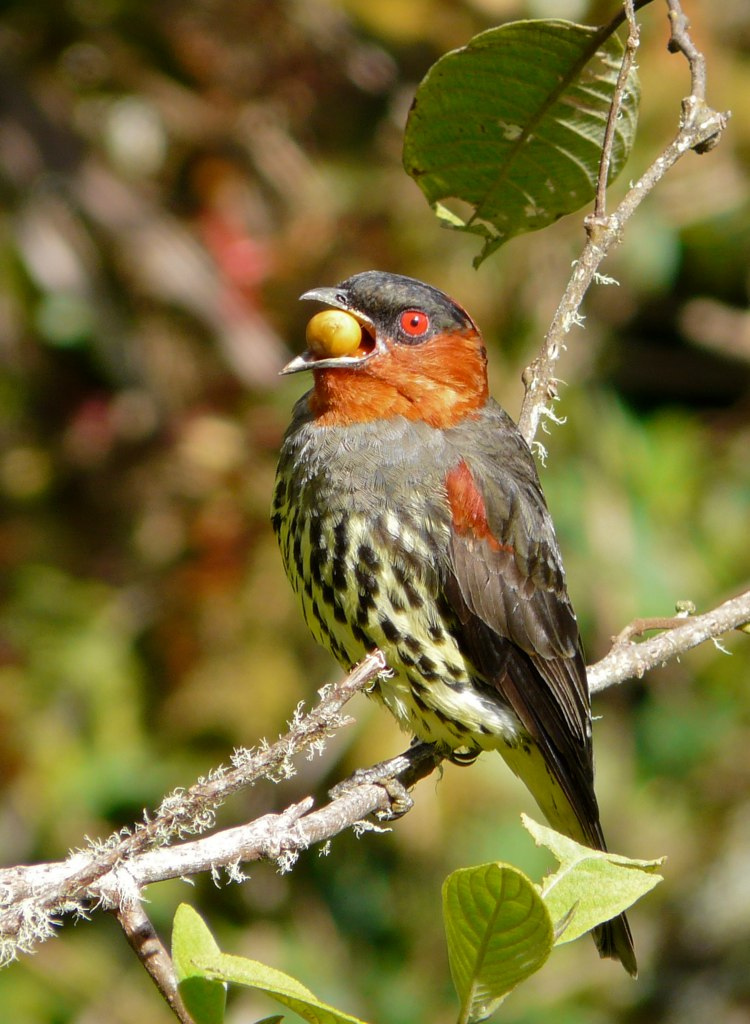
Plum-throated Cotinga
Cotinga maynana
Order: Passeriformes / Family: Cotingidae

Wikimedia Commons
About the Plum-throated Cotinga
The Plum-throated Cotinga (Cotinga maynana) is a mesmerizing bird found in the tropical rainforests of South America, primarily within the Amazon Basin. This avian species thrives in the lush, dense canopies of countries like Peru, Brazil, and Ecuador. As a member of the Cotingidae family, the Plum-throated Cotinga plays a crucial role in the intricate web of its ecosystem. These forests, abundant with diverse flora and fauna, provide the perfect backdrop for the cotinga's vibrant plumage which helps it blend into the canopy while also attracting mates.
The significance of the Plum-throated Cotinga extends beyond its aesthetic appeal. Its presence is a strong indicator of a healthy, thriving tropical forest. As a fruit-eating bird, it contributes to seed dispersal, thus aiding in forest regeneration and maintaining biodiversity. The cotinga is seasonally active, with heightened visibility during the breeding season when males display their striking colors and vocal abilities to attract females.
Their ecological role is essential in sustaining the delicate balance of the rainforest. By dispersing seeds over large areas, these birds help in the propagation of various plant species, contributing to the forest's resilience and longevity. Furthermore, the Plum-throated Cotinga's interactions with other species, such as insects and predators, depict a complex web of food chains within its habitat.
During the breeding season, typically in the wet months, these birds engage in elaborate courtship displays. The males, adorned in their brilliant plumage, perform aerial acrobatics and vocal displays to win the affection of potential mates. This behavior not only ensures the continuation of their lineage but also highlights the dynamic interactions within their ecosystem.
The Plum-throated Cotinga belongs to the family Cotingidae, within the order Passeriformes. These birds typically live averages 8-10 years, with some individuals reaching 12 years..
How to Identify a Plum-throated Cotinga
Identifying the Plum-throated Cotinga in the field involves recognizing its distinctive plumage and size. Adult males are especially striking with their bright blue body and a unique plum-colored throat. This coloration is a key distinguishing feature that sets them apart from other cotingas. The iridescent blue contrasts with the darker wings and tail, creating a dramatic appearance. Females, on the other hand, display a more subdued coloration with greenish upperparts and paler underparts, lacking the vivid throat patch.
Juveniles resemble females but are often duller, which can make distinguishing young males challenging until they mature. When observing these birds, note their perch preference in the upper canopy, where their silhouettes with short tails and broad wings are visible against the sky. Unlike many other birds, the Plum-throated Cotinga often sits motionless, making its identification based on movement rather challenging.
Although confusion with other blue cotingas can occur, the combination of size, throat color, and vocalizations helps in accurate identification. Its flight silhouette is characterized by rapid wingbeats interspersed with glides, a style typical of cotingas. When perched, the cotinga's upright stance and robust build are further clues to its identity.
Having trouble telling birds apart? Upload a photo to our bird identification tool for an instant species match.
Plum-throated Cotinga Habitat and Range
Preferred Habitat
The Plum-throated Cotinga inhabits the tropical rainforests of the Amazon Basin, thriving in the upper canopy layers. These birds are most commonly found in primary forests where tall trees provide ample perches and abundant fruit. They can also be observed in secondary growth forests, especially those on the edges of clearings or along rivers.
Typically residing at elevations ranging from lowland areas up to 1,000 meters, the Plum-throated Cotinga prefers humid environments with dense foliage. Seasonal habitat shifts are minimal given the consistent climate of the Amazon, but they may move locally within the forest in response to fruit availability.
Urban presence of the Plum-throated Cotinga is rare, as they are adapted to remote forest habitats. Their stronghold remains the interior of large, uninterrupted forest tracts, where they can find their preferred food sources and nesting sites.
Geographic Range
The Plum-throated Cotinga is primarily found across the northern regions of South America, with its range encompassing countries such as Peru, Ecuador, Brazil, and parts of Colombia. These birds are residents of the Amazon Basin, one of the world's most biodiverse regions, and they do not engage in long-distance migration.
In Peru, they are often spotted in the lowland rainforests, especially in protected areas like the Manu National Park. In Brazil, their range extends through the Amazonas state, reaching into western and northern territories. While they are not migratory, they may exhibit local movements within their range in search of food resources.
Population density hotspots include regions where fruiting trees are abundant, as these areas provide essential feeding grounds. During breeding season, activity may concentrate in areas with suitable nesting sites, often in thicker parts of the forest canopy.
Want to know which birds visit your area? Browse our backyard birds by location guides for region-specific species lists.
What Does the Plum-throated Cotinga Eat?
The Plum-throated Cotinga primarily feeds on a variety of fruits, making it an important frugivore in its ecosystem. Its diet includes fruits from species such as figs and various berries found in the rainforest canopy. This preference for fruit is consistent year-round, although the specific types of fruit consumed may vary with seasonal availability.
In addition to fruits, this cotinga occasionally supplements its diet with insects, providing a source of protein. Foraging typically occurs in the upper canopy, where the bird can access fruit-bearing trees. It often plucks fruits while hovering or perching near branches, demonstrating agility and precision in its feeding technique.
Prey size ranges from small berries to larger fruits, depending on abundance. Feeding usually occurs during the day, with peak activity observed in the early morning and late afternoon when temperatures are cooler and fruit availability is high.
Plum-throated Cotinga Behavior and Social Structure
The Plum-throated Cotinga exhibits fascinating behavioral patterns, particularly during the breeding season. Socially, these birds are often solitary or found in pairs, although loose aggregations may form around abundant food sources. Territorial behavior is generally subdued, but males may defend prime perching sites that offer optimal vantage points for displaying to females.
Courtship displays are elaborate, involving both visual and auditory elements. Males perform aerial displays, showcasing their vivid plumage, and emit complex vocalizations to attract mates. These displays often occur in clearings or above the canopy where visibility is greatest.
In response to predators, the cotinga relies on its plumage to blend into the canopy, remaining motionless to avoid detection. Daily activity patterns include periods of rest interspersed with foraging and display behaviors, primarily during daylight hours. Unlike some other tropical birds, the Plum-throated Cotinga tends to avoid forming large flocks, preferring the company of a mate or a small group.
Plum-throated Cotinga Nesting and Reproduction
Nesting for the Plum-throated Cotinga involves constructing a simple, cup-shaped nest high in the forest canopy. These nests are typically placed on sturdy branches, well-hidden among dense foliage to protect from predators. The materials used consist of twigs, leaves, and other plant matter, woven together to form a stable structure.
Clutch size usually comprises two to three eggs, with the female primarily responsible for incubation. The incubation period lasts approximately 20 days, during which the female remains vigilant, while the male may contribute by providing food. Fledging occurs around three weeks after hatching, with both parents involved in feeding the young.
The number of broods per year is typically one, although in areas with abundant food resources, a second brood might occasionally be attempted. Parental roles are shared, but the female tends to have a more prominent role in nurturing the young.
Plum-throated Cotinga Sounds and Vocalizations
The vocalizations of the Plum-throated Cotinga are a crucial aspect of its identity. The primary song, a series of melodious whistles and trills, carries through the dense forest, especially during the early morning hours. This song, rich in rhythm and pitch variation, serves as a declaration of territory and an invitation to potential mates.
Call notes include sharp, distinct chips and churred sounds, used for communication between mates or signaling alarm. The alarm call is a quick, repeated note that alerts other birds of potential danger. During the dawn chorus, the cotinga's song contributes to the symphony of bird calls that typify the forest ambiance.
Compared to other cotingas, the Plum-throated Cotinga's vocalizations are relatively soft, yet they exhibit complexity and variation that are key to species identification.
Interesting Facts About the Plum-throated Cotinga
- 1The Plum-throated Cotinga can be spotted from a distance due to its brilliant blue coloration, a trait shared by few other rainforest birds.
- 2This species is one of the many colorful bird species endemic to the Amazon Basin, highlighting the region's rich biodiversity.
- 3Despite its vivid appearance, the Plum-throated Cotinga often remains well-camouflaged among the blue skies and green canopies.
- 4These birds contribute significantly to forest health through seed dispersal, aiding in the propagation of numerous plant species.
- 5Plum-throated Cotingas are not known for long migrations, preferring the stability of their Amazonian home throughout the year.
- 6Their diet primarily consists of fruit, but they occasionally consume insects to supplement their nutritional needs.
- 7The vocal repertoire of the Plum-throated Cotinga is complex, featuring a variety of calls that serve multiple social functions.
Plum-throated Cotinga Conservation Status
The Plum-throated Cotinga currently holds a conservation status of Least Concern according to the IUCN Red List. However, its population trend is not entirely stable, as habitat loss poses a significant threat. Deforestation for agriculture and logging in the Amazon Basin impacts their habitat, reducing the areas available for feeding and nesting. Conservation efforts focus on preserving large tracts of continuous forest, crucial for maintaining viable populations. Protected areas such as national parks and reserves play a vital role in safeguarding these habitats. Historical population changes reflect the ongoing challenge of balancing human development with conservation needs. Raising awareness about the ecological importance of the Plum-throated Cotinga and its role in seed dispersal can aid in promoting conservation initiatives. Continued research and monitoring are essential to understanding the long-term impacts of habitat changes on this species.