Prince Henry's Laughingthrush
Trochalopteron henrici
Order: Passeriformes / Family: Leiothrichidae

Wikimedia Commons
About the Prince Henry's Laughingthrush
Prince Henry's Laughingthrush (Trochalopteron henrici) is a captivating bird species that thrives in the montane forests of southeast Asia. This bird is a member of the Leiothrichidae family, an assemblage known for their vocal prowess and social nature. Often found in the dense understory of evergreen forests, this laughingthrush plays a significant role in the ecosystem as both a seed disperser and an insect predator. Its presence signifies a healthy forest environment, as it depends on well-preserved habitats to thrive. Geographically, Prince Henry's Laughingthrush primarily occupies regions in southern China, including the provinces of Sichuan and Yunnan. These areas provide the dense foliage and varied food resources that the species requires. The bird's reliance on specific forest types makes it particularly vulnerable to habitat destruction, a pressing issue across much of its range. Seasonally, Prince Henry's Laughingthrush exhibits a range of behaviors that reflect its adaptability to local climate variations. During the breeding season, typically occurring in spring and early summer, the bird's activities focus on raising young, with pairs often seen engaging in cooperative behaviors. In the cooler months, its foraging activities intensify as it seeks out abundant food supplies to sustain itself through less hospitable weather. Despite its challenges, Prince Henry's Laughingthrush remains an essential component of its native ecosystems, illustrating the interconnectedness of avian life and forest health.
The Prince Henry's Laughingthrush belongs to the family Leiothrichidae, within the order Passeriformes. These birds typically live 6-8 years with a maximum recorded of 10 years..
How to Identify a Prince Henry's Laughingthrush
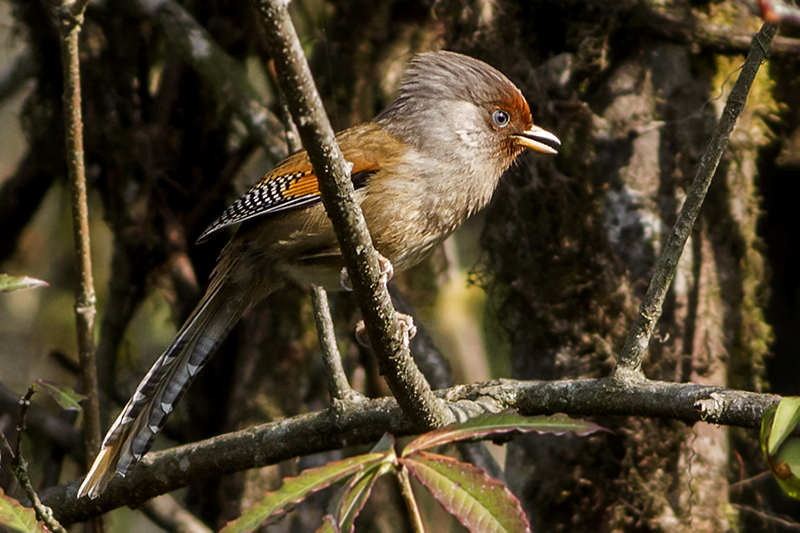
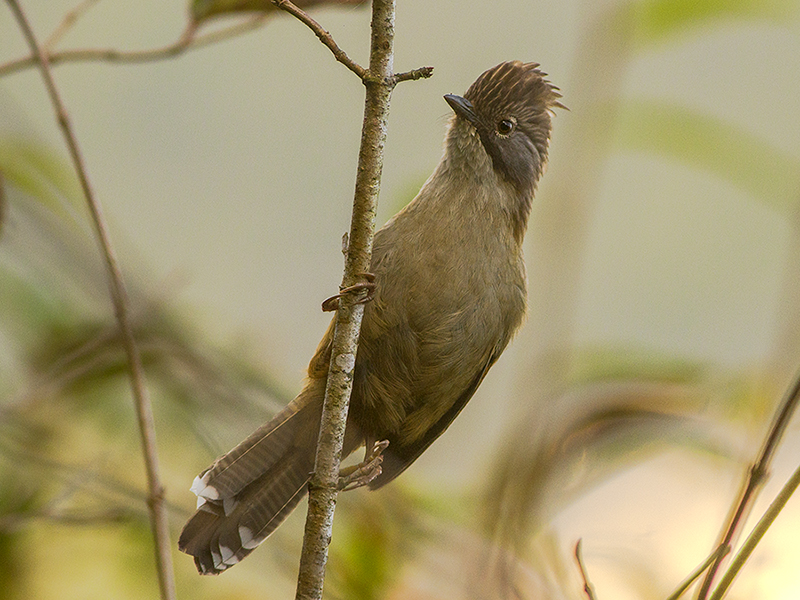
Adult Prince Henry's Laughingthrush displays a predominantly rich chestnut plumage, with subtle variations in hue across its body. The head and upperparts are a darker chestnut, while the underparts tend to be lighter, providing a striking contrast. Its eyes are encircled by a delicate white ring, adding to its distinctive appearance. Juvenile birds are generally duller, lacking the more intense chestnut tones of adults. In terms of sex differences, males and females are similar in plumage, making visual identification across sexes challenging. However, males are often slightly larger. When observing this species, birders may confuse it with the Red-tailed Laughingthrush, yet the latter has a more pronounced red in the tail and different vocalizations. In flight, Prince Henry's Laughingthrush demonstrates a swift, purposeful silhouette, characterized by rapid wingbeats and a slightly rounded tail. Perched, it maintains an upright posture, often seen hopping through dense foliage.
Having trouble telling birds apart? Upload a photo to our bird identification tool for an instant species match.
Prince Henry's Laughingthrush Habitat and Range
Preferred Habitat
Prince Henry's Laughingthrush predominantly inhabits montane evergreen forests, thriving in regions characterized by dense understory and ample cover. Typically, it resides at elevations ranging from 1,500 to 3,500 meters, often within the subtropical and temperate zones of southern China's mountainous regions. These areas provide the necessary microhabitats and climatic conditions that support its complex ecological needs. During different seasons, the bird may shift slightly within altitudinal zones to optimize its foraging efficiency and nesting opportunities. Although mainly a forest dweller, Prince Henry's Laughingthrush occasionally ventures into adjacent scrublands and forest edges, especially where human activity has altered its primary environment. Its presence in rural and semi-urban areas is minimal, highlighting its preference for undisturbed natural settings.
Geographic Range
The range of Prince Henry's Laughingthrush is largely restricted to southern China, where it occupies specific montane forest regions. Key areas include the provinces of Sichuan, Yunnan, and parts of Guangxi. Within these locales, the bird establishes territories that align with its ecological preferences. Breeding typically occurs within these primary regions, with little evidence of long-distance migration. However, local altitudinal movements are common, driven by seasonal weather and food availability. The bird does not typically venture into neighboring countries, with its range largely delineated by the mountainous terrain of southern China. Population densities vary, with hotspots often correlating to areas of pristine forest and minimal human disturbance. The species' limited range makes it susceptible to environmental changes and habitat fragmentation, necessitating conservation efforts to ensure its continued survival.
Want to know which birds visit your area? Browse our backyard birds by location guides for region-specific species lists.
What Does the Prince Henry's Laughingthrush Eat?
Prince Henry's Laughingthrush exhibits an omnivorous diet, relying heavily on a mixture of insects and plant material. Insects, including beetles, caterpillars, and other arthropods, form the primary component of its diet, especially during the breeding season when protein demands are high. The bird employs a foraging technique that involves hopping and probing through leaf litter, utilizing its bill to uncover hidden prey. Additionally, the bird consumes a variety of berries and small fruits, particularly during the autumn and winter months when insect availability declines. This seasonal diet shift underscores its adaptability and the importance of diverse habitat resources. On occasion, the bird may also feed on seeds and small invertebrates, showcasing its opportunistic feeding behavior. Foraging typically occurs during the early morning and late afternoon, aligning with periods of peak insect activity.
Prince Henry's Laughingthrush Behavior and Social Structure
The social structure of Prince Henry's Laughingthrush is intricate and highly cooperative. These birds often form small family groups or flocks, particularly outside of the breeding season, which provides mutual protection against predators and aids in effective foraging. Territorial behavior is pronounced during the breeding season, with pairs establishing and defending a defined area against intruders. Courtship displays are subtle yet harmonious, involving synchronized movements and vocal exchanges between partners. In response to predators, the species employs a range of vocal alarms and evasive maneuvers, utilizing dense foliage for cover. Daily activity patterns reveal a preference for early morning and late afternoon foraging, with periods of rest and preening occurring during midday. Communal roosting at night further exemplifies its social tendencies, providing warmth and safety.
Prince Henry's Laughingthrush Nesting and Reproduction
Nesting for Prince Henry's Laughingthrush involves constructing a cup-shaped nest, typically using twigs, grasses, and moss. The nest is strategically placed in thick shrubbery or low branches, often at heights between 1 to 3 meters above the ground. This choice of nesting site offers both concealment from predators and protection against environmental elements. A typical clutch size ranges from 3 to 5 eggs, with an incubation period lasting approximately 14 to 16 days. Both parents share incubation duties and subsequently participate in feeding and caring for the nestlings. Fledging occurs around 12 to 14 days post-hatching, with young birds remaining under parental supervision for several weeks thereafter. Known for their strong parental instincts, Prince Henry's Laughingthrush may raise one to two broods per year, depending on environmental conditions.
Prince Henry's Laughingthrush Sounds and Vocalizations
The vocal repertoire of Prince Henry's Laughingthrush is both varied and expressive, with its primary song characterized by a series of melodious whistles and chattering notes. This song conveys both territorial claims and courtship intentions. Call notes are typically sharp and distinct, serving as contact calls among flock members. Alarm calls, on the other hand, tend to be abrupt and harsh, alerting companions to potential threats. During dawn and dusk, the bird participates in a chorus that resonates through its forest habitat, a behavior that showcases its social nature and acoustic presence. Compared to other laughingthrushes, its vocalizations are less harsh, with a quality that is both musical and rhythmic.
Interesting Facts About the Prince Henry's Laughingthrush
- 1Prince Henry's Laughingthrush can mimic the calls of other bird species, showcasing its vocal adaptability.
- 2This species often forages in mixed-species flocks, increasing its chances of finding food and avoiding predators.
- 3The bird's melodious calls can be heard over considerable distances, often up to 500 meters in dense forest.
- 4Despite its vibrant plumage, Prince Henry's Laughingthrush blends well into its forest environment, making it elusive.
- 5The species was named in honor of Prince Henry of Prussia, reflecting historical ornithological naming practices.
- 6Its diet shifts seasonally, with a higher reliance on fruit during the colder months when insects are scarce.
- 7The laughingthrush's role as a seed disperser contributes significantly to the forest's ecological balance.
Prince Henry's Laughingthrush Conservation Status
Currently, Prince Henry's Laughingthrush is classified as Near Threatened on the IUCN Red List, with its population trend showing signs of decline. The primary threats to its survival include habitat loss due to deforestation and land conversion for agriculture. Conservation efforts have focused on habitat preservation and restoration, particularly within protected areas in southern China. Historical population changes have seen fluctuations due to varying degrees of habitat disturbance. Continued monitoring and environmental education are essential to mitigate ongoing threats and to promote sustainable land use practices.