Pterorhinus monachus
Pterorhinus monachus
Order: Passeriformes / Family: Leiothrichidae
About the Pterorhinus monachus
The Pterorhinus monachus, known commonly as the Black-headed Sibia, is a captivating member of the Leiothrichidae family. This bird inhabits the subtropical and temperate forests of Southeast Asia, particularly thriving in the montane forests of countries like Thailand, Myanmar, and parts of southern China. Its presence is most noted in areas with dense undergrowth, which provides both food and shelter. The Black-headed Sibia plays an essential role in its ecosystem, acting as both predator and prey. It contributes to seed dispersal, aiding in forest regeneration, and serves as a crucial link in the food web. The bird's ecological significance extends to its role in controlling insect populations, as it consumes a variety of invertebrates.
As the seasons change, the Black-headed Sibia adapts its behavior. During the breeding season, it becomes more vocal and territorial, often seen in pairs or small family groups. Outside of this period, it may join mixed-species foraging flocks, which allows it to exploit food resources more efficiently. The sibia's adaptability to different altitudes, ranging from lowland forests to higher elevations, demonstrates its resilience. However, the alteration of habitats due to deforestation and human encroachment poses a threat to its populations. Despite this, the Black-headed Sibia continues to be a common sight in suitable habitats, thanks to its adaptability and the relatively stable environmental conditions in its range.
The Black-headed Sibia's role as an indicator species also underscores its importance. Changes in its population density can reflect broader ecological shifts, making it a valuable subject for study in conservation biology. As forests face the pressures of climate change, the sibia's adaptability to varying conditions may offer insights into the resilience of forest ecosystems. Efforts to preserve its habitat not only benefit the sibia but also support countless other species that share its environment.
The Pterorhinus monachus belongs to the family Leiothrichidae, within the order Passeriformes. These birds typically live average 4-7 years with max recorded around 9 years..
How to Identify a Pterorhinus monachus
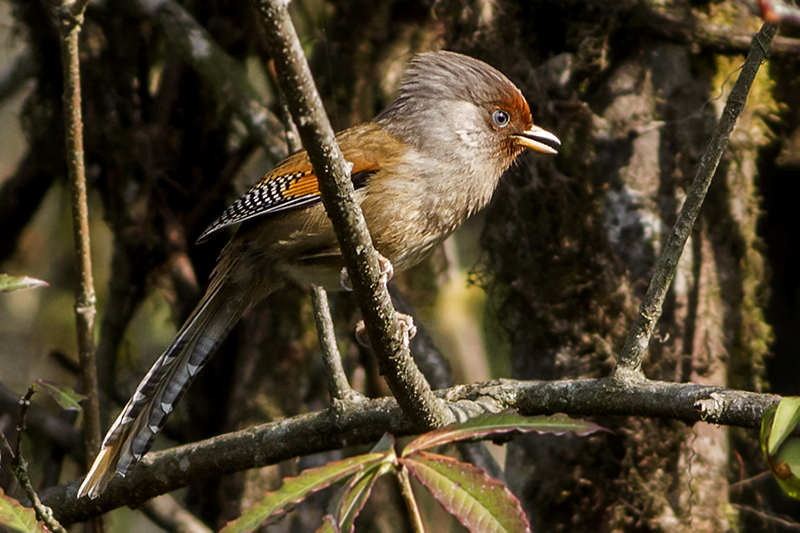
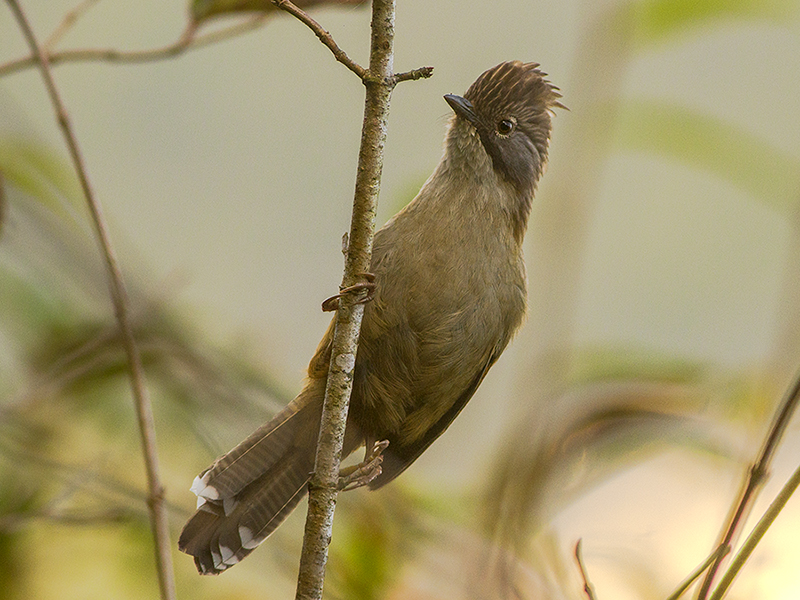
The Black-headed Sibia is easily identifiable by its distinct black head, which contrasts sharply with its gray-brown body. Adults exhibit a sleek, elongated silhouette with long tails and slender bills. The plumage on the back and upper wings is primarily gray, with subtle brownish hues, while the underparts are lighter, often appearing whitish or buff. Juveniles resemble adults but may have duller coloration and a less pronounced black cap.
While both sexes appear similar, subtle differences may exist, with males sometimes showing slightly more vibrant plumage. However, these differences can be challenging to discern in the field. When perched, the sibia shows a characteristic upright posture, often flicking its tail. In flight, it displays a somewhat undulating pattern, interspersed with bursts of rapid wingbeats.
Confusion with similar species, such as other sibias or leiothrix, can occur, but the Black-headed Sibia's distinctive black cap and song usually provide reliable identification cues. Observers should note the bird's behavior and vocalizations, which are key to distinguishing it from other species.
Having trouble telling birds apart? Upload a photo to our bird identification tool for an instant species match.
Pterorhinus monachus Habitat and Range
Preferred Habitat
The Black-headed Sibia primarily inhabits subtropical and temperate forests, frequently found in montane regions. It thrives in areas with dense undergrowth and abundant foliage, which offer ample foraging opportunities and protection from predators. In Thailand and Myanmar, it is often found at elevations between 800 and 2,500 meters. Seasonal shifts in habitat preference are minimal, as the bird tends to remain in forested environments year-round, though it may venture to lower elevations during colder months.
In terms of urban presence, the Black-headed Sibia is less common, typically avoiding heavily populated areas in favor of more remote forests. While it may occasionally appear in rural gardens or parks with suitable vegetation, its primary preference remains undisturbed natural habitats.
Geographic Range
The Black-headed Sibia inhabits a range that encompasses parts of Southeast Asia, including Thailand, Myanmar, Laos, and southern China. It is a resident bird, with no significant migratory behavior, although minor altitudinal movements may occur in response to seasonal temperature changes.
Within its range, population densities are highest in undisturbed montane forests, where the bird finds optimal conditions for feeding and breeding. While not considered a migratory species, the Black-headed Sibia may occasionally disperse to explore new territories, particularly if local food sources become scarce.
Want to know which birds visit your area? Browse our backyard birds by location guides for region-specific species lists.
What Does the Pterorhinus monachus Eat?
The diet of the Black-headed Sibia primarily consists of insects and other small invertebrates, which it forages from the dense foliage of its forest habitat. It employs a variety of techniques, including gleaning from leaves and branches, to capture prey. During certain seasons, the bird's diet expands to include berries and fruits, which are abundant in the undergrowth of its preferred environments.
The sibia typically feeds during daylight hours, with peak activity occurring in the early morning and late afternoon. Its flexible diet allows it to adapt to seasonal changes in food availability, ensuring its survival in varying ecological conditions.
Pterorhinus monachus Behavior and Social Structure
The Black-headed Sibia exhibits a strong social structure, often forming small family groups or joining mixed-species flocks outside the breeding season. This behavior enhances foraging efficiency and provides protection against predators. Territorial behavior is most pronounced during the breeding season, when pairs defend nesting sites with vigor.
Courtship displays involve vocalizations and subtle physical gestures, such as bowing and tail fanning. Flocking patterns vary, with the sibia sometimes seen in loose, fluid groups that move through the forest canopy. The bird remains highly alert to potential threats, often giving alarm calls to warn others of nearby predators. Its daily activities are punctuated by periods of vocalization, feeding, and rest, reflecting a balance between energy expenditure and conservation.
Pterorhinus monachus Nesting and Reproduction
Black-headed Sibias build cup-shaped nests using twigs, leaves, and moss, typically placed in forks of tree branches. Nesting sites are often chosen for their concealment from predators and proximity to food sources. Clutch size ranges from two to four eggs, with both parents sharing incubation duties, which last approximately 14 to 16 days.
After hatching, the young remain in the nest for about two weeks before fledging. During this period, both parents participate in feeding and protecting the chicks. The sibia may have one or two broods per year, depending on environmental conditions and food availability.
Pterorhinus monachus Sounds and Vocalizations
The primary song of the Black-headed Sibia is a melodious sequence of whistles and trills, characterized by its rhythm and varying pitch. This song serves both to attract mates and establish territory. Additionally, the sibia emits a variety of call notes, including sharp, repetitive chirps used for communication within flocks. Alarm calls are harsher and more urgent, signaling the presence of predators.
During the dawn chorus, the sibia contributes to the symphony of the forest with its clear, resonant notes, which can carry over considerable distances.
Interesting Facts About the Pterorhinus monachus
- 1The Black-headed Sibia can be found at elevations up to 2,500 meters, showcasing its adaptability to high-altitude environments.
- 2Despite its striking appearance, the Black-headed Sibia's plumage provides excellent camouflage among the forest foliage.
- 3The sibia's song contributes to the rich auditory landscape of Southeast Asian forests, often heard before the bird is seen.
- 4Unlike many birds, the Black-headed Sibia often joins mixed-species flocks, which enhances its foraging efficiency.
- 5The bird's diet includes both insects and fruit, allowing it to play a dual role in its ecosystem as both predator and seed disperser.
- 6The Black-headed Sibia's alarm calls are a critical component of its defense strategy, warning other birds of potential threats.
- 7The species' name, Pterorhinus monachus, reflects its distinctive black head, reminiscent of a monk's hood.
Pterorhinus monachus Conservation Status
The Black-headed Sibia is currently listed as Least Concern by the IUCN, with stable population trends. However, habitat destruction due to logging and agricultural expansion poses a potential threat. Conservation efforts focus on preserving forest habitats and monitoring population trends. Historical population levels have remained relatively stable, but continuous habitat loss could impact future numbers.