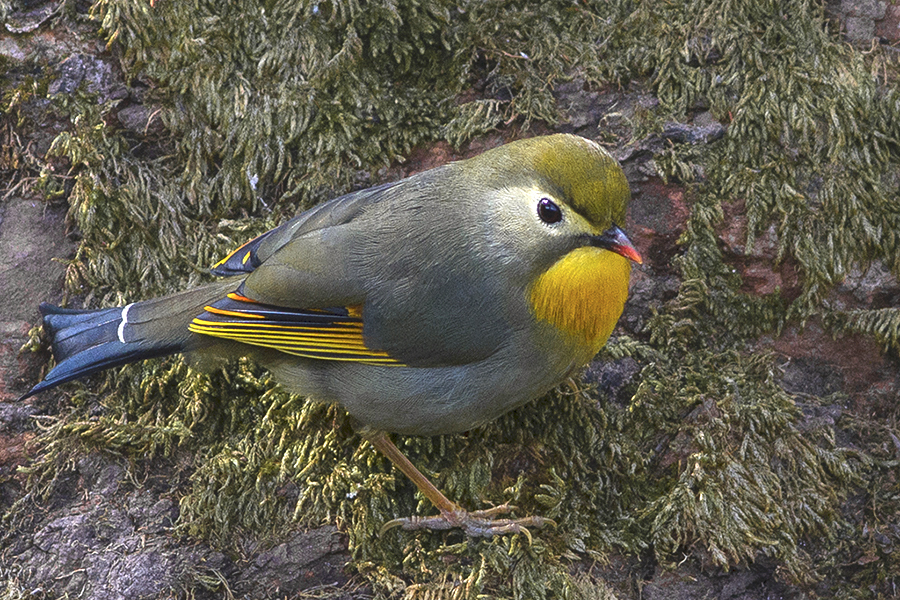
Red-faced Liocichla
Liocichla phoenicea
Order: Passeriformes / Family: Leiothrichidae

Wikimedia Commons
About the Red-faced Liocichla
The Red-faced Liocichla (Liocichla phoenicea) is a vibrant member of the family Leiothrichidae, known for its striking appearance and melodious calls. This bird inhabits the dense montane forests of South and Southeast Asia, thriving in regions such as the Himalayas, northeastern India, Myanmar, and southern China. The species plays a crucial role in the ecosystem as both a seed disperser and an insect predator, contributing to the health of its forested habitat. The Red-faced Liocichla exhibits a preference for altitudes ranging from 800 to 2500 meters, where it finds abundant food sources and nesting sites among the understory vegetation. The montane forests provide a diverse array of flora and fauna, offering the Red-faced Liocichla ample opportunities for foraging and breeding. During the breeding season, which typically occurs from April to August, these birds become particularly vocal, engaging in complex song displays to establish territories and attract mates. Their songs, a mix of melodious whistles and chatters, resonate throughout the forest, adding to the auditory tapestry of these biodiverse regions. In the non-breeding season, the Red-faced Liocichla often forms small flocks, sometimes mingling with other bird species, moving through the forest in search of food. This behavior not only aids in avoiding predators but also facilitates social interaction and information exchange about food resources. Their adaptability to seasonal changes and varied habitats underscores their resilience in the face of environmental fluctuations. As a species, the Red-faced Liocichla remains relatively common, although habitat loss due to deforestation and human encroachment poses ongoing challenges. Conservation efforts focus on preserving the forested areas that are essential to the survival of this and many other bird species in the region.
The Red-faced Liocichla belongs to the family Leiothrichidae, within the order Passeriformes. These birds typically live approximately 7-10 years, with the longest recorded at 12 years.
How to Identify a Red-faced Liocichla
The adult Red-faced Liocichla is easily identified by its vivid red face and olive-green upperparts, which create a striking contrast. Its underparts are a softer gray, with a subtle wash of rufous on the flanks and undertail coverts. The wings are adorned with a combination of black, white, and red markings, making it a colorful addition to any birdwatcher's list. Juveniles resemble adults but with slightly duller plumage and less pronounced red coloration on the face. Both males and females share similar plumage, although males may exhibit slightly brighter coloration during the breeding season. The bird has a relatively short tail, often held slightly cocked when perching, a characteristic posture that aids in its identification. In flight, the Red-faced Liocichla displays a distinctive rounded silhouette, with its broad wings and short tail contributing to a buoyant flight pattern. When compared to similar species, such as the Scarlet-faced Liocichla, the Red-faced Liocichla's face is more uniformly red, lacking the extensive black markings found in its relative. Observers should note the subtle differences in vocalizations and habitat preferences when distinguishing between these species, as both can inhabit overlapping ranges.
Having trouble telling birds apart? Upload a photo to our bird identification tool for an instant species match.
Red-faced Liocichla Habitat and Range
Preferred Habitat
The Red-faced Liocichla thrives in the montane forests of Asia, particularly favoring subtropical and temperate zones. These birds are commonly found in dense undergrowth, bamboo thickets, and rhododendron forests, where they forage for insects and fruit. They prefer elevations between 800 and 2500 meters, where the climate remains cool and moist, and the vegetation is lush and varied. In regions like the eastern Himalayas, they occupy forest edges and clearings, taking advantage of the diverse plant life for both food and cover. While primarily a forest dweller, the Red-faced Liocichla can occasionally be spotted in secondary growth and scrubby areas, particularly in regions where primary forests have been disturbed. Seasonal habitat shifts are minimal, as the species is non-migratory and relies on the consistent availability of resources within its range. In rural and semi-urban areas adjacent to forested habitats, they may be observed in gardens and plantations, though such sightings are less common.
Geographic Range
The Red-faced Liocichla's range extends across several countries in South and Southeast Asia, including India, Nepal, Bhutan, Bangladesh, Myanmar, Thailand, Laos, Vietnam, and southern China. In India, it is primarily found in the northeastern states, such as Arunachal Pradesh and Assam. The species is non-migratory, maintaining year-round territories within its preferred montane forest habitats. However, localized movements may occur in response to seasonal food availability. Population density is highest in regions with extensive undisturbed forests, such as the eastern Himalayas and the hills of northern Myanmar. In southern China, it is primarily found in Yunnan Province, where suitable habitats persist. Despite its wide range, the Red-faced Liocichla's presence is patchy, correlating with the distribution of appropriate montane forest environments. Conservation efforts aim to protect these critical habitats, ensuring that the species continues to thrive despite pressures from habitat loss and fragmentation.
Want to know which birds visit your area? Browse our backyard birds by location guides for region-specific species lists.
What Does the Red-faced Liocichla Eat?
The Red-faced Liocichla's diet consists primarily of insects and other small invertebrates, which it skillfully gleans from foliage and forest floor litter. During the breeding season, the bird's diet is supplemented with a variety of fruits and berries, providing essential nutrients for energy-intensive activities such as singing and chick-rearing. Common prey items include beetles, caterpillars, spiders, and ants, all of which are abundant in the montane forest environments it inhabits. The bird employs a foraging technique characterized by short, purposeful hops and brief flights between branches, as it searches for food. This method allows it to cover ground efficiently while minimizing exposure to potential predators. Seasonal variations in fruit availability lead to shifts in diet composition, with a higher reliance on fruits during the late summer and early autumn months when they are most plentiful. The Red-faced Liocichla typically forages during daylight hours, with peak activity occurring in the early morning and late afternoon, coinciding with the optimal availability of prey.
Red-faced Liocichla Behavior and Social Structure
The Red-faced Liocichla exhibits a complex social structure, often forming small flocks outside of the breeding season. Within these flocks, individuals engage in cooperative foraging, enhancing their ability to locate food and detect predators. Territorial behavior is pronounced during the breeding season, with pairs vigorously defending their chosen nesting sites. Courtship displays involve elaborate vocalizations and synchronized movements, with males often performing fluttering flights and displaying their vibrant red faces to attract females. The bird's response to predators involves a combination of discreet retreat into dense vegetation and alarm calls that alert nearby flock members. Daily activity patterns revolve around foraging and social interactions, with periods of rest occurring during the hottest parts of the day. Flocking patterns tend to be loose, allowing individuals to maintain a balance between cooperation and independent foraging. The Red-faced Liocichla adapts well to seasonal changes in food availability, shifting its diet and foraging strategies as necessary to meet its nutritional needs.
Red-faced Liocichla Nesting and Reproduction
The Red-faced Liocichla prefers to nest in dense shrubbery or low trees, often selecting sites close to the ground to minimize predation risk. Nests are typically cup-shaped, constructed from a variety of plant materials such as grasses, leaves, and twigs, and are often lined with softer materials like moss or feathers for insulation. Clutch sizes usually range from two to four eggs, with both parents sharing responsibilities for incubation and chick rearing. The incubation period lasts approximately 14 to 16 days, during which the parents take turns keeping the eggs warm. Once hatched, the chicks remain in the nest for another 12 to 14 days before fledging. Both parents actively participate in feeding the chicks, providing them with a diet rich in insects to support their rapid growth. The Red-faced Liocichla typically raises one to two broods per year, with the timing of breeding closely aligned with peak food availability in its habitat. Nesting success can vary based on environmental conditions and predation pressure, but the species' adaptability and cooperative breeding strategies contribute to its resilience.
Red-faced Liocichla Sounds and Vocalizations
The Red-faced Liocichla is known for its melodious song, a series of clear, flute-like whistles that are often delivered in rapid succession. The primary song serves both as a territorial marker and a courtship display, typically sung from concealed perches within dense vegetation. Call notes are more abrupt and less musical, often used for communication between flock members or to signal alarm. Alarm calls tend to be sharp and repetitive, designed to alert nearby birds to potential threats. During the dawn chorus, the Red-faced Liocichla's song is a prominent feature, with its rhythmic cadence adding to the cacophony of sounds that characterize the early morning forest. In terms of comparison, its song can be likened to a soft, liquid trill, reminiscent of a finely tuned reed instrument, with a quality that distinguishes it from the harsher calls of some cohabiting species.
Interesting Facts About the Red-faced Liocichla
- 1The Red-faced Liocichla can form mixed-species flocks, associating with other babblers and laughingthrushes.
- 2During courtship, males may display by fanning their tails and performing short, fluttering flights.
- 3Its song repertoire includes over a dozen distinct notes, making it one of the more varied singers in its family.
- 4Despite their vibrant colors, Red-faced Liocichlas can be surprisingly difficult to spot in dense foliage.
- 5The Red-faced Liocichla's diet shifts significantly between seasons, with a higher fruit intake in autumn.
- 6This species is non-migratory, maintaining stable territories year-round in suitable montane forests.
- 7Red-faced Liocichlas often forage in pairs or small family groups, enhancing their efficiency in finding food.
Red-faced Liocichla Conservation Status
The Red-faced Liocichla is currently listed as Least Concern by the IUCN, with stable population trends across much of its range. However, habitat loss due to deforestation and agricultural expansion remains a significant threat to its long-term survival. Conservation efforts focus on preserving the montane forests that are critical to the species' habitat. Protected areas in regions like the eastern Himalayas and Yunnan Province play a vital role in safeguarding these environments. Historical data indicate that while populations have faced pressures from human activities, effective conservation measures and habitat restoration projects have helped stabilize numbers in key areas. Continued monitoring and habitat protection are essential to ensure this vibrant songbird remains a common sight in its native range.
Other Leiothrichidae Species

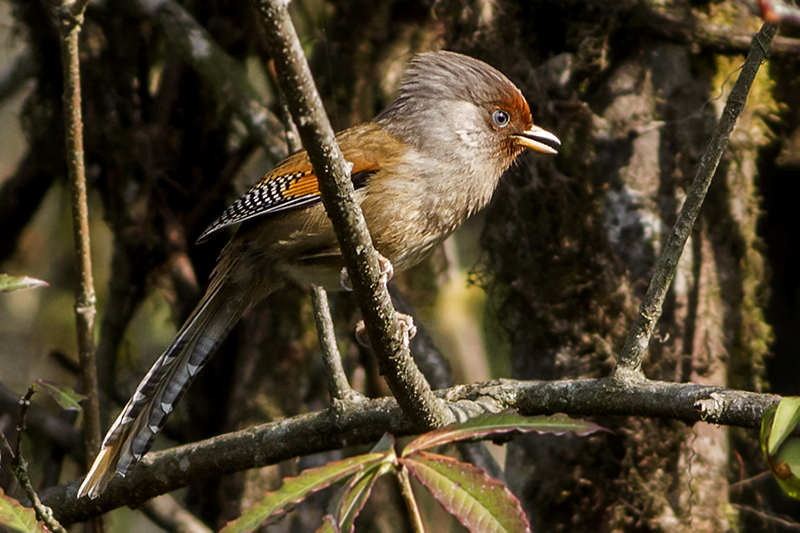

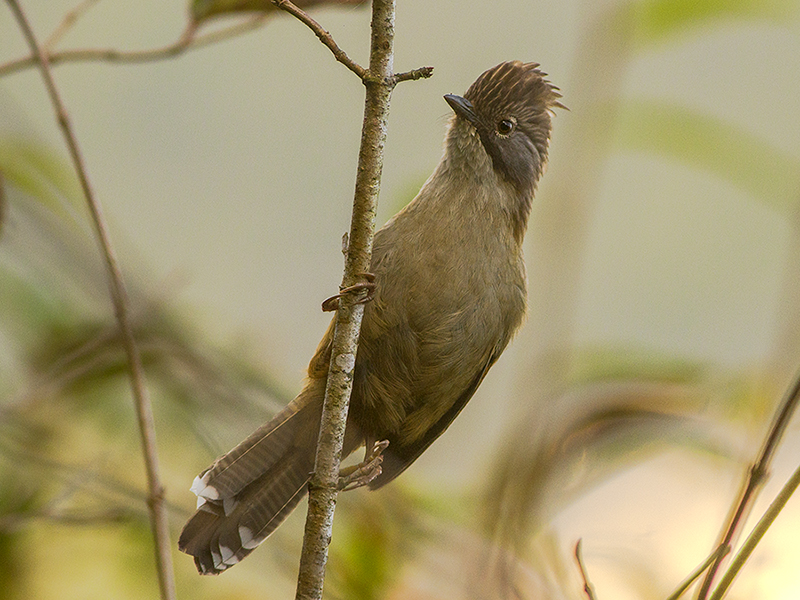
Birds Similar to the Red-faced Liocichla
These species are often confused with the Red-faced Liocichla due to similar appearance or overlapping range.