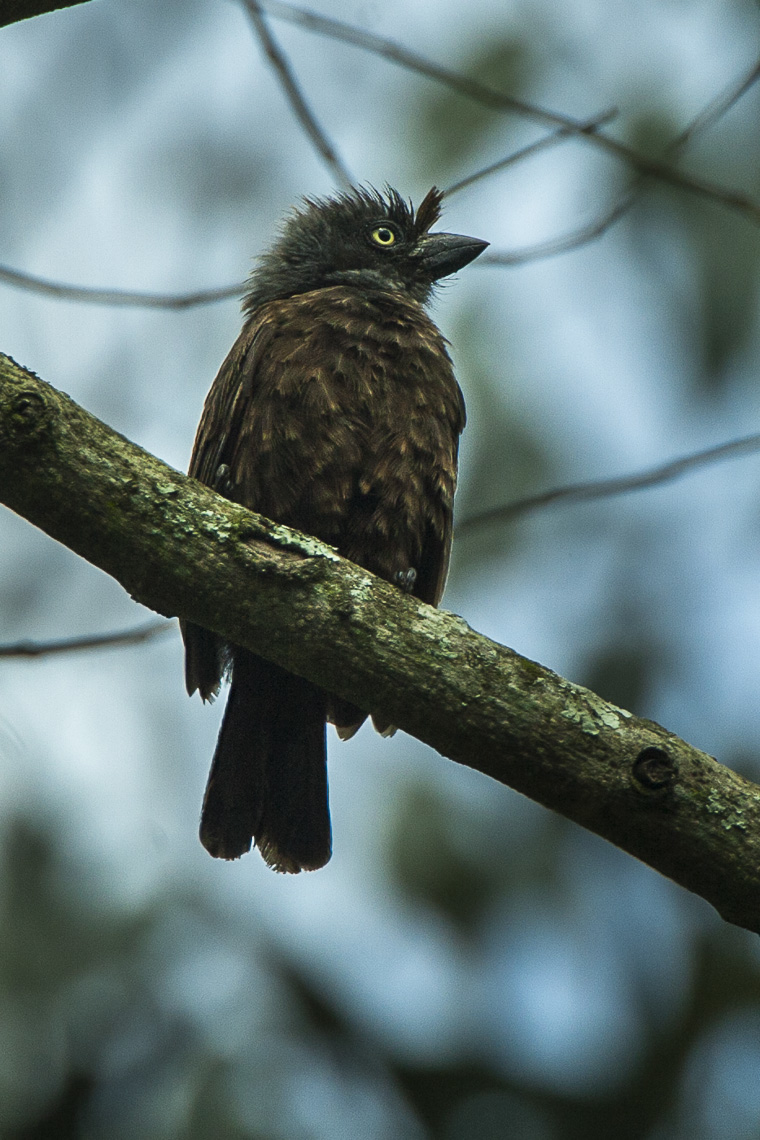
Red-fronted Barbet
Tricholaema diademata
Order: Piciformes / Family: Lybiidae

Wikimedia Commons
About the Red-fronted Barbet
The Red-fronted Barbet, scientifically named Tricholaema diademata, thrives in the diverse woodlands and savannas of eastern and southern Africa. This medium-sized bird is an integral part of its ecosystem, contributing to seed dispersal and insect control. Found primarily in Kenya, Tanzania, Uganda, and Ethiopia, the Red-fronted Barbet inhabits both dry and moist forests, often venturing into gardens and cultivated lands. Its presence is crucial in maintaining the ecological balance, as it preys on a variety of insects and fruits, aiding in pest control and plant reproduction.
This barbet's vibrant plumage serves not only an aesthetic role but also functions as a mechanism for species recognition and mate attraction. During the breeding season, which varies by region but generally peaks with the onset of rains, the Red-fronted Barbet becomes more vocal and visible, engaging in elaborate courtship displays. These displays often include a combination of head bobbing and synchronized calls, which strengthen pair bonds and deter rivals.
The Red-fronted Barbet's ecological role extends beyond its immediate environment. By feeding on a range of fruits, it aids in seed dispersal, thus promoting forest regeneration. Its preference for termite mounds as nesting sites also impacts termite populations. These interactions underscore the barbet's role in sustaining the health and diversity of its habitat, highlighting the interconnectedness of species within African ecosystems.
The Red-fronted Barbet belongs to the family Lybiidae, within the order Piciformes. These birds typically live average 5-7 years, with a max recorded of 9 years..
How to Identify a Red-fronted Barbet
The Red-fronted Barbet is easily recognized by its striking red forehead and crown. Its upperparts are predominantly black, streaked with white, while the underparts are a softer, yellowish hue. A distinct yellow collar frames its neck, contrasting with the black and white facial pattern. Juveniles resemble adults but have duller plumage and less pronounced coloration. Males and females are similar in appearance, although males may exhibit slightly more intense coloration during the breeding season.
Similar species that might cause confusion include the Black-collared Barbet and the Crested Barbet. However, the Red-fronted Barbet's distinct red and yellow patterning helps differentiate it. In flight, the bird's broad wings and short tail create a characteristic silhouette, and its strong, direct flight is typical of barbets.
When perched, the Red-fronted Barbet often adopts an upright stance, using its zygodactyl feet to grip branches securely. This posture, combined with its vibrant plumage, makes it a conspicuous presence in its habitat, particularly during periods of heightened vocal activity.
Having trouble telling birds apart? Upload a photo to our bird identification tool for an instant species match.
Red-fronted Barbet Habitat and Range
Preferred Habitat
The Red-fronted Barbet occupies a range of habitats, from coastal forests to inland woodlands. It is frequently found in acacia woodlands, riverine forests, and areas with scattered trees. In Kenya and Tanzania, it prefers elevations from sea level up to 2,000 meters. The barbet adapts well to secondary growth and can often be seen in gardens and plantations, indicating some tolerance for human-altered landscapes.
Seasonal habitat shifts are minimal, as the Red-fronted Barbet generally remains within its established range year-round. However, during breeding, it may move to areas with abundant food resources and nesting sites. In urban settings, it is less common but may appear in larger parks and wooded areas where native vegetation persists.
Geographic Range
The Red-fronted Barbet's range spans the eastern and southern regions of Africa. It is primarily found in countries such as Kenya, Tanzania, Uganda, and Ethiopia. In these areas, the bird prefers woodlands and forest edges, avoiding dense forests and open grasslands. Its presence in these regions is relatively stable, with the highest population densities occurring in locations that offer a mix of open and wooded areas.
While it does not engage in long-distance migrations, the Red-fronted Barbet may undertake local movements in response to seasonal variations in food availability. These movements are typically short-range and confined to its established territory. Despite these minor shifts, the species remains a permanent resident across most of its range, contributing to its widespread and stable population status.
Want to know which birds visit your area? Browse our backyard birds by location guides for region-specific species lists.
What Does the Red-fronted Barbet Eat?
The Red-fronted Barbet's diet primarily consists of fruits and insects. It shows a marked preference for figs, berries, and the fruits of various native trees and shrubs. Insects, such as beetles, caterpillars, and termites, provide an essential protein source, especially during the breeding season when nutritional demands increase.
Foraging typically occurs in the morning and late afternoon when the bird actively searches for food among the foliage. The Red-fronted Barbet often employs a sit-and-wait strategy, scanning for prey from a perch before making quick sallies to capture it. This method is particularly effective in dense foliage, where agile maneuvers are required.
Seasonal diet changes are observed, with a higher reliance on insect prey during the breeding season to meet the energy demands of raising young. In contrast, fruit consumption may dominate at other times, providing hydration and nutrients that are crucial during drier periods.
Red-fronted Barbet Behavior and Social Structure
The Red-fronted Barbet exhibits a range of behaviors that enhance its survival and reproductive success. Socially, it is generally seen alone or in pairs, although small family groups may form during non-breeding periods. Territorial behavior is pronounced, with males defending their chosen area through vocal displays and occasional physical confrontations.
Courtship involves elaborate displays, including head bobbing and synchronized calling. These rituals are crucial in pair bonding and ensuring reproductive success. Once formed, pairs remain together for the breeding season, cooperating in nesting and chick rearing.
The Red-fronted Barbet is diurnal, with peak activity occurring in the early morning and late afternoon. Its response to predators includes a variety of alarm calls and evasive flight patterns. When threatened, it may retreat to dense cover or employ rapid flights to escape. These behaviors, combined with its vocalizations, highlight the bird's adaptability and resilience in its natural habitat.
Red-fronted Barbet Nesting and Reproduction
The Red-fronted Barbet nests in cavities, often choosing abandoned woodpecker holes or natural tree hollows. It may also excavate its own nest in softer substrates like termite mounds. The nest is typically located several meters above the ground, providing protection from ground-based predators.
A clutch usually consists of 2 to 4 eggs, which both parents incubate for about 14 to 18 days. The fledging period lasts approximately 30 days, during which both parents actively feed and protect the young. Parental roles are shared, with both male and female participating in feeding and guarding activities.
The Red-fronted Barbet may raise one to two broods per year, depending on food availability and environmental conditions. This reproductive strategy ensures that at least some offspring survive to adulthood, contributing to the species' stable population dynamics.
Red-fronted Barbet Sounds and Vocalizations
The Red-fronted Barbet's primary song is a series of rhythmic, fluty notes that can be heard echoing through its woodland habitat. These calls vary in pitch and intensity, serving as both territorial proclamations and mating signals. The barbet's song is often described as melodious and repetitive, resembling the sound of a flute being played in a simple, rhythmic pattern.
Call notes include sharp, staccato chirps used for communication between mates and family members. Alarm calls are more abrupt and harsh, designed to warn of nearby predators. During the dawn chorus, the Red-fronted Barbet's song blends with those of other bird species, creating a rich tapestry of sound that marks the beginning of the day in its habitat.
Interesting Facts About the Red-fronted Barbet
- 1The Red-fronted Barbet can excavate its own nest cavity, a rare skill among birds that do not primarily rely on excavation.
- 2It is known to participate in mixed-species foraging flocks, cooperating with other bird species to locate food more efficiently.
- 3Despite its vibrant colors, the Red-fronted Barbet's plumage provides effective camouflage among the dappled light of forest canopies.
- 4The species exhibits a unique feeding technique known as 'hawking,' where it catches insects in mid-air.
- 5Red-fronted Barbets have been observed using their strong beaks to crack open hard seeds, showcasing their adaptability in diet.
- 6The barbet's call can carry over 500 meters, allowing it to communicate effectively over large distances in dense forests.
- 7It plays a vital role in controlling insect populations, thereby maintaining ecological balance in its habitat.
Red-fronted Barbet Conservation Status
The Red-fronted Barbet currently holds a status of Least Concern on the IUCN Red List, indicating a stable population. However, localized threats such as habitat destruction and fragmentation pose potential risks. Conservation efforts focus on habitat preservation and sustainable land use practices. Historically, the Red-fronted Barbet's population has remained relatively stable, benefiting from its adaptability to various habitats. Conservationists emphasize the importance of protecting key habitats in regions like Kenya and Tanzania to ensure the species' continued survival. Ongoing monitoring aims to detect any significant changes in population trends or habitat quality.