
Red-winged Laughingthrush
Trochalopteron formosum
Order: Passeriformes / Family: Leiothrichidae

Wikimedia Commons
About the Red-winged Laughingthrush
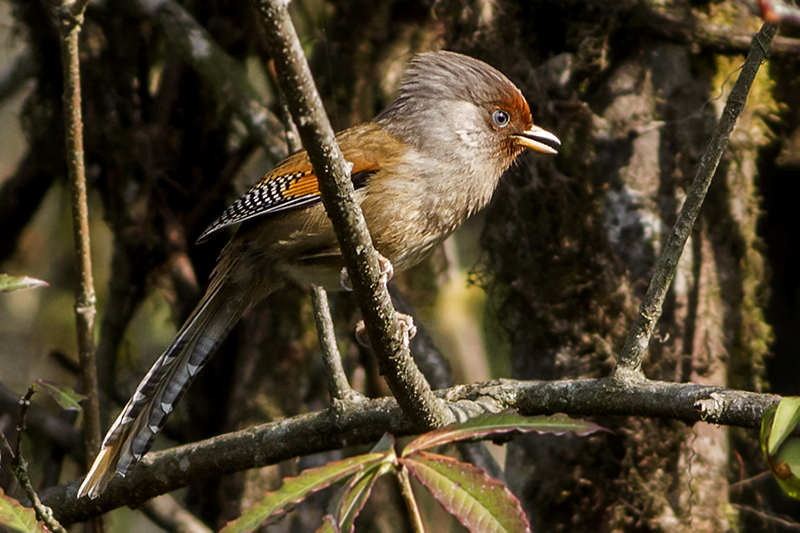
The Red-winged Laughingthrush, scientifically known as Trochalopteron formosum, is a captivating songbird belonging to the family Leiothrichidae. This bird species is renowned for its vibrant plumage, featuring striking red patches on its wings, which are accompanied by contrasting black, gray, and white feathers. The Red-winged Laughingthrush occupies a unique ecological niche within the subtropical and temperate forests of Southeast Asia, including regions such as Yunnan in China and parts of northern Vietnam. The presence of this species is indicative of the health of its native habitats, as it thrives in lush, dense forests where it can find ample food and shelter.
As a forest-dwelling species, the Red-winged Laughingthrush plays an essential role in seed dispersal and insect population control. Its diet primarily consists of insects, small invertebrates, and fruits, making it a key player in maintaining the ecological balance of its habitat. This bird is a year-round resident in its range, exhibiting minimal seasonal movements, although some altitudinal migration may occur in response to food availability and climatic conditions.
The Red-winged Laughingthrush is also significant culturally, as its distinctive song and appearance have made it a favorite among birdwatchers and a subject of folklore in its native regions. Unlike many other bird species, its population remains relatively stable, thanks in part to its adaptability to various forest types and altitudinal ranges. However, habitat destruction and degradation due to logging and agricultural expansion pose ongoing threats to its survival. The conservation of the Red-winged Laughingthrush thus relies on the protection and restoration of its forest habitats, ensuring this bird continues to enchant nature enthusiasts with its presence and vibrant displays.
The Red-winged Laughingthrush belongs to the family Leiothrichidae, within the order Passeriformes. These birds typically live 6-8 years with a maximum recorded of 10 years..
How to Identify a Red-winged Laughingthrush
The Red-winged Laughingthrush is a medium-sized bird easily recognized by its vibrant plumage. Adults typically measure around 26 to 28 centimeters in length. Their most distinctive feature is the bright red patches on their wings, which contrast strikingly with their otherwise dark and subtly patterned plumage. The head is mostly black, with a white throat and a noticeable grayish chest and underparts. The back and wings show a blend of dark brown and black, while the tail is long and slightly rounded.
Males and females display similar plumage, making it difficult to differentiate between the sexes in the field. Juveniles, however, tend to have duller coloration, lacking the vivid red wing patches seen in adults. Instead, they have a more muted brownish coloration overall, which gradually changes as they mature.
In flight, the Red-winged Laughingthrush exhibits a distinctive silhouette with its broad, rounded wings and long tail. When perched, its posture is upright, often observed in the middle to upper levels of the forest canopy, where its song can be heard echoing through the trees. The bird's coloration can lead to confusion with other members of the laughingthrush family, but the unique combination of its red wing patches and melodic song helps in accurate identification.
Having trouble telling birds apart? Upload a photo to our bird identification tool for an instant species match.
Red-winged Laughingthrush Habitat and Range
Preferred Habitat
The Red-winged Laughingthrush primarily inhabits subtropical and temperate forests within its range. It is most commonly found in the dense undergrowth and midstory layers of evergreen forests, mixed woodlands, and bamboo thickets. These habitats provide the necessary cover and feeding opportunities that this species requires.
In terms of elevation, the Red-winged Laughingthrush is typically found at altitudes ranging from 800 to 3,000 meters. Its presence in these highland and montane forests is indicative of its preference for cooler, more humid environments. During different seasons, this bird may exhibit some altitudinal movement, descending to lower elevations during colder periods when food is scarce in its usual highland habitats.
While primarily a forest dweller, the Red-winged Laughingthrush can occasionally be seen in more disturbed areas, such as secondary growth and forest edges, especially when searching for food. However, it is generally absent from urban environments, maintaining a preference for the tranquility and abundance of natural forested areas.
Geographic Range
The Red-winged Laughingthrush is native to Southeast Asia, with its range primarily encompassing parts of southwestern China and northern Vietnam. In China, it is most commonly found in the province of Yunnan, where the highland forests provide an ideal habitat. Its range extends into the northern regions of Vietnam, particularly in the mountainous areas where suitable forest habitats exist.
The species does not engage in long-distance migrations but may exhibit some altitudinal movement within its range in response to seasonal changes in food availability and climate. This movement typically involves descending to lower elevations during the winter months.
Within its range, the Red-winged Laughingthrush is generally considered to be a resident species, maintaining stable populations in areas where its preferred habitats are intact. Population density tends to be highest in undisturbed forested regions, where the availability of food and nesting sites is optimal.
Want to know which birds visit your area? Browse our backyard birds by location guides for region-specific species lists.
What Does the Red-winged Laughingthrush Eat?
The Red-winged Laughingthrush has a diverse diet that primarily consists of insects, small invertebrates, and fruits. This diet not only provides essential nutrients but also positions the bird as a crucial player in its ecosystem. Insects and invertebrates such as beetles, caterpillars, and spiders form the bulk of its diet, particularly during the breeding season when protein needs are high.
Fruits become increasingly important in the bird's diet outside the breeding season, with a preference for berries and small fruits from forest trees and shrubs. The consumption of fruits aids in seed dispersal, contributing to the regeneration of forest vegetation.
Foraging behavior is typically observed in the understory and mid-canopy levels of forests, where the bird actively searches for food among leaves and branches. The Red-winged Laughingthrush employs a variety of foraging techniques, including gleaning insects from foliage and catching flying insects on the wing. Its feeding activity is most prominent during the early morning and late afternoon hours, aligning with peak insect activity.
Red-winged Laughingthrush Behavior and Social Structure
The Red-winged Laughingthrush exhibits a range of behaviors that reflect its social and ecological adaptations. It is a highly social bird, often found in small flocks or family groups, especially outside the breeding season. This social structure facilitates cooperative foraging and provides added protection against predators.
Territorial behavior is pronounced during the breeding season, with pairs or small family groups establishing and defending territories against intruders. The bird's vocalizations play a significant role in these territorial displays, with its melodious song serving as both a declaration of ownership and a means of communication with potential mates.
Courtship displays are a notable aspect of the Red-winged Laughingthrush's behavior, involving a combination of vocalizations and physical displays. Males may engage in wing-fluttering and tail-fanning to attract females, accompanied by intricate songs. The bird's response to predators includes a series of alarm calls and evasive maneuvers, often taking cover in dense vegetation to avoid detection.
Daily activity patterns involve a mix of foraging, social interactions, and resting periods. The bird is most active during the early morning and late afternoon, aligning with periods of peak food availability and optimal temperature conditions. During these times, the Red-winged Laughingthrush can often be seen moving through the forest in search of food or engaging in social activities with its flock.
Red-winged Laughingthrush Nesting and Reproduction
The nesting habits of the Red-winged Laughingthrush are intricately linked to its forest habitat. The bird constructs a cup-shaped nest using a variety of materials such as twigs, grass, and moss, which are carefully woven together to provide stability and camouflage. These nests are typically situated in dense shrubs or lower branches of trees, offering protection from predators and the elements.
The typical clutch size for the Red-winged Laughingthrush ranges from two to four eggs. The eggs are incubated primarily by the female, with the male assisting by providing food and protection. The incubation period lasts approximately two weeks, after which the chicks hatch and require constant care and feeding from both parents.
Fledging occurs about two to three weeks after hatching, with young birds leaving the nest but remaining under parental supervision for an extended period. The number of broods raised per year can vary depending on environmental conditions, but typically one or two broods are produced annually in suitable habitats.
Red-winged Laughingthrush Sounds and Vocalizations
The Red-winged Laughingthrush is renowned for its melodious and varied song, which consists of a series of rich, flute-like notes. The song is typically rhythmic and repetitive, with a melodious quality that can carry over long distances in the forest. These vocalizations serve multiple purposes, including territory defense and mate attraction.
In addition to its primary song, the bird produces a range of call notes and alarm calls. These calls are shorter and more abrupt than its song, often used to communicate with flock members or alert them to potential threats. The alarm calls are particularly sharp and piercing, serving as an effective warning signal.
During the dawn chorus, the Red-winged Laughingthrush's song stands out, adding a vibrant and uplifting soundscape to the forest environment. Its vocalizations are often compared to those of other members of the laughingthrush family, though they are generally considered more melodious and less harsh.
Interesting Facts About the Red-winged Laughingthrush
- 1The Red-winged Laughingthrush is known to live in altitudes as high as 3,000 meters, showcasing its adaptability to cooler climates.
- 2Despite its colorful appearance, the Red-winged Laughingthrush is adept at hiding in dense foliage, making it a challenge to spot.
- 3This bird's melodious song has been likened to a flute, earning it admiration from birdwatchers and nature enthusiasts alike.
- 4Red-winged Laughingthrushes are highly social, often forming small flocks, which enhances their foraging efficiency.
- 5The species plays an essential role in seed dispersal, contributing to forest regeneration by consuming and spreading seeds.
- 6They exhibit altitudinal migration, moving to lower elevations during colder months in search of food.
- 7The Red-winged Laughingthrush's nest construction involves intricate weaving of twigs, grass, and moss for sturdiness.
Red-winged Laughingthrush Conservation Status
As of the latest assessments, the Red-winged Laughingthrush is listed as Least Concern by the International Union for Conservation of Nature (IUCN). The species maintains a stable population trend, with no immediate evidence of severe decline. However, habitat loss due to deforestation and land conversion for agriculture poses ongoing threats to its long-term survival. Conservation efforts focus on habitat protection and sustainable forest management practices in its native range. Preserving large tracts of undisturbed forest is crucial for maintaining population stability. Community-based conservation initiatives also play a role in raising awareness about the importance of protecting this species and its habitat. Historically, the Red-winged Laughingthrush has managed to persist in regions where suitable habitat remains, even as other species have declined. Continued conservation efforts are essential to ensure that this vibrant songbird continues to thrive in the wild.
Other Leiothrichidae Species


Birds Similar to the Red-winged Laughingthrush
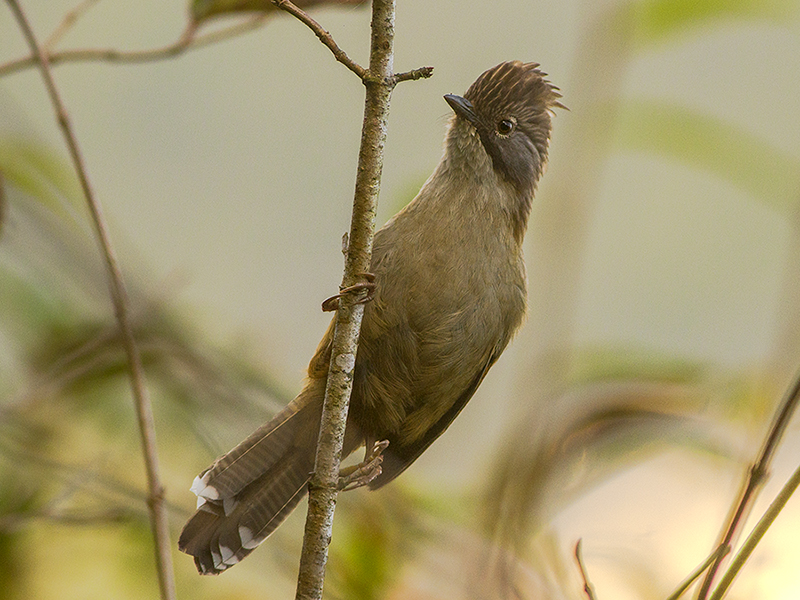
These species are often confused with the Red-winged Laughingthrush due to similar appearance or overlapping range.