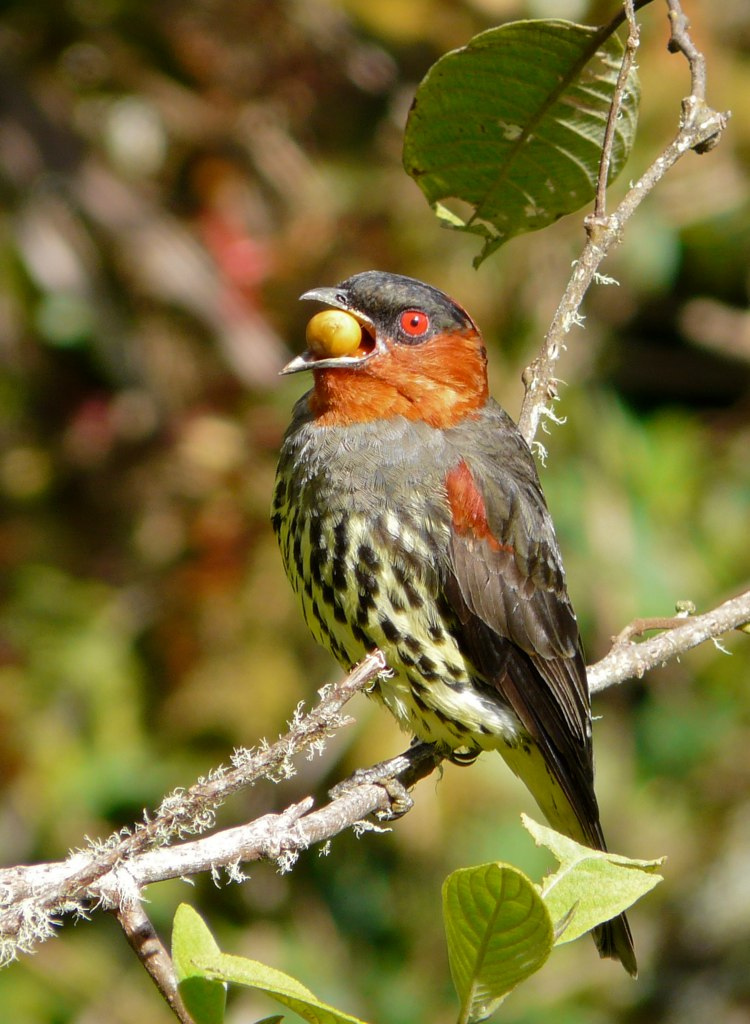
Rose-throated Becard
Pachyramphus aglaiae
Order: Passeriformes / Family: Cotingidae

Wikimedia Commons
About the Rose-throated Becard
The Rose-throated Becard, scientifically known as Pachyramphus aglaiae, is a captivating bird that belongs to the family Cotingidae within the order Passeriformes. This small to medium-sized songbird plays a crucial role in its ecosystem, acting as both a predator and a seed disperser. Found primarily in warm climates, its range spans from the southern United States through Central America and into parts of northern South America. The Rose-throated Becard thrives in a variety of habitats, including subtropical and tropical forests, open woodlands, and secondary growth areas. It is particularly common in riverine forests and coffee plantations, where its presence is often marked by its melodious song. During the breeding season, which typically occurs from March to July, this species becomes highly vocal, engaging in elaborate courtship displays. Males, in particular, use their striking coloration and vocal prowess to attract mates. Ecologically, the Rose-throated Becard contributes to controlling insect populations, as it primarily feeds on a diet of insects and small invertebrates. Additionally, it helps in seed dispersal, as it occasionally consumes fruits. Its role in maintaining the balance of its habitat underscores its ecological significance. As migratory patterns bring populations northward into the southern United States during the breeding season, the Rose-throated Becard adapts to different environmental conditions. It displays a remarkable adaptability, thriving in both humid lowland forests and drier upland regions. This adaptability, combined with its striking appearance and melodious song, makes the Rose-throated Becard a species of interest to both researchers and bird enthusiasts alike.
The Rose-throated Becard belongs to the family Cotingidae, within the order Passeriformes. These birds typically live average 6-8 years, with a max recorded of 12 years..
How to Identify a Rose-throated Becard
The Rose-throated Becard can be identified by its distinctive plumage and size. Adult males are particularly striking, featuring a vivid pinkish-red throat patch that sharply contrasts with their otherwise brownish-gray body. Their upperparts are generally darker, while the underparts are lighter, providing a subtle yet elegant color palette. Females and juveniles, however, lack the bright throat coloration of males, instead displaying a more uniform grayish-brown plumage. This sexual dimorphism makes it relatively easy to distinguish between the genders in the field. Another notable feature is the bird's compact build and relatively short tail, which aids in its agile movements through dense foliage. When perched, it often adopts an upright posture, giving it a somewhat alert appearance. In flight, the Rose-throated Becard exhibits a steady, direct flight pattern, characterized by quick, shallow wingbeats. This can sometimes lead to confusion with other similarly sized passerines, such as flycatchers. However, the becard's unique combination of throat coloration, body shape, and vocalizations generally sets it apart. Its song, a series of melodious whistles and trills, further aids in identification during the breeding season.
Having trouble telling birds apart? Upload a photo to our bird identification tool for an instant species match.
Rose-throated Becard Habitat and Range
Preferred Habitat
The Rose-throated Becard inhabits a diverse range of environments, primarily favoring subtropical and tropical forest regions. It is commonly found in lowland rainforests, riverine forests, and areas with abundant secondary growth. These birds are particularly fond of riparian zones and are frequently observed along the edges of water bodies. While they prefer humid and dense forest areas, they also adapt to drier, upland forests, especially during migration. In more urbanized areas, they can occasionally be found in gardens and parks, particularly where native vegetation is abundant. The species shows some seasonal habitat shifts, moving to higher elevations during the breeding season to take advantage of cooler temperatures and more abundant food resources. Typically, they are found between sea level and 1,500 meters, though they can occasionally be spotted at higher elevations during migration.
Geographic Range
The Rose-throated Becard's range extends from the southern United States, specifically Texas and Arizona, through Mexico and Central America, reaching as far south as northern Colombia and Venezuela. During the breeding season, populations expand northward into the southern U.S., taking advantage of the varied habitats in these regions. In winter, many of these birds migrate southward, although some populations remain resident in tropical areas year-round. Mexico hosts the highest population density, particularly in regions with suitable forest habitats. Migration corridors are primarily along the Central American isthmus, where the birds utilize the forested landscapes for food and shelter. The species is considered common throughout much of its range, although local populations may vary in density depending on habitat availability and environmental conditions.
Want to know which birds visit your area? Browse our backyard birds by location guides for region-specific species lists.
What Does the Rose-throated Becard Eat?
The diet of the Rose-throated Becard consists predominantly of insects and small invertebrates, making it an important insectivore in its ecosystem. It feeds on a variety of prey, including beetles, caterpillars, and spiders. During the breeding season, when energy demands are higher, it may also target larger prey items such as grasshoppers and dragonflies. The bird employs a flycatching technique, often observed sallying from a perch to snatch insects in mid-air. This active foraging behavior is complemented by gleaning, where it picks insects from foliage. In addition to animal prey, the Rose-throated Becard consumes small fruits and berries, particularly during the non-breeding season when insect availability may decrease. This dietary flexibility allows it to thrive in various habitats and contributes to its role as a seed disperser. Feeding typically occurs during the early morning and late afternoon, aligning with peak insect activity.
Rose-throated Becard Behavior and Social Structure
The Rose-throated Becard exhibits fascinating behavioral traits, particularly regarding its social structure and territoriality. These birds are generally observed alone or in pairs, especially during the breeding season. They establish territories that they defend vigorously against intruders, using both vocal displays and physical posturing to deter rivals. Courtship involves complex displays, with males showcasing their vibrant throat patch and engaging in synchronized flights with potential mates. Outside of the breeding season, the Rose-throated Becard may join mixed-species foraging flocks, benefiting from the communal search for food. Its response to predators is notable; when threatened, it often employs a mix of vocal alarm calls and evasive maneuvers to avoid detection. Daily activity patterns include peak activity during early morning and late afternoon, correlating with optimal foraging conditions. The species' adaptability to different social settings and environments underscores its ecological success.
Rose-throated Becard Nesting and Reproduction
The nesting habits of the Rose-throated Becard are characterized by their construction of large, domed nests made from plant fibers, leaves, and twigs. These nests are typically situated high in trees, often at the tips of branches, to minimize predation risk. The female primarily constructs the nest, although males may assist by gathering materials. Clutch size usually ranges from 2 to 4 eggs, with the female taking on the primary role of incubating them over a period of approximately 15 to 18 days. After hatching, both parents actively participate in feeding and caring for the young. The fledging period lasts about 18 to 20 days, during which the chicks remain under the watchful protection and care of both parents. The species typically raises one to two broods per year, depending on environmental conditions and food availability.
Rose-throated Becard Sounds and Vocalizations
The vocalizations of the Rose-throated Becard are notable for their complexity and variety. The primary song consists of a series of melodious whistles and trills that are both high-pitched and clear, often delivered in rapid succession. These vocalizations play a crucial role during the breeding season, as males use them to establish territory and attract mates. In addition to the primary song, the Rose-throated Becard produces a range of call notes that vary from soft 'chup' sounds to sharper alarm calls when predators are nearby. During the dawn chorus, their vocal presence is particularly prominent, contributing to the rich tapestry of sound in their forest habitats.
Interesting Facts About the Rose-throated Becard
- 1The Rose-throated Becard's nest can be as large as a basketball, hanging from tree branches to deter predators.
- 2Despite being part of the Cotingidae family, the Rose-throated Becard's size and shape often lead to confusion with flycatchers.
- 3Females can sometimes be observed engaging in 'anting,' a behavior where they use ants to clean their feathers.
- 4The species is named for its striking throat coloration, unique among becards and visible even from a distance.
- 5In Central America, the Rose-throated Becard is known to join mixed-species flocks, enhancing foraging success.
- 6Its diet shifts seasonally, relying more on fruits during periods of low insect availability, demonstrating dietary flexibility.
- 7The Rose-throated Becard contributes to seed dispersal, aiding in the regeneration of forest ecosystems.
Rose-throated Becard Conservation Status
The Rose-throated Becard is currently listed as Least Concern by the IUCN, reflecting a stable overall population. However, local populations may face threats from habitat loss due to deforestation and agricultural expansion. Conservation efforts focus on preserving and restoring forest habitats, particularly in areas of high population density such as Mexico and Central America. Historical population changes have been relatively minor, although ongoing monitoring is necessary to ensure that habitat degradation does not lead to future declines. Protected areas and sustainable land management practices are crucial for the continued well-being of this species.