Rufous-crowned Laughingthrush
Ianthocincla ruficeps
Order: Passeriformes / Family: Leiothrichidae

Wikimedia Commons
About the Rufous-crowned Laughingthrush
The Rufous-crowned Laughingthrush, scientifically known as Ianthocincla ruficeps, is a fascinating bird of the family Leiothrichidae. It is primarily found in the lush, subtropical forests of the Eastern Himalayas, stretching across countries such as India, Bhutan, Nepal, and parts of China. This bird's preference for dense, shrubby forests often sees it residing in areas with thick undergrowth and rich biodiversity. It plays a crucial role in these ecosystems, aiding in seed dispersal and insect population control, which contributes to the ecological balance.
The Rufous-crowned Laughingthrush is significant for its vibrant vocal repertoire, which consists of melodious, ringing notes that can be heard echoing through the forests it inhabits. These vocalizations not only serve as a mechanism for communication among individuals but also play a vital role in establishing territories and attracting mates during the breeding season. Seasonal behaviors of the Rufous-crowned Laughingthrush include forming larger groups in the non-breeding season, where they exhibit social and cooperative foraging behaviors.
The bird's ecological role extends beyond its immediate habitat. By participating in mixed-species feeding flocks, the Rufous-crowned Laughingthrush helps create a dynamic and interactive avian community. This interaction facilitates the spread of plant species, influencing forest composition and resilience. Additionally, its presence is often an indicator of healthy forest ecosystems, highlighting the importance of conserving its natural habitats. The Rufous-crowned Laughingthrush's adaptability to various forest types underscores its resilience, yet it remains sensitive to habitat disruption, emphasizing the need for sustainable forest management practices.
The Rufous-crowned Laughingthrush belongs to the family Leiothrichidae, within the order Passeriformes. These birds typically live average 5-8 years with a maximum recorded of 10 years..
How to Identify a Rufous-crowned Laughingthrush
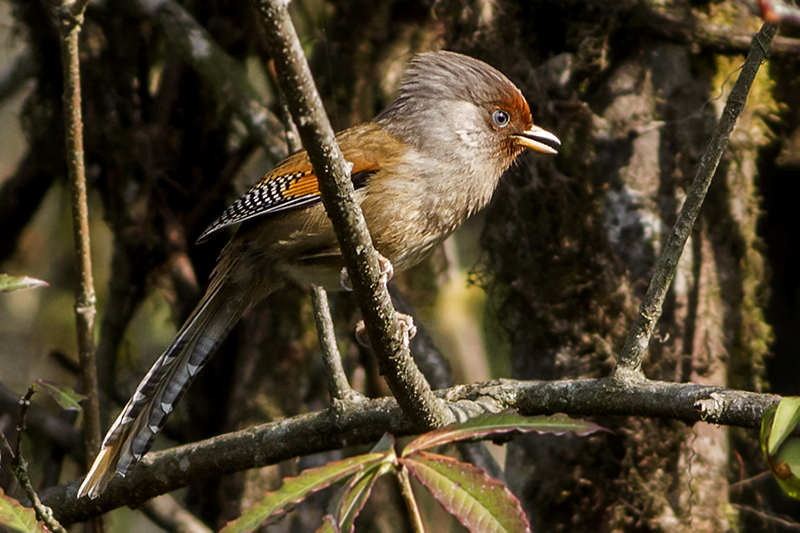
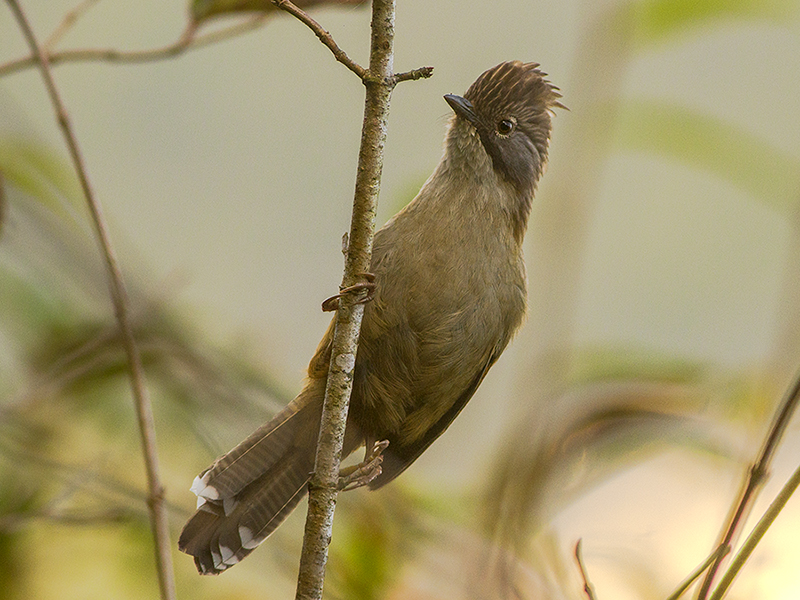
The Rufous-crowned Laughingthrush is easily identified by its characteristic rufous crown, which stands out against the muted tones of its plumage. Adults exhibit a predominantly gray-brown body, with a slightly paler underside. The rufous crown extends from the forehead to the nape, elegantly contrasting with the dark lores and ear coverts. Juvenile Rufous-crowned Laughingthrushes display a duller version of the adults' plumage, with less pronounced rufous on the crown, making them slightly less conspicuous.
Both males and females exhibit similar plumage, making sexual dimorphism virtually absent in this species. However, careful observation during the breeding season may reveal subtle behavioral differences related to courtship and nesting activities. The bird's flight silhouette is compact, with rounded wings and a slightly elongated tail that aids in maneuverability through dense foliage. When perched, the Rufous-crowned Laughingthrush maintains an upright posture, often flicking its tail as it surveys its surroundings.
Misidentification may occur with other laughingthrush species, but the combination of its distinctive rufous crown and vocalizations sets the Rufous-crowned Laughingthrush apart. Its calls, coupled with its striking crown, are essential field marks for birdwatchers attempting to distinguish it from similar species.
Having trouble telling birds apart? Upload a photo to our bird identification tool for an instant species match.
Rufous-crowned Laughingthrush Habitat and Range
Preferred Habitat
The Rufous-crowned Laughingthrush predominantly inhabits subtropical and temperate forests, favoring areas with dense underbrush and rich vegetation. These forests are often located at elevations ranging from 1,000 to 3,000 meters. Notable habitats include the Eastern Himalayan broadleaf forests and the temperate coniferous forests of the region. These areas provide the necessary cover and food resources crucial for the bird's survival.
Seasonal shifts may see the Rufous-crowned Laughingthrush move slightly in elevation, particularly during colder months, when it may descend to lower altitudes in search of warmer climates and food availability. While primarily a forest dweller, the bird occasionally ventures into rural areas with suitable vegetative cover but is seldom seen in urban environments.
The preference for forested areas underscores the importance of preserving these habitats to ensure the survival of the Rufous-crowned Laughingthrush. As human activities continue to encroach upon these natural landscapes, understanding the specific habitat requirements of this species becomes increasingly critical.
Geographic Range
The Rufous-crowned Laughingthrush boasts a range that spans several key regions in Asia. Its primary breeding range encompasses the Eastern Himalayas, with populations thriving in the forests of northeastern India, Bhutan, Nepal, and southern Tibet. In India, states such as Sikkim and Arunachal Pradesh serve as important strongholds for the species.
During the non-breeding season, the Rufous-crowned Laughingthrush may exhibit some altitudinal movement, descending to lower elevations within its range to adapt to seasonal changes. This vertical migration ensures access to food resources and milder climates, critical for its survival during harsher weather conditions.
While the bird's distribution is relatively stable within these regions, certain hotspots of population density coincide with areas of well-preserved natural forest. These include national parks and protected reserves that provide a refuge from habitat destruction and other anthropogenic pressures. Despite its stable presence in these areas, ongoing conservation efforts remain vital to mitigate potential threats and ensure the species' continued survival.
Want to know which birds visit your area? Browse our backyard birds by location guides for region-specific species lists.
What Does the Rufous-crowned Laughingthrush Eat?
The Rufous-crowned Laughingthrush primarily feeds on insects and other invertebrates, employing a ground-foraging technique that involves diligently scouring the forest floor and low shrubs for prey. Its diet is diverse, comprising beetles, ants, caterpillars, and occasionally small fruits and seeds, particularly during the fruiting season when insect availability may decrease.
Seasonal dietary shifts occur as the Rufous-crowned Laughingthrush adapts to the changing availability of food resources. Insects dominate the diet during the breeding season, providing the necessary protein for chick development. As seasons transition, the bird supplements its diet with a greater proportion of plant material, including berries and seeds, to sustain its energy requirements.
The Rufous-crowned Laughingthrush forages in small, cohesive groups, often joining mixed-species flocks to enhance foraging efficiency and reduce the risk of predation. This social foraging behavior allows individuals to exploit a wider range of resources while maintaining vigilance against potential threats.
Rufous-crowned Laughingthrush Behavior and Social Structure
The Rufous-crowned Laughingthrush exhibits a rich array of social and behavioral interactions. These birds are typically found in small, cohesive groups, ranging from family units to larger foraging parties. Their social structure facilitates cooperative foraging and predator vigilance, enhancing their survival in the dense forest habitats they frequent.
Territorial behavior is pronounced during the breeding season, with pairs establishing and defending territories through vocalizations and physical displays. Courtship displays often involve males performing a series of elaborate calls and postures to attract females, reinforcing pair bonds and securing mating opportunities.
In response to predators, the Rufous-crowned Laughingthrush employs a variety of strategies, from alarm calls to evasive maneuvers, leveraging the protective cover of dense foliage. Daily activity patterns center around foraging and social interactions, with peak activity occurring during the cooler morning and late afternoon hours. This bird's adaptability to varying environmental conditions exemplifies its resilience, yet it remains sensitive to disturbances within its habitat.
Rufous-crowned Laughingthrush Nesting and Reproduction
The nesting habits of the Rufous-crowned Laughingthrush reveal its adaptability and strategic planning. These birds construct cup-shaped nests made from twigs, leaves, and grass, typically located in dense shrubs or low trees, providing both concealment and accessibility. The nest site selection reflects the need for protection from predators and environmental elements.
A typical clutch consists of 2 to 4 eggs, with both parents participating in incubation duties over a period of approximately 14 to 16 days. The shared responsibility ensures that the eggs remain at a stable temperature, crucial for successful hatching. Once the chicks emerge, parental care intensifies, with both adults equally involved in feeding and protecting the young.
Fledging occurs around 14 to 18 days post-hatching, with juveniles gradually gaining independence while still receiving parental support. The Rufous-crowned Laughingthrush may raise one to two broods per year, depending on environmental conditions and food availability, demonstrating its capacity to adapt reproductive strategies to optimize survival and recruitment.
Rufous-crowned Laughingthrush Sounds and Vocalizations
The Rufous-crowned Laughingthrush is renowned for its vocal prowess, with a primary song characterized by a series of melodious, flute-like notes that build in rhythm and pitch, creating a harmonious and resonant sequence. These songs play a pivotal role in territory establishment and mate attraction.
In addition to its song, the bird emits a variety of call notes, including sharp, chattering sounds that serve as contact calls within groups or as alarms when predators approach. The alarm calls are notably harsher and more urgent, effectively alerting conspecifics to potential danger.
During the dawn chorus, the Rufous-crowned Laughingthrush contributes to the cacophony of forest sounds, its clear, ringing notes cutting through the morning air. This vocal activity not only marks its presence but also underscores the importance of communication in its social and ecological interactions.
Interesting Facts About the Rufous-crowned Laughingthrush
- 1The Rufous-crowned Laughingthrush can be found at elevations of up to 3,000 meters, thriving in the cooler climates of mountainous regions.
- 2Unlike many birds, the Rufous-crowned Laughingthrush often joins mixed-species flocks, enhancing its foraging success through cooperative behavior.
- 3This species' vocalizations are not just for communication; they also serve as a mechanism for establishing and defending territories.
- 4The Rufous-crowned Laughingthrush's diet shifts seasonally, with a higher dependence on insects during breeding and more plant matter in the off-season.
- 5Despite its name, the Rufous-crowned Laughingthrush is less of a laugher and more of a melodist, with its flute-like notes enchanting dense forests.
- 6This bird's adaptability to various forest types highlights its resilience, yet it remains vulnerable to habitat destruction.
- 7The Rufous-crowned Laughingthrush's participation in mixed-species flocks helps maintain dynamic and interactive avian communities.
Rufous-crowned Laughingthrush Conservation Status
According to the IUCN Red List, the Rufous-crowned Laughingthrush is currently classified as Least Concern, with population trends considered stable. However, habitat loss due to deforestation and agricultural expansion poses a significant threat to its long-term survival. Conservation efforts aimed at preserving forested habitats are crucial to ensuring the continued existence of this species. Protected areas and national parks play a key role in providing safe havens for the Rufous-crowned Laughingthrush, mitigating the impacts of human encroachment and environmental degradation. Historically, the Rufous-crowned Laughingthrush has maintained a relatively stable population, but ongoing habitat disturbances underscore the importance of vigilant conservation strategies. By fostering sustainable land-use practices and raising awareness of the ecological significance of this species, conservationists hope to secure a future for the Rufous-crowned Laughingthrush and the habitats it inhabits.