Rufous-fronted Laughingthrush
Garrulax rufifrons
Order: Passeriformes / Family: Leiothrichidae

Wikimedia Commons
About the Rufous-fronted Laughingthrush
The Rufous-fronted Laughingthrush (Garrulax rufifrons) is a notable member of the Leiothrichidae family, endemic to the montane forests of Java, Indonesia. This bird is known for its vibrant plumage and sociable nature, often found in the company of its kin in dense undergrowth. These birds play a significant ecological role by helping control insect populations and dispersing seeds through their diet. Their presence is indicative of a healthy forest ecosystem, as they thrive in undisturbed, high-altitude environments. During the breeding season, Rufous-fronted Laughingthrushes are more vocal and active, often engaging in elaborate courtship rituals. Outside of breeding periods, their activity patterns shift slightly, reflecting changes in their diet and habitat needs. Java's montane forests provide the perfect setting for these birds, offering an abundance of food sources and nesting sites. The Rufous-fronted Laughingthrush's preference for specific altitudes makes it a valuable species for studying the effects of climate change, as shifts in temperature and forest composition could impact its habitat and food availability. Conservationists closely monitor this species as changes in land use and deforestation pose significant threats to its habitat. The Rufous-fronted Laughingthrush serves as an indicator species, helping scientists assess the health of Java's montane forest ecosystems. Their communal behaviors, including cooperative breeding and complex vocalizations, provide insights into avian social structures. The Rufous-fronted Laughingthrush not only captivates birdwatchers with its striking appearance but also serves as a critical component of its native ecosystem, influencing both biotic and abiotic factors. Understanding its habits, distribution, and interactions within the forest environment is essential for effective conservation strategies.
The Rufous-fronted Laughingthrush belongs to the family Leiothrichidae, within the order Passeriformes. These birds typically live typically 5-8 years with a maximum recorded of 10 years..
How to Identify a Rufous-fronted Laughingthrush
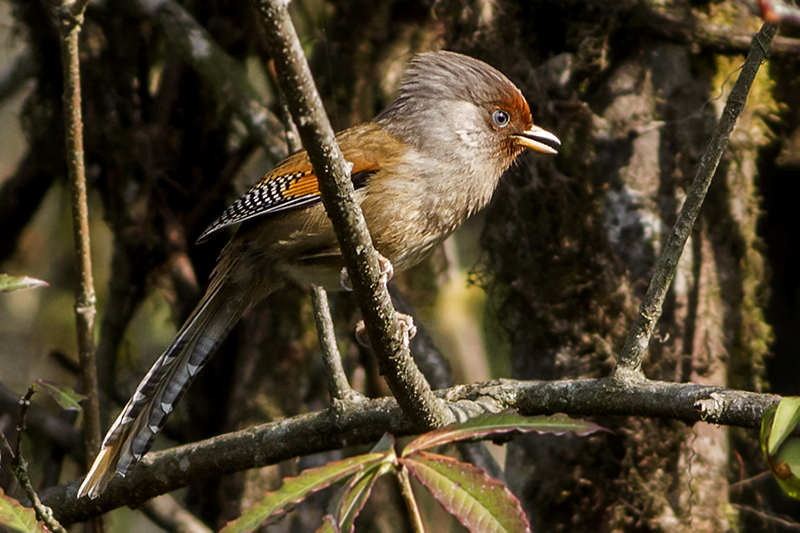
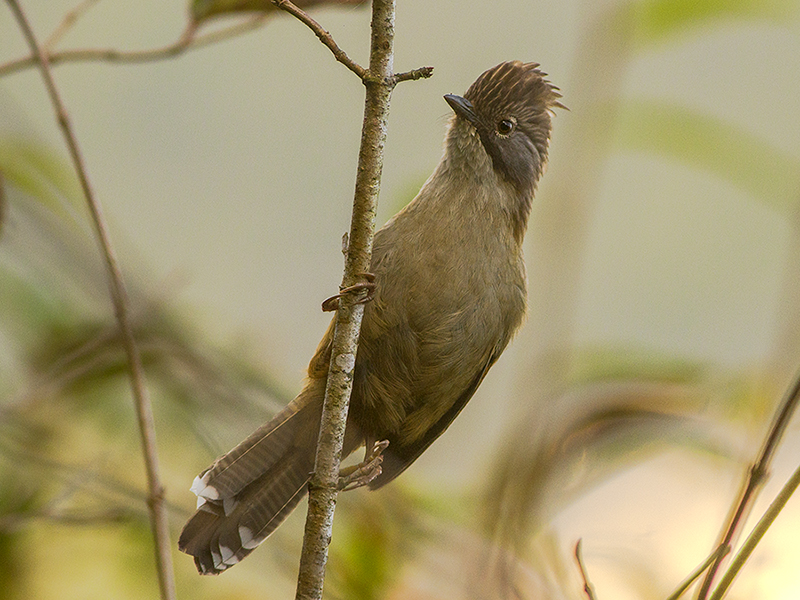
The Rufous-fronted Laughingthrush is easily recognized by its rufous-brown forehead and crown, which contrasts sharply with its otherwise olive-brown plumage. Adults typically measure around 23 cm in length. Males and females exhibit similar plumage, making visual sex differentiation difficult. However, males may slightly outsize females in some instances. Juveniles display a duller version of the adult plumage, lacking the rich hues of mature birds. When observing the Rufous-fronted Laughingthrush, note its robust body, short tail, and rounded wings, which give it a characteristic silhouette. The bird's perching posture is upright, often seen in the middle to lower canopy levels. Some confusion may arise with similar species such as the Chestnut-capped Laughingthrush, but the Rufous-fronted Laughingthrush's distinct forehead color helps in differentiation. In flight, they exhibit a powerful, direct flight pattern with rapid wingbeats, often moving in small family groups.
Having trouble telling birds apart? Upload a photo to our bird identification tool for an instant species match.
Rufous-fronted Laughingthrush Habitat and Range
Preferred Habitat
The Rufous-fronted Laughingthrush inhabits montane forests primarily on the island of Java. These birds prefer altitudes ranging from 1,000 to 2,500 meters, where the climate is cooler and the vegetation denser. They are typically found in primary and secondary forests with thick undergrowth. During the dry season, they may venture slightly lower in elevation in search of food. While predominantly forest dwellers, Rufous-fronted Laughingthrushes are occasionally observed near forest edges but rarely in urban or highly disturbed areas. Their reliance on dense forest cover for foraging and nesting makes them vulnerable to habitat destruction.
Geographic Range
Endemic to Java, the Rufous-fronted Laughingthrush's range is limited to this Indonesian island. They occupy a narrow altitudinal band in the central and western parts of the island, particularly in regions like the Gunung Gede Pangrango National Park and the Dieng Plateau. Population densities are highest in undisturbed montane forests, where they can find ample food and nesting sites. Unlike many bird species, the Rufous-fronted Laughingthrush does not migrate, though it may undertake minor altitudinal movements in response to seasonal changes in food availability.
Want to know which birds visit your area? Browse our backyard birds by location guides for region-specific species lists.
What Does the Rufous-fronted Laughingthrush Eat?
Primarily insectivorous, the Rufous-fronted Laughingthrush consumes a wide variety of insects, including beetles, caterpillars, and ants. During the breeding season, their diet expands to include more protein-rich invertebrates to support the nutritional needs of developing chicks. They also consume fruits and berries, which aid in seed dispersal. Foraging occurs mostly in the undergrowth, where they use their strong beaks to sift through leaf litter and foliage. Their foraging behavior is often cooperative, with family groups working together to locate food. They feed primarily during the early morning and late afternoon, taking advantage of cooler temperatures.
Rufous-fronted Laughingthrush Behavior and Social Structure
Rufous-fronted Laughingthrushes are social birds, often seen in small family groups that communicate through a series of complex vocalizations. They exhibit strong territorial behavior, defending their feeding and nesting areas from intruders. During courtship, males engage in displays that include bowing and wing fluttering, accompanied by soft calls. These birds are diurnal, with peak activity during the early morning and late afternoon. When threatened, they may emit alarm calls to alert group members and often take refuge in dense foliage. Flocking behavior is common during foraging, facilitating efficient food location and providing protection against predators.
Rufous-fronted Laughingthrush Nesting and Reproduction
The Rufous-fronted Laughingthrush builds cup-shaped nests using twigs, leaves, and grasses, often lined with softer materials. Nests are typically positioned in dense shrubs or small trees, usually a few meters off the ground. The breeding season coincides with the onset of the rainy season, ensuring ample food supply for the chicks. A typical clutch consists of 2-3 eggs, which are incubated by both parents for about 14-16 days. After hatching, both parents participate in feeding the chicks, which fledge approximately 14-18 days after hatching. These birds may raise two broods per year under favorable conditions.
Rufous-fronted Laughingthrush Sounds and Vocalizations
The Rufous-fronted Laughingthrush is known for its melodious and complex song, which consists of a series of whistles and chattering notes. The primary song, delivered from a prominent perch, has a rhythmic and cheerful quality. Calls include a variety of chatters used for communication within the flock. Alarm calls are harsher and more abrupt, serving to warn other birds of potential dangers. The dawn chorus is particularly vibrant, with groups often joining together in a cacophony of sound.
Interesting Facts About the Rufous-fronted Laughingthrush
- 1The Rufous-fronted Laughingthrush's vocal repertoire includes over 20 distinct calls, showcasing its complex communication skills.
- 2Despite its vibrant appearance, the Rufous-fronted Laughingthrush blends seamlessly into the dense undergrowth of Java's forests.
- 3This species is a cooperative breeder, meaning multiple adults assist in raising the young, a behavior observed in only 9% of bird species.
- 4Its diet of insects makes it an important player in controlling pest populations within its habitat.
- 5Breeding pairs of Rufous-fronted Laughingthrushes are known to remain together for several breeding seasons, indicating strong pair bonds.
- 6These birds are nearly impossible to spot outside of Java, highlighting their limited geographic range and uniqueness.
- 7The Rufous-fronted Laughingthrush's nest-building skills are so refined that their nests can withstand heavy tropical rains without damage.
Rufous-fronted Laughingthrush Conservation Status
Currently classified as Near Threatened by the IUCN, the Rufous-fronted Laughingthrush faces pressures from habitat loss due to deforestation and agricultural expansion on Java. The population trend is considered to be decreasing, primarily due to these threats. Conservation efforts include habitat protection and restoration projects within key national parks. Historically, the bird benefited from extensive montane forest cover, but ongoing land use changes pose significant challenges. Continued monitoring and habitat management are crucial to ensuring the survival of this species.