Rufous-necked Laughingthrush
Garrulax ruficollis
Order: Passeriformes / Family: Leiothrichidae

Wikimedia Commons
About the Rufous-necked Laughingthrush
The Rufous-necked Laughingthrush, scientifically known as Garrulax ruficollis, is a captivating bird belonging to the Leiothrichidae family. This species thrives in the montane forests of Southeast Asia, from the eastern Himalayas across to southern China and northern Thailand. These birds prefer dense undergrowth, and they exhibit a vibrant rufous coloration on their necks that contrasts with their otherwise olive-brown plumage, making them relatively easy to identify in their natural habitat. Rufous-necked Laughingthrushes are known for their social nature, often seen moving in small, noisy flocks, particularly during the breeding season. They play a vital ecological role in their habitat, aiding in seed dispersal and contributing to the control of insect populations. Their vocalizations, a chorus of chuckles and whistles, are a characteristic sound of their forested environments.
Ecologically, the Rufous-necked Laughingthrush is significant as both a seed disperser and an insect controller. This species' diet largely consists of insects and fruit, which it forages from the forest floor and low vegetation. The bird's foraging behavior involves a combination of ground hops and short flights, which effectively scatter seeds across the forest, promoting plant diversity and growth. During the rainy season, when insects are plentiful, the Rufous-necked Laughingthrushes increase their insect consumption, helping to regulate pest populations. In turn, these birds provide a food source for predators, such as hawks and snakes, maintaining the balance of the ecosystem.
In terms of conservation, the Rufous-necked Laughingthrush is currently listed as a species of Least Concern by the IUCN. However, habitat loss due to deforestation and agricultural expansion poses an ongoing threat. Conservation efforts focus on habitat preservation and the establishment of protected areas to ensure the species' long-term survival. Understanding the ecological importance and challenges facing this species is crucial for developing effective conservation strategies.
The Rufous-necked Laughingthrush belongs to the family Leiothrichidae, within the order Passeriformes. These birds typically live typically 6-9 years with a maximum recorded of 12 years..
How to Identify a Rufous-necked Laughingthrush
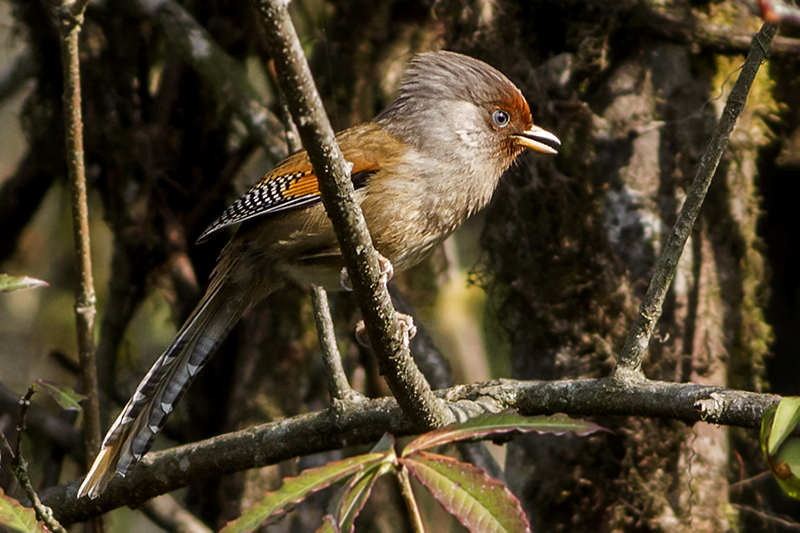
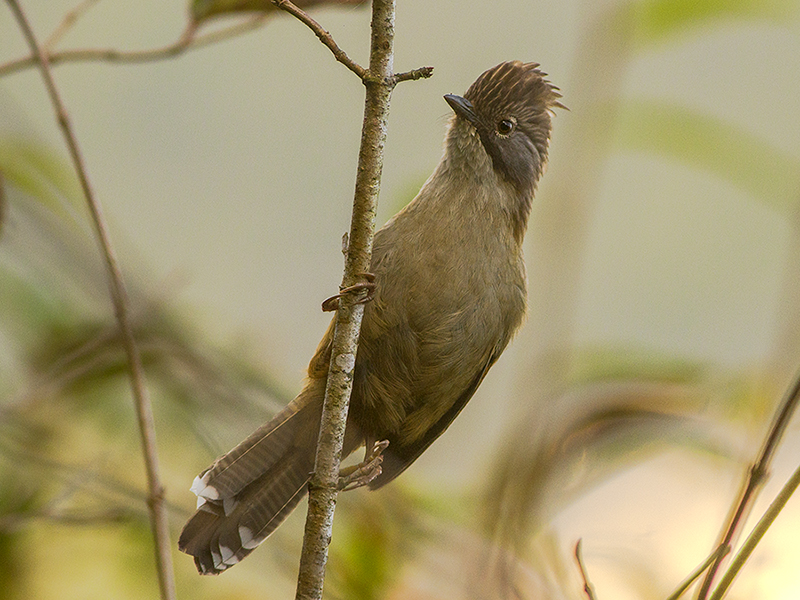
The Rufous-necked Laughingthrush is a medium-sized songbird, measuring approximately 24 to 26 centimeters in length. Its most distinguishing feature is the rich rufous coloring around its neck, which contrasts strikingly with its olive-brown body and wings. The underparts are paler, with a mix of grayish tones, while the tail feathers are dark with a rufous tinge. Adults possess a distinctive white eye-ring, which enhances their alert expression.
Juvenile Rufous-necked Laughingthrushes display duller plumage compared to adults, lacking the pronounced rufous neck, which develops as they mature. Both sexes look similar, making it challenging to distinguish males from females visually. However, during breeding season, males may exhibit slightly brighter plumage.
In flight, the Rufous-necked Laughingthrush shows a robust, rounded silhouette with broad wings and a slightly rounded tail. When perched, it often adopts an upright posture, showcasing its rufous collar prominently. This bird can be confused with other laughingthrush species, but its unique neck coloring and vocalizations help differentiate it. Observers often identify them by their lively calls and the distinctive flash of rufous as they move through the forest undergrowth.
Having trouble telling birds apart? Upload a photo to our bird identification tool for an instant species match.
Rufous-necked Laughingthrush Habitat and Range
Preferred Habitat
The Rufous-necked Laughingthrush thrives in subtropical or tropical moist montane forests. These birds prefer dense undergrowth and are typically found at elevations ranging from 800 to 2500 meters. They inhabit regions such as the eastern Himalayas, parts of southern China, and the mountainous areas of northern Thailand and Vietnam.
Seasonal shifts in habitat are minimal, as these birds are largely resident, maintaining territory year-round. However, they may descend to lower elevations during harsh weather conditions, searching for more abundant food sources. While primarily forest dwellers, Rufous-necked Laughingthrushes occasionally venture into adjacent shrublands or bamboo thickets.
Urban presence is rare, as they favor the secluded, dense environments of rural areas. Conservation efforts to protect their habitat focus on preserving these forested mountainous regions, crucial for maintaining the species' population.
Geographic Range
The Rufous-necked Laughingthrush's range spans the mountainous regions of Southeast Asia, prominently including the eastern Himalayas, parts of southern China, northern Myanmar, and northern Thailand. They are also present in the forests of Vietnam and Laos. While they are not migratory, these birds exhibit some altitudinal movement, particularly during unfavorable weather conditions, descending to lower elevations as needed.
Their breeding range is typically between 800 and 2500 meters in elevation, where they find suitable nesting sites and abundant food supplies. Population densities tend to be higher in undisturbed montane forests, where human impact is minimal. In areas like the Arunachal Pradesh region of India and the Yunnan province in China, these birds are relatively common, though local population sizes may vary.
Despite the stable status in many parts of their range, habitat fragmentation remains a concern, particularly in regions where deforestation for agriculture is prevalent. Efforts to monitor and manage these areas are essential for the species' continued well-being.
Want to know which birds visit your area? Browse our backyard birds by location guides for region-specific species lists.
What Does the Rufous-necked Laughingthrush Eat?
The Rufous-necked Laughingthrush primarily feeds on a diverse array of insects, fruits, and seeds, adapting its diet according to seasonal availability. During the wet season, when insect populations flourish, these birds consume a greater proportion of invertebrates such as beetles, caterpillars, and ants. This diet shift helps regulate insect populations within their habitat.
In drier months, their diet becomes more reliant on fruits and seeds, which they forage from the forest floor or low shrubs. The birds exhibit a unique foraging technique, using their strong beaks to turn over leaf litter and uncover hidden prey, such as small insects and fallen seeds. This ground-foraging behavior is efficient and often performed in small groups, enhancing their ability to locate food.
Their feeding schedule is predominantly diurnal, with peaks in activity occurring during early morning and late afternoon. This timing coincides with the availability of insects and the optimal conditions for seed foraging, ensuring they maximize their energy intake throughout the day.
Rufous-necked Laughingthrush Behavior and Social Structure
Social and vocal, Rufous-necked Laughingthrushes typically form small flocks, ranging from 4 to 10 individuals. These flocks are dynamic, with members interacting through a series of calls and displays that maintain group cohesion and establish social hierarchy.
During the breeding season, territorial behavior becomes more pronounced, with pairs defending specific areas from rivals. Courtship displays involve mutual preening and synchronized vocalizations, strengthening the pair bond. Once paired, they often remain monogamous throughout the breeding period.
Daily activity peaks during the morning and late afternoon, aligning with optimal foraging times. The birds are generally non-migratory, though they may travel locally in response to food availability or environmental conditions. In the presence of predators, such as raptors or snakes, Rufous-necked Laughingthrushes emit loud alarm calls and exhibit evasive flight patterns to deter threats. Their social structure and vocal repertoire play crucial roles in their survival, providing protection and enhancing foraging efficiency.
Rufous-necked Laughingthrush Nesting and Reproduction
Rufous-necked Laughingthrushes construct cup-shaped nests using twigs, leaves, and grass, typically situated in dense undergrowth or low trees. The choice of nesting site offers protection from predators and harsh weather, ensuring the safety of their offspring.
Females lay a clutch of 2 to 4 eggs, with both parents sharing incubation duties. The incubation period lasts approximately 14 to 16 days, during which the parents remain vigilant, taking turns to forage and guard the nest. Once hatched, the chicks are altricial and require significant parental care. Both parents actively feed the chicks, providing a diet rich in insects to support rapid growth.
Fledging occurs around 12 to 14 days post-hatching, but the young remain dependent on their parents for several more weeks. Rufous-necked Laughingthrushes typically produce one to two broods per year, depending on environmental conditions and food availability. Parental roles are well-defined, with both males and females contributing equally to nurturing their offspring, ensuring high survival rates.
Rufous-necked Laughingthrush Sounds and Vocalizations
The Rufous-necked Laughingthrush is renowned for its complex vocalizations, characterized by a series of melodious chuckles and whistles. The primary song consists of a lively sequence of notes with a rhythmic, rolling quality that resonates through their forest habitat.
Call notes are varied, including soft chirps and harsher, more strident sounds used for communication within flocks. Alarm calls, distinct and sharp, alert group members to potential dangers, prompting immediate evasive actions.
During the dawn chorus, these birds engage in exuberant vocal displays, establishing territory and reinforcing social bonds. The laughingthrush's vocal repertoire, while intricate, bears resemblance to the calls of other laughingthrush species but is distinguishable by its unique rhythm and pitch.
Interesting Facts About the Rufous-necked Laughingthrush
- 1The Rufous-necked Laughingthrush can mimic the calls of other bird species, a skill used to communicate and confuse predators.
- 2This species can often be found foraging with mixed-species flocks, benefiting from increased vigilance and foraging efficiency.
- 3Rufous-necked Laughingthrushes are often heard before they are seen, thanks to their distinctive and loud vocalizations.
- 4Despite their social nature, Rufous-necked Laughingthrushes exhibit strong territorial instincts during the breeding season.
- 5Their nests, while appearing haphazard, are strategically placed to offer maximum protection from predators and environmental elements.
- 6These birds play an essential role in their ecosystem by controlling insect populations and dispersing seeds.
- 7The Rufous-necked Laughingthrush is one of the few laughingthrush species with a rufous collar, making it easily distinguishable.
Rufous-necked Laughingthrush Conservation Status
The Rufous-necked Laughingthrush currently holds a status of Least Concern on the IUCN Red List, with populations generally considered stable. However, habitat loss due to deforestation for agriculture and urban expansion poses a significant threat. Conservation efforts focus primarily on habitat preservation, with several regions implementing protected areas to safeguard critical habitats. Community engagement and sustainable land-use practices are also encouraged to mitigate human impact. Historically, the species has experienced fluctuations in population density, largely correlated with environmental changes and human activity. Continued monitoring and adaptive management strategies are essential to maintain healthy population levels and prevent future declines.