
Rufous-vented Warbler
Sylvia subcaerulea
Order: Passeriformes / Family: Sylviidae

Wikimedia Commons
About the Rufous-vented Warbler
The Rufous-vented Warbler, scientifically known as Sylvia subcaerulea, is a small passerine bird belonging to the family Sylviidae. This bird is particularly notable for its presence across diverse regions of sub-Saharan Africa, thriving in countries such as South Africa, Botswana, Namibia, and Zimbabwe. It plays a significant ecological role in these areas, contributing to insect population control and serving as prey for larger avian species. The Rufous-vented Warbler is a common inhabitant of dry savanna, scrubland, and open woodland, where it exhibits a strong affinity for thickets and dense vegetation. Its presence is a reliable indicator of healthy, undisturbed habitats.
Throughout the year, the Rufous-vented Warbler demonstrates various seasonal behaviors. During the breeding season, typically from October to March, these birds become more conspicuous as they engage in vocal displays and territorial defense. Outside of the breeding season, they tend to be more solitary and elusive. Their adaptability to different habitats allows them to persist even in moderately degraded landscapes, though they are most abundant in areas with ample natural cover. The warbler's ability to adapt to both natural woodlands and altered environments, such as agricultural lands, underscores its ecological flexibility and resilience.
The Rufous-vented Warbler contributes significantly to the ecosystem as an insectivore, helping manage insect populations that might otherwise impact vegetation. Furthermore, their nesting habits, which involve using local plant materials, promote the dispersal and growth of native flora. As seed dispersers, they indirectly support plant propagation, ensuring the sustainability of their habitats. Despite being widespread, the Rufous-vented Warbler's reliance on specific vegetation types means that habitat destruction poses a significant threat to its long-term survival. Conservation efforts focus on preserving natural habitats and mitigating the impacts of agricultural expansion and urbanization.
The Rufous-vented Warbler belongs to the family Sylviidae, within the order Passeriformes. These birds typically live average 3-4 years with a maximum recorded of 7 years.
How to Identify a Rufous-vented Warbler
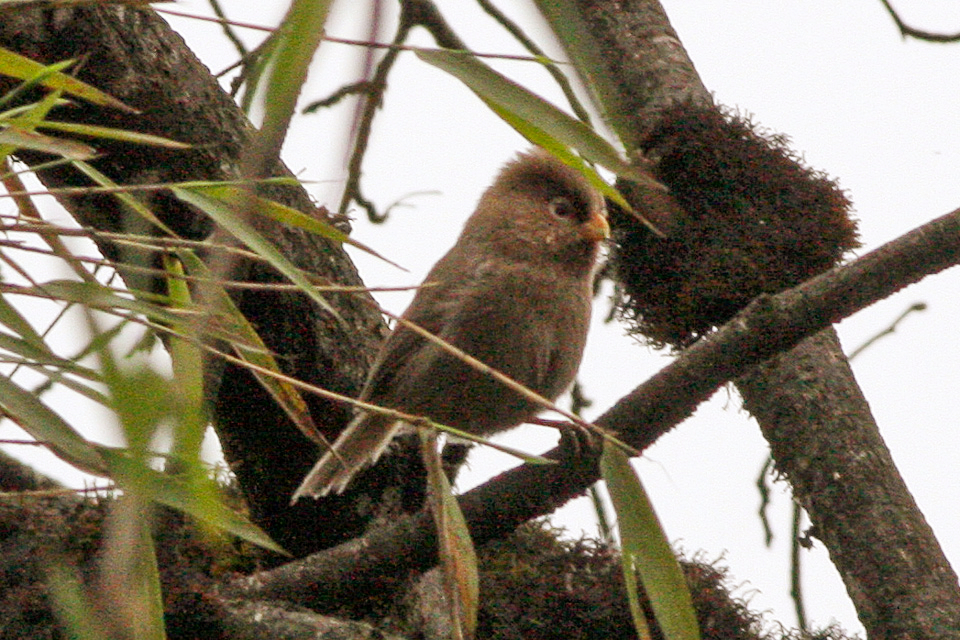
The Rufous-vented Warbler can be identified by its distinctive rufous-colored vent, which contrasts with its otherwise muted plumage. Adult warblers display a primarily grayish-brown upper body, with subtle streaking that blends into their surroundings. The underparts are paler, with a slight buff tinge, particularly on the belly. Juvenile Rufous-vented Warblers are similar in appearance but possess a more pronounced buff-colored wash on their underparts and less defined streaking on their upper body.
There are no significant plumage differences between male and female Rufous-vented Warblers, making visual sex differentiation challenging in the field. The species can be confused with other warblers in the region, such as the African Desert Warbler, but the rufous vent of Sylvia subcaerulea is a distinguishing feature. In flight, the Rufous-vented Warbler appears compact, with rapid wingbeats and a steady flight path.
When perched, the Rufous-vented Warbler often adopts a slightly hunched posture, with its tail held at or below the level of the wings. This posture, combined with its distinctive vent coloration, aids in identification. Observers should note the bird’s preference for dense thickets and scrub, which can provide further clues to its identity.
Having trouble telling birds apart? Upload a photo to our bird identification tool for an instant species match.
Rufous-vented Warbler Habitat and Range
Preferred Habitat
Rufous-vented Warblers inhabit a range of dry savanna and woodland habitats, often favoring areas with dense thickets and undergrowth. They are commonly found in regions such as the Kalahari Desert and the miombo woodlands of southern Africa. These birds are typically present at elevations ranging from sea level to about 2000 meters, depending on the availability of suitable cover.
During the breeding season, the Rufous-vented Warbler may be found in slightly more open areas as they search for nesting sites. However, they still rely on the protection of dense shrubs and small trees. Although they are primarily associated with rural and natural environments, these warblers can occasionally be observed in urban areas where patches of native vegetation are present, such as suburban gardens and parks.
Seasonal habitat shifts are minimal for the Rufous-vented Warbler, as they tend to remain within the same general area year-round. However, slight movements may occur in response to changes in rainfall patterns and food availability, prompting them to explore new territories within their range.
Geographic Range
The Rufous-vented Warbler is predominantly found in the southern parts of Africa, with its range extending across several countries. It breeds in and is a resident of South Africa, Botswana, Namibia, and Zimbabwe, with some populations extending into Angola, Zambia, and Mozambique. This non-migratory bird occupies a relatively stable range, benefiting from the diverse habitats available in the southern African region.
In terms of population density, hotspots include the savannas and woodlands of the Limpopo and Mpumalanga provinces in South Africa, where suitable habitat conditions are abundant. The presence of this species is also notable in the Kalahari region, where it thrives in the semi-arid environment.
While the Rufous-vented Warbler does not exhibit long-distance migrations, it may undertake local movements within its range in response to environmental conditions, particularly during periods of drought or after significant rainfall events. These movements are typically short-range and involve shifts to more favorable habitats rather than true migratory behavior.
Want to know which birds visit your area? Browse our backyard birds by location guides for region-specific species lists.
What Does the Rufous-vented Warbler Eat?
The Rufous-vented Warbler primarily feeds on insects and other small invertebrates, making it an important insectivore within its ecosystem. Its diet consists of beetles, caterpillars, spiders, and ants, which it actively searches for in the undergrowth and among the branches of shrubs and trees. This bird employs a methodical foraging technique, often seen hopping and flitting through dense foliage as it probes leaves and twigs for prey.
During the breeding season, the Rufous-vented Warbler's diet may expand to include larger quantities of protein-rich insects to support the energy demands of chick-rearing. In times of scarcity, they may also consume small amounts of plant material, such as berries or seeds, though this is not a primary food source.
The warbler typically forages throughout the day, with peak activity occurring in the early morning and late afternoon when insect activity is highest. This feeding schedule allows the bird to exploit the cooler parts of the day while avoiding the heat of midday. The Rufous-vented Warbler's role as an insect predator helps maintain the ecological balance by controlling pest populations.
Rufous-vented Warbler Behavior and Social Structure
Rufous-vented Warblers are primarily solitary birds, though they may be seen in pairs during the breeding season. They exhibit strong territorial behavior, with males engaging in vocal displays to defend their territory from intruders. These vocalizations are vital during the breeding season, serving as both a deterrent to rival males and an attraction to potential mates.
Courtship displays involve a combination of song and physical posturing, with males showcasing their agility by hopping between branches and fluffing their feathers to display their rufous vent. Once pair bonds are established, they remain monogamous for the duration of the breeding season.
Outside the breeding season, Rufous-vented Warblers are more secretive and can be difficult to observe. They tend to remain low in the vegetation, foraging quietly and avoiding open spaces. In response to predators, these birds exhibit a freeze response, relying on their camouflaged plumage to remain undetected.
Daily activity patterns are influenced by environmental conditions, with increased activity during cooler parts of the day. The warbler's adaptability to different habitats allows it to adjust its behavior according to the availability of food and cover, ensuring its survival in various landscapes.
Rufous-vented Warbler Nesting and Reproduction
The nesting behavior of the Rufous-vented Warbler involves constructing a cup-shaped nest, typically situated in dense vegetation or a low shrub. These nests are made using locally available materials, including grass, leaves, and fine twigs, with a lining of softer materials such as feathers or plant down. The choice of nest site is crucial, as it provides protection from predators and environmental elements.
The warbler's clutch size generally ranges from two to four eggs, which are incubated primarily by the female for a period of about 12 to 14 days. During this time, the male contributes by providing food and guarding the territory. After hatching, both parents participate in feeding the chicks, which fledge approximately 10 to 12 days after hatching.
The Rufous-vented Warbler may produce one or two broods per year, depending on environmental conditions and food availability. The timing and success of nesting can be influenced by rainfall patterns, as adequate moisture is essential for the growth of insect populations, which are the primary food source for the young.
Rufous-vented Warbler Sounds and Vocalizations
The primary song of the Rufous-vented Warbler is a series of melodious, warbling notes that are delivered in a rapid sequence. The rhythm of the song is consistent, with a slight rise and fall in pitch that creates a pleasant musical quality. These vocalizations are most prominent during the breeding season, as males use their songs to establish and defend territories.
In addition to their song, Rufous-vented Warblers produce various call notes, including a sharp 'chit' or 'tek' sound used for communication between mates or to signal alarm. These calls are typically short and repeated in quick succession when the bird is agitated or threatened.
Alarm calls are more intense and may be accompanied by tail flicking and other visual signals. The dawn chorus behavior of this species is notable, with males often being among the first to sing at daybreak, setting the tone for the morning's avian concert.
Interesting Facts About the Rufous-vented Warbler
- 1The Rufous-vented Warbler is adaptable, thriving across a range of African habitats from open woodlands to dry savannas.
- 2Despite its small size, the Rufous-vented Warbler plays a crucial role in controlling insect populations, acting as a natural pesticide.
- 3This bird's song, a series of melodious notes, can often be heard during the dawn chorus, signifying the start of the avian day.
- 4Rufous-vented Warblers are non-migratory, meaning they remain in their home territories throughout the year, adapting to seasonal changes.
- 5The Rufous vent coloration, a key identification feature, provides a striking contrast to the bird's otherwise muted plumage.
- 6Nesting habits of the Rufous-vented Warbler involve using local plant materials, promoting the dispersal and growth of native flora.
- 7These warblers are often solitary, but during the breeding season, they become more vocal and visible as they defend territories.
Rufous-vented Warbler Conservation Status
The Rufous-vented Warbler is currently listed as a species of Least Concern by the IUCN, with a stable population trend. However, its reliance on specific habitat types makes it susceptible to habitat loss due to agricultural expansion and urban development. The primary threats to this species include deforestation, land degradation, and the conversion of natural landscapes into croplands or settlements. Conservation efforts for the Rufous-vented Warbler focus on habitat protection and restoration, ensuring that key areas of vegetation are preserved and managed sustainably. Awareness programs aimed at promoting the importance of maintaining native flora and fauna also play a role in supporting this species. Historically, population levels have remained relatively stable, though localized declines may occur due to habitat alteration. Continued monitoring and conservation action are essential to ensure the long-term survival of the Rufous-vented Warbler in its natural habitat.
Other Sylviidae Species



Birds Similar to the Rufous-vented Warbler
These species are often confused with the Rufous-vented Warbler due to similar appearance or overlapping range.
