Rufous-winged Antshrike
Thamnophilus torquatus
Order: Passeriformes / Family: Thamnophilidae

Wikimedia Commons
About the Rufous-winged Antshrike
The Rufous-winged Antshrike (Thamnophilus torquatus) is a charismatic bird endemic to the lush forests and dense underbrush of South America. This species is particularly notable for its presence across various countries, including Brazil, Bolivia, and Paraguay, where it inhabits the subtropical and tropical moist lowland forests. The antshrike plays a significant ecological role as both a predator of insects and a prey species for larger birds and mammals, contributing to the intricate web of its ecosystem. In terms of behavior, the Rufous-winged Antshrike exhibits a fascinating pattern of seasonal habits that coincide with the abundance of prey and changes in its environment. During the wet season, when the forest is most verdant and insect populations peak, the antshrike becomes particularly active, showcasing its adept hunting skills. As a resident bird, it does not migrate but may shift slightly in altitude or habitat preference following the availability of resources. The significance of the Rufous-winged Antshrike extends beyond its biological role; it is also an indicator of forest health and biodiversity. Birdwatchers and ecologists often use its presence as a measure of the ecological integrity of an area. With its reliance on dense forest habitats, the antshrike is sensitive to deforestation and habitat degradation, making its conservation a priority in regions undergoing rapid environmental change. The Rufous-winged Antshrike demonstrates a unique adaptation to its environment, perfectly blending into the foliage with its cryptic coloration. However, its rufous wings are a distinctive feature that allows birders to spot it amidst the verdant backdrop. This bird’s resilience and adaptability make it a fascinating subject for study, highlighting the dynamic interplay between bird species and their habitats.
The Rufous-winged Antshrike belongs to the family Thamnophilidae, within the order Passeriformes. These birds typically live 5-8 years in the wild, with a maximum recorded of 10 years..
How to Identify a Rufous-winged Antshrike
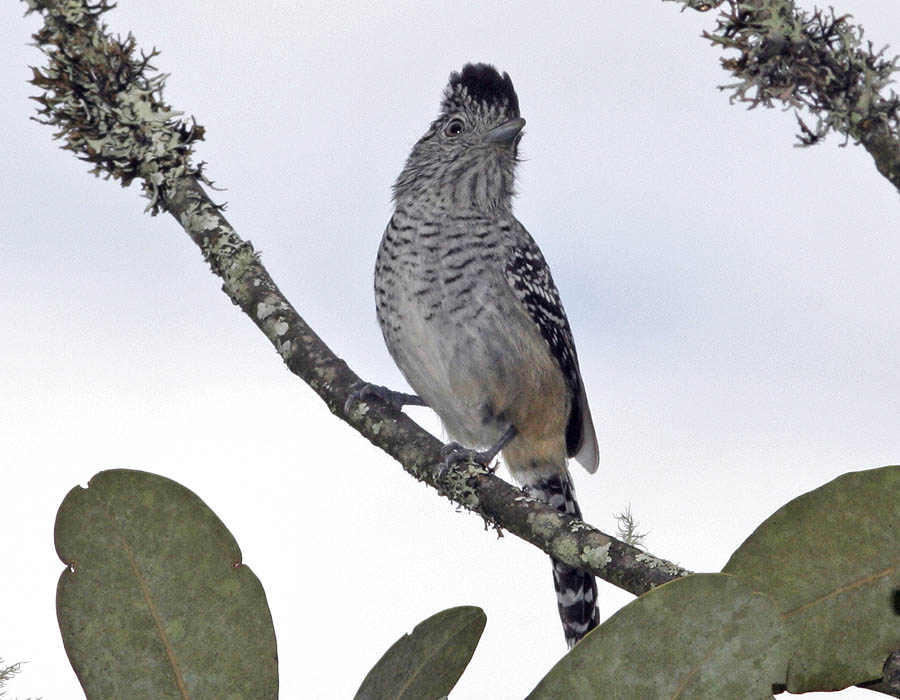
The Rufous-winged Antshrike is a medium-sized bird with a length of approximately 16 centimeters. Its most striking field marks include the distinctive rufous coloring on its wings, which contrast sharply with its otherwise black and white plumage. Adult males and females exhibit some sexual dimorphism; males tend to have more pronounced black barring on their white underparts, while females possess a slightly duller plumage with less barring. Juveniles resemble adult females but with even less distinct markings. One might confuse this antshrike with other members of the Thamnophilidae family, such as the Barred Antshrike, but the rufous wing edges of Thamnophilus torquatus serve as a reliable distinguishing feature. In flight, the Rufous-winged Antshrike displays a somewhat rounded silhouette, with broad wings and a relatively short tail. When perched, it often adopts an upright posture, which, combined with its bold plumage, makes it a striking presence in its habitat.
Having trouble telling birds apart? Upload a photo to our bird identification tool for an instant species match.
Rufous-winged Antshrike Habitat and Range
Preferred Habitat
The Rufous-winged Antshrike predominantly inhabits subtropical and tropical moist lowland forests. It thrives in areas with dense understory vegetation, which provides ample cover for foraging and nesting. In terms of elevation, this species is most commonly found from sea level up to 1,000 meters, though it can occasionally be found at higher altitudes in some regions. While the antshrike primarily resides in rural forested areas, it can sometimes be spotted in secondary growth or degraded forests, showcasing its adaptability to varying degrees of habitat disturbance. Unlike some other bird species, the Rufous-winged Antshrike does not frequent urban environments, preferring the seclusion and resources provided by forested habitats.
Geographic Range
The Rufous-winged Antshrike is primarily found in South America, with a range that encompasses countries such as Brazil, Bolivia, and eastern Paraguay. It is a resident species, with no significant migrations, although it may exhibit local movements in response to seasonal changes in food availability. Within these countries, the antshrike is most commonly associated with the Atlantic Forest biome, one of the most biodiverse and yet highly threatened regions. Population densities vary, with hotspots generally located in regions where the habitat remains relatively intact. Despite habitat fragmentation in some areas, the Rufous-winged Antshrike maintains a reasonably stable presence across much of its range.
Want to know which birds visit your area? Browse our backyard birds by location guides for region-specific species lists.
What Does the Rufous-winged Antshrike Eat?
The Rufous-winged Antshrike primarily feeds on insects and other small invertebrates. Its diet consists of ants, beetles, and caterpillars, which it skillfully extracts from the leaf litter and dense foliage. This antshrike employs a methodical foraging technique, hopping through the underbrush while flicking its wings to flush out prey. During the wet season, when insect populations are at their peak, the antshrike may broaden its diet to include a wider variety of arthropods. Prey size typically ranges from small to medium, allowing the bird to capture and consume its finds efficiently. The Rufous-winged Antshrike engages in feeding throughout the day, with heightened activity in the early morning and late afternoon when temperatures are cooler.
Rufous-winged Antshrike Behavior and Social Structure
The Rufous-winged Antshrike is a predominantly solitary bird, although it may occasionally be observed in pairs or small family groups. Its territorial behavior is pronounced, with both males and females vigorously defending their home range through vocalizations and displays. Courtship involves subtle displays, including wing-flicking and soft vocal exchanges, which strengthen pair bonds. Unlike some other bird species, the Rufous-winged Antshrike does not form large flocks, preferring the solitude or companionship of a mate. When faced with predators, the antshrike exhibits a combination of freezing and evasive maneuvers, relying on its cryptic coloration to blend into the surroundings. Daily activity patterns show a preference for the cooler parts of the day, with mid-day often spent in the shade of dense foliage.
Rufous-winged Antshrike Nesting and Reproduction
The Rufous-winged Antshrike constructs a cup-shaped nest, carefully woven from plant fibers and leaves, and often situated in low shrubs or small trees. Nest placement typically ranges from one to three meters above the ground, providing a balance between concealment and accessibility. The typical clutch size consists of two to three eggs, which both parents incubate for approximately 14 to 16 days. After hatching, the chicks remain in the nest under the watchful care of both parents, who share feeding responsibilities. Fledging occurs about 12 to 14 days post-hatching, although the young often remain dependent on the parents for several weeks thereafter. The Rufous-winged Antshrike commonly raises one to two broods per year, depending on environmental conditions and food availability.
Rufous-winged Antshrike Sounds and Vocalizations
The primary song of the Rufous-winged Antshrike is a distinctive series of sharp, staccato notes that accelerate in tempo, often described as a 'tik-tik-tik-tik' sequence. This song serves as both a territorial marker and a communication tool between mates. Call notes are typically shorter and more subdued, used during foraging or when alerting others to potential threats. Alarm calls are sharp and insistent, designed to alert nearby birds to predators. The Rufous-winged Antshrike participates in the dawn chorus, contributing its voice to the vibrant symphony of the forest.
Interesting Facts About the Rufous-winged Antshrike
- 1The Rufous-winged Antshrike can be difficult to spot despite its distinct plumage, as it often remains motionless when sensing danger.
- 2This species is one of over 200 in the Thamnophilidae family, showcasing incredible diversity among antbirds.
- 3The Rufous-winged Antshrike's ability to adapt to secondary forests makes it more resilient to habitat changes than some other forest-dependent species.
- 4Its diet of primarily ants and beetles helps control insect populations, highlighting its role as a natural pest regulator.
- 5The antshrike's vocalizations are not only a means of communication but also serve as a deterrent to potential intruders in its territory.
Rufous-winged Antshrike Conservation Status
The Rufous-winged Antshrike is currently listed as Least Concern by the IUCN, with a stable population trend. However, habitat destruction due to deforestation and agricultural expansion poses a significant threat to its long-term survival. Conservation efforts focus on preserving and restoring forest habitats, particularly within the Atlantic Forest biome. Historical population changes have been closely linked to habitat availability, with declines occurring in regions experiencing significant deforestation. Continued conservation efforts are crucial to ensure the species remains a vibrant part of its ecosystem.
Other Thamnophilidae Species



Birds Similar to the Rufous-winged Antshrike
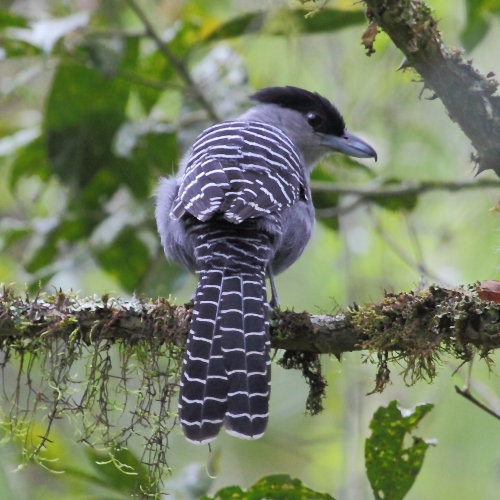
These species are often confused with the Rufous-winged Antshrike due to similar appearance or overlapping range.