Rusty Laughingthrush
Garrulax poecilorhynchus
Order: Passeriformes / Family: Leiothrichidae

Wikimedia Commons
About the Rusty Laughingthrush
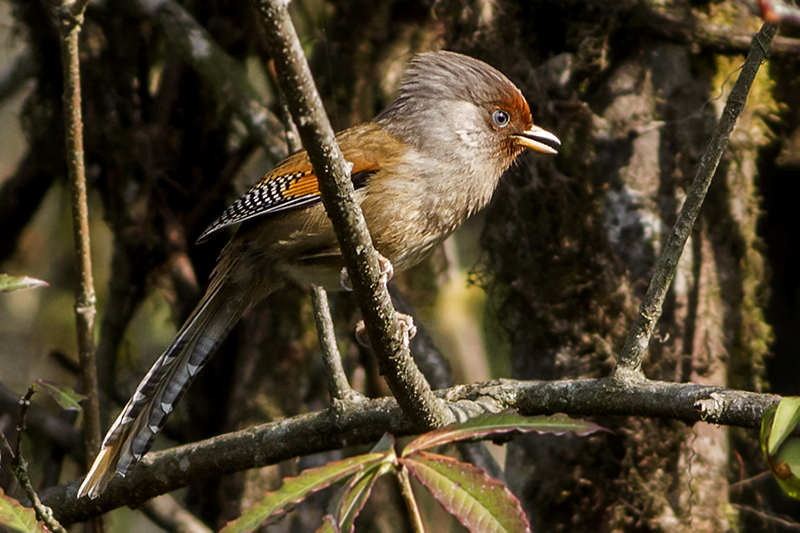
The Rusty Laughingthrush (Garrulax poecilorhynchus), a member of the Leiothrichidae family, is a captivating bird native to Taiwan. This species thrives in dense montane forests, where its rich, rust-colored plumage and distinctive vocalizations make it a prominent figure among the avian community. The bird plays a crucial ecological role in its habitat by acting as both a predator of insects and a disperser of seeds, thus contributing to the maintenance of forest health. During the breeding season, which typically spans from March to May, the Rusty Laughingthrush becomes more vocal and conspicuous as it establishes territories and attracts mates. Outside of this period, it often remains hidden within the dense underbrush, foraging for food and maintaining a relatively low profile. The Rusty Laughingthrush is particularly significant in Taiwanese culture and biodiversity, serving as a symbol of the country's rich natural heritage. Ecologically, it occupies a niche that supports the balance of insect populations and the spread of vegetation. Its presence indicates a healthy, thriving forest ecosystem, and its behaviors reflect the seasonal shifts within its environment. During the winter, the Rusty Laughingthrush may descend to lower elevations in search of food, showing adaptability to changing conditions. This species' ability to adjust its habitat preferences and dietary intake according to seasonal availability underscores its resilience and importance within its ecosystem. Overall, the Rusty Laughingthrush represents a vital component of the forest ecosystems it inhabits, with its behaviors and presence reflecting the health and dynamics of these environments. Conservation efforts aimed at preserving its natural habitat are crucial, as the bird's existence is intrinsically linked to the well-being of Taiwan's montane and subtropical forests.
The Rusty Laughingthrush belongs to the family Leiothrichidae, within the order Passeriformes. These birds typically live typically 5-7 years with a maximum recorded of 10 years..
How to Identify a Rusty Laughingthrush
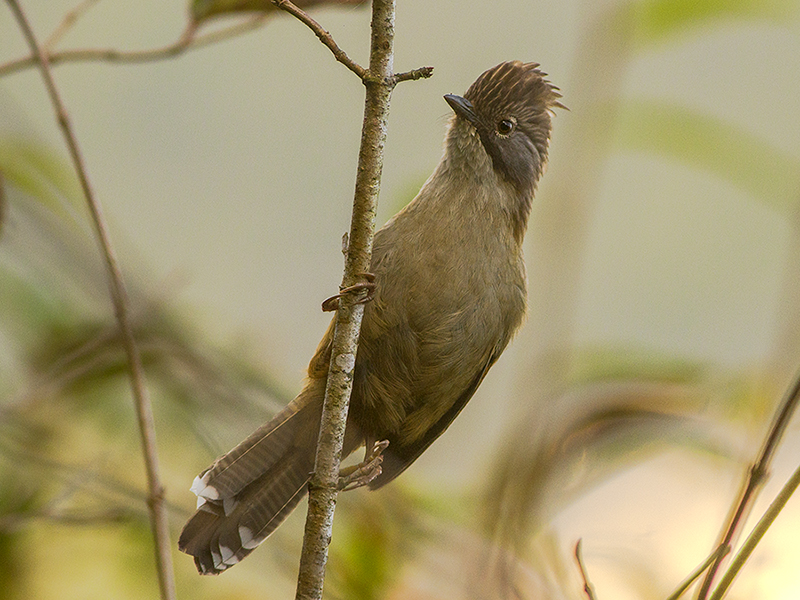
The Rusty Laughingthrush is notable for its distinct rust-colored plumage, which covers most of its body, providing effective camouflage within the forest underbrush. Adults showcase a uniform rust hue with a slightly lighter throat and underparts, while juveniles tend to have a duller appearance with less pronounced coloration. Males and females are similar in appearance, making them difficult to distinguish by plumage alone. Differences between the sexes are usually subtle and more easily observed through behavior during the breeding season. In flight, the Rusty Laughingthrush's silhouette is characterized by broad, rounded wings and a relatively short tail, allowing for agile movement through dense foliage. When perching, it often adopts an upright posture, using its strong legs and claws to grasp branches securely. Compared to similar species, such as the Black-throated Laughingthrush, the Rusty Laughingthrush lacks any dark facial markings, making it easier to identify in the field. Observers should note its distinctive rust coloration, which differentiates it from other members of the Garrulax genus.
Having trouble telling birds apart? Upload a photo to our bird identification tool for an instant species match.
Rusty Laughingthrush Habitat and Range
Preferred Habitat
The Rusty Laughingthrush primarily inhabits dense montane forests, favoring elevations ranging from 1,000 to 2,500 meters. These forests, characterized by thick undergrowth and ample canopy cover, provide the ideal environment for foraging and nesting. The bird thrives in both primary and secondary forests, demonstrating adaptability to various forest types. Seasonal habitat shifts occur as the Rusty Laughingthrush descends to lower elevations during the winter months, seeking areas with more abundant food sources. While predominantly a forest dweller, it occasionally ventures into adjacent rural areas, particularly those near forest edges where it can find additional food resources. Urban encroachment poses a potential threat to its habitat, although the Rusty Laughingthrush tends to avoid heavily urbanized regions.
Geographic Range
The Rusty Laughingthrush is endemic to Taiwan, where it occupies a relatively confined range across the island's mountainous regions. Its breeding territory encompasses the central mountain range, including areas such as Alishan, Taroko National Park, and Yushan National Park. During the breeding season, it remains in these higher elevation forests, taking advantage of the abundant resources and suitable nesting sites. As winter approaches, the Rusty Laughingthrush may migrate to lower elevations, though it does not engage in long-distance migrations typical of many other passerine species. Population density hotspots include regions with extensive forest cover and minimal human disturbance, where the bird can maintain its ecological role effectively. Despite its limited range, the Rusty Laughingthrush is often considered a common species within its suitable habitat zones.
Want to know which birds visit your area? Browse our backyard birds by location guides for region-specific species lists.
What Does the Rusty Laughingthrush Eat?
The Rusty Laughingthrush has a diverse diet that includes insects, fruits, and seeds. Its primary food sources consist of various insects and arthropods, which it skillfully captures among the forest floor litter and foliage. The bird uses its sharp bill to probe into crevices and under leaves, extracting prey with precision. During the breeding season, its diet shifts slightly to accommodate the nutritional demands of raising young, with an increased intake of protein-rich insects. Outside the breeding season, the bird incorporates more fruits and seeds into its diet, taking advantage of the seasonal availability of these resources. The Rusty Laughingthrush typically forages in small groups, which may enhance its ability to locate food and reduce individual predation risk. Its foraging behavior is characterized by deliberate movements and a keen sense of observation, allowing it to exploit a variety of food sources effectively.
Rusty Laughingthrush Behavior and Social Structure
The Rusty Laughingthrush is a social bird, often found in small flocks consisting of family groups. These flocks contribute to their cooperative foraging strategy and collective defense against predators. Territorial behavior becomes prominent during the breeding season, when males engage in vocal displays and physical posturing to establish dominance and attract mates. Courtship displays include elaborate songs and physical gestures, such as wing flicking and hopping. Outside the breeding season, the bird maintains a more subdued presence, focusing on foraging and survival. Its response to predators involves a combination of alarm calls and coordinated flock movements to deter threats. Daily activity patterns show a preference for early morning and late afternoon foraging, taking advantage of cooler temperatures and active insect populations. Throughout the day, the bird may engage in preening and resting within dense foliage, minimizing exposure to potential predators.
Rusty Laughingthrush Nesting and Reproduction
The Rusty Laughingthrush constructs cup-shaped nests using twigs, leaves, and moss, typically placing them in dense undergrowth or low trees to conceal them from predators. Nesting sites are chosen for their proximity to food sources and protection from inclement weather. A typical clutch consists of 3 to 4 eggs, which are incubated primarily by the female for approximately 14 to 16 days. Both parents participate in feeding the chicks, ensuring a steady supply of food to support rapid growth. Fledging occurs about 12 to 14 days after hatching, with young birds remaining dependent on parental care for several weeks. The Rusty Laughingthrush may produce up to two broods per year, depending on environmental conditions and food availability. Parental roles are shared, with both sexes contributing to nest construction, incubation, and chick-rearing.
Rusty Laughingthrush Sounds and Vocalizations
The primary song of the Rusty Laughingthrush is a series of melodious, laughing calls that vary in pitch and rhythm, often described as a chorus of cheerful, bubbling notes. These vocalizations are most prominent during the breeding season, when males use them to establish territory and attract mates. Call notes are shorter and more abrupt, serving as communication between flock members and as alarms in response to potential threats. The bird's alarm calls are sharp and repetitive, effectively alerting others to danger. During the dawn chorus, the Rusty Laughingthrush contributes its distinctive calls to the symphony of sounds in its habitat, reinforcing social bonds and territorial boundaries.
Interesting Facts About the Rusty Laughingthrush
- 1The Rusty Laughingthrush's call resembles human laughter, often described as a series of cheerful, bubbly notes.
- 2This species is endemic to Taiwan, making it a unique component of the island's avian biodiversity.
- 3Despite its bright coloration, the Rusty Laughingthrush is well-camouflaged in its dense forest habitat.
- 4The bird's strong legs and claws allow it to navigate the forest floor and dense underbrush effectively.
- 5Rusty Laughingthrushes are known to form cooperative flocks, enhancing their foraging success and predator defense.
- 6The species plays a crucial role in seed dispersal, aiding in the regeneration of its forest habitat.
- 7Courtship displays involve elaborate songs and physical gestures, highlighting the bird's intricate social behaviors.
Rusty Laughingthrush Conservation Status
The Rusty Laughingthrush is currently listed as Least Concern by the IUCN, with stable population trends. Despite its limited range, the species benefits from the relatively intact forest habitats in Taiwan's protected areas. Primary threats include habitat loss due to development and deforestation, though conservation efforts focus on preserving these critical environments. Historical population changes have been minimal, with the species maintaining a stable presence in its native range. Continued conservation initiatives aim to mitigate habitat fragmentation and ensure the Rusty Laughingthrush's long-term survival.