Scaly Babbler
Turdoides squamulata
Order: Passeriformes / Family: Leiothrichidae

Wikimedia Commons
About the Scaly Babbler
The Scaly Babbler (Turdoides squamulata) is an intriguing species of bird belonging to the family Leiothrichidae. It is predominantly found in the savanna regions of East Africa, specifically in countries such as Kenya, Tanzania, and Uganda. These birds are a significant component of their ecosystem, playing an essential role in seed dispersal and insect population control due to their omnivorous diet. Their presence is a common sight in bushy areas and wooded grasslands where they contribute to the ecological balance by engaging in various foraging activities. The Scaly Babbler is known for its social behavior, often seen in small groups, which helps them efficiently search for food and protect against predators. Their adaptability to different environments, including areas disturbed by human activity, highlights their resilience and ecological importance. During the breeding season, which typically occurs in the wet months, the Scaly Babbler engages in elaborate courtship displays and vocalizations, further emphasizing its role as a dynamic participant in its environment. The Scaly Babbler's ability to thrive in diverse habitats, from rural landscapes to the edges of urban areas, demonstrates its versatility and ecological significance.
The Scaly Babbler belongs to the family Leiothrichidae, within the order Passeriformes. These birds typically live estimated to live around 7-9 years in the wild..
How to Identify a Scaly Babbler
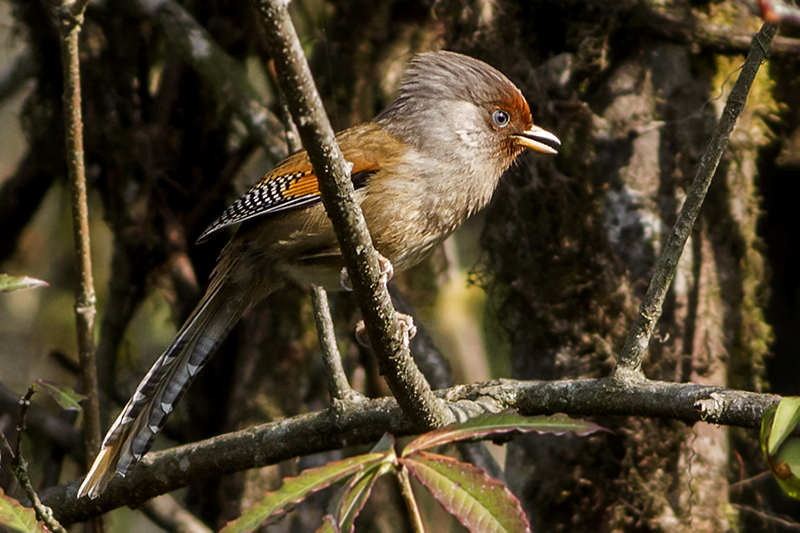
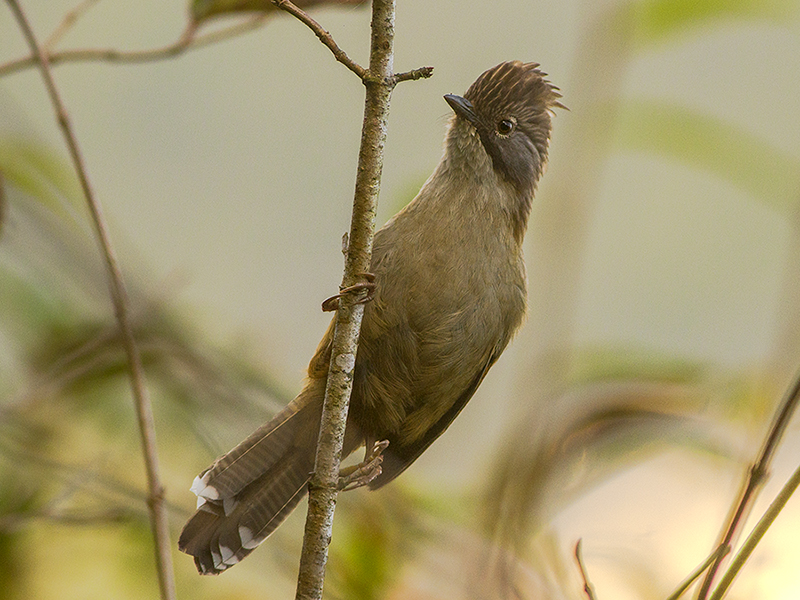
The Scaly Babbler's most striking feature is its scalloped plumage, which appears as a series of dark edges on each feather, giving it a unique scaly appearance. Adults typically exhibit a brownish-gray coloration with a lighter underbelly. The juvenile Scaly Babblers tend to have a slightly duller plumage compared to adults, lacking the distinct scalloped edges that characterize mature birds. Males and females are similar in appearance, making it difficult to distinguish between the sexes by sight alone. In the field, the Scaly Babbler can be confused with other babbler species, but its distinctive plumage pattern and social behavior help in correct identification. In flight, they display a loose, fluttering style with rounded wings, often moving in short bursts from bush to bush. While perched, they maintain an upright posture, often seen engaging in communal preening and vocal communication with group members.
Having trouble telling birds apart? Upload a photo to our bird identification tool for an instant species match.
Scaly Babbler Habitat and Range
Preferred Habitat
The Scaly Babbler predominantly inhabits savanna regions, favoring areas with dense shrubbery and scattered trees. These habitats provide ample foraging opportunities and shelter from predators. They are typically found at elevations ranging from sea level to about 2,000 meters, primarily occupying bushy savannas and open woodlands. During the dry season, they may shift to areas with water sources or more abundant vegetation. While they predominantly occupy rural landscapes, Scaly Babblers have been observed on the fringes of urban areas, indicating a level of adaptability to human-altered environments.
Geographic Range
Scaly Babblers are residents of East Africa, with their range primarily covering Kenya, Tanzania, and Uganda. They do not engage in long-distance migrations, but may exhibit local movements in response to seasonal changes in food availability or habitat conditions. Within their range, they are most commonly found in savanna regions, making them a familiar sight to birdwatchers exploring these areas. The population density of Scaly Babblers is highest in regions where bushy savannas are abundant, providing optimal conditions for foraging and nesting.
Want to know which birds visit your area? Browse our backyard birds by location guides for region-specific species lists.
What Does the Scaly Babbler Eat?
The Scaly Babbler has an omnivorous diet that includes a variety of insects, seeds, and fruits. Their diet is primarily composed of small invertebrates such as beetles, ants, and caterpillars, which they forage for by probing into leaf litter and underbrush. During certain seasons, they supplement their diet with seeds and small berries, which are abundant in their habitat. They employ a cooperative foraging strategy, often working in small groups to disturb leaf litter and uncover hidden prey. This social foraging behavior not only increases their efficiency but also provides safety from predators.
Scaly Babbler Behavior and Social Structure
Scaly Babblers are highly social birds, typically found in groups ranging from five to fifteen individuals. These groups engage in cooperative behaviors such as foraging and predator watch, which enhances their survival chances. They are territorial, often defending their feeding and nesting areas from other groups of babblers. Courtship displays involve both vocalizations and physical displays, including wing flicking and tail spreading. Their daily activities begin at dawn, with groups becoming active in search of food, and continue until dusk when they roost together in dense foliage. When facing predators, they employ alarm calls and group mobbing tactics to deter threats.
Scaly Babbler Nesting and Reproduction
Scaly Babblers build cup-shaped nests using twigs, grass, and leaves, typically situated in dense shrubs or low trees. These nests are often positioned at heights of 1 to 3 meters above the ground to protect against ground predators. The typical clutch size ranges from 2 to 4 eggs, which are incubated for approximately 14 to 16 days. Both parents participate in feeding the chicks, which fledge about 18 to 21 days after hatching. Scaly Babblers may raise two broods in a year, depending on environmental conditions and food availability. Their cooperative breeding behavior often involves other group members assisting in feeding and caring for the young.
Scaly Babbler Sounds and Vocalizations
The Scaly Babbler's vocalizations are a key aspect of its social behavior. Their primary song consists of a series of melodious whistles and chatters that vary in pitch and rhythm. These vocalizations are used for communication within the group and to establish territory. Their call notes are typically sharp and abrupt, serving as alarms when predators are near. During the dawn chorus, Scaly Babblers are particularly vocal, with groups engaging in synchronized singing that reinforces social bonds and territorial claims.
Interesting Facts About the Scaly Babbler
- 1Scaly Babblers often engage in 'allopreening,' where individuals groom each other to strengthen social bonds.
- 2Unlike many birds, Scaly Babblers are cooperative breeders, with multiple group members helping to raise the young.
- 3Scaly Babblers have been observed using their vocalizations to mimic other species, a trait that confuses predators.
- 4Their nests are typically constructed with a mix of plant fibers and animal hair, creating a sturdy yet flexible structure.
- 5The Scaly Babbler's diet shifts seasonally, relying more on fruits during the wet season when insects are less abundant.
Scaly Babbler Conservation Status
The Scaly Babbler is currently classified as Least Concern by the IUCN, with a stable population trend. However, habitat destruction and fragmentation due to agricultural expansion and urban development pose potential threats. Conservation efforts focus on preserving natural habitats through sustainable land-use practices and protected area management. Historically, the species has maintained stable populations due to its adaptability to a variety of habitats, but ongoing monitoring is essential to ensure this trend continues.