
Slender-billed Babbler
Turdoides longirostris
Order: Passeriformes / Family: Leiothrichidae

Wikimedia Commons
About the Slender-billed Babbler
The Slender-billed Babbler, Turdoides longirostris, is a unique species of bird belonging to the Leiothrichidae family. This bird is primarily found in the subtropical and tropical regions of South Asia, thriving in wetland areas. The species is notably present in Nepal, northern India, and Bangladesh. Its ecological role is significant, as it participates in the control of insect populations, thereby maintaining the balance within its habitat. The Slender-billed Babbler's presence in the grasslands and marshes represents a healthy ecosystem, as these birds are sensitive to environmental changes. During the breeding season, which stretches from April to July, these birds become more vocal and active, often forming small family groups. Their behavior and vocalizations are crucial for communication, indicating territory and breeding readiness. Conservationists pay keen attention to the Slender-billed Babbler due to its preference for specific wetland habitats, which are increasingly threatened by human activities. Its survival depends on the preservation of these grassland and marsh environments, which also supports a diversity of other wildlife.
The Slender-billed Babbler belongs to the family Leiothrichidae, within the order Passeriformes. These birds typically live on average, 5-7 years, with some records of up to 10 years..
How to Identify a Slender-billed Babbler
The Slender-billed Babbler can be identified by its distinct long and slender bill, which sets it apart from other babblers. Its plumage is generally brown with lighter underparts, providing effective camouflage in its habitat. Adults have a more uniform coloration, while juveniles may display some streaking on the underparts. There is minimal sexual dimorphism in this species, making males and females look quite similar. When compared to similar species like the Large Gray Babbler, the Slender-billed Babbler's bill is notably thinner and more elongated. In flight, this species exhibits a relatively weak and fluttering flight pattern, often staying close to cover. Its perching posture is upright and alert, allowing it to scan its surroundings for predators and food sources.
Having trouble telling birds apart? Upload a photo to our bird identification tool for an instant species match.
Slender-billed Babbler Habitat and Range
Preferred Habitat
The Slender-billed Babbler is closely associated with wetland habitats, particularly favoring marshes and grasslands with dense vegetation. These habitats provide ample cover and abundant food resources. The bird is typically found at low elevations, usually below 500 meters. There is little evidence of seasonal habitat shifts, as the Slender-billed Babbler appears to be resident in its preferred areas. While it is primarily found in rural environments, some populations may edge into peri-urban areas, especially where suitable wetlands are conserved.
Geographic Range
The range of the Slender-billed Babbler extends across the northern Indian subcontinent. Notably, it breeds in Nepal, the Indian states of Assam and West Bengal, and parts of Bangladesh. The species is non-migratory, preferring to remain within its established territories year-round. Although its distribution is somewhat fragmented, there are population density hotspots, particularly in protected wetland reserves in Assam and the Chitwan National Park in Nepal, where conservation efforts are focused.
Want to know which birds visit your area? Browse our backyard birds by location guides for region-specific species lists.
What Does the Slender-billed Babbler Eat?
The diet of the Slender-billed Babbler primarily consists of insects, which it gleans from the foliage and the ground. During the rainy season, the availability of insects increases, providing a rich food source for this bird. It also consumes seeds and small fruits, supplementing its diet when insect prey is less abundant. The Slender-billed Babbler employs a foraging technique that involves active searching and occasional ground scratching to uncover hidden prey. Feeding occurs throughout the day, with peaks in the early morning and late afternoon when temperatures are cooler.
Slender-billed Babbler Behavior and Social Structure
Slender-billed Babblers exhibit a social structure centered around small family groups, often seen foraging together. They display territorial behavior, especially during the breeding season. Courtship displays are subtle but involve vocalizations and mutual preening. These birds exhibit a degree of flocking behavior, primarily outside the breeding season, when they may join mixed-species flocks. In response to predators, such as raptors, they issue alarm calls and seek cover in dense vegetation. Their daily activity includes periods of rest during the hottest part of the day, with increased activity in the cooler morning and evening hours.
Slender-billed Babbler Nesting and Reproduction
The Slender-billed Babbler constructs cup-shaped nests using grass, leaves, and twigs, typically placing them low in dense shrubbery or reeds. The preferred nesting sites are well-concealed within their wetland habitats. A typical clutch consists of 3 to 4 eggs, which are incubated for about 14 to 16 days. Both parents participate in feeding and caring for the young, which fledge approximately 12 to 14 days after hatching. The species may have one or two broods per year, depending on environmental conditions.
Slender-billed Babbler Sounds and Vocalizations
The primary song of the Slender-billed Babbler is a series of melodious whistles and trills, with a rhythmic and repetitive pattern. These songs serve both to establish territory and attract mates. The bird also produces softer call notes, used for communication within family groups. Alarm calls are sharp and piercing, designed to alert others to danger. During the dawn chorus, the Slender-billed Babbler is particularly vocal, contributing to the soundscape of its wetland environment.
Interesting Facts About the Slender-billed Babbler
- 1The Slender-billed Babbler's long bill is adapted for probing into grass and foliage for insects.
- 2This species is often found in the same habitats as the globally threatened Bengal Florican.
- 3Unlike many other babblers, the Slender-billed Babbler shows limited migratory behavior.
- 4Slender-billed Babblers play a role in seed dispersal by consuming and excreting seeds.
- 5Their alarm calls can alert a variety of other bird species to the presence of predators.
Slender-billed Babbler Conservation Status
Currently, the Slender-billed Babbler is classified as Near Threatened by the IUCN, with a decreasing population trend. The primary threats to this species include habitat loss due to agricultural expansion and wetland drainage. Conservation efforts focus on protecting key habitats and raising awareness about the ecological value of wetlands. Historically, the population has fluctuated with changes in land use, underscoring the need for sustainable habitat management.
Other Leiothrichidae Species


Birds Similar to the Slender-billed Babbler
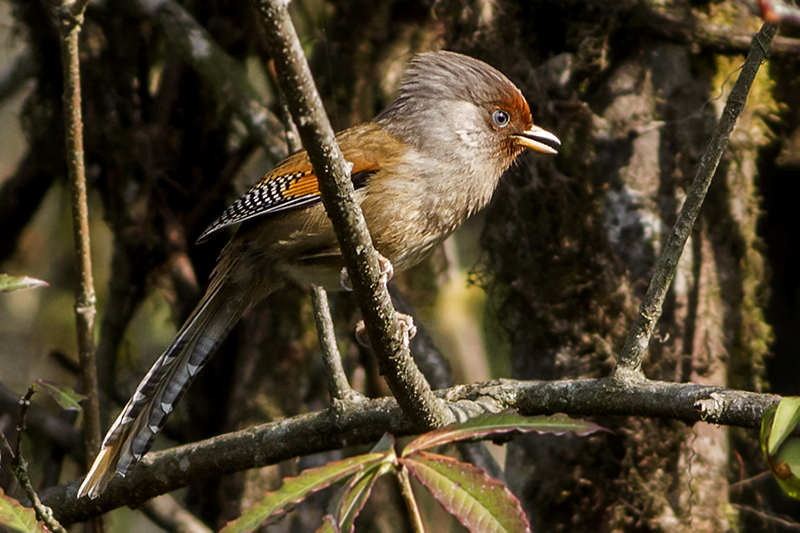
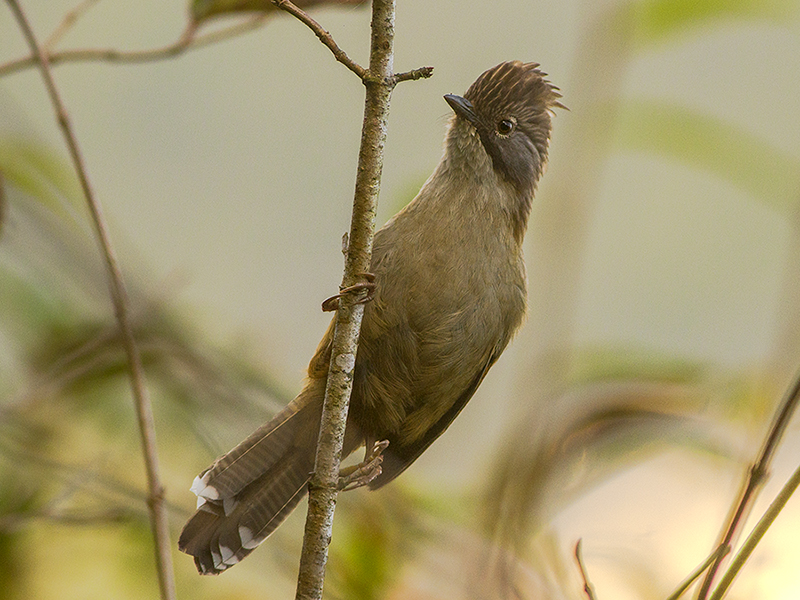
These species are often confused with the Slender-billed Babbler due to similar appearance or overlapping range.
