Snowy-cheeked Laughingthrush
Garrulax sukatschewi
Order: Passeriformes / Family: Leiothrichidae

Wikimedia Commons
About the Snowy-cheeked Laughingthrush
The Snowy-cheeked Laughingthrush (Garrulax sukatschewi) is a striking bird belonging to the family Leiothrichidae. Endemic to the temperate forests of central China, it inhabits the lush undergrowth of montane regions, primarily in Sichuan and Shaanxi provinces. The bird is particularly notable for its vibrant vocalizations and conspicuous white cheeks, which stand in stark contrast to its otherwise darker plumage. The species plays an important role in seed dispersal due to its varied diet, which includes fruits and insects. This activity aids forest regeneration and supports ecosystem diversity.
Known for its gregarious nature, the Snowy-cheeked Laughingthrush often forages in small flocks. These groups are typically composed of family units, which communicate with a series of calls and songs. During the breeding season, these birds exhibit a fascinating array of behaviors, including elaborate courtship displays that involve both visual and auditory signals. Their presence is essential to the health of the montane ecosystems they inhabit, as they contribute to the control of insect populations and the spread of plant species.
Ecologically, the Snowy-cheeked Laughingthrush is adapted to a life in dense undergrowth, where it can exploit a variety of food sources. This adaptability aids its survival through seasonal changes, allowing it to thrive in both the warmer months and the colder winter, when it descends to lower elevations. The bird's resilience and adaptability highlight its significance as a species capable of navigating the challenges posed by its environment.
The Snowy-cheeked Laughingthrush belongs to the family Leiothrichidae, within the order Passeriformes. These birds typically live average 7-9 years, with a maximum recorded of 15 years..
How to Identify a Snowy-cheeked Laughingthrush
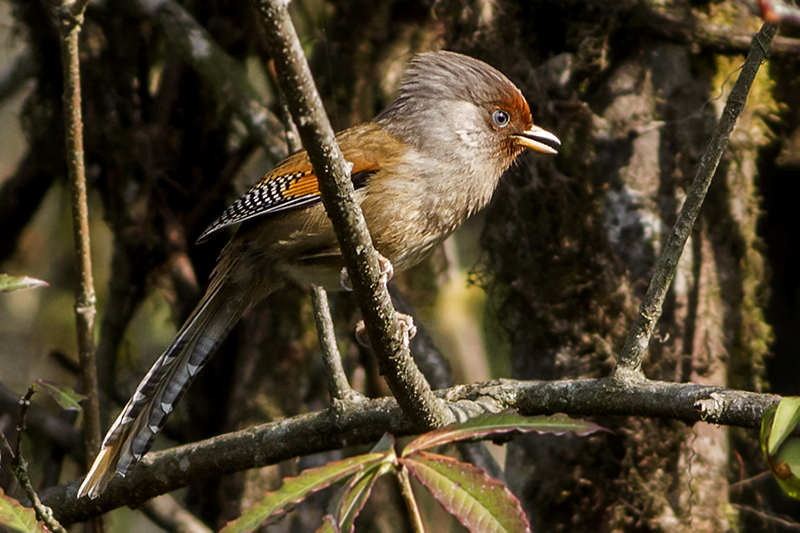
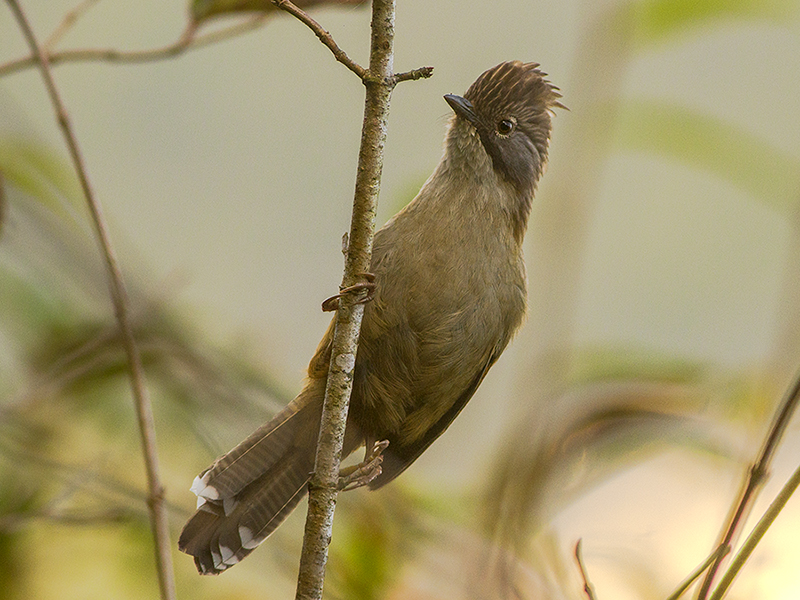
Adult Snowy-cheeked Laughingthrushes are easily recognized by their snowy-white cheek patches, which contrast sharply with the rest of their plumage. Their upperparts are predominantly brown, with a slight rufous tinge, while their underparts are paler, tinged with gray. These birds measure approximately 24 to 27 centimeters in length, placing them in the medium size class among passerines. Both males and females appear similar, with no significant sexual dimorphism, though males can be slightly larger.
Juvenile birds resemble adults but display more subdued coloring, lacking the vividness of the adults' cheek patches. This can lead to some initial confusion, but the overall shape and behavior remain consistent, aiding identification in the field. In flight, the Snowy-cheeked Laughingthrush shows a rounded silhouette with broad wings and a somewhat long tail, which is typical of many thrush-like birds in its family.
When perching, their posture is upright and alert, often seen flicking their tails or moving actively through the underbrush. These field marks, combined with their distinctive vocalizations, make them relatively easy to identify, even in dense forest habitats.
Having trouble telling birds apart? Upload a photo to our bird identification tool for an instant species match.
Snowy-cheeked Laughingthrush Habitat and Range
Preferred Habitat
The Snowy-cheeked Laughingthrush thrives in temperate montane forests, where it favors dense underbrush and thickets. These environments, often found at elevations ranging from 1,500 to 3,000 meters, provide both food resources and shelter. In their preferred habitats, they are associated with broadleaf and mixed forests, which offer a rich supply of fruits and insects.
During the colder months, these birds might migrate slightly downslope to avoid the harshest weather, although they do not undertake long-distance migrations. They are typically absent from urban areas, preferring the secluded and undisturbed mountain forests.
In terms of habitat specificity, the Snowy-cheeked Laughingthrush is particularly reliant on the presence of thick undergrowth, which provides cover from predators and a rich foraging ground. This habitat preference influences their distribution and density, often making them a key species in monitoring forest health.
Geographic Range
The Snowy-cheeked Laughingthrush is primarily found in central China, with its range extending across the provinces of Sichuan and Shaanxi. These regions, characterized by their mountainous terrain, provide the ideal environment for this species. The bird's breeding range is confined to these mountainous forests, where it spends much of its life.
Unlike many other passerine birds, the Snowy-cheeked Laughingthrush does not migrate long distances. Instead, it exhibits altitudinal movements, shifting to lower elevations during winter to escape the coldest conditions. This limited range makes it a species of interest in conservation, as its habitat is susceptible to deforestation and other anthropogenic pressures.
Though not widely dispersed, within its range, the Snowy-cheeked Laughingthrush can be locally common, particularly in protected areas where its habitat remains intact. This limited distribution highlights the importance of conserving the specific montane ecosystems the species relies on.
Want to know which birds visit your area? Browse our backyard birds by location guides for region-specific species lists.
What Does the Snowy-cheeked Laughingthrush Eat?
The diet of the Snowy-cheeked Laughingthrush is diverse, consisting primarily of fruits, seeds, and insects. This omnivorous diet allows it to adapt to seasonal changes in food availability. During the warmer months, it forages for insects, including beetles and caterpillars, which are abundant and provide essential protein.
In autumn and winter, when insect populations dwindle, the bird shifts its diet to include more fruits and seeds. Berries from shrubs and small trees become a crucial food source, aiding in their survival during the leaner months. Their foraging technique is typically ground-based, involving agile movements through the underbrush as they search for food.
The Snowy-cheeked Laughingthrush is a diurnal feeder, most active during the early morning and late afternoon. This schedule allows it to exploit the cooler temperatures and reduced predator activity during these times. The bird's dietary flexibility makes it an important ecological component, helping control insect populations and disperse seeds within its habitat.
Snowy-cheeked Laughingthrush Behavior and Social Structure
The Snowy-cheeked Laughingthrush is a social bird, often seen in flocks ranging from small family groups to larger gatherings of up to a dozen individuals. Within these flocks, they exhibit complex social structures, with individuals maintaining close communication through a variety of calls and songs.
Territorial behavior is prominent during the breeding season, when pairs become more isolated and aggressive towards intruders. Courtship displays are intricate, involving both visual and auditory cues, such as singing and body posturing, to attract mates.
In response to predators, the Snowy-cheeked Laughingthrush employs alarm calls to alert conspecifics, often retreating into dense cover to escape danger. These birds exhibit a diurnal activity pattern, being most active in the early morning and late afternoon. Their day is spent foraging, preening, and socializing, with periods of rest during the hottest part of the day.
Snowy-cheeked Laughingthrush Nesting and Reproduction
Snowy-cheeked Laughingthrushes construct their nests in dense undergrowth or low shrubs, preferring locations that offer concealment from predators. The nests are cup-shaped and crafted from twigs, leaves, and moss, providing a sturdy yet camouflaged home for their offspring.
A typical clutch consists of 3 to 5 eggs, which are incubated primarily by the female for about 14 to 16 days. During this period, the male assists by providing food and defending the territory. Once hatched, the chicks are altricial, requiring significant parental care.
Both parents participate in feeding the young, delivering a diet rich in insects to promote rapid growth. Fledging occurs approximately 14 to 16 days after hatching, although the young remain dependent on the parents for several weeks post-fledging. Generally, the Snowy-cheeked Laughingthrush raises one brood per year, though favorable conditions may allow for a second.
Snowy-cheeked Laughingthrush Sounds and Vocalizations
The vocalizations of the Snowy-cheeked Laughingthrush are varied and melodious, characterized by a series of rich, whistling notes. Their primary song consists of a rhythmic sequence of whistles and trills, which can carry over long distances in their dense forest habitats.
Calls include a sharp 'chak' note, often used in alarm situations to alert others within the flock. During the dawn chorus, their songs are particularly prominent, contributing to the acoustic tapestry of their montane environment. Their vocal repertoire is diverse, with individuals capable of mimicking other species to a limited extent.
Interesting Facts About the Snowy-cheeked Laughingthrush
- 1The Snowy-cheeked Laughingthrush can be found at elevations as high as 3,000 meters, showcasing its adaptation to montane environments.
- 2Despite its striking appearance, the Snowy-cheeked Laughingthrush is often heard before it is seen, thanks to its rich vocalizations.
- 3These birds are known to form loose associations with other bird species during non-breeding seasons, a behavior known as mixed-species flocking.
- 4Their distinctive cheek patches serve as a key field mark, making them stand out even in dense foliage.
- 5The Snowy-cheeked Laughingthrush plays a crucial role in seed dispersal, aiding in the regeneration of its forest habitat.
- 6Although not a long-distance migrant, the species exhibits altitudinal migration, adjusting its range according to seasonal temperatures.
- 7Their nests, often hidden in thick undergrowth, are constructed with precision, using a mix of natural materials for strength and camouflage.
Snowy-cheeked Laughingthrush Conservation Status
The Snowy-cheeked Laughingthrush is currently listed as Near Threatened on the IUCN Red List. Its population trend is considered decreasing due to habitat loss from deforestation and human encroachment. Conservation efforts focus on habitat preservation and the establishment of protected areas. Historically, the bird's population has fluctuated in response to changes in land use policies. Continued monitoring and habitat restoration initiatives are crucial to ensuring its survival. Efforts to curb illegal logging and promote sustainable forest management practices are vital components of its conservation strategy.