
Speckled Mourner
Laniocera rufescens
Order: Passeriformes / Family: Cotingidae

Wikimedia Commons
About the Speckled Mourner
The Speckled Mourner, scientifically named Laniocera rufescens, is a striking bird found primarily in the dense, humid forests of Central and South America. This species belongs to the family Cotingidae, which is renowned for its diversity and vibrant plumage. The Speckled Mourner, however, takes on a more subdued color palette compared to its relatives, with its distinct rufous hue and speckled appearance serving as key identifiers. This bird thrives in the understory of tropical forests, where it plays a vital ecological role as both a predator and a prey species. In terms of geography, the Speckled Mourner's range extends from Honduras in the north, through Nicaragua and Costa Rica, down to western Panama. The bird is most commonly observed in lowland forests, although it can inhabit elevations up to 1,200 meters, particularly in the moist forest regions. The Speckled Mourner is a non-migratory species, thus its presence is a constant in the regions it inhabits, contributing to its ecological stability. During the breeding season, which typically spans from March to June, the Speckled Mourner engages in various courtship behaviors that include vocal displays and subtle plumage movements. These displays are not only significant for mate attraction but also for maintaining territories in the densely populated forests. The bird's sedentary nature means it heavily relies on the local ecosystem for food and nesting sites, making it sensitive to habitat destruction and climate changes. The Speckled Mourner's ecological role extends beyond its immediate survival. As an insectivorous bird, it helps control insect populations, contributing to the health and balance of its forest habitat. It also serves as prey for larger avian predators, thus occupying a middle position in the food web. This makes the conservation of its habitats crucial not only for its survival but also for maintaining biodiversity in the regions where it resides. Understanding the Speckled Mourner's habits, habitat preferences, and ecological contributions provides valuable insights into the complex dynamics of tropical forest ecosystems.
The Speckled Mourner belongs to the family Cotingidae, within the order Passeriformes. These birds typically live typically around 6-8 years, with the oldest recorded at 11 years..
How to Identify a Speckled Mourner
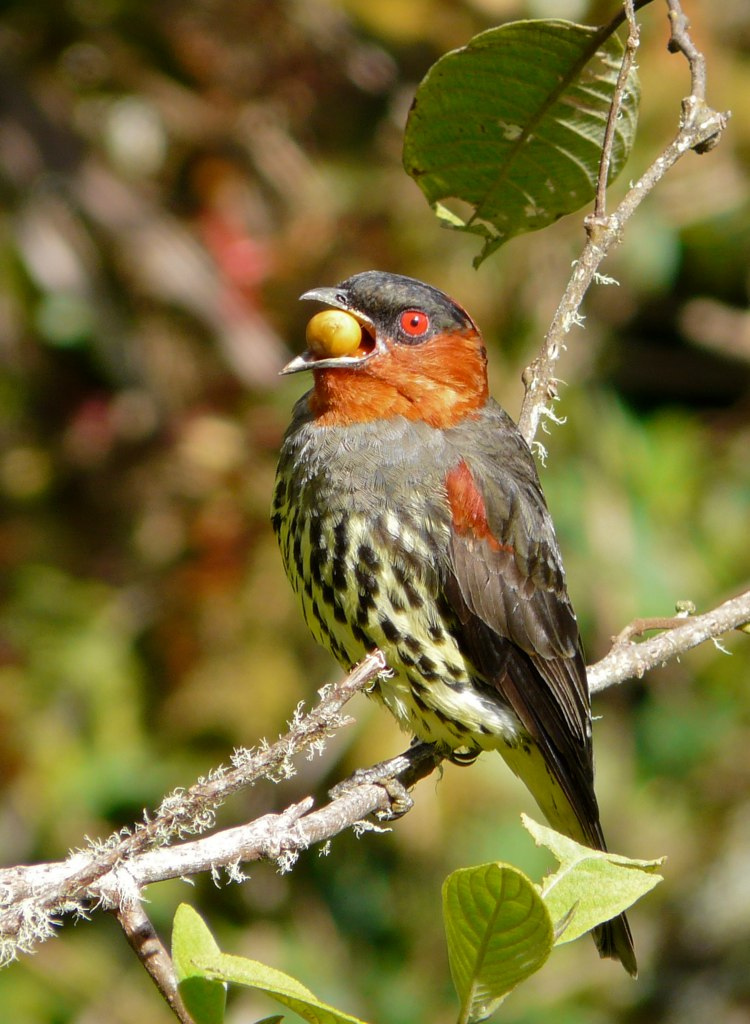
Identifying the Speckled Mourner involves observing its characteristic rufous plumage, which is speckled with small, dark spots. This speckling gives it a mottled appearance, allowing it to blend seamlessly into the forest understory. Adults typically measure around 20-23 cm in length, making them medium-sized within the cotinga family. Both sexes appear similar, with no significant differences in plumage or size, which is somewhat unusual among birds where sexual dimorphism is common. Juveniles exhibit a slightly duller coloration but retain the speckled pattern that is crucial for identification. In flight, the Speckled Mourner displays a broad, rounded wing shape and a short tail, which are adaptations for maneuverability in dense forest environments. When perched, it maintains an upright posture, often remaining motionless for extended periods as it surveys the surroundings. This posture, combined with its distinctive coloration, minimizes the chance of detection by predators and birdwatchers alike. The Speckled Mourner can be confused with other similarly-sized forest birds, such as certain thrushes or flycatchers. However, its consistent speckling and rufous color distinguish it from these groups, which might lack the same degree of patterning. Birdwatchers should note these features carefully, as similar species in the same habitat can easily lead to misidentification without precise observation.
Having trouble telling birds apart? Upload a photo to our bird identification tool for an instant species match.
Speckled Mourner Habitat and Range
Preferred Habitat
The Speckled Mourner thrives in tropical lowland forests, where it prefers the dense understory. This bird is most commonly found in primary forests, which offer the complex structure and diverse resources it requires. While it predominantly inhabits lowland areas, it can be found at elevations reaching up to 1,200 meters, especially in regions with abundant forest cover. Habitat preference includes areas with high humidity and dense foliage, providing cover and ample foraging opportunities. Unlike some bird species that adapt to urban environments, the Speckled Mourner avoids human-disturbed areas, favoring the pristine conditions of untouched forests. Seasonal shifts do not significantly alter its habitat preferences, as it remains within its established range year-round. The conservation of these habitats is critical, given that the bird's survival is closely tied to the availability of its specific forest environment.
Geographic Range
The range of the Speckled Mourner spans from Honduras in Central America through Nicaragua and Costa Rica, reaching as far as western Panama. This distribution mainly follows the Pacific slope, where the bird can find suitable forest habitats. Within these countries, it occupies regions with dense, humid forests, avoiding open and fragmented landscapes. The Speckled Mourner is non-migratory, remaining in its established territories throughout the year. This constant presence contributes to the stability of local ecosystems, as the bird engages in routine activities such as foraging and nesting without seasonal migrations. Population density is highest in areas where forest cover is extensive and continuous, offering the resources necessary for survival. Although not considered globally rare, local population densities can fluctuate based on habitat disturbances, such as deforestation and land conversion. Conservation efforts are crucial to maintain these densely populated hotspots, ensuring the bird's continued presence and ecological role.
Want to know which birds visit your area? Browse our backyard birds by location guides for region-specific species lists.
What Does the Speckled Mourner Eat?
The Speckled Mourner primarily feeds on insects, making it an important predator in controlling insect populations within its forest habitat. Its diet includes a variety of arthropods such as beetles, caterpillars, and spiders. During the breeding season, the bird's dietary needs may expand to include small fruits, providing additional nutrition for its increased energy demands. Foraging behavior involves a methodical approach, with the bird often observed gleaning insects from foliage and bark. It employs a sit-and-wait strategy, perching quietly before making quick, deliberate movements to capture prey. This technique requires a keen eye and precise timing, as the bird capitalizes on the element of surprise. The Speckled Mourner typically forages during the cooler parts of the day, such as early morning and late afternoon, avoiding the midday heat. Prey size is generally small to medium, in line with the bird's relatively modest size and foraging capabilities. Seasonal variations in diet are minimal, as the bird remains within its consistent habitat year-round, relying on the stable availability of forest resources.
Speckled Mourner Behavior and Social Structure
The Speckled Mourner exhibits a solitary and somewhat secretive lifestyle, often remaining hidden within the dense understory of its forest habitat. Its social structure is primarily based on individual territories, with little evidence of flocking behavior outside of the breeding season. Territoriality plays a significant role in its behavior, as both males and females defend their chosen areas from intruders. Courtship displays are subtle, involving vocalizations and slight plumage displays to attract mates. These behaviors are crucial during the breeding season, helping to establish pair bonds and ensure reproductive success. The Speckled Mourner's response to predators is typically passive, relying on its cryptic plumage to avoid detection rather than engaging in active defense or alarm calls. Daily activity patterns revolve around foraging and territory maintenance, with peak activity occurring during the cooler parts of the day. Despite its solitary nature, the Speckled Mourner contributes to the forest community by maintaining ecological balance through its predation and interaction with other species.
Speckled Mourner Nesting and Reproduction
Nesting for the Speckled Mourner involves constructing a small, cup-shaped nest made of twigs, leaves, and other forest debris. These nests are typically located in low shrubs or small trees, positioned to provide cover and protection from predators. The bird's clutch size generally consists of two to three eggs, which the female incubates for a period of approximately 15-17 days. Both parents participate in feeding the chicks, which fledge after about two to three weeks. The fledging period is critical, as it requires the parents to intensively feed and protect the vulnerable young. The Speckled Mourner usually raises one brood per year, although favorable conditions may occasionally allow for a second. Parental roles are shared, with both the male and female involved in nest defense and chick rearing. This cooperative breeding strategy enhances the survival chances of the offspring, ensuring the continuation of the species within its niche habitat.
Speckled Mourner Sounds and Vocalizations
The primary song of the Speckled Mourner is a series of soft, melodious notes delivered in a slow, deliberate rhythm. These notes are low-pitched and resonate gently through the forest, blending harmoniously with the background sounds of the environment. Call notes are simpler and consist of a few short, sharp whistles used for communication between mates or to signal alarm. Unlike some tropical birds, the Speckled Mourner is not known for a loud or complex song repertoire, reflecting its somewhat secretive nature. During the dawn chorus, its calls can be heard as part of the broader symphony of forest sounds, contributing a subtle yet distinct voice to the natural soundscape.
Interesting Facts About the Speckled Mourner
- 1The Speckled Mourner is one of the lesser-known members of the colorful cotinga family, often overshadowed by its more vibrant relatives.
- 2Despite its name, the Speckled Mourner does not exhibit particularly mournful behavior, with its demeanor being more secretive and solitary.
- 3The Speckled Mourner's plumage provides excellent camouflage, a crucial adaptation for avoiding predators in its dense forest habitat.
- 4Unlike many tropical birds, the Speckled Mourner is not migratory, remaining in its preferred habitat year-round.
- 5The Speckled Mourner uses a sit-and-wait foraging strategy, showcasing patience and precision in capturing its insect prey.
- 6This bird's diet primarily consists of insects, but it occasionally eats small fruits during the breeding season.
- 7The Speckled Mourner's territorial calls are less about aggression and more about maintaining communication with mates.
Speckled Mourner Conservation Status
The Speckled Mourner currently holds a conservation status of Least Concern according to the IUCN. However, its population trend shows signs of decline, primarily due to habitat destruction and fragmentation from logging and agricultural expansion. The bird's reliance on pristine forest environments makes it particularly vulnerable to these threats, as it cannot easily adapt to altered landscapes. Conservation efforts focus on protecting and restoring its habitat, emphasizing the importance of maintaining continuous forest cover. Historically, the Speckled Mourner benefited from extensive forest ranges, but modern pressures necessitate targeted conservation strategies to ensure its survival. Protecting these habitats supports not only the Speckled Mourner but also countless other species that share its ecosystem.
Other Cotingidae Species



Birds Similar to the Speckled Mourner
These species are often confused with the Speckled Mourner due to similar appearance or overlapping range.

