Spectacled Barwing
Actinodura ramsayi
Order: Passeriformes / Family: Leiothrichidae

Wikimedia Commons
About the Spectacled Barwing
The Spectacled Barwing, scientifically known as Actinodura ramsayi, is a captivating member of the Leiothrichidae family. This medium-sized passerine bird is renowned for its distinct white eye-rings that give the appearance of wearing spectacles, a feature that is both charming and unmistakable. Native to the montane forests of Southeast Asia, the Spectacled Barwing thrives in the subtropical and tropical moist forests of countries such as Thailand, Vietnam, Laos, and Myanmar. These regions provide the dense canopy and undergrowth that the bird favors, allowing it to forage effectively and nest with security. The ecological significance of the Spectacled Barwing lies in its role as both a predator of insects and a seed disperser, contributing to the control of insect populations and the propagation of plant species. During the breeding season, which typically occurs between March and August, the Spectacled Barwing becomes particularly active, engaging in elaborate courtship displays and nesting activities. Its presence in the ecosystem signifies a healthy forest environment, as it requires a stable and undisturbed habitat to thrive. In non-breeding seasons, the bird demonstrates less territorial aggression, forming small flocks that move through the forest in search of food. This behavior underscores its adaptability and social nature, as it navigates the challenges of fluctuating food availability and climatic conditions. The Spectacled Barwing's adaptability extends to its diet, which varies seasonally. During the wet season, when insects are plentiful, it consumes a wider variety of arthropods, while in drier months, it relies more heavily on available fruits and seeds. This flexible diet not only ensures the bird's survival across seasons but also highlights its role as a critical link in the food web, connecting various trophic levels. Understanding the Spectacled Barwing's ecological role provides insights into the broader health of its habitat, making it an important species for conservationists monitoring forest ecosystems.
The Spectacled Barwing belongs to the family Leiothrichidae, within the order Passeriformes. These birds typically live typically 4-6 years, with some individuals living up to 8 years..
How to Identify a Spectacled Barwing
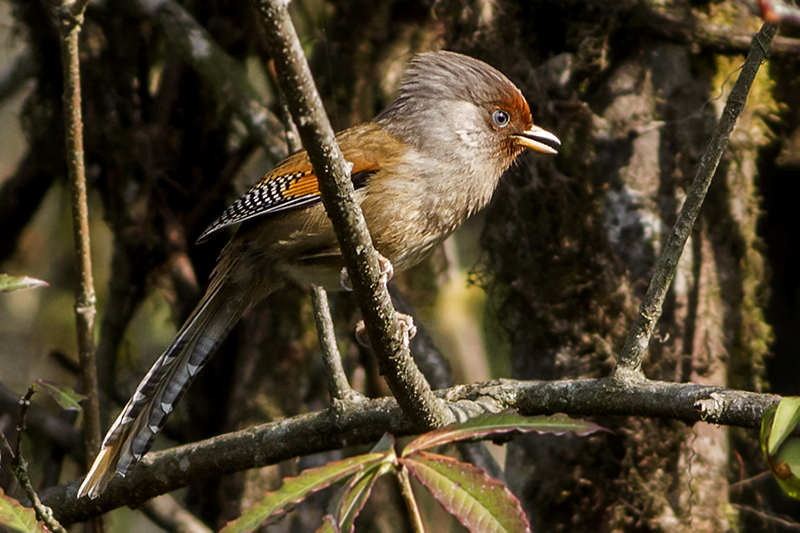
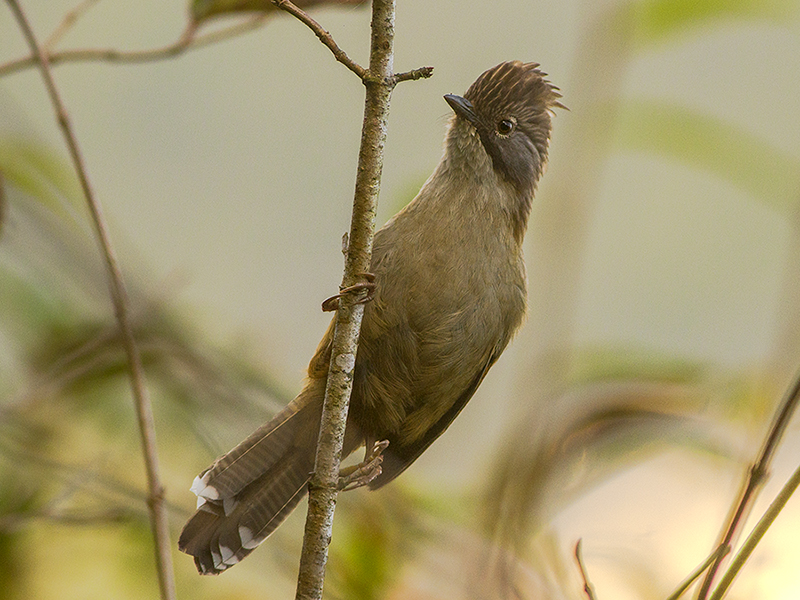
Identifying the Spectacled Barwing involves noting several key characteristics. Adults possess a predominantly brownish-gray plumage, with a distinctive pattern of rufous and black streaks on the wings and tail. The most striking feature is the prominent white eye-rings, resembling spectacles, which contrast sharply against its darker body. Juveniles resemble adults but may have slightly duller plumage and less pronounced eye-rings. Male and female Spectacled Barwings exhibit similar plumage, making it challenging to distinguish sexes in the field. In terms of similar species, the Spectacled Barwing may be confused with other barwing species, but its unique eye-rings and specific wing patterning help to set it apart. When in flight, the bird displays a somewhat rounded silhouette, with broad wings and a long tail that aid in agile maneuvers through dense forest canopies. When perched, the Spectacled Barwing often adopts an upright posture, which, along with its distinctive markings, aids in quick identification.
Having trouble telling birds apart? Upload a photo to our bird identification tool for an instant species match.
Spectacled Barwing Habitat and Range
Preferred Habitat
The Spectacled Barwing is predominantly found in subtropical and tropical moist montane forests. These habitats are characterized by dense vegetation, providing ample cover and food resources. Typically residing at elevations ranging from 900 to 2500 meters, these birds prefer areas where the forest canopy remains relatively intact. In terms of specific locales, the bird is common in the evergreen and semi-evergreen forests of northern Thailand and Vietnam. Seasonal habitat shifts are minimal, as the Spectacled Barwing tends to remain within montane environments year-round. However, minor altitudinal movements may occur in response to seasonal food availability. The species shows limited presence in urban areas, favoring the tranquility and complexity of rural and forested regions.
Geographic Range
The Spectacled Barwing's range extends across several countries in Southeast Asia. It can be found breeding in the montane forests of northern Thailand, Myanmar, Laos, and Vietnam. These regions offer the ideal climatic and environmental conditions for its survival and reproduction. The bird does not engage in long-distance migration, instead remaining in its montane forest habitat throughout the year. Population densities are highest in areas where forest cover remains largely undisturbed, such as the Annamite Range in Vietnam and Laos. Here, the Spectacled Barwing thrives in the rich biodiversity of these forests, contributing to the ecological stability of these regions.
Want to know which birds visit your area? Browse our backyard birds by location guides for region-specific species lists.
What Does the Spectacled Barwing Eat?
The diet of the Spectacled Barwing primarily consists of insects and other arthropods, which it skillfully extracts from the foliage and bark of trees. During the wet season, its diet expands to include a variety of insects such as beetles, caterpillars, and spiders, which are abundant in the lush forest environment. As the dry season approaches and insect availability decreases, the bird shifts its feeding strategy to consume more fruits and seeds. This seasonal dietary flexibility allows the Spectacled Barwing to maintain its energy requirements throughout the year. The bird employs a methodical foraging technique, often seen hopping along branches and using its bill to probe crevices in search of hidden prey. It is most active during the early morning and late afternoon, aligning its feeding schedule with periods of peak insect activity.
Spectacled Barwing Behavior and Social Structure
The Spectacled Barwing exhibits a highly social structure, often forming small groups that forage and move together through the forest. These flocks, usually consisting of 4 to 8 individuals, provide safety in numbers and enhance foraging efficiency. Territorial behavior becomes more pronounced during the breeding season, when pairs defend their nesting sites from intruders. Courtship displays are an integral part of their reproductive behavior, involving vocalizations and physical displays that strengthen pair bonds. The bird's response to potential predators includes alarm calls and rapid, erratic flight patterns to evade capture. Daily activity patterns are diurnal, with peak activities occurring during the cooler hours of the day, particularly around dawn and dusk. The Spectacled Barwing's adaptability to its environment is evident in its flexible social and foraging behaviors, which allow it to thrive in the dynamic montane forest ecosystem.
Spectacled Barwing Nesting and Reproduction
The nesting habits of the Spectacled Barwing are both intricate and resourceful. It constructs a cup-shaped nest using materials like twigs, moss, and leaves, often lined with softer materials for insulation. Nests are typically placed in the forks of small trees or shrubs, at heights ranging from 1.5 to 4 meters above ground, offering protection from ground predators. The typical clutch size consists of 2 to 4 eggs, which are incubated primarily by the female for about 14 to 16 days. Both parents participate in feeding the hatchlings, ensuring a steady supply of food. The fledging period lasts approximately 12 to 14 days, during which the young birds develop the skills necessary for independent survival. The Spectacled Barwing usually raises one brood per year, though under favorable conditions, a second brood may be attempted.
Spectacled Barwing Sounds and Vocalizations
The vocal repertoire of the Spectacled Barwing is varied and distinctive. Its primary song consists of a series of melodious whistling notes that rise and fall in pitch, creating a soothing rhythm that resonates through the forest. Call notes are shorter and sharper, often used for communication between flock members. Alarm calls are more abrupt and harsh, serving to alert others to potential dangers. The Spectacled Barwing participates actively in the dawn chorus, contributing its unique voice to the symphony of forest sounds. Comparatively, its song bears a resemblance to the tuneful notes of thrushes, though with a more complex and varied structure.
Interesting Facts About the Spectacled Barwing
- 1The Spectacled Barwing's white eye-rings are unique among barwings and make it easy to identify.
- 2Despite its distinctive appearance, the Spectacled Barwing is often heard before it is seen due to its dense forest habitat.
- 3The species rarely leaves the canopy, demonstrating its adaptation to life high above the forest floor.
- 4Spectacled Barwings are known for their cooperative breeding habits, occasionally involving older offspring.
- 5Their diet shifts seasonally, showcasing adaptability to the insect-rich wet season and the fruit-reliant dry season.
- 6The bird's flocks can include other species, forming mixed-species foraging groups that enhance food-finding efficiency.
- 7Spectacled Barwings use a range of vocalizations to communicate, from melodious songs to sharp alarm calls.
Spectacled Barwing Conservation Status
The Spectacled Barwing is currently listed as Least Concern by the IUCN due to its relatively stable population across its range. However, localized threats such as deforestation and habitat fragmentation pose significant risks to certain populations. Conservation efforts focus on preserving the montane forest habitats that are critical for the survival of this species. Historical population trends have shown fluctuations in response to habitat changes, emphasizing the need for ongoing habitat protection. Collaborative conservation projects with local communities aim to mitigate the impacts of deforestation and promote sustainable land use practices.