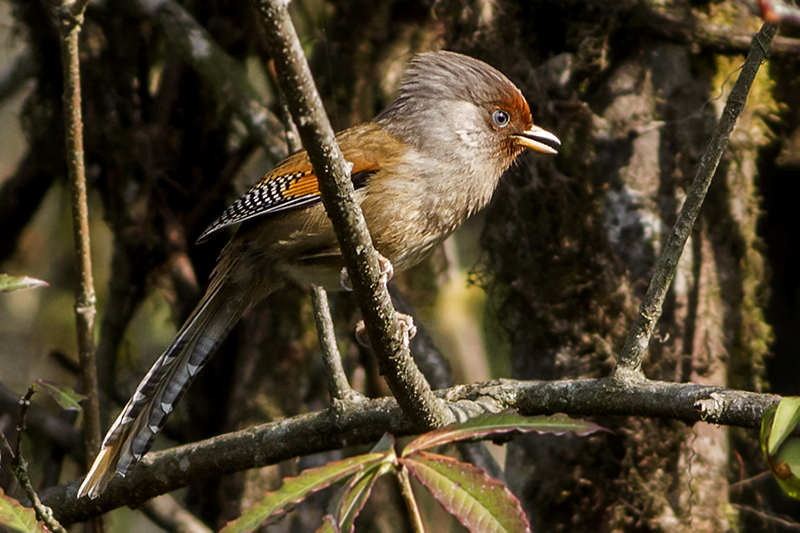
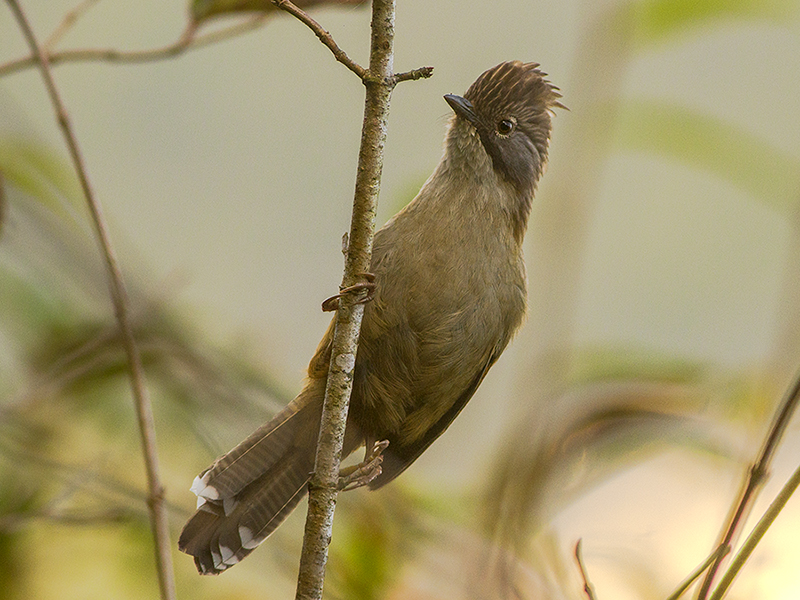
Spot-breasted Laughingthrush
Garrulax merulinus
Order: Passeriformes / Family: Leiothrichidae

Wikimedia Commons
About the Spot-breasted Laughingthrush
The Spot-breasted Laughingthrush, scientifically known as Garrulax merulinus, is a captivating member of the Leiothrichidae family. This bird is mainly found in the subtropical and tropical forests of Southeast Asia, particularly thriving in countries like Vietnam, Laos, and Thailand. Renowned for its melodious and varied vocalizations, the Spot-breasted Laughingthrush often brings life to its dense forest habitat. Its presence signals a healthy ecosystem, as it plays a critical role in seed dispersion and insect control.
In terms of ecological significance, the Spot-breasted Laughingthrush is an integral part of the forest community. It interacts with the environment by consuming a diverse diet, which includes fruits, seeds, and insects. Moreover, this species contributes to the control of insect populations, which helps maintain the forest's ecological balance.
Observing the Spot-breasted Laughingthrush in its natural setting offers insights into its seasonal behaviors. During the breeding season, these birds are more vocally active, using their calls to establish territories and attract mates. Outside of the breeding season, they engage in foraging activities with greater intensity to prepare for the less abundant winter months. Their adaptability to different forest levels, from the understory to the canopy, highlights their versatility in utilizing available resources.
The Spot-breasted Laughingthrush is not only a subject of interest for bird watchers but also for ecologists who study the dynamics of forest ecosystems. Its presence indicates a well-preserved habitat, making it a species of interest for conservation efforts aimed at protecting Southeast Asia's rich biodiversity.
The Spot-breasted Laughingthrush belongs to the family Leiothrichidae, within the order Passeriformes. These birds typically live average 8 years, with a maximum of 12 years recorded..
How to Identify a Spot-breasted Laughingthrush
The Spot-breasted Laughingthrush is a medium-sized bird with a length ranging between 24 and 26 centimeters. Its most distinguishing feature is the pattern of dark spots on its otherwise pale breast. The upper parts of the bird display a warm brown coloration, while the face and throat are adorned with a contrasting white plumage. This white is often accentuated by a subtle grayish tone.
Juvenile Spot-breasted Laughingthrushes have a slightly duller appearance than adults, with less defined spotting on the breast. This can make them harder to identify at a glance, but their behavior and vocalizations often give them away. Males and females look remarkably similar, a common trait among laughingthrushes, making sex identification challenging without observing their behavior during breeding.
In flight, the Spot-breasted Laughingthrush exhibits a steady, flapping style. Its wings are broad and rounded, which allows for agile navigation through dense forest foliage. When perched, this bird often holds its tail slightly cocked, and its posture is alert and upright. It can be confused with other laughingthrush species, such as the Chestnut-capped Laughingthrush, but the unique breast spotting sets the Spot-breasted Laughingthrush apart.
Having trouble telling birds apart? Upload a photo to our bird identification tool for an instant species match.
Spot-breasted Laughingthrush Habitat and Range
Preferred Habitat
The Spot-breasted Laughingthrush primarily inhabits subtropical and tropical moist lowland forests. It favors areas with dense undergrowth, which provide ample cover and foraging opportunities. This bird can be found at elevations ranging from sea level up to 1,500 meters, although it predominantly occupies lower elevations.
Seasonal habitat shifts are minimal as the Spot-breasted Laughingthrush is largely a resident species. However, it may move to slightly higher or lower elevations depending on resource availability and climatic conditions. While it is most commonly associated with forested areas, it occasionally ventures into secondary growth and lightly disturbed habitats, demonstrating some adaptability.
Despite its adaptability, the Spot-breasted Laughingthrush is rarely found in urban or heavily developed areas. It prefers the tranquility and resources that untouched or minimally disturbed forests provide. Its presence is a good indicator of forest health, as it requires a stable habitat with abundant food sources.
Geographic Range
The Spot-breasted Laughingthrush's range is confined to Southeast Asia, where it is a resident species. It does not undertake significant migratory movements, instead remaining within a localized range throughout the year.
Breeding populations are strong in countries like Vietnam, Laos, and Thailand, where suitable forest habitats are abundant. The densest populations occur in the central and northern regions of Vietnam, where the combination of undisturbed forest and favorable climate supports their needs.
While the species does not migrate, it may exhibit minor altitudinal movements in response to seasonal changes in temperature and food availability. This altitudinal shift is most noticeable in mountainous regions where different forest types are available within a relatively small area.
Want to know which birds visit your area? Browse our backyard birds by location guides for region-specific species lists.
What Does the Spot-breasted Laughingthrush Eat?
The diet of the Spot-breasted Laughingthrush is diverse, reflecting its role as an omnivore. The bird primarily consumes a variety of fruits and seeds, which are abundant in its forest habitat. This frugivorous diet is complemented by the consumption of insects, spiders, and other invertebrates, especially during the breeding season when protein requirements increase.
Seasonal changes in food availability influence the diet of the Spot-breasted Laughingthrush. During the wet season, when insects are more plentiful, its diet shifts towards more insectivorous habits. In contrast, the dry season sees a greater reliance on fruits and seeds.
The Spot-breasted Laughingthrush employs a methodical foraging technique, often rummaging through leaf litter and probing into crevices in search of hidden prey. It tends to forage in the early morning and late afternoon, avoiding the heat of midday when prey is less active. The size of prey varies, with a preference for small to medium-sized insects, which are easier to handle and digest.
Spot-breasted Laughingthrush Behavior and Social Structure
The Spot-breasted Laughingthrush exhibits a range of behaviors that are both fascinating and complex. It is a social bird, often seen in small groups or family flocks. These groups are typically composed of 4 to 8 individuals, which helps in cooperative foraging and predator vigilance.
Territoriality is evident during the breeding season, when pairs actively defend their chosen area from intruders. This is achieved through vocalizations and occasional physical confrontations. Courtship displays are subtle, involving mutual preening and soft vocal exchanges between mates.
The Spot-breasted Laughingthrush is diurnal, with peak activity occurring during the early morning and late afternoon. This pattern allows it to maximize foraging efficiency while avoiding the peak heat of the day. In response to predators, the Spot-breasted Laughingthrush relies on its agility and dense cover to evade capture, often retreating into thick vegetation when threatened.
Spot-breasted Laughingthrush Nesting and Reproduction
Nesting for the Spot-breasted Laughingthrush involves constructing a cup-shaped nest made primarily from twigs, leaves, and mosses. This nest is usually situated low in a bush or small tree, well-hidden among dense foliage to protect against predators.
The clutch size typically consists of 2 to 4 eggs, with an incubation period of about 14 to 16 days. Both male and female participate in the incubation process, taking turns to ensure the eggs remain consistently warm.
After hatching, the fledglings are dependent on their parents for food and protection. The fledging period lasts approximately 12 to 15 days, during which time the parents are highly attentive, bringing a variety of food items to the nest. The Spot-breasted Laughingthrush usually raises one to two broods per year, depending on environmental conditions and food availability.
Spot-breasted Laughingthrush Sounds and Vocalizations
The Spot-breasted Laughingthrush is celebrated for its rich and melodious song, which consists of a series of clear, varied whistles and trills. The primary song often carries a rhythmic quality, with a mix of high and low pitches that create a harmonious soundscape.
In addition to its song, the bird produces a range of call notes that serve various functions, including alarm calls and communication between flock members. These calls are typically harsher and more abrupt than the song, often used to signal danger or to maintain group cohesion.
During the dawn chorus, the Spot-breasted Laughingthrush is particularly vocal, filling the forest with its enchanting melodies. Its vocalizations are sometimes compared to the melodic and complex calls of the thrush family, known for their musicality.
Interesting Facts About the Spot-breasted Laughingthrush
- 1The Spot-breasted Laughingthrush is named for its distinctive, laughter-like calls, common among the laughingthrush family.
- 2Despite its vibrant vocalizations, the Spot-breasted Laughingthrush is notoriously difficult to spot due to its preference for dense foliage.
- 3Unlike many bird species, both male and female Spot-breasted Laughingthrushes participate equally in nesting duties, showcasing cooperative breeding behavior.
- 4The Spot-breasted Laughingthrush can often be heard before it is seen, as its song carries well through the forest understory.
- 5This species is non-migratory, meaning it remains in its preferred habitat year-round, unlike many other seasonal birds.
- 6The Spot-breasted Laughingthrush plays a crucial ecological role by controlling insect populations through its varied diet.
- 7Despite its elusive nature, the Spot-breasted Laughingthrush is a favorite among birdwatchers for its distinctive song and striking appearance.
Spot-breasted Laughingthrush Conservation Status
The Spot-breasted Laughingthrush currently holds a status of Least Concern according to the IUCN Red List. However, its population trend is difficult to determine accurately due to its elusive nature and the inaccessibility of its preferred habitats. Primary threats to this species include habitat degradation from logging, agricultural expansion, and development. Despite these challenges, the bird's adaptability to secondary forests provides some resilience against habitat loss. Conservation efforts focus on habitat preservation and monitoring population trends to ensure long-term survival. Protected areas within its range, such as national parks and reserves, play a crucial role in safeguarding its habitat. Historical records suggest stable populations, but ongoing habitat changes could potentially impact future numbers.