
Spotted Crocias
Crocias albonotatus
Order: Passeriformes / Family: Leiothrichidae

Wikimedia Commons
About the Spotted Crocias
The Spotted Crocias, scientifically referred to as Crocias albonotatus, is a bird endemic to the Indonesian island of Java. It occupies a niche within montane forests, predominantly in the west of the island, where it plays a significant role in the ecosystem. This species is part of the Leiothrichidae family, known for their social and complex vocal behaviors. The Spotted Crocias contributes to its habitat by aiding in seed dispersal and insect population control, thus maintaining a delicate ecological balance.
Historically, this bird was considered relatively common within its limited range. However, habitat destruction, particularly due to deforestation for agriculture and urban development, has led to a decline in its population. This makes the Spotted Crocias an important indicator of environmental health in the montane regions of Java. Efforts to conserve its habitat are crucial not just for the Crocias, but also for the myriad of species that share its environment.
The Spotted Crocias exhibits seasonal behaviors that are closely tied to the monsoon cycles of its native region. During the dry season, it tends to remain within dense forest canopies, where it finds shelter and food. In the wet season, its activity often increases, with a greater presence in the mid-canopy as it forages more actively. This seasonal shift highlights the bird’s adaptability and its reliance on the forest's health and resources. As a result, understanding the Spotted Crocias' habits provides insights into the broader environmental dynamics of the Javan montane forests.
The Spotted Crocias belongs to the family Leiothrichidae, within the order Passeriformes. These birds typically live 5-8 years with a maximum recorded of 10 years.
How to Identify a Spotted Crocias
The Spotted Crocias is a medium-sized bird, approximately 22 centimeters in length. It features a predominantly gray-brown plumage, with distinctive white spots dotting its wings and back. This speckled pattern is the bird’s most recognizable trait, providing camouflage among the dappled light of its forest habitat. The bird's underparts are paler, with more subtle spotting.
In adults, the contrast between the white spots and darker feathers is more pronounced, whereas juvenile birds tend to have less distinct markings. Males and females are similar in appearance, making sex differentiation challenging in the field without behavioral observation.
The Spotted Crocias can be confused with other babblers, such as the Chestnut-capped Laughingthrush, although the latter lacks the characteristic spotting. In flight, the Crocias displays a rounded wing silhouette and a relatively short tail, which differentiates it from similarly sized species. When perched, it often adopts an upright posture, enhancing the visibility of its spotted plumage.
Having trouble telling birds apart? Upload a photo to our bird identification tool for an instant species match.
Spotted Crocias Habitat and Range
Preferred Habitat
The Spotted Crocias primarily inhabits montane forests on the island of Java. These forests, situated at elevations of 900 to 2,400 meters, provide the dense canopy that the species prefers. Within this range, the bird frequents areas with thick undergrowth and a rich diversity of flora.
The species shows a marked preference for primary forests, although it can occasionally be found in well-preserved secondary forests. Seasonal shifts in habitat are observed, with the bird retreating to denser forest areas during the dry season for shelter, and expanding its range within the forest during the wet season.
Unlike some bird species that adapt to urban environments, the Spotted Crocias remains largely absent from urban and heavily disturbed areas. Its reliance on intact forest ecosystems underscores the importance of conservation efforts aimed at preserving Javan montane habitats.
Geographic Range
The geographic range of the Spotted Crocias is restricted to the island of Java in Indonesia. Within Java, it is predominantly found in the western montane regions, such as the Mount Halimun-Salak National Park and the Gede Pangrango National Park. These areas serve as the primary strongholds for the species.
The Spotted Crocias does not migrate, which confines its range to these high-altitude forests year-round. Its non-migratory nature means that any changes in habitat conditions, such as deforestation, directly impact its population.
In terms of population density, the bird is most frequently observed in protected areas where the forest remains largely intact. Outside these regions, sightings are rare, highlighting the species' vulnerability to habitat loss and fragmentation. Conservation efforts are therefore concentrated in these key areas to ensure the survival of the Spotted Crocias.
Want to know which birds visit your area? Browse our backyard birds by location guides for region-specific species lists.
What Does the Spotted Crocias Eat?
The diet of the Spotted Crocias primarily consists of insects, spiders, and other small invertebrates. It forages by gleaning prey from leaves and branches within the forest canopy, demonstrating agility and precision. During the wet season, the abundance of insects increases, providing ample food resources.
In addition to invertebrates, the Crocias occasionally consumes fruits and berries, playing a role in seed dispersal within its habitat. This diet diversification is particularly evident during the dry season when insect availability may decrease.
Foraging activity typically peaks in the early morning and late afternoon, coinciding with cooler temperatures and increased prey activity. The bird’s feeding schedule and technique highlight its adaptability and the importance of a healthy forest ecosystem for its survival.
Spotted Crocias Behavior and Social Structure
The Spotted Crocias exhibits a social structure characterized by loose, fluid flocks consisting of family groups. These flocks are generally small, ranging from 4 to 10 individuals, allowing for efficient communication and cooperation during foraging.
Territorial behavior is not strongly pronounced, although flocks tend to maintain a preferred range within the forest. Courtship displays among Spotted Crocias involve a combination of vocalizations and subtle physical gestures, reinforcing pair bonds.
In the presence of predators, the Crocias employs alarm calls to alert fellow flock members, showcasing a sophisticated communication system. Daily activity patterns are diurnal, with heightened activity in the morning and late afternoon. This schedule aligns with the availability of food resources and favorable environmental conditions within their montane forest habitat.
Spotted Crocias Nesting and Reproduction
Nesting for the Spotted Crocias occurs during the wet season, taking advantage of the increased availability of food resources. The nest is typically a cup-shaped structure built using twigs, leaves, and moss, providing camouflage and stability.
Nests are usually located in the fork of a tree branch, often several meters above the ground, offering protection from ground predators. The clutch size ranges from 2 to 3 eggs, with both parents sharing incubation duties.
The incubation period lasts approximately two weeks, followed by a fledging period of around 14 to 16 days. Parental care extends beyond fledging, as young birds remain dependent on their parents for food and protection. The Spotted Crocias generally raises one brood per year, influenced by environmental conditions and resource availability.
Spotted Crocias Sounds and Vocalizations
The vocalizations of the Spotted Crocias are a key aspect of its identification. Its primary song consists of a series of clear, melodious whistles, with a rhythmic pattern that varies slightly among individuals.
The bird’s call notes are sharp and piercing, often used to maintain contact within a flock. Alarm calls, on the other hand, are rapid and harsh, conveying urgency in the presence of potential threats.
During the dawn chorus, the Spotted Crocias is particularly vocal, contributing to the rich acoustic tapestry of the montane forest. Its song can be compared to the clear, flute-like notes of a wood thrush, although with a distinctive cadence unique to the species.
Interesting Facts About the Spotted Crocias
- 1The Spotted Crocias is endemic to Java, making it one of the island's unique avian treasures.
- 2Its diet shift from insects to fruits during the dry season highlights its ecological versatility.
- 3The bird's melodious song is a prominent feature of Java's montane dawn chorus.
- 4Despite its striking appearance, the Spotted Crocias is rarely seen outside protected areas.
- 5The species' reliance on primary forests underscores the importance of habitat conservation.
- 6Spotted Crocias flocks exhibit a high degree of social cohesion, enhancing foraging efficiency.
- 7The bird's presence is an indicator of healthy montane forest ecosystems on Java.
Spotted Crocias Conservation Status
The Spotted Crocias currently holds a conservation status of Vulnerable according to the IUCN Red List. Its population trends indicate a decline, primarily driven by habitat loss and fragmentation due to logging and agricultural expansion. Conservation efforts focus on protecting its remaining habitat within Java’s national parks and promoting sustainable land use practices. These actions aim to stabilize the population and preserve the ecological integrity of its environment. Historically, the species was more widespread, but ongoing habitat degradation has led to its current restricted range. Continued conservation initiatives are essential to prevent further decline and ensure the long-term survival of the Spotted Crocias.
Other Leiothrichidae Species

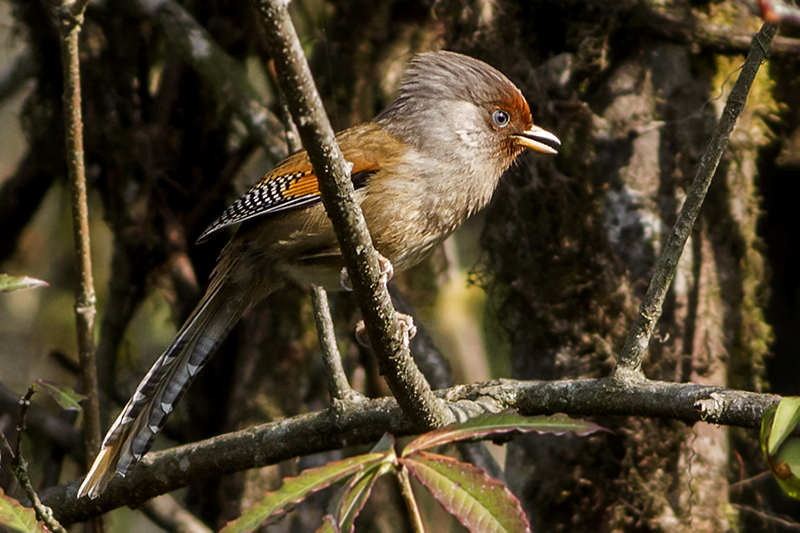

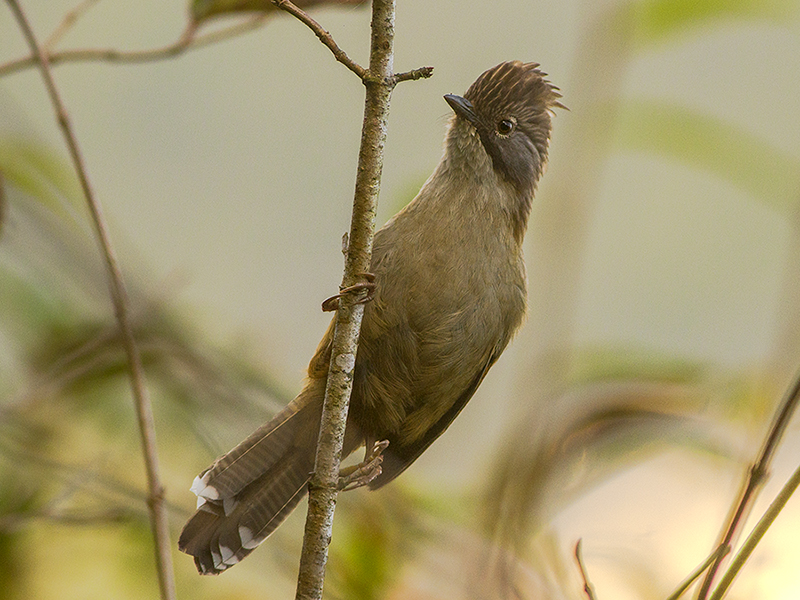
Birds Similar to the Spotted Crocias
These species are often confused with the Spotted Crocias due to similar appearance or overlapping range.

