
Squamate Antbird
Myrmeciza squamosa
Order: Passeriformes / Family: Thamnophilidae

Wikimedia Commons
About the Squamate Antbird
The Squamate Antbird, scientifically known as Myrmeciza squamosa, is a fascinating avian species found primarily in the dense, humid forests of South America. This bird is a member of the Thamnophilidae family, which is known for its diverse array of ant-following birds. The Squamate Antbird thrives in tropical and subtropical regions, particularly in the Atlantic Forest biome of Brazil, where it plays a significant role in the ecosystem by helping control insect populations. Its ecological role is crucial, as it often forages by following army ant swarms, picking off insects and other small invertebrates that attempt to flee the ants. The Squamate Antbird is also known for its striking appearance, characterized by a unique scale-like pattern on its plumage, which gives it its name. The plumage provides excellent camouflage against the forest floor's dappled light and shadows, offering protection from both predators and prey. This bird is non-migratory, maintaining its presence in the same territories year-round. During the breeding season, which typically occurs in the wetter months, the Squamate Antbird becomes more vocal, using its distinctive calls to establish territory and attract mates. As an integral part of the forest ecosystem, the Squamate Antbird acts as both predator and prey, contributing to the intricate web of life that sustains the biodiversity of its habitat.
The Squamate Antbird belongs to the family Thamnophilidae, within the order Passeriformes. These birds typically live average 5 years, with a max recorded of 9 years..
How to Identify a Squamate Antbird
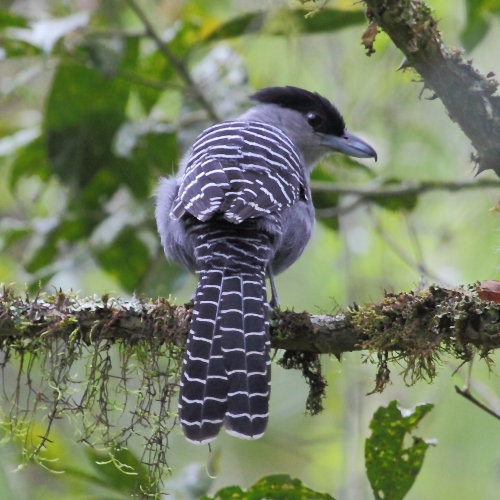
The Squamate Antbird is a medium-sized bird, easily recognized by its unique scale-like pattern on its plumage. Adult males and females exhibit similar coloration, with predominantly gray and brown hues. The upperparts are a deep slate gray, while the underparts feature a lighter gray suffused with a subtle brown tone. The striking scaly pattern, which is especially noticeable on the breast and flanks, distinguishes it from other antbird species. Juvenile Squamate Antbirds tend to have duller plumage, with less pronounced scaling and a more uniform brownish color. This can lead to confusion with other juvenile antbirds, but the Squamate's distinctive posture and foraging behavior help in identification. In the field, pay attention to its perching posture, as it often holds its body horizontally with a slight tail flick. The flight of the Squamate Antbird is typically short and direct, with rapid wingbeats. When perched, the bird is often seen low to the ground, moving through the underbrush with agility as it searches for prey.
Having trouble telling birds apart? Upload a photo to our bird identification tool for an instant species match.
Squamate Antbird Habitat and Range
Preferred Habitat
The Squamate Antbird primarily inhabits the lush, humid forests of the Atlantic Forest in Brazil. It is typically found at low to mid-elevations, rarely venturing above 1,000 meters. This bird prefers dense understory vegetation, where it can find ample cover and food sources. During the wet season, the antbird remains within its established territories, taking advantage of the increased insect activity. Unlike some bird species, the Squamate Antbird does not adapt well to urban environments, maintaining a preference for pristine forest conditions. Its reliance on specific forest habitats makes it vulnerable to deforestation and habitat fragmentation.
Geographic Range
The Squamate Antbird is endemic to the Atlantic Forest region of southeastern Brazil. Its range spans from the state of Bahia in the north to Santa Catarina in the south. This bird does not undertake long migrations, instead maintaining a relatively stable presence within its range throughout the year. Within this area, the population density is highest in regions where the forest remains intact, particularly in protected reserves and national parks. Human activities such as agriculture and urban development have reduced its available habitat, leading to isolated populations.
Want to know which birds visit your area? Browse our backyard birds by location guides for region-specific species lists.
What Does the Squamate Antbird Eat?
The diet of the Squamate Antbird primarily consists of insects and other small invertebrates. It is a highly specialized forager, often following swarms of army ants to capture prey that escapes the advancing ants. This behavior is most commonly observed during the early morning and late afternoon, when ant activity is highest. The bird uses its sharp bill to pick off prey items such as beetles, spiders, and caterpillars from the forest floor. Seasonal changes in its diet are minimal, as the bird relies on the consistent availability of insects within its habitat. Its foraging technique involves a combination of ground feeding and short flights to capture airborne prey.
Squamate Antbird Behavior and Social Structure
Squamate Antbirds are primarily solitary, but during the breeding season, pairs form strong bonds and become highly territorial. Males become particularly vocal, using a series of melodious whistles and calls to establish and defend their territory against rivals. Courtship displays involve a combination of vocalizations and physical displays, such as wing and tail flicking. Squamate Antbirds are diurnal, with peak activity occurring during the cooler hours of the day. When threatened by predators, such as snakes or larger birds, they exhibit evasive maneuvers, often retreating to dense cover. Despite their solitary nature, they may occasionally be observed in loose associations with other ant-following birds.
Squamate Antbird Nesting and Reproduction
The Squamate Antbird constructs a cup-shaped nest, typically using materials such as leaves, twigs, and moss. Nests are usually positioned low to the ground, often in dense underbrush or near the base of a tree. The typical clutch size ranges from 2 to 3 eggs. Both parents share incubation duties, with the incubation period lasting about 14 to 16 days. After hatching, the young are altricial and require significant parental care. Fledging occurs approximately 12 to 14 days post-hatching, with both parents involved in feeding and protecting the chicks. The Squamate Antbird generally produces one brood per year, with the breeding season aligning with the rainy months.
Squamate Antbird Sounds and Vocalizations
The primary song of the Squamate Antbird is a series of clear, melodious whistles, often described as 'pee-pee-pee-pip-pip.' These whistles carry well through the dense forest, serving as both territorial and mating calls. Besides its main song, the Squamate Antbird also produces short, sharp call notes used for communication between mates. Alarm calls are harsher and more rapid, signaling the presence of predators. During the dawn chorus, males are particularly vocal, their songs contributing to the vibrant symphony of the forest.
Interesting Facts About the Squamate Antbird
- 1The Squamate Antbird's distinctive scale-like plumage pattern is unique among antbirds and provides excellent camouflage.
- 2Despite their reliance on army ants, Squamate Antbirds do not consume the ants themselves, focusing instead on other escaping insects.
- 3Males and females share incubation duties equally, a trait not always common in bird species.
- 4The Squamate Antbird's song is often one of the first to be heard in the dawn chorus, marking its territory each morning.
- 5This species is an integral part of the Atlantic Forest ecosystem, contributing to insect population control.
Squamate Antbird Conservation Status
The Squamate Antbird is currently listed as Near Threatened by the IUCN due to ongoing habitat loss and fragmentation. The primary threat to its population is deforestation for agriculture and urban expansion, which reduces available habitat and isolates populations. Conservation efforts focus on protecting remaining forest areas and establishing protected reserves. While the population trend shows a decline, targeted conservation actions, including habitat restoration, offer potential for stabilization. Historically, this species benefitted from the extensive Atlantic Forest, but current pressures necessitate urgent conservation measures.
Other Thamnophilidae Species



Birds Similar to the Squamate Antbird
These species are often confused with the Squamate Antbird due to similar appearance or overlapping range.

