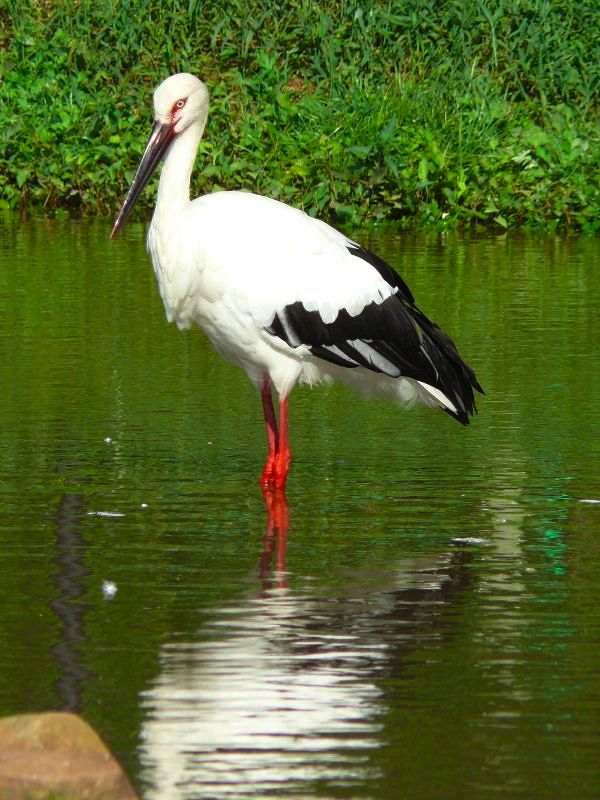
Storm's Stork
Ciconia stormi
Order: Ciconiiformes / Family: Ciconiidae

Wikimedia Commons
About the Storm's Stork
The Storm's Stork (Ciconia stormi) is a large, distinctive member of the Ciconiidae family, recognized for its contrasting black and white plumage. This stork inhabits the dense tropical and subtropical forests of Southeast Asia, primarily in regions like Borneo, Sumatra, and the Malay Peninsula. As one of the world's rarest storks, its presence is confined largely to protected reserves and remote areas, making encounters with this bird a coveted experience for birdwatchers. The survival of the Storm's Stork is increasingly precarious due to habitat destruction and fragmentation, which have led to its classification as Endangered by the IUCN. This species plays a significant ecological role in its habitat, functioning as both a predator and a scavenger. Its diet consists largely of fish, amphibians, and small reptiles, which it hunts with remarkable precision in slow-moving rivers and flooded forests. During the breeding season, which typically aligns with the rainy months, the Storm's Stork becomes more territorial and less conspicuous, focusing its activities around nesting sites in tall trees. The onset of the breeding season sees a slight shift in habitat preference, with individuals often moving to areas with more abundant food supply to sustain their growing families. The Storm's Stork's role in maintaining the balance of its ecosystem cannot be understated. By controlling the populations of various aquatic and semi-aquatic organisms, it helps maintain the health of the wetlands it inhabits. The stork's presence is an indicator of a thriving, biodiverse ecosystem, underscoring the vital importance of conservation efforts aimed at preserving its habitats.
The Storm's Stork belongs to the family Ciconiidae, within the order Ciconiiformes. These birds typically live average 20 years with a max recorded of 25 years.
How to Identify a Storm's Stork
Adult Storm's Storks are unmistakable with their stark contrast of white underparts and black upperparts, including the wings and back. This coloring extends to their black tail and face, which is accentuated by a striking red bill and bare skin around the eyes, enhancing their visual appeal. In flight, their broad wings and outstretched neck create a silhouette typical of storks, but the unique coloration helps differentiate them from other species in the region. Juveniles are similar but tend to have duller plumage and a less vivid bill color, lacking the full brilliance of mature adults. There is little sexual dimorphism in this species, with males and females appearing similar in size and coloration, though males may be slightly larger. Compared to other storks, the Storm's Stork can occasionally be confused with the Woolly-necked Stork, but the latter lacks the distinctive red bill and face. When perched, this stork maintains an upright posture, often seen perched on branches near water bodies, scanning for potential prey.
Having trouble telling birds apart? Upload a photo to our bird identification tool for an instant species match.
Storm's Stork Habitat and Range
Preferred Habitat
Storm's Storks primarily inhabit lowland tropical and subtropical forests, often found near slow-moving rivers, swamps, and freshwater marshes. These birds prefer dense vegetation that provides ample cover and a supply of aquatic prey. They are usually found at elevations ranging from sea level to about 300 meters, though they occasionally venture higher. Seasonal shifts in habitat are minimal, but during the breeding season, they may move to areas with increased food availability to support their young. Unlike some stork species, the Storm's Stork is not commonly found in urban environments, preferring the seclusion of unspoiled natural landscapes.
Geographic Range
The Storm's Stork is endemic to Southeast Asia, with its range including parts of Malaysia, Indonesia, and Thailand. In Malaysia, it is primarily found in the states of Sabah and Sarawak on the island of Borneo. In Indonesia, populations exist in Sumatra, particularly in the remaining lowland forests. This stork's range is highly fragmented, with limited breeding and foraging areas due to extensive deforestation. It is not a migratory species, tending to remain within its core range throughout the year, with only localized movements in search of food or nesting sites. Population densities are greatest within protected areas where habitat conditions remain favorable.
Want to know which birds visit your area? Browse our backyard birds by location guides for region-specific species lists.
What Does the Storm's Stork Eat?
The diet of the Storm's Stork primarily consists of fish, amphibians, and small reptiles, which it catches in the shallow waters of its wetland habitats. During the wet season, when water levels rise, the stork's foraging activities increase as it takes advantage of the influx of aquatic prey. It employs a stealthy approach, standing motionless or slowly stalking its prey before striking with precision using its sharp bill. The Storm's Stork may also consume crustaceans and insects, particularly during periods when its preferred prey is less abundant. Its feeding schedule is largely influenced by the availability of prey, with increased activity observed during early morning and late afternoon.
Storm's Stork Behavior and Social Structure
The Storm's Stork exhibits a solitary or paired lifestyle, rarely forming large flocks unlike some of its relatives. During the breeding season, pairs become territorial, defending their nesting sites aggressively against intruders. Courtship displays are subtle, often involving mutual preening and bill clattering. After establishing a nest, the stork becomes more elusive, minimizing activities that would draw attention to its location. In response to predators, Storm's Storks employ distraction displays or take flight to lead threats away from the nest. Daily activities revolve around foraging and nest maintenance, with periods of rest during the hottest parts of the day.
Storm's Stork Nesting and Reproduction
Storm's Storks build large stick nests high in the canopy of tall trees, often near water bodies. The choice of nest site is critical for protection against ground predators and to provide a vantage point for foraging. A typical clutch consists of two to four eggs, with incubation lasting approximately 30 days. Both parents share incubation duties, ensuring the eggs remain at an optimal temperature. Once hatched, chicks remain in the nest for about two months, during which time they are fed regurgitated food by both parents. The fledging period extends beyond this, with young storks gradually gaining independence over several weeks. Typically, the species raises one brood per year, though successful breeding is heavily reliant on favorable environmental conditions.
Storm's Stork Sounds and Vocalizations
The Storm's Stork is relatively quiet compared to other stork species, but it does produce a range of low, guttural calls, particularly during the breeding season. These calls serve as communication between mates and as territorial signals to other storks. The primary call can be described as a deep, resonating croak, which is sometimes accompanied by bill clattering during courtship displays. Alarm calls are harsher and more abrupt, serving to warn of nearby predators. While not known for a dawn chorus, the Storm's Stork's calls are most often heard at dawn and dusk, times when the birds are most active.
Interesting Facts About the Storm's Stork
- 1The Storm's Stork is one of the rarest storks in the world, with fewer than 500 individuals estimated to remain in the wild.
- 2Named after the British naturalist Frederick Storm, it was first described scientifically in 1875.
- 3Unlike many stork species, the Storm's Stork does not form large flocks, preferring to live solitarily or in pairs.
- 4Despite its flashy plumage, the Storm's Stork can be incredibly elusive, often hidden within dense forest canopies.
- 5The red coloration on its bill and face is not just for show; it intensifies during the breeding season as a sign of readiness to mate.
- 6Storm's Storks are considered indicators of healthy wetland ecosystems, reflecting the quality of their habitat.
- 7Their primary method of hunting involves standing motionless in water, a strategy that requires patience and precision.
Storm's Stork Conservation Status
The Storm's Stork is currently classified as Endangered by the IUCN, with population numbers continuing to decline. The primary threats to this species are habitat loss due to deforestation and conversion of wetlands for agriculture and development. Conservation efforts focus on habitat protection and restoration, with several key populations residing in protected areas in Borneo and Sumatra. Historical population declines have been significant, necessitating international cooperation to ensure the survival of this rare and ecologically important bird. Continued monitoring and research are vital to understanding and mitigating the threats faced by the Storm's Stork.
Other Ciconiidae Species


Birds Similar to the Storm's Stork
These species are often confused with the Storm's Stork due to similar appearance or overlapping range.