Tibetan Babax
Ianthocincla koslowi
Order: Passeriformes / Family: Leiothrichidae

Wikimedia Commons
About the Tibetan Babax
The Tibetan Babax, Ianthocincla koslowi, is an intriguing member of the Leiothrichidae family, known for its distinctive vocalizations and gregarious behavior. This bird is endemic to the high-altitude regions of the Tibetan plateau, specifically found in parts of western China, including the provinces of Qinghai and Tibet. It thrives in mountainous terrain, where it inhabits scrublands and thickets at elevations of 3,000 to 5,000 meters. The Tibetan Babax plays a vital role in the ecosystem, assisting in seed dispersal and insect population control. These birds are primarily non-migratory, exhibiting only minor altitudinal movements in response to harsh winter conditions. During these colder months, they may descend slightly to more sheltered areas, though they remain within their mountainous confines. Social by nature, Tibetan Babaxes often congregate in groups, performing complex vocalizations to communicate and establish social bonds. Their calls and songs are a crucial aspect of their daily lives, used for territory establishment and maintenance of group cohesion. The bird's presence in the Tibetan plateau highlights its adaptability and significance within its native habitat. The Tibetan Babax contributes to the biodiversity of the region, interacting with other local fauna and responding to the seasonal availability of resources. Understanding the ecological role of the Tibetan Babax offers insight into the complex dynamics of high-altitude ecosystems, underscoring the importance of preserving these unique environments.
The Tibetan Babax belongs to the family Leiothrichidae, within the order Passeriformes. These birds typically live average 7-10 years with max recorded 13 years.
How to Identify a Tibetan Babax
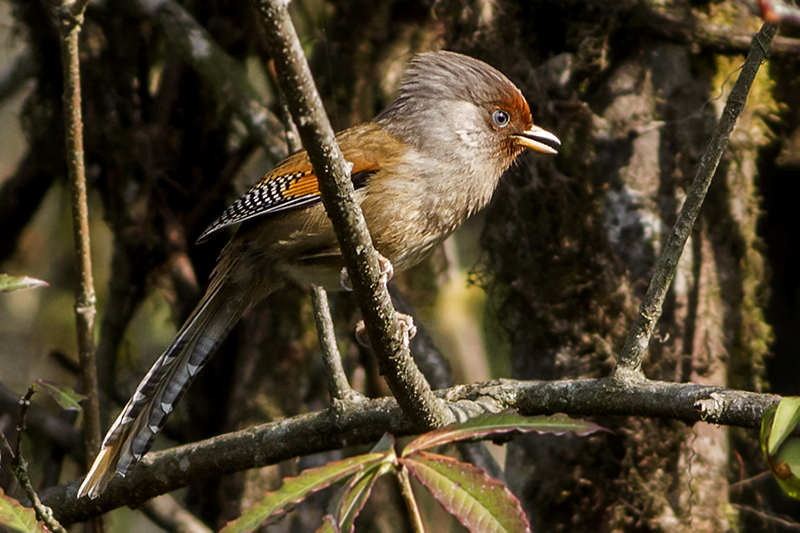
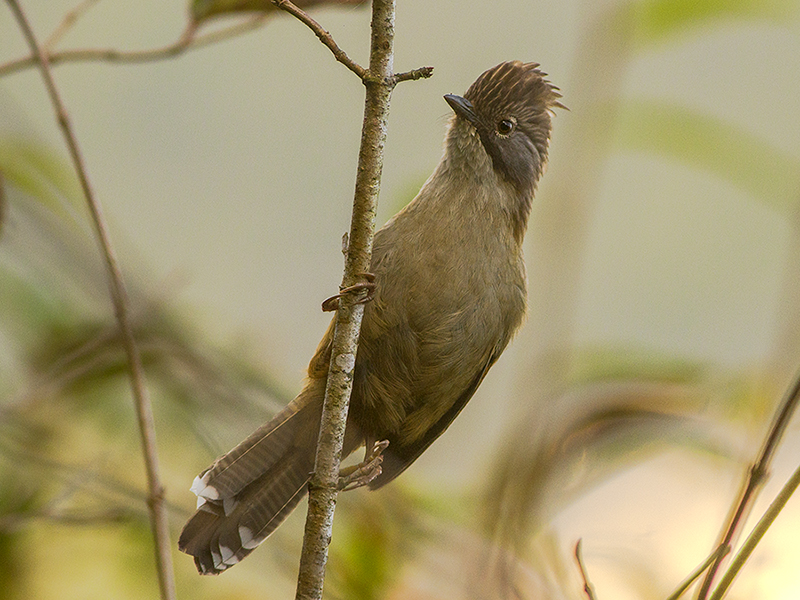
The Tibetan Babax is a medium-sized bird, approximately 24-26 cm in length, with a robust build and a long, graduated tail. Its plumage is predominantly brown with a subtly mottled breast and distinct white streaking on the throat and upper chest. The wings are darker, providing a subtle contrast. Both males and females appear similar in plumage, lacking significant sexual dimorphism, a feature common in many songbirds. Juveniles resemble adults but often exhibit duller tones and less pronounced markings. In flight, the Tibetan Babax possesses a broad wingspan and a somewhat rounded wing shape, which aids in navigating the dense thickets it often inhabits. The bird's flight is generally direct and purposeful, characterized by steady wingbeats. Perched, it adopts an upright stance, often seen in groups communicating with vocalizations. Similar species include the Giant Babax, but the Tibetan Babax can be distinguished by its smaller size and more uniform brown coloration, whereas the Giant Babax displays a more varied pattern with a prominent eye stripe.
Having trouble telling birds apart? Upload a photo to our bird identification tool for an instant species match.
Tibetan Babax Habitat and Range
Preferred Habitat
The Tibetan Babax predominantly inhabits the high-altitude scrublands and rhododendron thickets of the Tibetan plateau. Preferring elevations between 3,000 and 5,000 meters, it is well-adapted to the challenging conditions of its mountainous environment. These birds favor areas with dense vegetation, which provide both food sources and protection from predators. Seasonal habitat shifts are minimal, though they may seek slightly lower altitudes during harsh winters. Unlike some species, the Tibetan Babax is not typically found in urban areas, remaining closely tied to its natural mountain habitats.
Geographic Range
The breeding and year-round range of the Tibetan Babax is restricted to the Tibetan plateau, primarily within the regions of Qinghai and Tibet in China. This bird does not undertake long-distance migrations, maintaining its presence throughout the year in its native range. Within these regions, it is most commonly found in areas where suitable habitats, such as dense scrubland and thickets, are abundant. While populations are dispersed across its range, certain hotspots of higher density occur in areas with optimal habitat conditions, where food resources are plentiful.
Want to know which birds visit your area? Browse our backyard birds by location guides for region-specific species lists.
What Does the Tibetan Babax Eat?
The Tibetan Babax's diet primarily consists of insects and other small invertebrates, which it actively forages for among the dense undergrowth of its habitat. During the warmer months, insects form the bulk of its diet, providing essential protein for breeding and rearing young. In addition to invertebrates, these birds consume a variety of seeds and berries, especially in the autumn and winter when insect availability decreases. Foraging typically occurs in small groups, with birds using their bills to probe the leaf litter and soil, often turning over leaves to uncover hidden prey. The Tibetan Babax's diet reflects its adaptability to seasonal changes, ensuring survival in its challenging environment.
Tibetan Babax Behavior and Social Structure
The Tibetan Babax exhibits highly social behavior, often forming small flocks that aid in foraging and provide protection against predators. These groups are dynamic, with individuals frequently engaging in vocal communication to maintain cohesion. The babax is territorial, with groups defending specific areas from intruders using a combination of vocal displays and aggressive posturing. Courtship involves both vocalizations and physical displays, with pairs engaging in mutual preening and feeding. Flocking patterns vary seasonally, with larger groups forming outside the breeding season to enhance foraging success. When faced with predators, Tibetan Babaxes rely on collective vigilance, emitting alarm calls to alert others and coordinating evasive maneuvers.
Tibetan Babax Nesting and Reproduction
Tibetan Babaxes build cup-shaped nests, typically constructed from twigs, grasses, and leaves. These nests are often situated in dense shrubs or low trees, providing concealment and protection. The typical clutch consists of 2 to 4 eggs, with both parents sharing incubation duties over a period of approximately 14 days. After hatching, both parents continue to feed and care for the chicks until they fledge, usually within three weeks. The Tibetan Babax typically raises one brood per year, though pairs may occasionally attempt a second if conditions are favorable.
Tibetan Babax Sounds and Vocalizations
The Tibetan Babax is renowned for its complex vocal repertoire, which includes melodious songs and a variety of calls. The primary song is a series of rich, flute-like notes with a rhythmic, cascading pattern. Call notes are sharp and varied, used for communication within flocks and during territorial disputes. Alarm calls are distinct and harsh, serving to alert others to potential threats. During the dawn chorus, the Tibetan Babax's song is particularly prominent, adding a lively soundscape to its mountainous habitat.
Interesting Facts About the Tibetan Babax
- 1The Tibetan Babax is a member of the Leiothrichidae family, which includes laughingthrushes and other socially complex birds.
- 2Despite their sociable nature, Tibetan Babaxes are known for their fierce territorial disputes with neighboring flocks.
- 3The bird's rich vocalizations are essential not only for communication but also for maintaining intricate social structures.
- 4Tibetan Babaxes adapt to seasonal changes by altering their diet, relying more on seeds and berries during winter.
- 5These birds often form mixed-species flocks with other ground-dwelling birds, enhancing foraging efficiency.
- 6The Tibetan Babax's plumage provides excellent camouflage in its scrubland habitat, helping it avoid predators.
- 7Unlike many high-altitude birds, the Tibetan Babax does not migrate, showcasing its adaptation to harsh environments.
Tibetan Babax Conservation Status
The Tibetan Babax is currently classified as Least Concern by the IUCN, with stable population trends observed. However, its restricted range makes it susceptible to habitat disturbances. Primary threats include habitat degradation due to overgrazing and climate change. Conservation efforts focus on habitat preservation and monitoring population dynamics. Historical data suggest that the species has maintained stable numbers, although continued vigilance is necessary to ensure its long-term survival.