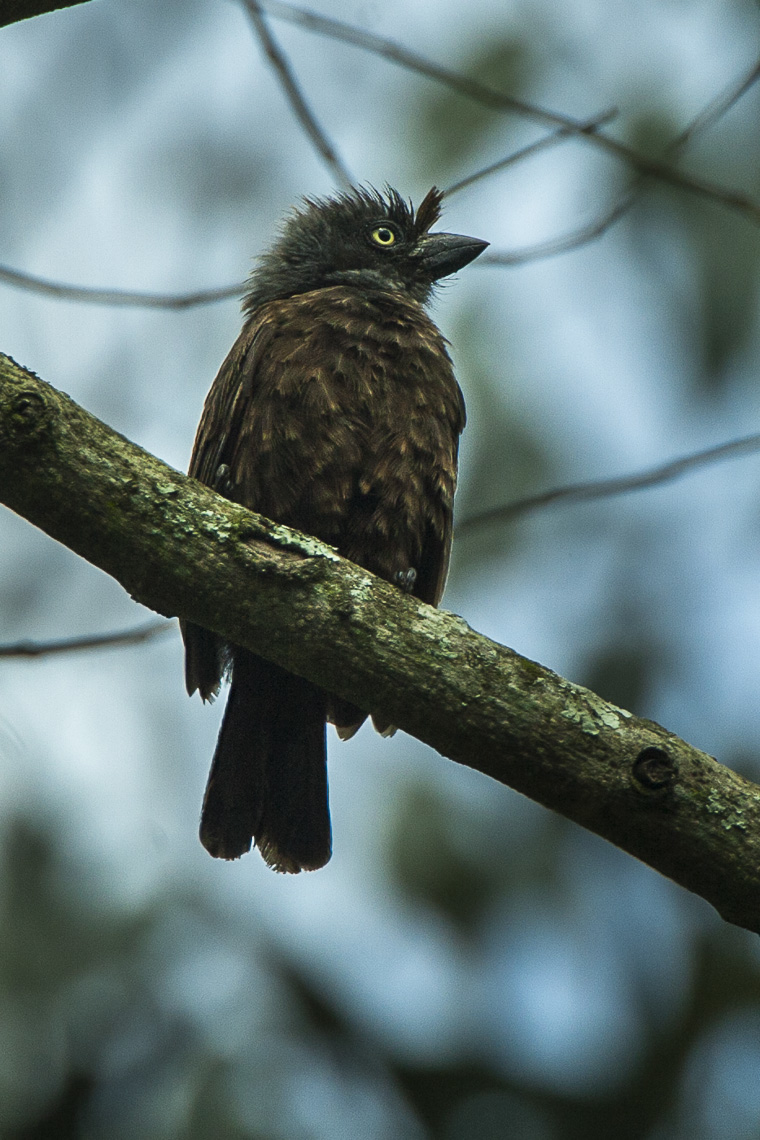
Tricholaema lachrymosa
Tricholaema lachrymosa
Order: Piciformes / Family: Lybiidae
About the Tricholaema lachrymosa
The Spot-flanked Barbet, scientifically known as Tricholaema lachrymosa, is a small to medium-sized bird belonging to the family Lybiidae, within the order Piciformes. This species is native to parts of Africa, where it plays a crucial role in its ecosystem as both predator and seed disperser. Spot-flanked Barbets are primarily found in East African countries such as Kenya, Tanzania, and Uganda, where they inhabit a variety of wooded environments from dry savannas to montane forests. They are also present, albeit in smaller numbers, in parts of Ethiopia and South Sudan. These birds prefer regions with ample tree cover, which offers both food resources and nesting sites.
Spot-flanked Barbets exhibit significant ecological importance due to their diet, which includes a wide range of fruits and insects. By feeding on fruits, they aid in seed dispersal, which is vital for forest regeneration. Their insectivorous habits help control pest populations, balancing the ecosystem. This dual role underscores their value to both plant and animal communities within their range.
During the breeding season, which typically coincides with the rainy months, Spot-flanked Barbets become more vocal and active. Their calls play a role in mate attraction and territory establishment. Outside the breeding season, they are less conspicuous, but remain a vital part of their habitat's ecological tapestry. Their adaptability to various wooded habitats, including human-altered landscapes, indicates their resilience to moderate environmental changes. However, ongoing habitat destruction poses a potential threat to their populations. Despite this, the Spot-flanked Barbet remains a common and vital component of the African avian community.
The Tricholaema lachrymosa belongs to the family Lybiidae, within the order Piciformes. These birds typically live average 4-6 years, with a max recorded of 8 years..
How to Identify a Tricholaema lachrymosa
Identifying the Spot-flanked Barbet involves noting several key features. Adults possess a robust body size, typically ranging from 18 to 20 centimeters in length. They exhibit a striking black and white pattern, with a predominantly black back and wings, contrasted by a white belly adorned with characteristic tear-shaped black spots along the flanks, giving the bird its common name. The head is marked by a distinctive black cap and a white throat, while the stout bill is black and slightly curved, suited for both frugivorous and insectivorous feeding.
Juvenile Spot-flanked Barbets resemble adults but may have less pronounced flank spots and a duller overall plumage. There is minimal sexual dimorphism, meaning males and females appear quite similar, though males may sometimes exhibit slightly brighter markings.
In flight, Spot-flanked Barbets display a rapid, direct flight pattern, characterized by rapid wingbeats and short glides. When perched, they maintain an upright posture, often on high branches or fruiting trees. They could be confused with other barbet species, like the Crested Barbet, but the flanking spots and lack of a crest provide clear distinctions.
Having trouble telling birds apart? Upload a photo to our bird identification tool for an instant species match.
Tricholaema lachrymosa Habitat and Range
Preferred Habitat
Spot-flanked Barbets inhabit a wide range of wooded environments. They thrive in dry savannas, open woodlands, and montane forests. In East Africa, they are commonly found in regions with abundant Acacia and Brachystegia trees. These habitats provide not only food but also ideal nesting sites.
The elevation range for these birds varies, with populations existing from sea level to about 2,500 meters in montane regions. While they prefer rural areas, Spot-flanked Barbets can adapt to suburban and urban areas where sufficient tree cover exists. They do not exhibit significant seasonal habitat shifts, remaining in the same territories year-round as long as food resources are stable.
Geographic Range
The Spot-flanked Barbet's range is centered in East Africa, primarily in Kenya, Tanzania, and Uganda. These countries host the densest populations, particularly in regions like the Maasai Mara in Kenya and the Serengeti in Tanzania. The range extends slightly into Ethiopia and South Sudan, though these areas support smaller, more scattered populations.
Unlike some migratory birds, the Spot-flanked Barbet does not undertake long-distance migrations. Instead, they maintain relatively stable year-round territories. Local movements may occur in response to seasonal food availability, but these are generally short-range. The species' concentration in specific hotspots makes them an accessible subject for birdwatchers visiting East Africa.
Want to know which birds visit your area? Browse our backyard birds by location guides for region-specific species lists.
What Does the Tricholaema lachrymosa Eat?
The diet of the Spot-flanked Barbet consists primarily of fruits and insects. They are particularly fond of figs and other soft fruits, which they pluck efficiently with their strong bills. Fruits not only provide essential nutrients but also aid in hydration during dry seasons. Insects, such as beetles and caterpillars, form a significant portion of their diet, especially during the breeding season when protein demands are higher.
Foraging typically occurs in the morning and late afternoon when temperatures are cooler. Spot-flanked Barbets exhibit a methodical foraging technique, often moving along tree branches while inspecting leaves and bark for hidden insects. They also exploit fruiting trees, where they can be seen hopping between branches to access ripe food.
Want to attract Tricholaema lachrymosas to your yard? See our recommended feeders and seed types for the best results.
Tricholaema lachrymosa Behavior and Social Structure
Spot-flanked Barbets exhibit a social and territorial structure that is both fascinating and complex. They are often observed in pairs or small family groups, particularly during the breeding season. These birds demonstrate strong territoriality, frequently engaging in vocal displays to assert their presence and ward off intruders.
Courtship behaviors include mutual preening and food offerings, with males often presenting fruits or insects to potential mates. During the day, Spot-flanked Barbets are most active at dawn and dusk, times when they can be heard calling from prominent perches. Their response to predators involves a combination of alarm calls and mobbing behavior, where several birds join forces to deter a threat.
While generally not flocking birds, Spot-flanked Barbets may gather in larger numbers around abundant food sources, such as fruiting trees or termite swarms. Their ability to adapt to human-altered landscapes allows them to persist even as natural habitats face pressure.
Tricholaema lachrymosa Nesting and Reproduction
Spot-flanked Barbets prefer to nest in tree cavities, which they either find naturally or excavate themselves in softer woods. The nesting season aligns with the rainy season, providing ample food for growing chicks. Nests are typically located 2 to 10 meters above ground in trees, offering protection from ground predators.
The clutch size generally consists of 2 to 4 eggs, with both parents sharing incubation duties over a period of about 14 to 16 days. Upon hatching, the chicks are altricial, requiring intensive care and feeding. Both parents participate in feeding the young, regurgitating a mixture of fruits and insects. Fledging occurs approximately 24 to 28 days after hatching, though parental care may continue for some time thereafter.
Spot-flanked Barbets usually raise one brood per year, but in particularly favorable conditions, they might attempt a second. Their nesting habits contribute to the maintenance of healthy tree ecosystems, as their cavity excavation can provide future shelter for other cavity-nesting species.
Tricholaema lachrymosa Sounds and Vocalizations
The Spot-flanked Barbet's vocalizations are a key component of its identity. Their primary song consists of a series of resonant, repetitive notes, often described as 'pup-pup-pup', which can echo through wooded areas. This song serves to establish territories and attract mates.
Apart from their song, Spot-flanked Barbets produce a variety of call notes, including sharp 'kek' sounds used in alarm situations. During the early morning hours, they participate in a dawn chorus, where their voices blend with those of other local bird species, creating a rich tapestry of sound.
Their calls, while not melodious like some songbirds, are distinctive and useful for identification in the field. The straightforward rhythm and pitch of their songs make them easily recognizable for birders familiar with East African avifauna.
Interesting Facts About the Tricholaema lachrymosa
- 1Spot-flanked Barbets can excavate their own nesting cavities, using their robust bills to carve out hollows in softer wood.
- 2These birds play a crucial role in seed dispersal, as their fruit-heavy diet helps propagate many tree species.
- 3Spot-flanked Barbets have a powerful bite, capable of cracking hard fruit shells to access nutritious interiors.
- 4The species' distinctive flank spots, resembling teardrops, are unique among African barbets and aid in field identification.
- 5They are surprisingly adaptable, often thriving in urban areas with sufficient tree cover, unlike many other woodland birds.
- 6The Spot-flanked Barbet's call is a key territorial tool, with both males and females participating in vocal displays.
- 7Despite their size, Spot-flanked Barbets can be quite aggressive, often seen mobbing larger predators to protect their territory.
Tricholaema lachrymosa Conservation Status
The Spot-flanked Barbet is currently listed as a species of Least Concern by the IUCN. Its population appears stable, though localized declines have been noted in areas experiencing rapid deforestation and habitat fragmentation. The primary threats to this species include habitat loss due to agricultural expansion and urban development. Conservation efforts for the Spot-flanked Barbet focus on habitat preservation and sustainable land management practices. In regions where their habitats remain intact, these birds continue to thrive. Historical population data indicates that while there have been fluctuations, the core populations in key areas like Kenya and Tanzania have remained robust. Ongoing conservation initiatives aim to maintain these stable populations by supporting reforestation efforts and promoting bird-friendly practices in agricultural landscapes. Such measures are crucial to ensuring the long-term survival of the Spot-flanked Barbet and its role in the ecosystem.
Attracting Tricholaema lachrymosas to Your Feeder
The Tricholaema lachrymosa is a regular visitor to backyard bird feeders across its range. At the Eye On The Fly feeding station, we observe Tricholaema lachrymosas regularly and capture footage with our feeder cameras.