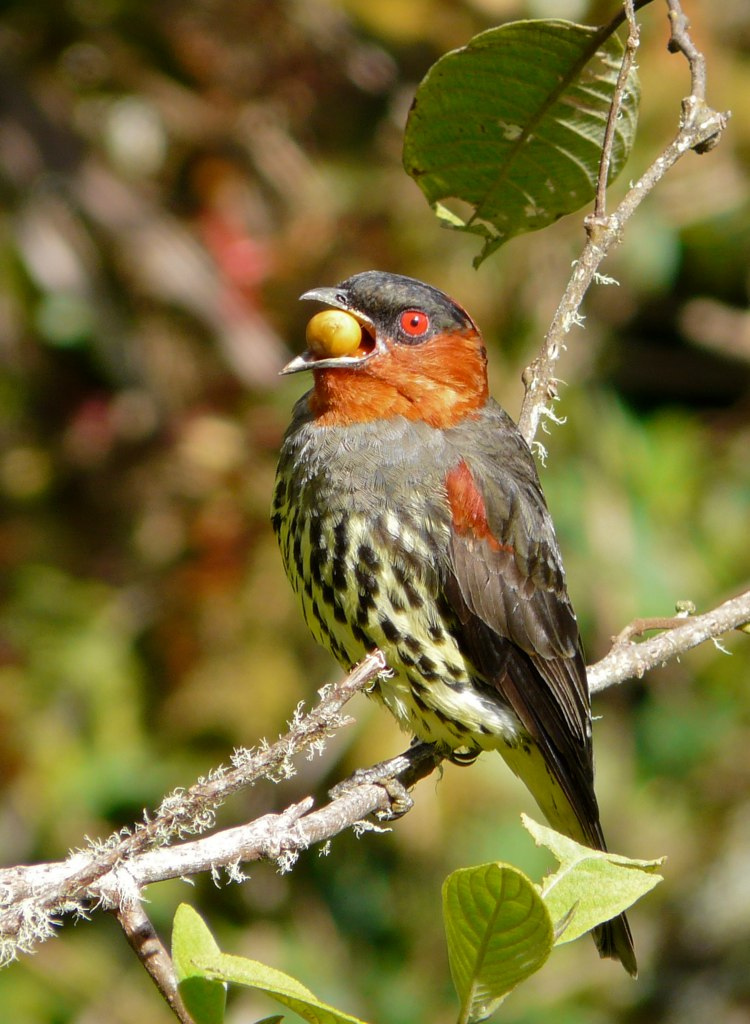
Varzea Schiffornis
Schiffornis major
Order: Passeriformes / Family: Cotingidae

Wikimedia Commons
About the Varzea Schiffornis
The Varzea Schiffornis, scientifically known as Schiffornis major, is a distinctive bird species belonging to the family Cotingidae. This species primarily inhabits the lush, verdant environments of the Amazon Basin, thriving in the dense varzea and igapó forests that periodically flood. These birds play an integral role in the ecosystem as seed dispersers and insect population controllers. Unlike many resident species of the Amazon, the Varzea Schiffornis is non-migratory, maintaining a stable presence in its habitat throughout the year.
The Varzea Schiffornis exhibits a strong affinity for the unique floodplain forests it calls home. These environments are characterized by seasonal inundation, which shapes the biodiversity and ecological processes within. The bird is often found in Brazil, particularly in areas like the Rio Negro and the Amazon River Basin. Its presence in these regions underscores its adaptation to humid, equatorial climates, where it contributes to the perennial cycles of seed dispersal necessary for forest regeneration.
Ecologically, the Varzea Schiffornis is significant due to its role in controlling insect populations. By preying on insects, it helps maintain a balance within its ecosystem, preventing potential outbreaks that could harm vegetation. This species also aids in the dissemination of seeds from the fruits it consumes, thus promoting plant diversity and forest health. Observations suggest that during the wet season, when the forest transforms into a mosaic of aquatic habitats, the bird’s feeding habits shift slightly to accommodate the increase in available resources.
The Varzea Schiffornis belongs to the family Cotingidae, within the order Passeriformes. These birds typically live average 5-7 years, with a maximum recorded lifespan of 9 years..
How to Identify a Varzea Schiffornis
Adult Varzea Schiffornis are primarily olive-gray, with subtle variations that can sometimes make them hard to distinguish from their forest surroundings. The species exhibits minimal sexual dimorphism, meaning males and females appear similar in plumage. However, juveniles often display slightly duller coloration compared to adults, which can aid in age identification in the field.
When attempting to differentiate the Varzea Schiffornis from other similar species, such as the Thrush-like Schiffornis, birders should note the Varzea's more uniform coloring and muted tones. Its size, about 20 centimeters in length, combined with its rounded wings and tail, presents a robust yet streamlined silhouette in flight. The bird's large eyes and stout bill are also defining features, aiding in its identification.
In terms of posture, the Varzea Schiffornis typically adopts a hunched stance when perched, often remaining motionless for extended periods. This behavior, together with its coloration, provides excellent camouflage against predation, allowing it to blend seamlessly into the dense forest backdrop.
Having trouble telling birds apart? Upload a photo to our bird identification tool for an instant species match.
Varzea Schiffornis Habitat and Range
Preferred Habitat
The Varzea Schiffornis thrives in the varzea and igapó forests of the Amazon Basin, environments characterized by their seasonal flooding. These forests are predominantly found along the Amazon River and its tributaries in countries like Brazil and Peru. The bird prefers the dense understory of these forests, where it finds ample cover and abundant food resources.
The elevation range for the Varzea Schiffornis is generally low, as it inhabits regions close to sea level. Seasonal changes in water levels influence its habitat, with the bird adapting to the fluctuations by shifting its foraging strategies rather than changing habitats.
While primarily a forest dweller, the Varzea Schiffornis seldom ventures into urban areas. Its presence is thus restricted to rural, forested landscapes, where it can exploit the ecological niches provided by the rich biodiversity of its environment.
Geographic Range
The Varzea Schiffornis is native to the neotropical regions of South America, with its range concentrated in the Amazon Basin. It is predominantly found in Brazil, particularly in the states bordering the Amazon River and its tributaries. The species' range extends into parts of Peru, Colombia, and Venezuela, where similar floodplain forests exist.
The Varzea Schiffornis is not a migratory bird, maintaining a year-round presence in its habitat. Its range does not extend into high altitudes or temperate zones, as it is closely tied to the lowland tropical forests. Within its range, population densities can vary, with higher concentrations often found in regions where food resources are abundant and predation pressure is lower.
Hotspots for observing the Varzea Schiffornis include areas like the Rio Negro and the flooded forests around the city of Manaus. These regions offer optimal conditions for the species, allowing for stable populations and viable breeding grounds.
Want to know which birds visit your area? Browse our backyard birds by location guides for region-specific species lists.
What Does the Varzea Schiffornis Eat?
The Varzea Schiffornis primarily feeds on a diet of insects and small invertebrates, which it captures using its keen sight and agile movements. Common prey items include caterpillars, beetles, and moths. During the wet season, when the forest floods, the bird may also consume aquatic insects, capitalizing on the increased availability of these resources.
In addition to insects, the Varzea Schiffornis supplements its diet with fruits, contributing to its role as a seed disperser. It often plucks berries and small fruits directly from the forest understory, utilizing its strong bill to break into tougher-skinned varieties.
Foraging behavior typically occurs during the cooler parts of the day, such as early morning and late afternoon. The bird employs a methodical approach, moving through the forest in short bursts, pausing frequently to scan for prey from perches low to the ground.
Varzea Schiffornis Behavior and Social Structure
The Varzea Schiffornis exhibits a solitary lifestyle, primarily roaming the forest alone or in pairs. Territorial by nature, the bird establishes and defends a defined area, often using vocalizations to assert dominance and ward off intruders. Its territorial calls are a common soundscape in the forest, particularly during the breeding season.
Courtship displays are subtle, involving vocal duets between mates and coordinated movements. Unlike many bird species, the Varzea Schiffornis does not engage in elaborate visual displays, relying instead on auditory signals to strengthen pair bonds.
In terms of daily activity, the Varzea Schiffornis is most active during the cooler hours of the day. It typically rests during the midday heat, when the forest is at its quietest. When faced with predators, the bird relies on its cryptic plumage and stillness to avoid detection, often freezing in place until the threat has passed.
Varzea Schiffornis Nesting and Reproduction
The Varzea Schiffornis constructs its nests in well-concealed locations within the dense understory of floodplain forests. The nests are typically cup-shaped and made from a variety of natural materials, including twigs, leaves, and fibers gathered from the forest floor.
Preferred nesting sites are often located in shrubs or low-hanging branches, providing both concealment and protection from predators. The female alone incubates the eggs, which are usually two to three in number. The incubation period lasts approximately 16 to 18 days.
After hatching, both parents partake in feeding the chicks, providing them with a diet rich in insects and fruits. The fledging period is relatively short, with young birds leaving the nest about 15 to 17 days after hatching. Typically, the Varzea Schiffornis raises one brood per year, timed to coincide with periods of food abundance.
Varzea Schiffornis Sounds and Vocalizations
The Varzea Schiffornis is known for its distinctive song, a series of melodious whistles that rise and fall in pitch. The song is often described as having a flute-like quality, clear and resonant, carrying through the dense forest.
In addition to its primary song, the Varzea Schiffornis produces a variety of call notes, including soft chips and harsher alarm calls when threatened. These vocalizations play a crucial role in communication between individuals, particularly during the breeding season.
The bird is most vocal during the early morning hours, participating in the dawn chorus that fills the jungle with sound. Its calls can be likened to those of other forest songbirds, yet are distinct enough to make it identifiable to seasoned birders.
Interesting Facts About the Varzea Schiffornis
- 1The Varzea Schiffornis is one of the few bird species that thrive in the seasonally flooded forests of the Amazon Basin.
- 2Despite its common name, the Varzea Schiffornis is not restricted to the varzea forests but is also found in igapó forests.
- 3This species is non-migratory, remaining in its lowland rainforest habitat throughout the year.
- 4The Varzea Schiffornis plays a key role in seed dispersal, contributing to the biodiversity of the Amazon rainforest.
- 5Its song, described as flute-like, can be heard echoing through the forest, particularly during the early morning hours.
- 6Unlike many cotingas, the Varzea Schiffornis exhibits little sexual dimorphism, with males and females sharing similar plumage.
- 7The Varzea Schiffornis is adept at camouflage, often remaining motionless to avoid detection by predators.
Varzea Schiffornis Conservation Status
The Varzea Schiffornis is currently classified as Least Concern by the IUCN, with populations considered stable across its range. However, ongoing threats to its habitat, primarily from deforestation and habitat degradation, pose significant challenges. Conservation efforts focused on preserving the Amazon Basin's floodplain forests are crucial for the continued survival of this species. Protected areas, such as national parks and reserves, offer some safeguard against habitat loss. Historically, the Varzea Schiffornis has maintained a robust population, although localized declines have been noted in regions where deforestation rates are highest. Continued monitoring and conservation initiatives are essential to ensure its long-term viability.