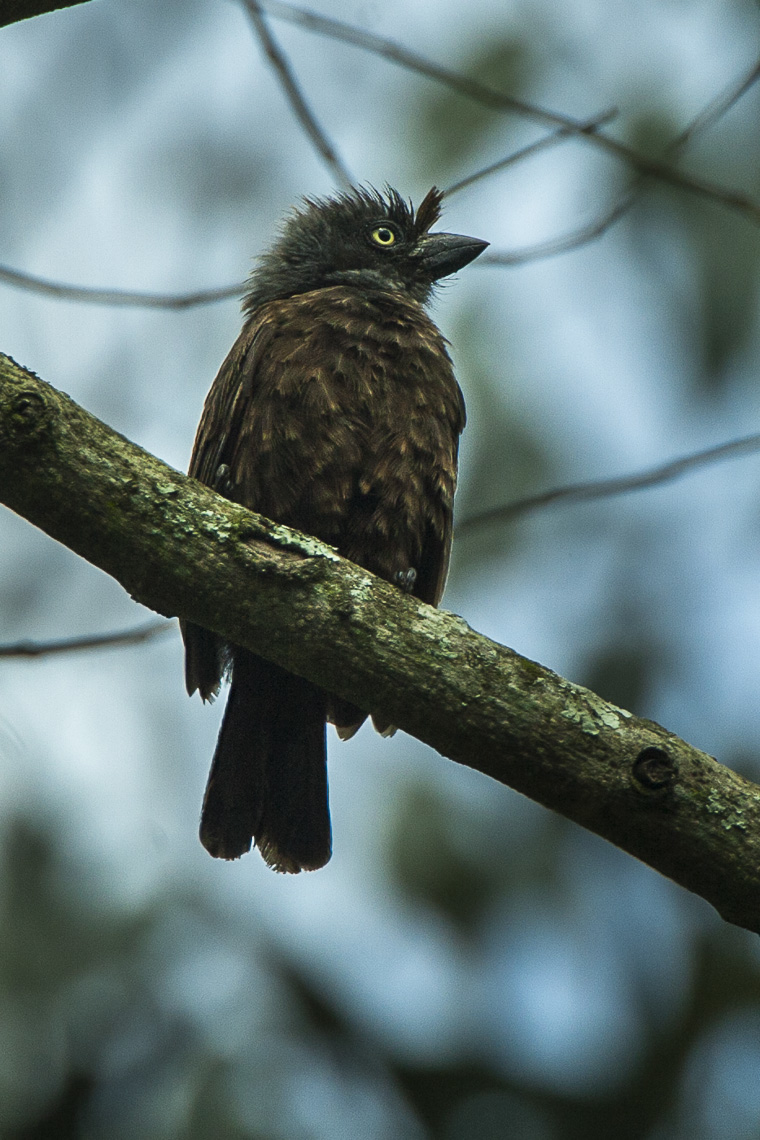
Vieillot's Barbet
Lybius vieilloti
Order: Piciformes / Family: Lybiidae

Wikimedia Commons
About the Vieillot's Barbet
Vieillot's Barbet (Lybius vieilloti) is a striking bird found predominantly in the savannas and forests of sub-Saharan Africa. This medium-sized barbet plays a vital role in its ecosystem as both a seed disperser and a predator of insects. Named after the French ornithologist Louis Jean Pierre Vieillot, the bird exhibits a remarkable ability to adapt to various environments, from open woodlands to the fringes of human settlements. The species is often found in countries like Nigeria, Cameroon, and the Democratic Republic of the Congo, thriving in areas where trees and shrubs are plentiful. The Vieillot's Barbet is distinguished by its robust, slightly curved bill, which it uses adeptly to excavate nest holes in trees and to forage for food. Its ecological role extends beyond seed dispersal; by controlling insect populations, it helps maintain the health of its habitat. During the breeding season, which typically occurs at the onset of the rainy season, these birds become highly territorial. Their calls, a series of loud, repetitive notes, resonate across their territories, serving as both a mating call and a deterrent to potential rivals. The Vieillot's Barbet also participates in mutualistic relationships with other species, such as the honeyguide, which benefits from the barbet's ability to open nests of bees. Observations have shown that the bird's presence often correlates with high biodiversity, indicating its integral role in the ecosystem. As climate change and deforestation alter African landscapes, the adaptability of Vieillot's Barbet will determine its continued success in these regions.
The Vieillot's Barbet belongs to the family Lybiidae, within the order Piciformes. These birds typically live typically 5-8 years, with some individuals living up to 10 years..
How to Identify a Vieillot's Barbet
Vieillot's Barbet is easily recognizable by its vivid red head and neck, which contrast sharply with its black and white patterned body. The adult plumage features a predominantly black back with white spots, creating a striking mosaic that distinguishes it from other barbets. Juveniles, however, display a duller version of this plumage, with more muted red and less defined spotting, which gradually develops into the adult coloration as they mature. Male and female Vieillot's Barbets are similar in appearance, although males may exhibit slightly more vibrant red hues. This can occasionally lead to confusion with similar species, such as the Double-toothed Barbet, but careful observation of size and plumage detail will aid proper identification. In flight, Vieillot's Barbet presents a compact silhouette, with rapid wing beats that give it a distinctive flapping pattern. When perched, the bird often adopts a slightly hunched posture, allowing it to maintain a broad field of vision while foraging or surveying its territory.
Having trouble telling birds apart? Upload a photo to our bird identification tool for an instant species match.
Vieillot's Barbet Habitat and Range
Preferred Habitat
Vieillot's Barbet thrives in a variety of habitats, primarily favoring open woodlands and savannas with abundant tree cover. These environments provide both the food resources and nesting sites crucial for the species' survival. The barbet can be found from lowland areas to elevations of up to 2,000 meters, often adapting to locally available resources. It shows a preference for areas with scattered trees, such as those found in the Guinean forest-savanna mosaic. During different seasons, the Vieillot's Barbet may shift slightly in habitat preference, moving closer to water sources during dry periods. While primarily a resident of rural landscapes, the bird has shown some adaptability to urban areas, where it can inhabit large gardens or parks that offer comparable resources to its natural habitat.
Geographic Range
The range of Vieillot's Barbet spans across sub-Saharan Africa, from Senegal and Gambia in the west to Uganda and Kenya in the east. This geographic distribution includes countries such as Ghana, Nigeria, and the Central African Republic, where the bird is commonly observed. While the species does not undertake long-distance migrations, it may engage in local movements in response to environmental changes or food availability, particularly during the dry season. The population density of Vieillot's Barbet tends to be higher in regions with abundant food sources and suitable nesting sites, such as riparian woodlands and agricultural areas with scattered trees. Despite its wide range, the species is unevenly distributed, with certain regions serving as hotspots for its population.
Want to know which birds visit your area? Browse our backyard birds by location guides for region-specific species lists.
What Does the Vieillot's Barbet Eat?
Vieillot's Barbet primarily feeds on a diet of fruits and insects, demonstrating its dual role as both a frugivore and an insectivore. The bird's strong, slightly curved bill allows it to efficiently pluck fruits from trees and shrubs, with figs being a notable component of its diet. During the dry season, when fruit is less abundant, the barbet increases its consumption of insects, including beetles, ants, and termites. This dietary shift highlights the bird's adaptability to seasonal changes in food availability. Vieillot's Barbet forages both alone and in small groups, often seen climbing tree trunks or branches in search of prey. Its feeding schedule typically peaks during the cooler parts of the day, such as early morning and late afternoon, when insect activity is heightened, and fruit is more readily accessible.
Want to attract Vieillot's Barbets to your yard? See our recommended feeders and seed types for the best results.
Vieillot's Barbet Behavior and Social Structure
Vieillot's Barbet displays a complex social structure, often forming loose flocks outside the breeding season. These flocks, typically consisting of family groups, engage in cooperative foraging and mutual grooming. The species is known for its territorial behavior, particularly during the breeding season when males vigorously defend their territories through vocal displays and physical confrontations. Courtship involves the male presenting food to the female, a gesture that strengthens pair bonds. Flocking patterns vary with season and resource availability, with barbets occasionally joining mixed-species flocks to exploit abundant food sources. When faced with predators, Vieillot's Barbet employs a series of alarm calls and erratic flight patterns to confuse and evade threats. Daily activity patterns revolve around foraging, interspersed with periods of rest and preening, particularly during the hottest parts of the day.
Vieillot's Barbet Nesting and Reproduction
Vieillot's Barbet constructs its nests in tree cavities, either excavated by the birds themselves or adapted from existing holes. The birds prefer dead wood for easier excavation but will utilize any suitable cavity in a live tree. Nesting sites are typically located 2 to 10 meters above the ground, providing protection from ground predators. The clutch size ranges from two to four eggs, with both parents participating in incubation, which lasts approximately 13 to 15 days. After hatching, the chicks are fed by both parents and fledge after about 30 days. Vieillot's Barbet may produce two broods per year, particularly in regions with extended rainy seasons, which provide ample food resources for raising young.
Vieillot's Barbet Sounds and Vocalizations
The primary song of Vieillot's Barbet is a loud, repetitive series of notes that can be described as a 'tuk-tuk-tuk,' delivered at a consistent rhythm and pitch. This vocalization serves multiple functions, from territory defense to mate attraction. The bird's call notes are shorter, often used in communication between mates or group members. Alarm calls are sharper and more urgent, employed to alert conspecifics of potential threats. During the dawn chorus, Vieillot's Barbet is among the first to vocalize, its robust calls resonating through the forest. These sounds are reminiscent of a woodpecker's drumming but are unique in their melodic quality.
Interesting Facts About the Vieillot's Barbet
- 1Vieillot's Barbet can excavate a nest cavity in just a few days, showcasing its strong bill and determination.
- 2Despite their vibrant colors, Vieillot's Barbets are often overlooked due to their preference for dense foliage.
- 3These birds play a crucial role in seed dispersal, aiding in forest regeneration and plant diversity.
- 4Vieillot's Barbet has been known to mimic the calls of other birds, adding to its complex vocal repertoire.
- 5The species demonstrates a high degree of site fidelity, often returning to the same nesting territory annually.
Vieillot's Barbet Conservation Status
According to the IUCN Red List, Vieillot's Barbet is currently listed as a species of Least Concern, with a stable population trend. However, the primary threats to its habitat include deforestation and agricultural expansion, which reduce available nesting sites and food resources. Conservation efforts focus on habitat preservation and sustainable land-use practices that mitigate deforestation impacts. Historically, the species has shown resilience to environmental changes, maintaining stable populations even in altered landscapes. Continued monitoring and habitat conservation remain crucial to ensuring the long-term survival of Vieillot's Barbet.
Attracting Vieillot's Barbets to Your Feeder
The Vieillot's Barbet is a regular visitor to backyard bird feeders across its range. At the Eye On The Fly feeding station, we observe Vieillot's Barbets regularly and capture footage with our feeder cameras.