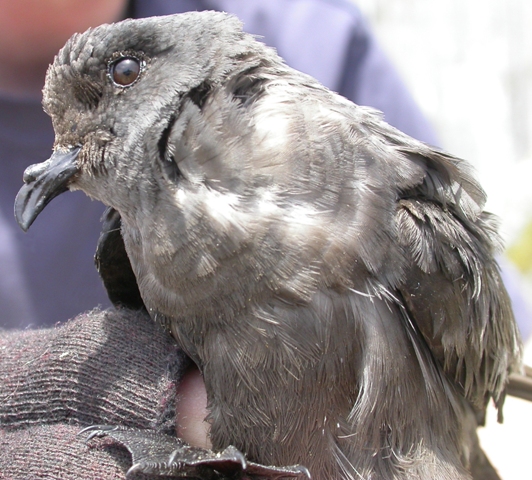
Wedge-rumped Storm-Petrel
Oceanodroma tethys
Order: Procellariiformes / Family: Hydrobatidae

Wikimedia Commons
About the Wedge-rumped Storm-Petrel
The Wedge-rumped Storm-Petrel, scientifically known as Oceanodroma tethys, is a fascinating and agile seabird belonging to the family Hydrobatidae. This species is renowned for its ability to navigate vast ocean expanses with precision. Found predominantly in the warmer waters of the Pacific Ocean, the Wedge-rumped Storm-Petrel plays a crucial role in marine ecosystems. Its range extends from the waters off western Mexico, down the Central American coast, to the Galápagos Islands, highlighting its adaptability to diverse marine environments.
These storm-petrels are essential indicators of ocean health. Their presence or absence often signals changes in marine conditions, such as shifts in prey availability or water temperature. As pelagic birds, they venture far from land, spending most of their lives at sea. During breeding season, however, they nest in colonies on isolated islands, where their nocturnal habits help to avoid predators. This seabird's life cycle is tightly interwoven with ocean currents and food supply, making it a vital component of the marine food web.
One of the most intriguing aspects of the Wedge-rumped Storm-Petrel's ecology is its migratory behavior. These birds embark on long migrations across the Pacific, adjusting their range based on oceanic conditions. Their movements are influenced by the availability of plankton and small fish, which constitute their primary diet. As such, they are often found in areas of upwelling currents where nutrients are abundant, supporting their feeding habits. This characteristic makes them an important species for studying the impacts of climate change on marine ecosystems.
The Wedge-rumped Storm-Petrel belongs to the family Hydrobatidae, within the order Procellariiformes. These birds typically live average 15 years, with some individuals reaching over 20 years..
How to Identify a Wedge-rumped Storm-Petrel
The Wedge-rumped Storm-Petrel is a small, agile seabird, measuring about 18 to 21 cm in length with a wingspan of approximately 43 to 46 cm. Its plumage is predominantly sooty brown, with the distinguishing feature being the wedge-shaped white rump, which stands out against its dark body. This unique rump pattern is the easiest way to differentiate it from similar species. In flight, the petrel exhibits rapid, fluttering wing beats interspersed with glides, creating a distinctive erratic flight pattern often compared to a bat's.
Juvenile Wedge-rumped Storm-Petrels resemble adults but may have slightly duller plumage. There are no significant differences in appearance between males and females, making sexual dimorphism minimal in this species. However, during breeding season, females may appear slightly heavier due to egg carrying. Observers might confuse this storm-petrel with other small petrels or shearwaters, but the wedge-shaped rump and characteristic flight behavior aid in proper identification.
The bird's silhouette in flight is marked by long, narrow wings and a square tail, which adds to its distinct profile against the sky. When perching, often on rocky ledges or sandy beaches, the Wedge-rumped Storm-Petrel maintains an upright posture, allowing the characteristic rump pattern to remain visible. Its small size and subtle coloration make it more likely to be observed during active feeding or in flight rather than at rest.
Having trouble telling birds apart? Upload a photo to our bird identification tool for an instant species match.
Wedge-rumped Storm-Petrel Habitat and Range
Preferred Habitat
The Wedge-rumped Storm-Petrel occupies a wide range of marine habitats, primarily favoring open ocean environments. They are most commonly found in the tropical and subtropical waters of the Pacific Ocean. These birds are adept at exploiting areas of upwelling, where nutrient-rich waters support abundant marine life. During the breeding season, they nest on islands such as the Galápagos, where the terrain is rocky or sandy and devoid of predators.
The species tends not to venture into urban areas, as its life is closely tied to the ocean. In terms of elevation, they are found at sea level, as their dependence on marine life confines them to oceanic environments. Seasonally, the Wedge-rumped Storm-Petrel may shift slightly in habitat preference, moving towards areas with favorable feeding conditions, but these shifts generally remain within marine ecosystems.
Geographic Range
The breeding range of the Wedge-rumped Storm-Petrel extends across the central Pacific Ocean, with primary colonies located on the Galápagos Islands. This species also breeds on some islands off the coast of Ecuador. During non-breeding seasons, the bird's range expands dramatically across the eastern Pacific, reaching north to Mexico and south to the waters off Peru and Chile.
Migration corridors for the Wedge-rumped Storm-Petrel remain largely over open seas, as these birds are adept at long-distance oceanic travel. While they are not known to concentrate in large numbers in specific hotspots, areas with significant oceanic upwellings often see higher densities due to increased prey availability. The species is considered common within its preferred range, although it remains largely unseen by the casual observer due to its pelagic lifestyle.
Want to know which birds visit your area? Browse our backyard birds by location guides for region-specific species lists.
What Does the Wedge-rumped Storm-Petrel Eat?
The Wedge-rumped Storm-Petrel primarily feeds on zooplankton and small fish, making it an integral part of the marine food web. Its diet consists of krill, copepods, and other small crustaceans, alongside fish larvae and squid. The petrel's diet changes seasonally, with greater emphasis on particular prey types depending on availability and location.
These birds employ a surface-seizing feeding technique, skimming the water's surface with their bills to capture prey. This method is aided by their erratic flight pattern, allowing them to cover broad areas of the ocean efficiently. Prey size typically ranges from a few millimeters to several centimeters, dictated by the bird's small size and feeding capacity. Feeding occurs primarily during the day, with peak activity in the early morning and late afternoon when prey is near the water's surface.
Wedge-rumped Storm-Petrel Behavior and Social Structure
Wedge-rumped Storm-Petrels exhibit fascinating social and foraging behaviors. They typically forage in small flocks, often in association with other seabird species. This behavior allows them to exploit food resources efficiently, as they are adept at locating areas of high prey concentration. The species is not particularly territorial, focusing on cooperative foraging rather than defending feeding grounds.
Courtship displays are subtle, primarily involving synchronized flight patterns and vocalizations. The birds nest in large colonies, where nocturnal habits help them evade predators. At night, the colony becomes a bustling hub of activity, with birds calling and interacting as they return from foraging trips. These storm-petrels exhibit strong site fidelity, often returning to the same nesting sites annually, which underscores the importance of undisturbed breeding habitats.
In response to predators, Wedge-rumped Storm-Petrels rely on their agility and cryptic plumage. They are most vulnerable on the ground, where nocturnal nesting reduces risk. Their daily activity patterns revolve around feeding, with resting periods interspersed throughout the day as they conserve energy for long flights over open ocean.
Wedge-rumped Storm-Petrel Nesting and Reproduction
Nesting for the Wedge-rumped Storm-Petrel occurs in colonies located on isolated, predator-free islands, such as the Galápagos. The bird nests in burrows or crevices among rocks and sandy soils to protect eggs and chicks from the harsh elements and potential predators. Nest materials are minimal, primarily consisting of natural debris found within the chosen site.
Clutch size is typically one egg per breeding season, with both male and female contributing to incubation duties. The incubation period lasts about 45 days, after which the chick hatches. Parents take turns foraging and brooding, ensuring the chick receives ample protection and nourishment. Fledging occurs approximately 70 to 80 days after hatching, with chicks developing rapidly to prepare for life at sea. The Wedge-rumped Storm-Petrel usually raises one brood per year, with breeding success heavily dependent on food availability and environmental conditions.
Wedge-rumped Storm-Petrel Sounds and Vocalizations
The vocalizations of the Wedge-rumped Storm-Petrel are a series of repetitive, high-pitched chirps and trills, often described as a 'tittering' sound. These calls are most commonly heard at night within breeding colonies, serving to facilitate communication among individuals in the dark. Alarm calls are sharper and more urgent, designed to alert others to potential threats.
During the dawn chorus, their calls blend into a symphony of sounds created by other seabird species, creating a lively atmosphere in the colony. These vocalizations are crucial for maintaining social bonds and coordinating movements within large groups. Compared to more melodic bird songs, the petrel's calls are functional and straightforward, reflecting their adapted life in the challenging marine environment.
Interesting Facts About the Wedge-rumped Storm-Petrel
- 1The Wedge-rumped Storm-Petrel can fly thousands of kilometers without landfall, demonstrating extraordinary endurance.
- 2Despite spending most of their lives at sea, these birds return to the same breeding sites year after year, showcasing strong site fidelity.
- 3The Wedge-rumped Storm-Petrel's unique wedge-shaped rump serves as a key identification marker among similar seabirds.
- 4These birds are primarily nocturnal on land, reducing predation risk by returning to their nests under the cover of darkness.
- 5Wedge-rumped Storm-Petrels have been observed associating with other marine species, such as dolphins, to locate food more efficiently.
- 6During non-breeding seasons, they expand their range significantly across the Pacific, highlighting their adaptability to changing conditions.
- 7The species' presence in an area often indicates rich marine productivity, making them important indicators for ocean health assessments.
Wedge-rumped Storm-Petrel Conservation Status
The Wedge-rumped Storm-Petrel is currently listed as Least Concern by the IUCN due to its wide distribution and stable population trends. However, certain threats persist, including habitat disturbance on breeding islands, primarily from human activities and introduced predators. Conservation efforts focus on protecting nesting sites and controlling invasive species to prevent declines. Historical population changes have been minor, with stable numbers largely attributed to successful breeding strategies on isolated islands. Marine pollution and climate change pose future threats by impacting food availability and altering oceanic conditions. Continued monitoring and conservation efforts are essential to ensure the long-term survival of this resilient seabird.