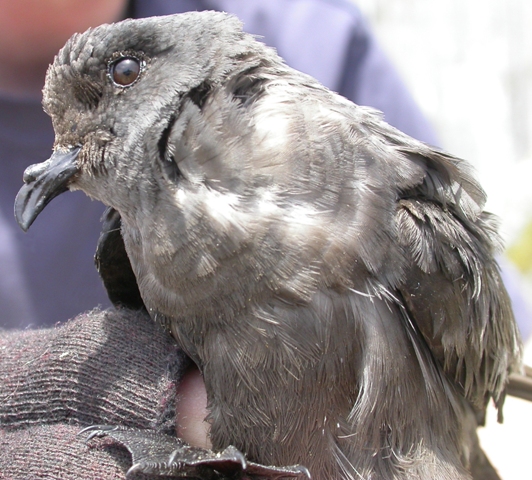
White-bellied Storm-Petrel
Fregetta grallaria
Order: Procellariiformes / Family: Hydrobatidae

Wikimedia Commons
About the White-bellied Storm-Petrel
The White-bellied Storm-Petrel (Fregetta grallaria) is a small seabird renowned for its striking appearance and agile flight. This species belongs to the family Hydrobatidae, within the order Procellariiformes, and plays a significant role in the marine ecosystems it inhabits. Known for its distinctive dark upperparts and bright white undersides, the White-bellied Storm-Petrel can be spotted across various oceanic regions, notably in the Southern Hemisphere. Its preferred habitats include offshore waters and is often associated with islands where it breeds.
This storm-petrel is particularly significant as an indicator species for ocean health, owing to its reliance on marine food sources and the impact of oceanic conditions on its life cycle. The species is often found skimming the ocean surface in search of plankton and small fish, contributing to the oceanic food web by controlling prey populations. Observers have noted seasonal behaviors, with the White-bellied Storm-Petrel showing increased activity during breeding seasons on isolated islands such as Tristan da Cunha and the Seychelles.
The ecological role of the White-bellied Storm-Petrel extends beyond just feeding. It also acts as a bioindicator for changes in marine environments, reflecting shifts in ocean temperatures and food availability. Its presence in diverse marine areas, from the temperate waters off New Zealand to the subtropical regions of the Indian Ocean, highlights its adaptability yet underscores the vulnerability of seabirds to environmental changes. Conservation efforts are crucial to ensure the sustainability of its populations, particularly in the face of climate change and human disturbances.
The White-bellied Storm-Petrel belongs to the family Hydrobatidae, within the order Procellariiformes. These birds typically live average 8 years with max recorded 15 years..
How to Identify a White-bellied Storm-Petrel
The White-bellied Storm-Petrel is a small seabird, typically measuring around 19 to 22 centimeters in length with a wingspan of approximately 45 to 48 centimeters. Its plumage features a stark contrast, with the upperparts being predominantly black or dark brown while the underparts are a bright, clean white, giving it its name. The bird's dark head and back are complemented by a white rump patch, a key field mark when identifying this species at sea.
Juvenile White-bellied Storm-Petrels resemble adults but may exhibit slightly duller plumage and less distinct contrast between the upper and lower parts. There are no significant differences between male and female plumage, making sexing in the field challenging without behavioral cues. In flight, the bird presents a distinctive silhouette with long, pointed wings and a square or slightly forked tail which aids in its agile maneuvering over ocean surfaces.
When comparing the White-bellied Storm-Petrel to similar species, such as the Black-bellied Storm-Petrel, the white belly and rump are definitive identifiers. Observers often note the erratic flight pattern typical of storm-petrels, characterized by rapid wing beats interspersed with glides, which can aid in distinguishing them from other seabirds.
Having trouble telling birds apart? Upload a photo to our bird identification tool for an instant species match.
White-bellied Storm-Petrel Habitat and Range
Preferred Habitat
The White-bellied Storm-Petrel predominantly inhabits open ocean environments, particularly favoring subtropical and temperate marine zones. It is often observed far from land, skimming the water's surface in search of food. During the breeding season, this species nests on remote islands, including the Tristan da Cunha group, as well as islands in the southern Indian and Pacific Oceans.
The storm-petrel's habitat varies with the seasons. Outside the breeding season, the bird is pelagic, spending the majority of its time over the open ocean. It is rarely found in coastal waters, preferring the vast expanses of the sea where it can exploit oceanic feeding grounds. The species is not commonly associated with urban or heavily populated coastal areas, maintaining a largely offshore lifestyle.
Elevation is not a significant factor for the White-bellied Storm-Petrel, as it is a bird of the sea rather than land. However, it does seek out elevated island terrains for nesting, favoring crevices or burrows in rocky areas to protect its eggs and chicks from predators.
Geographic Range
The White-bellied Storm-Petrel has a widespread breeding range across the Southern Hemisphere, with key populations on islands such as Tristan da Cunha, Gough Island, and islands in the Indian Ocean like the Seychelles. During the non-breeding season, the species disperses widely across the southern oceans, reaching as far as the waters surrounding Australia and New Zealand.
This storm-petrel does not undertake long migrations typical of some other seabirds, but it does exhibit movement patterns following ocean currents and food availability. Its presence has been recorded in waters off South America, particularly in the Humboldt Current region, indicating a preference for areas rich in marine life.
Population density hotspots tend to occur around breeding islands during the nesting season. However, during the austral winter, the White-bellied Storm-Petrel is more evenly distributed across the oceans of the Southern Hemisphere, making it a fascinating subject for pelagic birdwatchers and researchers alike.
Want to know which birds visit your area? Browse our backyard birds by location guides for region-specific species lists.
What Does the White-bellied Storm-Petrel Eat?
The diet of the White-bellied Storm-Petrel primarily consists of planktonic crustaceans, small fish, and squid. It is a surface feeder, relying on its agile flight to skim the ocean's surface and snatch up prey items with its sharp bill. This feeding technique, known as surface seizing, allows the bird to exploit the rich feeding grounds of the southern seas.
Seasonal changes can influence the diet of the White-bellied Storm-Petrel, with some variations in prey availability affecting its food sources. During breeding seasons, when energy demands are higher, the bird may consume larger prey items or increase its foraging range to ensure sufficient food supply for its chicks.
The storm-petrel's prey size is generally small, reflecting its own diminutive stature. It feeds primarily during daylight hours, although it is known to exploit bioluminescent prey at night when such opportunities arise. This opportunistic feeding behavior underscores the bird's adaptability and efficiency as a forager in the challenging marine environment.
White-bellied Storm-Petrel Behavior and Social Structure
White-bellied Storm-Petrels exhibit solitary or loosely organized social structures, especially outside the breeding season when they disperse widely across the open ocean. During breeding periods, they exhibit more communal behaviors, nesting in colonies on isolated islands where they engage in social interactions with conspecifics.
Territorial behavior is minimal, as these birds occupy vast ocean spaces where competition is less intense compared to land-based environments. However, they can display aggressive behaviors towards conspecifics when nesting sites are limited. Courtship displays are subtle and occur primarily at night, involving ritualized movements and vocalizations near the nesting burrows.
The species tends to form loose flocks when foraging, especially in areas with abundant food resources. These flocks are not tightly knit but are rather a result of convergent foraging efforts. In response to predators, White-bellied Storm-Petrels rely on their swift, erratic flight to evade capture rather than engage in direct confrontation.
The daily activity patterns of the White-bellied Storm-Petrel are largely diurnal, although they may exhibit nocturnal behavior during breeding seasons when attending to nests. This adaptability in behavior allows them to optimize feeding and breeding success in a dynamic marine environment.
White-bellied Storm-Petrel Nesting and Reproduction
White-bellied Storm-Petrels choose remote, often rocky islands for nesting, where they dig burrows or utilize natural crevices to protect their offspring from predators and environmental extremes. The nesting sites are typically situated on steep slopes or cliff faces, offering both security and protection from the elements.
The clutch size for this species is generally one egg per breeding attempt, which is incubated by both parents for a period of approximately 42 to 46 days. This shared incubation duty is critical for maintaining egg viability in the harsh island climates. Once hatched, the chick remains in the nest for another 60 to 70 days, receiving care and feeding from both parents.
Parental roles are well defined, with both males and females involved in feeding and defending the chick. The species typically raises a single brood per year, although some pairs may attempt a second if conditions are favorable and the first breeding attempt fails early. This low reproductive rate underscores the importance of successful fledging for population sustainability.
White-bellied Storm-Petrel Sounds and Vocalizations
The White-bellied Storm-Petrel's vocalizations are characterized by a series of soft, twittering notes, often described as a rapid 'tittering' that can be heard during flight. These calls are most frequently heard at night around nesting colonies, where they serve as communication between mates and as territorial signals.
In addition to these calls, the storm-petrel emits a distinct alarm call when disturbed or threatened, which is sharper and more abrupt than its usual vocalizations. This alarm call serves as a warning to other birds in the vicinity of potential danger.
The species does not participate significantly in a dawn chorus, as its vocal activity is primarily nocturnal, coinciding with its breeding behaviors. Compared to the melodic calls of many songbirds, the White-bellied Storm-Petrel's sounds are more utilitarian, serving specific purposes related to breeding and territory.
Interesting Facts About the White-bellied Storm-Petrel
- 1The White-bellied Storm-Petrel spends most of its life at sea, only coming ashore to breed on isolated islands.
- 2This storm-petrel is known for its erratic flight pattern, which resembles a dancing motion over the waves.
- 3Despite its small size, the White-bellied Storm-Petrel can cover vast distances across the ocean, following food sources.
- 4The species' breeding sites are often on remote islands, making them challenging to study and monitor.
- 5White-bellied Storm-Petrels use their highly developed sense of smell to locate food sources, a trait rare among birds.
- 6Storm-petrels, including the White-bellied, are among the few birds that can drink seawater due to specialized salt glands.
- 7The White-bellied Storm-Petrel's breeding season is synchronized with oceanic productivity, ensuring food availability for chicks.
White-bellied Storm-Petrel Conservation Status
The White-bellied Storm-Petrel is currently classified as Least Concern by the IUCN, indicating a stable population trend. However, the species faces several threats, primarily from introduced predators at breeding sites, such as rats and cats, which can decimate nesting colonies if not controlled. Conservation efforts are focused on habitat protection and predator eradication on breeding islands. These efforts have been successful in some areas, leading to population recoveries where invasive species have been removed. Furthermore, monitoring programs aim to track population changes and respond to emerging threats, such as climate change impacts and pollution. Historically, the species' population has fluctuated, with declines primarily linked to human activities. Continued conservation vigilance is necessary to ensure the long-term survival of this and other seabird species that rely on pristine marine environments for their survival.