
Wood Warbler
Phylloscopus sibillatrix
Order: Passeriformes / Family: Phylloscopidae

Wikimedia Commons
About the Wood Warbler
The Wood Warbler, a member of the Phylloscopidae family, is well known for its striking appearance and melodious song. This small songbird, found across Europe, particularly in deciduous and mixed forests, has a special affinity for woodlands dominated by beech and oak trees. Its presence is most notable during the breeding season, when its distinctive song fills the air. The Wood Warbler plays a crucial role in the ecosystem as both a predator of insects and a prey species for birds of prey and small mammals.
During the spring and summer, the Wood Warbler migrates to Europe from its wintering grounds in sub-Saharan Africa. This migration is a remarkable feat, as the species travels thousands of kilometers, demonstrating its incredible endurance and navigational skills. Upon arrival, male Wood Warblers establish territories where they perform their characteristic singing to attract mates and defend their space from rivals.
The ecological significance of the Wood Warbler is multifaceted. As an insectivore, it helps control populations of forest insects, thereby contributing to the health of its forest habitat. Its activities also provide food for predators, such as hawks and owls, maintaining the balance of the woodland food web. The Wood Warbler's migratory habits highlight the interconnectedness of global ecosystems, linking European forests with the African savannas where it spends the winter months. This connectivity underscores the importance of conservation efforts across continents, ensuring the preservation of both breeding and wintering habitats.
In recent years, concerns about the Wood Warbler's population have arisen due to habitat loss and changes in forest management practices. Conservationists emphasize the need for sustainable forestry practices and the protection of migratory corridors to support this species. As an indicator of forest health, the Wood Warbler's presence or absence can provide valuable insights into the state of its environment, making it a species of considerable interest to ornithologists and conservation biologists alike.
The Wood Warbler belongs to the family Phylloscopidae, within the order Passeriformes. These birds typically live averages 2-3 years, with some individuals reaching up to 8 years..
How to Identify a Wood Warbler
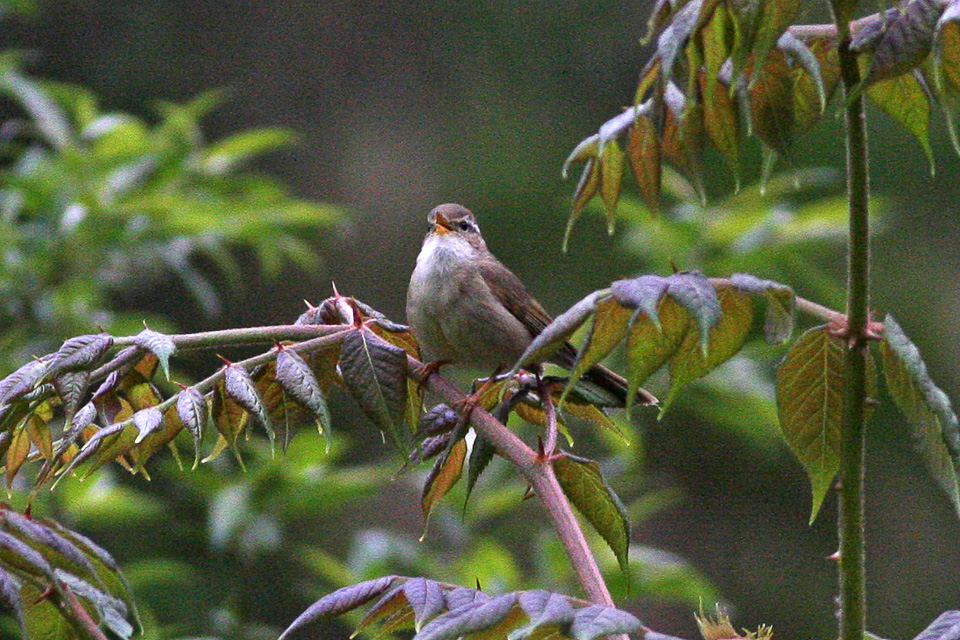
The Wood Warbler is easily identifiable by its bright yellow throat and chest, set against a contrasting white belly and undertail. Its upperparts are a vibrant yellow-green, which provides excellent camouflage among the foliage of its forest habitat. This coloration is particularly useful during the breeding season when the bird must remain discreet to protect its nest from predators.
Adult Wood Warblers measure about 11-12.5 centimeters in length, with a wingspan of approximately 19-24 centimeters. They exhibit a slender build, and their long wings are well-adapted for long-distance migration. Both sexes appear similar, though males may display slightly brighter plumage during the breeding season. Juveniles resemble adults but often have a duller, more subdued coloration, making them less noticeable.
The Wood Warbler can be confused with other Phylloscopus species, such as the Willow Warbler and Chiffchaff. However, the Wood Warbler's larger size, combined with its unique song and the bright lemon-yellow wash on its throat and chest, are reliable distinguishing features. In flight, the Wood Warbler displays a distinctive, swift, and agile silhouette, often performing short, rapid flights among the tree canopy. When perching, its posture is upright, often with its tail slightly cocked, allowing observers to appreciate its striking plumage.
Having trouble telling birds apart? Upload a photo to our bird identification tool for an instant species match.
Wood Warbler Habitat and Range
Preferred Habitat
Wood Warblers favor deciduous and mixed forests, with a particular preference for broadleaf woodlands rich in beech and oak trees. These habitats provide the dense canopy and undergrowth necessary for nesting and foraging. Wood Warblers typically occupy lowland forests but can be found at elevations up to 1500 meters in mountainous regions.
During the breeding season, they are primarily associated with mature forests that offer abundant insect prey and suitable nesting sites. In contrast, during migration, Wood Warblers may be observed in a wider range of habitats, including scrublands and urban parks, where they rest and refuel.
Seasonal habitat shifts are evident as they migrate between Europe and Africa. In their wintering grounds, they inhabit the edges of tropical forests and savannas, where they find ample food resources. The Wood Warbler's adaptability to different environments during migration highlights its resilience, though the loss of both breeding and wintering habitats poses a significant threat to its survival.
Geographic Range
The Wood Warbler breeds across a broad swath of Europe, from the British Isles and Scandinavia in the north to the Iberian Peninsula and the Balkans in the south. Its breeding range extends eastward into western Russia, showcasing its adaptability to various European climates.
During the winter, the Wood Warbler migrates to sub-Saharan Africa, primarily in the western and central regions. Countries such as Ghana, Nigeria, and Cameroon provide essential wintering grounds, where the birds can find the necessary food and habitat to sustain them through the non-breeding season.
Migration corridors for the Wood Warbler include key stopover sites in southern Europe and North Africa, where they rest and replenish their energy reserves. These migratory paths are crucial for the species' survival, as they must navigate long distances and various environmental challenges. Population densities are generally higher in central and eastern Europe, where suitable habitat is more abundant. Conservation efforts in these areas focus on preserving mature forests and maintaining the health of migratory stopover sites.
Want to know which birds visit your area? Browse our backyard birds by location guides for region-specific species lists.
What Does the Wood Warbler Eat?
The primary diet of the Wood Warbler consists of insects and other small invertebrates, which it actively hunts among the foliage of its forest habitat. Common prey items include caterpillars, beetles, and spiders, which provide essential nutrients during the breeding season.
As an insectivore, the Wood Warbler plays a vital role in controlling forest insect populations, benefiting both the trees and the bird itself. Its foraging technique involves gleaning insects from leaves and branches, often seen flitting among the canopy in search of its next meal.
Seasonal diet changes occur when the Wood Warbler migrates to its wintering grounds in Africa. Here, it continues to feed on insects but may also consume small fruits and berries when available. This dietary flexibility allows it to adapt to varying food availability across different regions and seasons. The Wood Warbler typically feeds throughout the day, with peak activity in the early morning and late afternoon when insect activity is highest.
Wood Warbler Behavior and Social Structure
Wood Warblers are solitary or found in pairs during the breeding season, with males establishing and vigorously defending territories through song. Their territorial behavior includes chasing intruders and performing display flights to assert dominance over their chosen area.
Courtship displays involve the male performing a series of fluttery flights and singing to attract a female. Once paired, the female takes the lead in nest building, while the male continues to defend the territory. The species is monogamous, with pairs often remaining together for the entire breeding season.
Outside the breeding season, Wood Warblers become more social, often joining mixed-species flocks during migration and on their wintering grounds. This flocking behavior provides added protection against predators and facilitates efficient foraging. The Wood Warbler's response to predators includes a variety of alarm calls and evasive flight maneuvers, as it relies on its agility to escape threats. Daily activity patterns are largely diurnal, with most feeding, singing, and social interactions occurring during daylight hours.
Wood Warbler Nesting and Reproduction
Wood Warblers build their nests low to the ground, typically in dense undergrowth or amongst fallen leaves. The nest is a dome-shaped structure composed of grasses, moss, and leaves, lined with feathers and fine plant materials for insulation.
The female is primarily responsible for constructing the nest, though the male may assist in gathering materials. Nest sites are carefully chosen to provide camouflage and protection from predators. Clutch sizes generally range from 5 to 7 eggs, with the female incubating them for about 12-14 days.
After hatching, both parents participate in feeding and caring for the chicks. The young fledge approximately 14-16 days after hatching, though they remain dependent on the parents for food and protection for some time thereafter. Typically, Wood Warblers raise one brood per year, although they may attempt a second if conditions permit. The breeding season's success hinges on favorable weather and abundant food supply, which influence chick survival rates.
Wood Warbler Sounds and Vocalizations
The primary song of the Wood Warbler is a distinctive, trilling series of notes that crescendo rapidly, often described as a spinning coin or a sewing machine. This rhythmic and melodious song is a hallmark of spring in European forests, with males using it to establish territories and attract mates.
Call notes are sharp and metallic, often used as contact calls between mates and during foraging. Alarm calls are high-pitched and urgent, signaling the presence of predators or other threats. The Wood Warbler participates in the dawn chorus, contributing its voice to the symphony of bird songs that greet the new day.
Compared to similar species, the Wood Warbler's song stands out for its rapid tempo and clarity, making it a favorite among birdwatchers. Its vocalizations, combined with its vibrant plumage, make it a species that is both audibly and visually captivating.
Interesting Facts About the Wood Warbler
- 1Wood Warblers can migrate over 3,000 kilometers between their breeding and wintering grounds, showcasing their incredible endurance.
- 2The Wood Warbler's song can be heard up to 100 meters away, making it a powerful tool for territory establishment.
- 3During migration, Wood Warblers can fly at altitudes of up to 2,000 meters, navigating across diverse landscapes.
- 4The species relies heavily on beech and oak forests during breeding, linking its survival to the health of these forest ecosystems.
- 5Wood Warblers are known for their rapid wingbeats and agile flight, which aid in both foraging and predator evasion.
- 6Despite their small size, Wood Warblers play a significant role in controlling forest insect populations, benefiting the entire ecosystem.
- 7Their nests are often hidden among dense undergrowth, providing effective camouflage against predators such as snakes and birds of prey.
Wood Warbler Conservation Status
The Wood Warbler is currently listed as 'Least Concern' by the IUCN, though its population trend is decreasing due to habitat loss and changes in forest management. Primary threats include deforestation, fragmentation of breeding and wintering habitats, and climate change, which can alter the timing of insect emergence and affect food availability. Conservation efforts focus on preserving mature forest habitats in both Europe and Africa, as well as maintaining the integrity of migratory corridors. Initiatives include sustainable forestry practices and the establishment of protected areas to safeguard critical habitats. Historically, Wood Warbler populations have fluctuated in response to environmental changes, highlighting the importance of ongoing monitoring and research. Conservationists emphasize the need for international cooperation to address the challenges faced by this migratory species, ensuring its continued presence in the world's woodlands.
Other Phylloscopidae Species



Birds Similar to the Wood Warbler
These species are often confused with the Wood Warbler due to similar appearance or overlapping range.
