
Willow Warbler x Chiffchaff
Phylloscopus trochilus x collybita
Order: Passeriformes / Family: Phylloscopidae
About the Willow Warbler x Chiffchaff
The Willow Warbler x Chiffchaff hybrid, belonging to the family Phylloscopidae, represents a fascinating intersection between two closely related species, Phylloscopus trochilus and Phylloscopus collybita. These hybrids occur where the ranges of the Willow Warbler and the Chiffchaff overlap significantly, primarily in parts of Europe. The hybridization between these two species offers unique insights into the dynamics of avian speciation and the complexities of interspecies interactions. Willow Warblers typically prefer woodlands, thickets, and gardens, while Chiffchaffs are known for their presence in open woodland, scrub, and hedgerows. The hybrid, therefore, can be found in a variety of mixed habitats that accommodate the preferences of both parent species. During the breeding season, which spans from late spring to early summer, the hybrid exhibits adaptability in nesting and foraging behaviors. Their ecological role includes insect population control, given their diet primarily consists of small invertebrates. As both parent species are migratory, the hybrid also engages in seasonal movements. They migrate to southern Europe and northern Africa during the winter, where they occupy similar habitats to those found during the breeding season. The presence of the Willow Warbler x Chiffchaff is indicative of healthy ecosystems where diverse habitats coexist, supporting a variety of avian life.
The Willow Warbler x Chiffchaff belongs to the family Phylloscopidae, within the order Passeriformes. These birds typically live potentially similar to parent species, averaging 2-3 years..
How to Identify a Willow Warbler x Chiffchaff
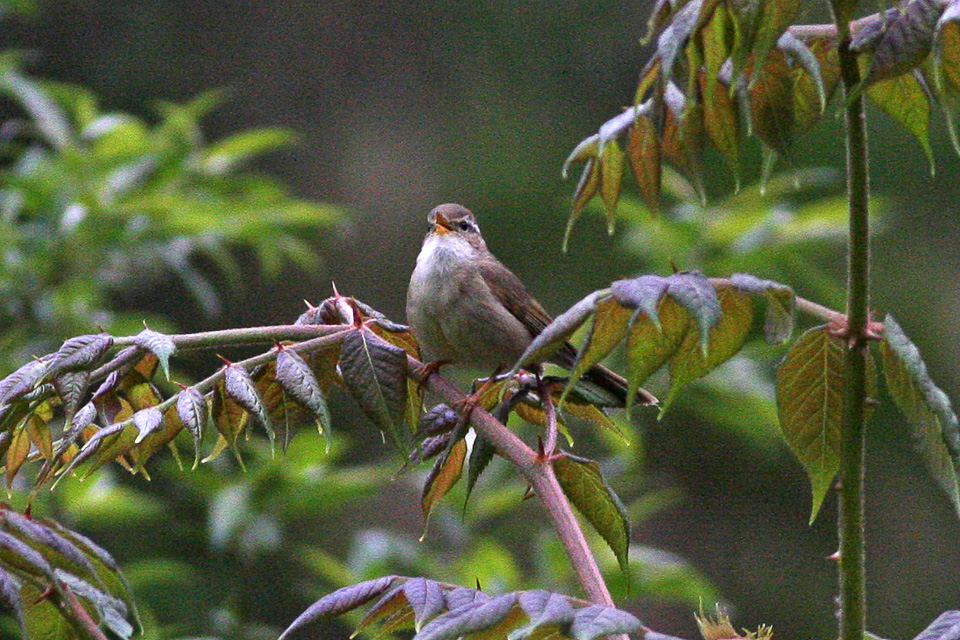
Identifying the Willow Warbler x Chiffchaff can be challenging due to its intermediate characteristics. Adult hybrids display a mix of plumage traits from both species, often showing a greenish-brown back with a paler underside, resembling the Willow Warbler, along with a more pronounced eye stripe akin to the Chiffchaff. Juveniles may appear even more similar, requiring careful observation of subtle differences. Unlike the Willow Warbler's longer primary projection, the hybrid's wing structure can appear short and rounded, more like the Chiffchaff. Neither sex exhibits markedly different plumage, making male and female hybrids difficult to distinguish visually. In flight, the hybrid's silhouette tends to be less distinct, but their perching posture is typically upright and alert. Confusion with other Phylloscopus species is common, demanding attention to vocalizations and subtle markings for accurate identification.
Having trouble telling birds apart? Upload a photo to our bird identification tool for an instant species match.
Willow Warbler x Chiffchaff Habitat and Range
Preferred Habitat
The Willow Warbler x Chiffchaff hybrid inhabits a range of environments, including deciduous woodlands, mixed forests, and scrublands. They are often found at low to moderate elevations, from sea level up to approximately 1,500 meters. In urban settings, these hybrids may occasionally occupy parks and gardens, particularly where native vegetation is present. Seasonal shifts in habitat are minimal, as they tend to follow the migratory patterns of their parent species, wintering in southern regions where similar habitat types are available. Their adaptability to various habitats highlights their evolutionary significance and resilience.
Geographic Range
The range of the Willow Warbler x Chiffchaff hybrid primarily spans Europe, where the breeding territories of the Willow Warbler and Chiffchaff overlap. This includes countries such as the United Kingdom, Germany, and Poland, where these species are both prevalent. During migration, these hybrids traverse central and southern Europe, reaching wintering grounds in the Mediterranean and North Africa. Population density hotspots are often found in areas where both parent species are abundant, providing ample opportunities for interbreeding. As migratory birds, they travel significant distances annually, showcasing remarkable endurance and navigational skills.
Want to know which birds visit your area? Browse our backyard birds by location guides for region-specific species lists.
What Does the Willow Warbler x Chiffchaff Eat?
The diet of the Willow Warbler x Chiffchaff consists largely of small insects and other invertebrates. During the breeding season, they focus on consuming caterpillars, beetles, and flies, which are abundant in their forest and woodland habitats. In the autumn, they may also eat berries and seeds, supplementing their insect diet as these become more available. The hybrid employs foraging techniques such as gleaning from leaves and branches and occasionally hovering to catch prey. Their feeding schedule aligns with daylight hours, with heightened activity in the early morning and late afternoon, reflecting the foraging habits of their parent species.
Willow Warbler x Chiffchaff Behavior and Social Structure
The behavior of the Willow Warbler x Chiffchaff is characterized by its blend of traits from both parent species. These hybrids tend to be solitary or found in loose flocks outside the breeding season. Territorial during breeding, males sing to establish their presence and ward off rivals. Courtship displays are subtle, involving song and aerial maneuvers. Their response to predators involves rapid flight and seeking cover in dense foliage. Daily activity peaks at dawn and dusk, coinciding with optimal feeding times. The hybrid's adaptability in social structure and behavior underscores its flexibility in varying environments.
Willow Warbler x Chiffchaff Nesting and Reproduction
Willow Warbler x Chiffchaff hybrids exhibit nesting behaviors influenced by both parent species. They construct dome-shaped nests on or near the ground, using grasses, leaves, and feathers for insulation. Preferred locations include dense undergrowth and thickets, providing camouflage and protection. A typical clutch contains 4 to 6 eggs, with an incubation period of about 12 to 14 days. Both parents share incubation duties, although females typically invest more time. After hatching, the young fledge in approximately 14 to 16 days. The hybrid generally raises one brood per year, although favorable conditions may allow for a second.
Willow Warbler x Chiffchaff Sounds and Vocalizations
The song of the Willow Warbler x Chiffchaff is a unique blend of its parent species, featuring a mix of the Chiffchaff's repetitive 'chiff-chaff' notes and the Willow Warbler's melodic, descending phrases. This results in a song that is both rhythmic and tuneful, often less predictable than either parent. Call notes are typically simple 'huet' sounds, while alarm calls become sharper and more rapid in response to threats. During the dawn chorus, their song contributes to the vibrant soundscape of their habitat, making them a key participant in the avian community's acoustic display.
Interesting Facts About the Willow Warbler x Chiffchaff
- 1These hybrids are often more challenging to identify than their parent species, requiring close attention to song and subtle plumage differences.
- 2Hybrids like the Willow Warbler x Chiffchaff provide valuable insights into avian speciation and genetic diversity.
- 3The hybrid zone where Willow Warblers and Chiffchaffs interbreed is a dynamic area for studying evolutionary processes.
- 4Some hybrid individuals exhibit songs that can mimic one parent species more than the other, adding to identification challenges.
- 5The hybrid's adaptability to different habitats may offer some resilience against environmental changes affecting parent species.
Willow Warbler x Chiffchaff Conservation Status
Currently, the Willow Warbler x Chiffchaff does not have a distinct IUCN status, as it is considered a hybrid of two common species. The populations of both parent species are stable, contributing to a steady occurrence of hybrids in regions where their ranges overlap. Primary threats include habitat loss due to deforestation and urban expansion. Conservation efforts focus on preserving natural habitats and ensuring connectivity between breeding and wintering ranges. Historical population changes reflect broader trends in the populations of Willow Warblers and Chiffchaffs, with no significant recent declines observed.
Other Phylloscopidae Species



Birds Similar to the Willow Warbler x Chiffchaff
These species are often confused with the Willow Warbler x Chiffchaff due to similar appearance or overlapping range.
