Wynaad Laughingthrush
Ianthocincla delesserti
Order: Passeriformes / Family: Leiothrichidae

Wikimedia Commons
About the Wynaad Laughingthrush
The Wynaad Laughingthrush (Ianthocincla delesserti) is a striking member of the Leiothrichidae family, endemic to the Western Ghats of India. Known for its gregarious nature and distinctive calls, this species plays a crucial role in the ecosystem as both a seed disperser and insect controller. The bird inhabits the dense, humid forests primarily within the states of Kerala, Karnataka, and Tamil Nadu. It thrives in the lush, montane environments of the Western Ghats, which offer the thick canopy and rich biodiversity essential for its survival.
The bird's significance extends beyond its ecological role. It is a flagship species for conservation in the Western Ghats, highlighting the importance of preserving these biodiverse rainforests. The Wynaad Laughingthrush's presence often indicates a healthy and well-balanced ecosystem, as it requires pristine forest conditions to thrive. Alarmingly, the species is classified as vulnerable, facing threats from habitat destruction and fragmentation.
Seasonal behaviors of the Wynaad Laughingthrush include forming larger flocks during the non-breeding season, enhancing its social interactions and foraging efficiency. During the breeding season, these flocks disperse slightly as pairs establish territories. The bird's vocalizations, particularly its loud, laughing call, are instrumental in maintaining social bonds and signaling territory during these periods. As an insectivore and frugivore, it contributes significantly to controlling insect populations and spreading the seeds of various fruiting plants, thus maintaining the ecological balance of its habitat.
The Wynaad Laughingthrush belongs to the family Leiothrichidae, within the order Passeriformes. These birds typically live average 6-8 years with max recorded 12 years.
How to Identify a Wynaad Laughingthrush
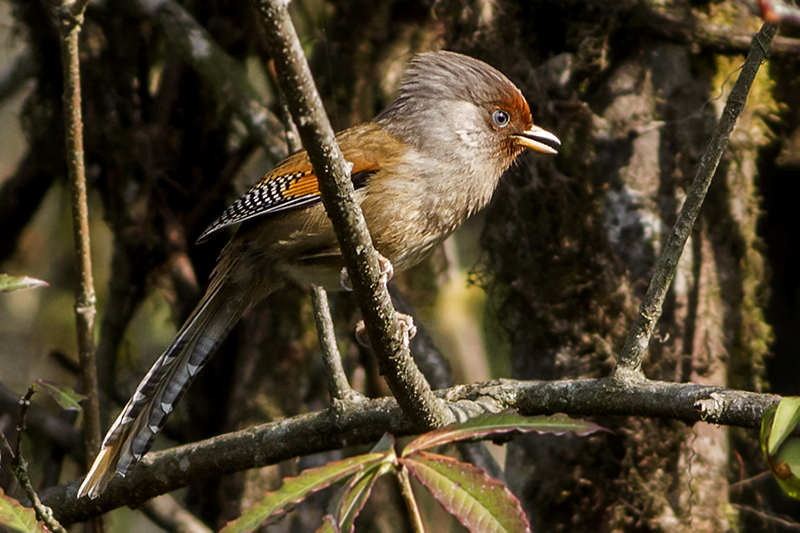
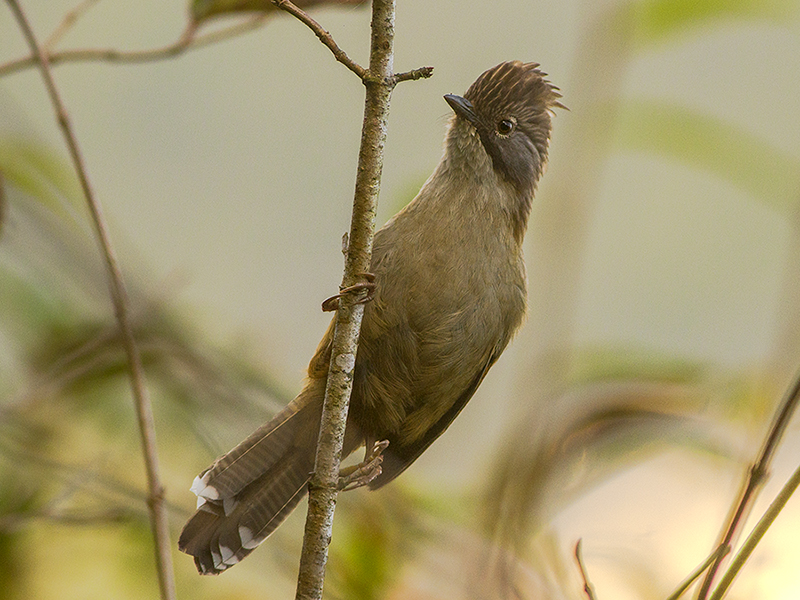
The Wynaad Laughingthrush is medium-sized, measuring about 26 centimeters in length. It exhibits a striking combination of brown and gray plumage with a pale throat and a distinctive white eyebrow stripe. The breast and belly are a lighter shade of brown, providing subtle contrast to its darker upper parts. Juveniles resemble adults but with slightly duller plumage, lacking the crispness of color seen in mature birds. Males and females are similar in appearance, making them difficult to distinguish in the field without behavioral cues.
In flight, this laughingthrush presents a somewhat rounded silhouette with broad, rounded wings and a slightly long tail, aiding its agility in dense forest canopies. When perched, it often assumes an alert posture with its tail slightly cocked, a common trait within the genus.
Though it shares its habitat with other laughingthrushes, the Wynaad Laughingthrush is distinguished by its vocal patterns and the unique combination of its plumage colors. Observers should note its constant movement and vocal activity when identifying it among other species.
Having trouble telling birds apart? Upload a photo to our bird identification tool for an instant species match.
Wynaad Laughingthrush Habitat and Range
Preferred Habitat
The Wynaad Laughingthrush is primarily found in tropical and subtropical moist broadleaf forests. It prefers elevations ranging from 600 to 1800 meters, often thriving in the dense undergrowth and along the edges of evergreen forests. These habitats provide the necessary cover and food resources for the species.
Seasonal shifts in habitat use are minimal, as the bird remains largely within the forested regions of the Western Ghats throughout the year. The species tends to avoid urban areas, preferring the tranquility and resources of rural and forested environments. The preservation of its natural habitat is crucial for its long-term survival, as the bird relies on the intact forest structure for nesting, foraging, and shelter.
Geographic Range
Endemic to the Western Ghats, the Wynaad Laughingthrush is found in southwestern India, specifically within the states of Kerala, Karnataka, and Tamil Nadu. Its range is restricted to this mountain range, making it a truly local species, with no significant migratory patterns observed.
Within this range, population density is higher in protected areas such as national parks and wildlife sanctuaries, where habitat conditions remain optimal. The bird's limited geographic distribution underscores the importance of habitat conservation in these regions, as any significant environmental changes could have drastic effects on its population dynamics.
Want to know which birds visit your area? Browse our backyard birds by location guides for region-specific species lists.
What Does the Wynaad Laughingthrush Eat?
The Wynaad Laughingthrush primarily feeds on insects and fruit, making it both an insectivore and a frugivore. Its diet includes beetles, caterpillars, and other arthropods, which it skillfully extracts from leaf litter and bark crevices using its strong bill. During the fruiting season, the bird supplements its diet with berries and small fruits, playing a vital role in seed dispersal for various plant species in its habitat.
The bird forages in small groups, often mixing with other species to form larger flocks, increasing its efficiency in locating food. It follows a diurnal feeding schedule, with peak activity occurring in the early morning and late afternoon when insects are most active and fruits are abundant.
Wynaad Laughingthrush Behavior and Social Structure
The Wynaad Laughingthrush exhibits highly social behavior, often forming small flocks that can include up to a dozen individuals. These flocks engage in constant vocal communication, using their distinctive calls to maintain contact and coordinate movements through the dense forest. The species is territorial during the breeding season, with pairs defending their nesting sites vigorously from intruders.
Courtship displays involve a combination of vocalizations and physical displays, such as bowing and wing-fluttering. The bird's response to predators includes a series of alarm calls that alert other flock members to potential danger, facilitating a coordinated escape.
Daily activity patterns are largely diurnal, with the birds becoming more active during the cooler parts of the day. They engage in foraging, social interaction, and preening throughout daylight hours, retreating to dense cover for rest at night.
Wynaad Laughingthrush Nesting and Reproduction
The Wynaad Laughingthrush constructs cup-shaped nests using twigs, leaves, and other plant materials. These nests are typically located in dense undergrowth or low trees, providing concealment from predators. The breeding season spans from March to June, aligning with the pre-monsoon period in its native range.
A typical clutch consists of 2 to 3 eggs, which are incubated by both parents over a period of about 14 days. After hatching, chicks remain in the nest for an additional 12 to 14 days before fledging. Both parents share responsibilities in feeding and protecting the young, ensuring their survival in the competitive forest environment. The species typically produces one brood per year, though favorable conditions can sometimes lead to a second brood.
Wynaad Laughingthrush Sounds and Vocalizations
The Wynaad Laughingthrush is known for its loud, laughing calls that consist of a series of repeated notes with a melodious and somewhat harsh quality. These calls serve various functions, including mate attraction, territory defense, and flock cohesion. The bird also produces softer, conversational notes used within its social groups.
Alarm calls are shorter and more urgent, effectively communicating the presence of predators to other members of the flock. During the dawn chorus, the bird's song becomes particularly prominent, echoing through the forest as individuals establish their presence and engage in social interactions.
Interesting Facts About the Wynaad Laughingthrush
- 1The Wynaad Laughingthrush is named after the Wayanad region in Kerala, highlighting its restricted range.
- 2Despite its name, the Wynaad Laughingthrush's vocalizations are more melodious than harsh, resembling laughter.
- 3The bird's social structure is complex, with flocks often consisting of extended family groups.
- 4Wynaad Laughingthrushes play a critical role in seed dispersal for many endemic plant species.
- 5Their cooperative breeding behavior involves non-breeding individuals helping to rear young.
- 6This bird's preference for dense forest undergrowth makes it a key indicator of forest health.
- 7The Wynaad Laughingthrush is one of the few birds found exclusively in the Western Ghats, a biodiversity hotspot.
Wynaad Laughingthrush Conservation Status
The Wynaad Laughingthrush is currently listed as Vulnerable by the IUCN due to its limited range and the ongoing threat of habitat loss. Deforestation and fragmentation of the Western Ghats pose significant risks to its population. Conservation efforts focus on habitat preservation and restoration, with several protected areas providing refuge for the species. Historical population declines have been linked to extensive logging and agricultural expansion, emphasizing the need for continued protection and sustainable land-use practices.