Yellow-billed Babbler
Turdoides affinis
Order: Passeriformes / Family: Leiothrichidae

Wikimedia Commons
About the Yellow-billed Babbler
The Yellow-billed Babbler (Turdoides affinis) is a quintessential species of the family Leiothrichidae, known for its gregarious nature and loud, chattering calls. This bird plays a vital role in its native ecosystems, primarily found across southern India and Sri Lanka. The species thrives in a variety of habitats, including scrublands, gardens, and agricultural areas. Its adaptability to human-altered environments highlights its significance as a resilient species in rapidly changing landscapes. The Yellow-billed Babbler's social structure is particularly notable, as it often forms large, cooperative groups. These groups are not only essential for breeding success but also for maintaining hierarchical social interactions. In these flocks, individuals communicate through a complex system of vocalizations, which contribute to their social cohesion. This adaptability and social behavior make the Yellow-billed Babbler a key species in understanding avian responses to environmental changes. Ecologically, the Yellow-billed Babbler contributes to seed dispersal and insect control. Its foraging activities, which include turning over leaves and soil to find insects, help aerate the soil, thereby promoting nutrient cycling. The species shows a degree of seasonal variation in its behavior, particularly during the breeding season, when territorial disputes become more frequent. During this period, the babblers are more vocal and visible, often engaging in territorial displays to ward off rival groups. The Yellow-billed Babbler's presence in diverse habitats, including urban areas, underscores its adaptability and ecological importance. Understanding its role in these ecosystems can provide insights into the broader ecological dynamics of the regions it inhabits.
The Yellow-billed Babbler belongs to the family Leiothrichidae, within the order Passeriformes. These birds typically live average 5 years, with a maximum recorded of 7 years..
How to Identify a Yellow-billed Babbler
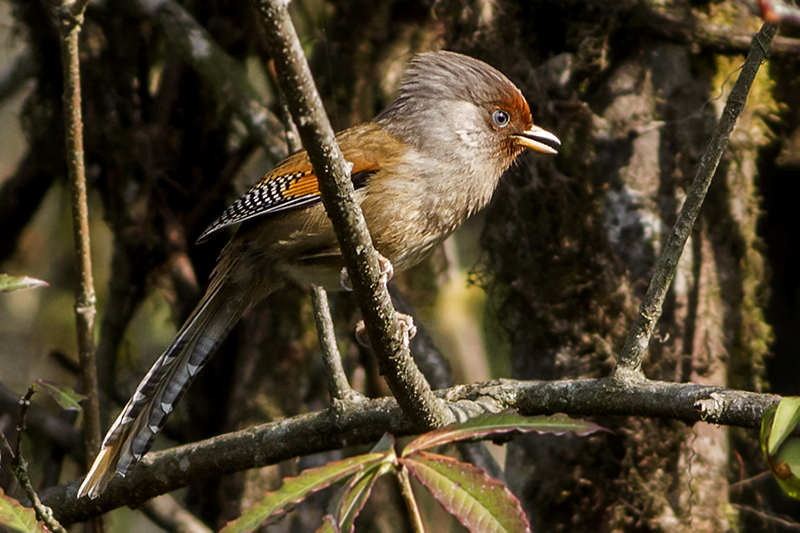
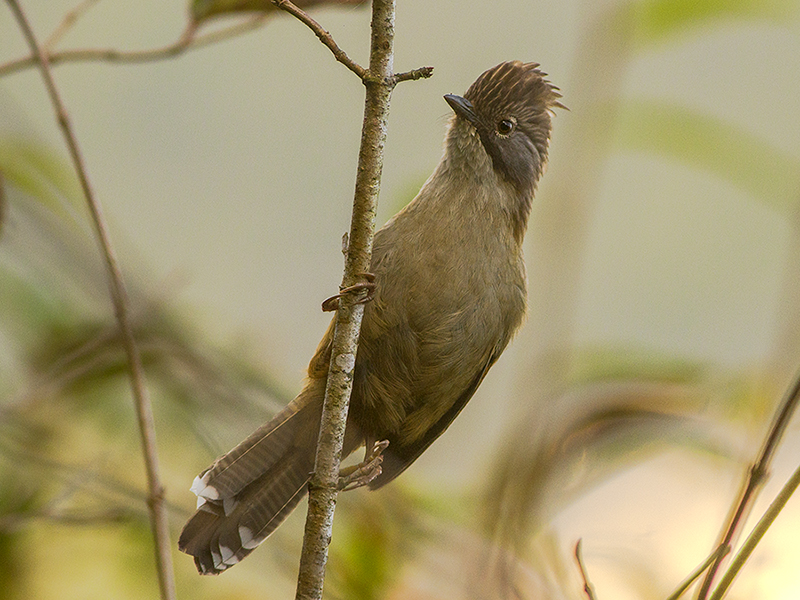
Identifying the Yellow-billed Babbler involves noting several key features. The adult plumage is predominantly brownish-grey, with a paler underside. A distinctive feature is its bright yellow bill, which contrasts sharply with the overall drab coloration. Additionally, the bird's eyes are pale and striking, offering another identifying mark. Juvenile birds resemble adults but have a slightly duller plumage and a less pronounced eye color. Unlike many bird species, there is little sexual dimorphism in the Yellow-billed Babbler, meaning males and females look similar. This can make field identification based on sex challenging. When observing the bird in flight, look for its medium size and the somewhat rounded tail, which is often held slightly raised. The flight pattern is typically fluttery and direct, with short bursts of flapping interspersed with glides. The Yellow-billed Babbler often perches in groups, usually on exposed branches or wires, where its social behavior is evident. It's common to see individuals actively preening each other, reinforcing social bonds. While observing in the field, be cautious of confusing this species with the similar Jungle Babbler (Turdoides striatus). However, the Jungle Babbler generally has a darker overall plumage and lacks the Yellow-billed Babbler's characteristic bright bill.
Having trouble telling birds apart? Upload a photo to our bird identification tool for an instant species match.
Yellow-billed Babbler Habitat and Range
Preferred Habitat
The Yellow-billed Babbler occupies a range of habitats, primarily favoring open and semi-open landscapes. It thrives in scrublands, agricultural fields, and gardens, showing a marked preference for areas with scattered bushes and trees. These habitats offer ample foraging opportunities and suitable nesting sites. In terms of elevation, the bird is usually found from sea level up to about 1200 meters, adapting well to both lowland and foothill regions. In urban settings, the Yellow-billed Babbler is a familiar sight, often inhabiting city parks, suburban gardens, and even bustling streets, where it forages without much concern for human presence. Unlike some species that undergo seasonal habitat shifts, the Yellow-billed Babbler tends to remain in its chosen territory year-round, taking advantage of the relatively stable climate in its native range. However, seasonal changes might influence its movement within a territory, primarily due to food availability or breeding activities.
Geographic Range
The Yellow-billed Babbler is predominantly found in the Indian subcontinent, with its range extending across southern India and Sri Lanka. In India, it is particularly abundant in the states of Tamil Nadu, Kerala, Karnataka, and Andhra Pradesh. The species is largely resident, showing little migratory behavior, as the climatic conditions in these regions provide consistent resources throughout the year. Within its range, the Yellow-billed Babbler occupies a variety of landscapes, from rural agricultural areas to urban environments. Population densities are notably high in areas with abundant food resources and suitable nesting sites. While generally widespread, local population densities can vary significantly, often correlating with habitat quality and human disturbance. The species does not typically venture beyond its established range, as its ecological requirements are largely fulfilled within these regions.
Want to know which birds visit your area? Browse our backyard birds by location guides for region-specific species lists.
What Does the Yellow-billed Babbler Eat?
The Yellow-billed Babbler maintains a diverse diet, primarily consisting of insects and other small invertebrates. Its foraging technique involves turning over leaves and soil to uncover hidden prey, demonstrating its adaptability in acquiring food. The bird also consumes a variety of fruits and seeds, which become more prominent in its diet during certain times of the year when insect availability decreases. This dietary flexibility allows the Yellow-billed Babbler to exploit different food sources depending on seasonal availability. Prey items typically range from ants and beetles to caterpillars and spiders, with the bird showing a preference for small to medium-sized invertebrates. Foraging sessions occur throughout the day, often in the company of other flock members, which aids in locating food more efficiently. The cooperative nature of their foraging activities underscores the social dynamics of the species.
Yellow-billed Babbler Behavior and Social Structure
Yellow-billed Babblers exhibit complex social behavior, often forming cohesive flocks that can number up to 20 individuals. These groups are not only family units but can also include unrelated individuals, which strengthens the social structure. Within these flocks, a hierarchical system is evident, with dominant birds often leading foraging and territorial activities. Territorial behavior is pronounced, especially during the breeding season, when flocks become highly vocal and assertive in defending their areas. Courtship displays involve a combination of vocalizations and physical postures, where males attempt to attract females by showcasing their agility and plumage. Flocking patterns demonstrate a high degree of coordination, with birds maintaining close proximity to one another while foraging or roosting. In response to predators, such as birds of prey, Yellow-billed Babblers rely on collective vigilance, with individuals taking turns to watch for threats. Daily activity patterns revolve around feeding and social interactions, with peak activity occurring in the early morning and late afternoon. During the hottest parts of the day, babblers often retreat to shaded areas, reducing activity levels significantly.
Yellow-billed Babbler Nesting and Reproduction
Yellow-billed Babblers construct their nests using a variety of materials such as twigs, grasses, and leaves. These nests, typically located in bushes or low trees, offer protection from predators and environmental elements. The choice of nesting site usually ensures concealment, with locations often close to the ground yet sufficiently hidden within dense foliage. Clutch sizes generally range from 3 to 5 eggs, with both parents sharing incubation duties. The incubation period spans approximately 13 to 15 days. Once the chicks hatch, they remain in the nest for about two weeks before fledging. During this vulnerable period, both parents, along with other flock members, participate in feeding and protecting the young. The communal approach to rearing young is a hallmark of the Yellow-billed Babbler's social behavior. Typically, the species can raise multiple broods per year, particularly in regions where food resources remain abundant throughout the breeding season.
Yellow-billed Babbler Sounds and Vocalizations
The vocal repertoire of the Yellow-billed Babbler is varied and distinctive, contributing significantly to its social interactions. The primary song is characterized by a series of rapid, chattering notes that can be likened to a constant babble, hence the common name. This song serves multiple purposes, including communication within the flock and territory defense. Call notes include a mix of harsh churring sounds and melodious whistles, often used to maintain contact between flock members. Alarm calls are sharp and piercing, effectively alerting the group to potential danger. During the dawn chorus, Yellow-billed Babblers become particularly vocal, engaging in a cacophony of calls that can be heard over long distances. The complexity and variety of their sounds are essential for maintaining the social structure and cohesiveness of their flocks.
Interesting Facts About the Yellow-billed Babbler
- 1Yellow-billed Babblers are known to engage in communal dust bathing, an activity that strengthens social bonds within the flock.
- 2The species is often referred to as the 'Seven Sisters' in India due to their tendency to form groups of around seven birds.
- 3Yellow-billed Babblers are considered helpful in agriculture as they consume a large number of insects, reducing pest populations.
- 4Despite their noisy nature, these babblers can be surprisingly elusive when foraging in dense vegetation.
- 5The species exhibits a unique juvenile behavior known as 'play fighting,' which helps young birds develop social skills.
- 6Yellow-billed Babblers are known to mob predators, such as snakes and raptors, to protect their flock members.
- 7They use a cooperative breeding system where non-breeding individuals assist in raising the young within the flock.
Yellow-billed Babbler Conservation Status
The Yellow-billed Babbler currently holds a status of Least Concern on the IUCN Red List, indicating a stable overall population. Despite its widespread presence, certain local populations may face threats from habitat loss and fragmentation due to agricultural expansion and urban development. Conservation efforts focus primarily on habitat preservation, ensuring that these birds have access to the diverse environments they require for feeding and nesting. Historical population data suggests that while some areas have experienced declines, others have seen stable or increasing numbers, largely due to the bird's adaptability. Continued monitoring and habitat management are essential to maintain the species' current status, particularly in areas undergoing rapid environmental changes.