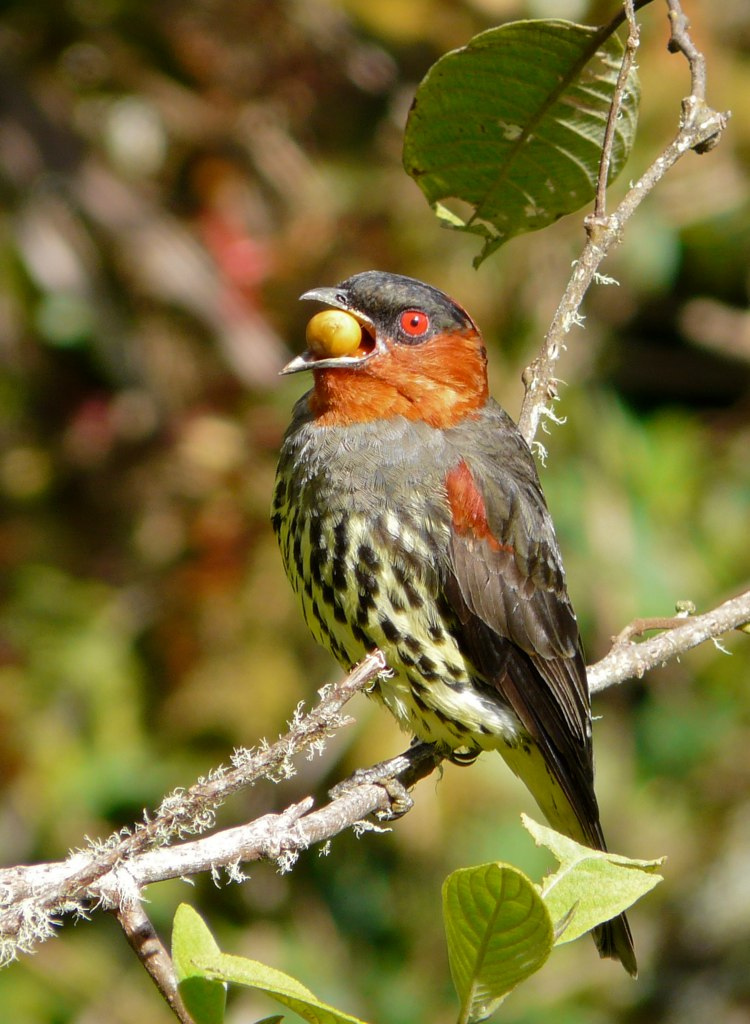
Yellow-billed Cotinga
Carpodectes antoniae
Order: Passeriformes / Family: Cotingidae

Wikimedia Commons
About the Yellow-billed Cotinga
The Yellow-billed Cotinga (Carpodectes antoniae) captures the attention of bird enthusiasts with its vivid contrast of white plumage and bright yellow bill. This medium-sized songbird is endemic to the Pacific lowland forests and mangroves of Costa Rica and Panama, where it plays a crucial ecological role as a frugivore. These birds contribute significantly to seed dispersal in their habitats, aiding in the regeneration of local flora. The Yellow-billed Cotinga is particularly significant because it is highly specialized, relying on specific fruiting trees that are increasingly threatened by habitat destruction.
This species exhibits notable seasonal behaviors, often moving to different areas in search of food. During the breeding season, which typically aligns with the wet months from May to September, the cotingas become more territorial and vocal. Outside of the breeding season, they may join mixed-species flocks, enhancing their chances of finding food while reducing predation risk.
Unfortunately, the Yellow-billed Cotinga's populations are under threat. Habitat loss due to deforestation and conversion of land for agriculture has reduced their numbers. Conservation efforts focus on protecting the remaining forest habitats and creating corridors that connect fragmented areas to support genetic diversity and long-term survival of the species.
The Yellow-billed Cotinga belongs to the family Cotingidae, within the order Passeriformes. These birds typically live average 8 years, with a max recorded of 12 years..
How to Identify a Yellow-billed Cotinga
Adult Yellow-billed Cotingas are primarily white, a rare trait among tropical birds, making them relatively easy to spot against the green backdrop of the forest canopy. Their most distinctive feature is the bright yellow bill, which stands out vividly against their otherwise monochromatic plumage. Males and females are similar in appearance, though males are slightly larger. Juveniles tend to have a duller, cream-colored plumage and a more subdued bill coloration, gradually acquiring the striking adult features as they mature.
In flight, the Yellow-billed Cotinga displays a unique silhouette with broad wings and a relatively short tail, contributing to a buoyant and somewhat erratic flight pattern. When perched, they often adopt an upright posture, which, combined with their color, can make them resemble a piece of fruit or a white flower at a distance.
Observers might confuse the Yellow-billed Cotinga with the Snowy Cotinga, another white bird native to Central America. However, the Snowy Cotinga lacks the distinctive yellow bill and tends to inhabit slightly different ecological niches, further assisting identification.
Having trouble telling birds apart? Upload a photo to our bird identification tool for an instant species match.
Yellow-billed Cotinga Habitat and Range
Preferred Habitat
Yellow-billed Cotingas primarily inhabit tropical and subtropical moist lowland forests and mangrove swamps. These environments provide the dense canopy cover and abundant fruit resources essential for their survival. They are most commonly found at elevations ranging from sea level up to about 600 meters, rarely venturing into higher altitudes.
Seasonally, these birds may shift their habitat slightly in response to fruit availability, moving from the mangroves to adjacent moist forests. Urban environments do not typically suit their needs, as cotingas are highly dependent on undisturbed forest patches. In pristine habitats like the Golfo Dulce region and the Osa Peninsula in Costa Rica, their presence is a valuable indicator of ecological health.
Geographic Range
The Yellow-billed Cotinga's range is limited to the Pacific slope of Central America, primarily within southern Costa Rica and western Panama. Their population is particularly concentrated in areas like the Osa Peninsula and the Golfo Dulce, where suitable habitats persist. During the breeding season, their distribution becomes more localized as they establish territories.
Migration is not a significant aspect of their behavior, as they are considered largely sedentary. However, they may engage in altitudinal movements in response to seasonal fruiting patterns. Despite their restricted range, the cotingas can form relatively dense populations within their preferred habitats, though these populations are fragmented and declining due to ongoing habitat loss.
Want to know which birds visit your area? Browse our backyard birds by location guides for region-specific species lists.
What Does the Yellow-billed Cotinga Eat?
The diet of the Yellow-billed Cotinga consists primarily of fruits, making it an important frugivore in its ecosystem. They prefer a variety of fleshy fruits, including those from fig trees and other native species. The availability of these fruits dictates their movements and habitat preferences.
During times when fruit is scarce, they may supplement their diet with insects, especially those found on fruiting trees. Their foraging technique involves short flights from a perch to pluck fruits directly off branches, often during the early morning and late afternoon when fruiting activity peaks. This feeding schedule not only helps them avoid the midday heat but also aligns with the active periods of potential predators, reducing risk.
Yellow-billed Cotinga Behavior and Social Structure
Yellow-billed Cotingas exhibit a solitary lifestyle during the breeding season, defending their territories with calls and displays. Males perform elaborate courtship displays, often involving wing flapping and bill clapping to attract females.
Outside of the breeding season, they become more social, occasionally joining mixed-species flocks. This behavior increases their efficiency in locating food and provides safety in numbers against predators such as hawks and arboreal snakes.
These birds are generally diurnal, with peak activity periods in the morning and late afternoon. They remain relatively quiet, except during the breeding season when males vocalize to establish dominance and attract mates.
Yellow-billed Cotinga Nesting and Reproduction
The Yellow-billed Cotinga constructs an open cup nest, typically located high in the forest canopy to protect from ground-based predators. The nest is made from twigs, leaves, and fibers, carefully woven to provide a secure platform for the eggs.
Females lay one to two eggs per clutch, with an incubation period of about 20 days. Both parents participate in feeding and caring for the chicks, although the female primarily handles incubation. The fledging period lasts approximately 3 weeks, after which the young birds become independent.
Typically, this species raises one brood per year, though in optimal conditions, they may attempt a second. Nesting success heavily depends on the availability of food and the absence of predators.
Yellow-billed Cotinga Sounds and Vocalizations
The primary song of the Yellow-billed Cotinga is a series of soft, fluty notes, often delivered from a high perch. The rhythm is slow, with a melodious quality that carries through the dense canopy. Call notes are more abrupt, serving as contact signals between mates or flock members.
Alarm calls are sharp and repetitive, intended to alert nearby cotingas of potential threats. During the dawn chorus, their song is most prominent, contributing to the morning soundscape of the tropical forest. The Yellow-billed Cotinga's vocalizations, while not as varied as some other songbirds, play a vital role in communication and territory defense.
Interesting Facts About the Yellow-billed Cotinga
- 1The Yellow-billed Cotinga's yellow bill is so distinctive that it can be seen from great distances, aiding in identification.
- 2Despite their striking appearance, Yellow-billed Cotingas are surprisingly elusive, often remaining hidden high in the canopy.
- 3Unlike many other tropical birds, Yellow-billed Cotingas do not exhibit sexual dimorphism, with males and females looking similar.
- 4Their role as seed dispersers helps maintain the biodiversity of their forest habitats, crucial for the ecosystem's health.
- 5Yellow-billed Cotingas have a specialized diet, relying heavily on specific fruiting trees, making them vulnerable to habitat changes.
- 6These birds are often found in the same areas as the critically endangered Golden-cheeked Warbler, sharing conservation challenges.
- 7The population of Yellow-billed Cotingas is estimated at fewer than 1,000 mature individuals, highlighting their conservation priority.
Yellow-billed Cotinga Conservation Status
The Yellow-billed Cotinga is currently listed as Endangered by the IUCN due to its declining population, primarily driven by habitat loss. Deforestation for agriculture and urban development poses the greatest threat to its habitat. Conservation efforts focus on habitat protection and restoration, particularly in key areas like the Osa Peninsula. Organizations are working to establish protected areas and promote sustainable land-use practices. Historically, the population has decreased as forest habitats have been fragmented and degraded, but ongoing conservation work aims to stabilize and eventually increase their numbers.