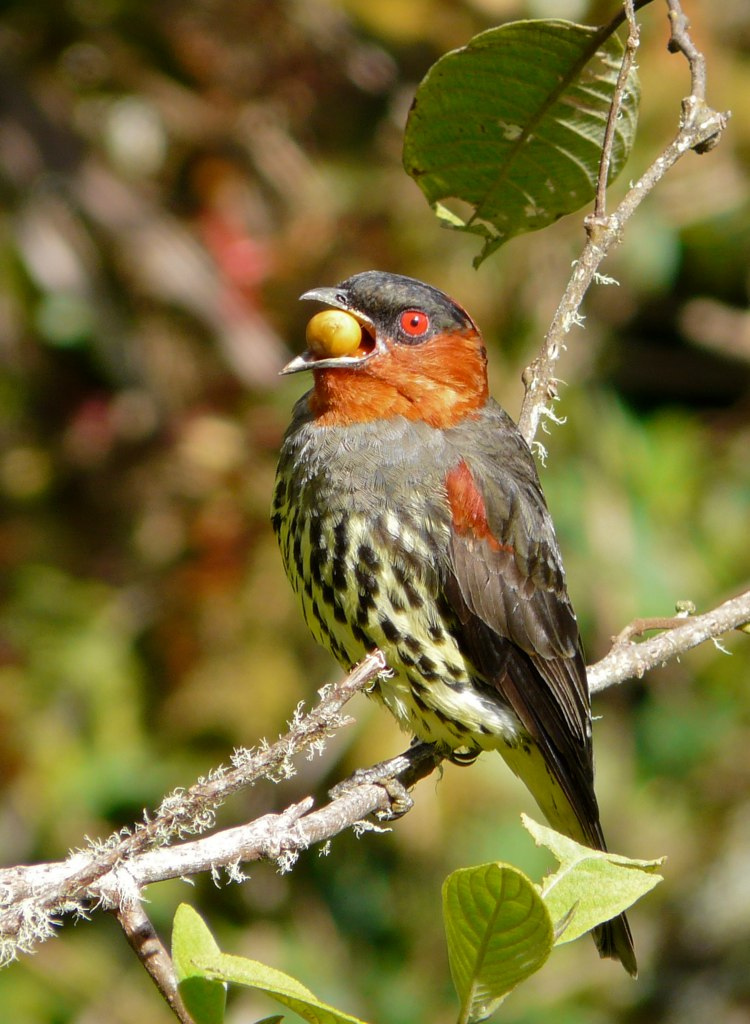
Yellow-cheeked Becard
Pachyramphus xanthogenys
Order: Passeriformes / Family: Cotingidae

Wikimedia Commons
About the Yellow-cheeked Becard
The Yellow-cheeked Becard, Pachyramphus xanthogenys, inhabits a fascinating ecological niche within the tropical and subtropical forests of Central and South America. As a member of the Cotingidae family, this bird holds a unique position among passerines due to its vibrant plumage and engaging behaviors. Its presence is most notable in regions stretching from southern Mexico to western Ecuador, where it thrives in the dense canopy of humid forests. The Yellow-cheeked Becard plays a crucial role in its ecosystem by participating in seed dispersal and insect population control, thus maintaining the delicate balance of its forest habitat. During the breeding season, which typically spans from March to August, these birds exhibit fascinating courtship behaviors that include intricate vocalizations and acrobatic flight displays. As the seasons change, the Yellow-cheeked Becard adapts by altering its foraging patterns and diet to align with the availability of food resources. This adaptability highlights the bird's resilience and ability to thrive in various environmental conditions. The Yellow-cheeked Becard's ecological significance extends beyond its physical beauty. Its presence indicates the health of the forest ecosystems it inhabits. These birds often serve as bioindicators, reflecting changes in their environment, such as deforestation and climate shifts. Conservation efforts aimed at preserving their habitat not only benefit the Yellow-cheeked Becard but also support the myriad of species that share its environment. Observing the Yellow-cheeked Becard in its natural habitat provides an enriching experience for birdwatchers and nature enthusiasts alike, as it offers a glimpse into the complex interactions within tropical ecosystems.
The Yellow-cheeked Becard belongs to the family Cotingidae, within the order Passeriformes. These birds typically live average 5-7 years with a max recorded of 10 years.
How to Identify a Yellow-cheeked Becard
Adult Yellow-cheeked Becards are medium-sized birds, measuring approximately 15 cm in length, with males and females exhibiting slight variations in plumage. Males boast the eponymous yellow cheeks, set against a predominantly black head and back. Their underparts are a softer gray, creating a striking contrast. Females, on the other hand, have a more subdued appearance with olive-green upper parts and a less pronounced yellow cheek patch. Juveniles resemble females but have even duller plumage. The Yellow-cheeked Becard's silhouette is characterized by its slightly rounded wings and tail, giving it a stocky appearance when perched. Its stout bill, adapted for a mixed diet, is a distinguishing feature that sets it apart from other similar species. In flight, the bird's short, rapid wingbeats and undulating pattern make it easily recognizable. It's important to differentiate the Yellow-cheeked Becard from similar species, such as the Rose-throated Becard, which can be found in overlapping ranges. The Rose-throated Becard, however, lacks the distinctive yellow facial markings, making the Yellow-cheeked Becard's identification straightforward for keen observers.
Having trouble telling birds apart? Upload a photo to our bird identification tool for an instant species match.
Yellow-cheeked Becard Habitat and Range
Preferred Habitat
Yellow-cheeked Becards primarily inhabit tropical and subtropical forests, thriving in both primary and secondary growth areas. They are most commonly found at elevations ranging from sea level to about 1,500 meters, although they may occasionally venture higher. These birds favor the dense canopy and forest edges, where insect prey and fruit are abundant. While they are generally absent from urban areas, they can be found in rural regions with suitable forest cover. Seasonal shifts in habitat use are observed, particularly during the breeding season, when they prefer quieter, less disturbed areas to raise their young. Despite their preference for forested environments, Yellow-cheeked Becards are adaptable and can occasionally be observed in semi-open areas, provided there is sufficient tree cover.
Geographic Range
The breeding range of the Yellow-cheeked Becard spans from southern Mexico through Central America, extending into parts of western Ecuador and Colombia. These birds are non-migratory, typically maintaining a year-round presence within their established territories. However, some altitudinal migration occurs as individuals move to lower elevations during cooler months, seeking more favorable conditions. In Mexico, they are commonly found in the states of Veracruz, Oaxaca, and Chiapas, while in Central America, their presence is noted in countries like Guatemala, Honduras, and Costa Rica. Population density tends to be higher in areas where forest habitat remains intact, such as protected reserves and national parks. The species has experienced range contractions in regions where deforestation and habitat fragmentation are prevalent, emphasizing the importance of conservation efforts to preserve its natural habitat.
Want to know which birds visit your area? Browse our backyard birds by location guides for region-specific species lists.
What Does the Yellow-cheeked Becard Eat?
The diet of the Yellow-cheeked Becard is diverse, comprising both animal and plant matter, which reflects its adaptability and role in the ecosystem. Primarily, these birds forage for insects, including beetles, caterpillars, and other arthropods, which they skillfully capture among the foliage. Their strong, slightly hooked bill is well-suited for this task, allowing them to pick prey from leaves and branches with precision. In addition to insects, the Yellow-cheeked Becard also consumes a variety of fruits and berries, which provide essential nutrients and energy, particularly during the breeding season when demands are high. Seasonal variations in food availability may prompt shifts in diet composition, with a greater reliance on fruit during times when insect abundance decreases. Foraging typically occurs during the early morning and late afternoon, coinciding with peak insect activity and cooler temperatures. This pattern not only maximizes food intake but also minimizes exposure to potential predators.
Yellow-cheeked Becard Behavior and Social Structure
Yellow-cheeked Becards exhibit a range of intriguing behaviors that highlight their adaptability and social dynamics. These birds are generally solitary or found in pairs, especially during the breeding season, when they establish and defend territories. Males are known for their vocal displays, which serve to attract females and deter rival males. During courtship, the male may perform aerial displays, showcasing his agility and strength. Flocking behavior is less common, though small family groups can sometimes be observed post-breeding season. The Yellow-cheeked Becard's daily activity patterns revolve around foraging, with peak activity occurring in the early morning and late afternoon. They are alert birds, often responding to potential threats with a series of sharp calls, serving as an alarm to both mates and offspring. Territorial disputes between males can involve aggressive displays and vocal duels, with the dominant bird usually prevailing. Their interactions with other species, such as mixed-species feeding flocks, demonstrate their adaptability and ability to coexist in diverse avian communities.
Yellow-cheeked Becard Nesting and Reproduction
The Yellow-cheeked Becard constructs a distinctive, domed nest, often suspended from the end of a branch or vine. These nests are primarily composed of moss, lichen, and plant fibers, which provide camouflage and protection from predators. Preferred nesting sites include the mid to upper canopy levels, offering safety and seclusion. The female typically lays 2-3 eggs per clutch, with an incubation period of approximately 14-16 days. Both parents participate in feeding the chicks, although the female often takes on a more prominent role in brooding. Fledging occurs about 18-21 days after hatching, with the young remaining under parental care for a few weeks post-fledging. The species typically raises one brood per year, although in some regions with favorable conditions, a second brood may occur. Nesting success is influenced by factors such as food availability and predation pressure, underscoring the importance of suitable habitat for breeding.
Yellow-cheeked Becard Sounds and Vocalizations
The vocalizations of the Yellow-cheeked Becard are a distinctive feature of its communication repertoire. Its primary song consists of a series of melodious whistles, often described as a 'chee-chee-chee' pattern, delivered in a steady rhythm and moderate pitch. These songs serve to establish territory and attract mates, particularly during the breeding season. In addition to its song, the Yellow-cheeked Becard emits a variety of call notes, including sharp 'chip' sounds used as contact calls between paired individuals. Alarm calls are more abrupt and louder, serving to alert nearby birds to potential dangers. During dawn, the Yellow-cheeked Becard's song contributes to the forest's avian chorus, though it is not as prominent as some other species. Its calls and songs are easily distinguishable once learned, aiding in the identification of this species in the field.
Interesting Facts About the Yellow-cheeked Becard
- 1The Yellow-cheeked Becard is one of the few becard species with a distinct yellow facial marking, making it easily recognizable.
- 2Despite their colorful appearance, Yellow-cheeked Becards are often more frequently heard than seen, due to their preference for dense canopy habitats.
- 3The Yellow-cheeked Becard's mixed diet helps control insect populations and aids in seed dispersal, supporting forest regeneration.
- 4These birds can adapt to secondary forests and edge habitats, showcasing their resilience in changing environments.
- 5Yellow-cheeked Becards are known for their intricate domed nests, which are constructed with materials that blend seamlessly with their surroundings.
- 6The species demonstrates altitudinal migration, often moving to lower elevations during colder months in search of optimal foraging conditions.
- 7Unlike many songbirds, both male and female Yellow-cheeked Becards participate in nesting duties, ensuring a higher success rate for raising young.
Yellow-cheeked Becard Conservation Status
The International Union for Conservation of Nature (IUCN) currently lists the Yellow-cheeked Becard as a species of Least Concern, reflecting a stable population trend. However, habitat loss due to deforestation and fragmentation poses significant threats, particularly in areas where agricultural expansion encroaches on forested habitats. Conservation efforts focus on preserving critical habitats through protected areas and reserves. Historical population changes have seen fluctuations in local densities, largely driven by habitat availability. Continued deforestation could lead to more pronounced declines, emphasizing the need for concerted conservation strategies. Public awareness and community involvement in habitat restoration projects are vital to ensuring the long-term survival of the Yellow-cheeked Becard and the ecosystems it inhabits.