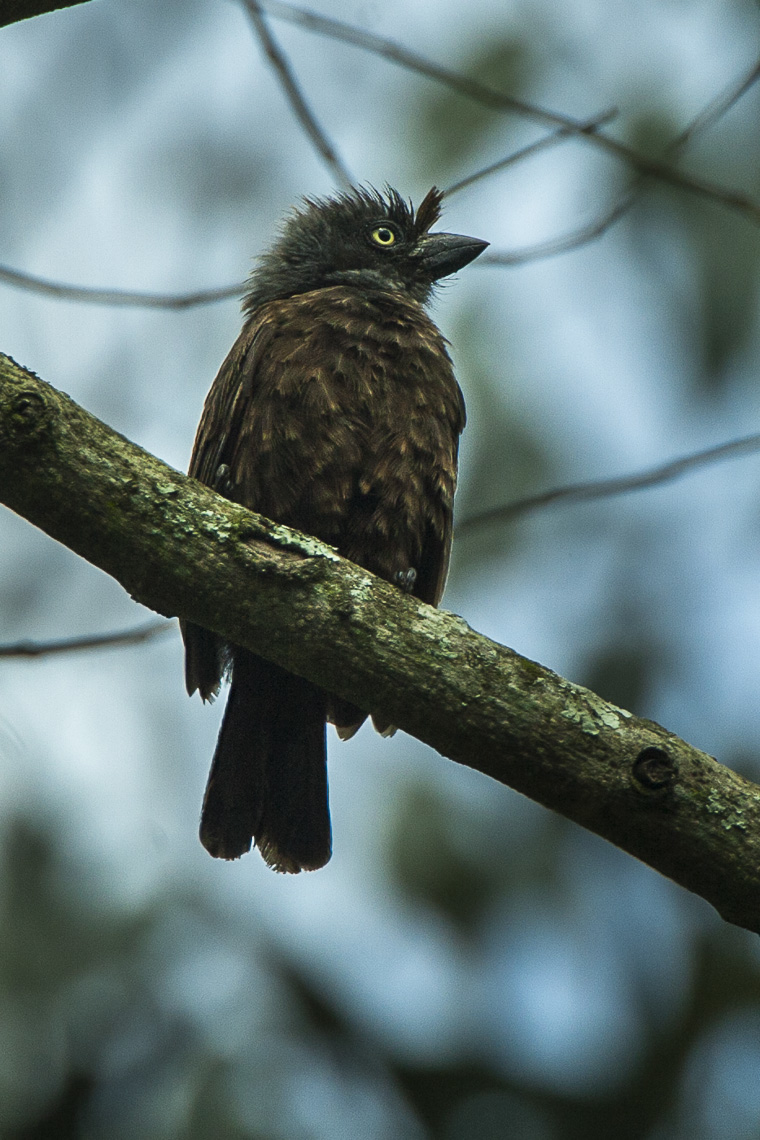
Yellow-fronted Tinkerbird
Pogoniulus chrysoconus
Order: Piciformes / Family: Lybiidae

Wikimedia Commons
About the Yellow-fronted Tinkerbird
The Yellow-fronted Tinkerbird, Pogoniulus chrysoconus, is a vibrant member of the Lybiidae family, recognized for its vocal presence and striking appearance. This diminutive bird, measuring approximately 12 cm in length, plays a significant role in the ecosystems of sub-Saharan Africa. It thrives in a variety of habitats, including open woodlands, savannas, and urban gardens, where it contributes to seed dispersal and pest control. The Yellow-fronted Tinkerbird is especially notable in regions like the Sahel, East Africa, and the southern parts of Africa, where it can often be heard before it is seen, thanks to its characteristic call resembling a tinkling bell. Ecologically, this bird is vital as it assists in managing insect populations and serves as a prey item for larger birds and mammals. Seasonal behaviors of the Yellow-fronted Tinkerbird reflect its adaptability to fluctuating environmental conditions. During the breeding season, which varies geographically but generally occurs during the wetter months, these birds become more territorial and vocal. Outside the breeding period, they may join mixed-species flocks, which offer safety in numbers and increased foraging efficiency. In urban settings, the Yellow-fronted Tinkerbird often finds refuge in gardens and parks, where there is an abundance of fruiting trees. Its presence in these areas highlights its adaptability and resilience in the face of habitat alteration. Additionally, the bird's role in seed dispersal is crucial for the regeneration of native flora, aiding in the maintenance of biodiversity. Despite its small size, the Yellow-fronted Tinkerbird stands out as an ecological powerhouse in its native regions. The bird's adaptability allows it to thrive in relatively open areas, and its preference for fruiting trees makes it a frequent visitor to orchards and gardens. These birds are not migratory, but they may exhibit local movements in response to food availability and climate conditions. The Yellow-fronted Tinkerbird is an indicator species in healthy woodland and savanna ecosystems, reflecting the ecological richness and balance of these environments.
The Yellow-fronted Tinkerbird belongs to the family Lybiidae, within the order Piciformes. These birds typically live averages 4-6 years, with some living up to 8 years..
How to Identify a Yellow-fronted Tinkerbird
The adult Yellow-fronted Tinkerbird exhibits a striking blend of colors that make it easily identifiable. Its most distinctive feature is the bright yellow forehead, which stands out against the black crown and nape. The face is adorned with a white supercilium, while the throat and underparts are predominantly white, sometimes with a faint yellowish wash. The back and wings are a dark olive-green, providing excellent camouflage amidst foliage. Juvenile birds are similar in pattern but exhibit duller plumage, with the yellow parts appearing more subdued. There is little sexual dimorphism, meaning males and females are quite alike in appearance. Differentiating the Yellow-fronted Tinkerbird from similar species can be challenging at first, but the bird’s small size and distinctive tinkling call are reliable identifiers. The Red-fronted Tinkerbird, for instance, can be confused with the Yellow-fronted due to its similar size and shape, but it can be distinguished by its red forehead. In flight, the Yellow-fronted Tinkerbird presents a rapid, undulating flight style typical of barbets, with short wings and a slightly rounded tail. When perched, it often adopts an upright posture, allowing the observer to easily notice its contrasting bright yellow and dark plumage.
Having trouble telling birds apart? Upload a photo to our bird identification tool for an instant species match.
Yellow-fronted Tinkerbird Habitat and Range
Preferred Habitat
The Yellow-fronted Tinkerbird inhabits a range of environments, primarily favoring open woodlands and savannas. These habitats provide the ideal conditions for foraging and breeding, with ample fruiting trees and nesting sites. The bird is found at elevations ranging from sea level up to 2,500 meters, although it predominantly occupies lower altitudes. Seasonal shifts in habitat preference are minimal due to the bird's adaptability, but during the dry season, it may venture closer to water sources. Unlike many species, it has shown a remarkable capacity to thrive in human-altered landscapes, frequently visiting urban gardens and parks where suitable trees and shrubs are present. The Yellow-fronted Tinkerbird's presence in urban areas underscores its adaptability and may provide opportunities for urban residents to engage with local wildlife.
Geographic Range
The Yellow-fronted Tinkerbird's range spans a broad swath of sub-Saharan Africa. In the west, it is found from Senegal and Gambia across to Nigeria, extending eastward through the Central African Republic into the heart of the continent. Eastward, its presence is noted from Ethiopia and Kenya down to Tanzania. In southern Africa, the bird's range encompasses Zambia, Zimbabwe, and parts of Mozambique, reaching as far south as northeastern South Africa. While the Yellow-fronted Tinkerbird is non-migratory, it may undertake local movements in response to food availability. Population density tends to be higher in regions where fruiting trees are abundant, particularly in savanna and woodland environments. Areas like the Miombo woodlands and the Guinean forest-savanna mosaic serve as prime habitats, supporting healthy populations of this species.
Want to know which birds visit your area? Browse our backyard birds by location guides for region-specific species lists.
What Does the Yellow-fronted Tinkerbird Eat?
The Yellow-fronted Tinkerbird primarily feeds on fruits, with a particular preference for figs and berries. Its diet also includes insects, especially during the breeding season when the demand for protein increases. The bird employs a methodical foraging technique, systematically searching for food among foliage and branches. It often hangs upside-down to access fruits and insects hidden beneath leaves. Its small size enables it to maneuver adeptly through dense vegetation, allowing it to exploit a variety of food sources. Seasonal changes in diet are apparent, with a greater reliance on insects during wetter months when these are more abundant. The bird's feeding schedule is largely diurnal, with peak activity in the early morning and late afternoon when temperatures are cooler.
Want to attract Yellow-fronted Tinkerbirds to your yard? See our recommended feeders and seed types for the best results.
Yellow-fronted Tinkerbird Behavior and Social Structure
Yellow-fronted Tinkerbirds are generally solitary or found in pairs, especially during the breeding season. Their territorial behavior becomes pronounced during this time, with males vigorously defending their space through calls and displays. The bird's courtship involves a series of displays, including head-bobbing and wing-flicking, accompanied by soft calls. Outside the breeding season, they may join mixed-species flocks, which offer enhanced foraging opportunities and protection from predators. The Yellow-fronted Tinkerbird's daily activities include foraging, preening, and vocalizing. The bird is diurnal, with peak activity observed during the cooler hours of the day. When threatened, it relies on its ability to blend into the foliage, remaining motionless until danger passes. In some regions, it has adapted to human presence, foraging in gardens and parks.
Yellow-fronted Tinkerbird Nesting and Reproduction
The Yellow-fronted Tinkerbird nests in tree cavities, often excavating their own or utilizing abandoned woodpecker holes. The preferred nesting sites are found in dead trees or branches, which provide easier excavation. The nest chamber is lined with plant fibers and leaves. Clutch size typically ranges from two to four eggs. Both parents share incubation duties, which last approximately 13 to 15 days. Once hatched, the chicks are altricial and dependent on their parents for food and warmth. The fledging period extends to about 20 to 24 days, during which the parents will continue to feed the young. Typically, the Yellow-fronted Tinkerbird can raise multiple broods per year if conditions allow, contributing to its stable population numbers.
Yellow-fronted Tinkerbird Sounds and Vocalizations
The Yellow-fronted Tinkerbird is renowned for its persistent, metallic tinkling call, which resembles the sound of a small bell being struck rapidly. This call is often repeated in long sequences, especially during the breeding season when it serves to establish territory and attract mates. Aside from this primary song, the bird also produces a variety of softer calls used in close communication between pairs. Alarm calls are less musical and more abrupt, serving to alert conspecifics to potential threats. During the dawn chorus, the Yellow-fronted Tinkerbird's vocalizations blend with those of other avian species, creating a vibrant soundscape typical of African woodlands.
Interesting Facts About the Yellow-fronted Tinkerbird
- 1The Yellow-fronted Tinkerbird's call can be heard from over 500 meters away, making it more often detected by sound than sight.
- 2Despite their small size, Yellow-fronted Tinkerbirds can excavate nesting cavities in surprisingly hard wood.
- 3These birds can consume up to 50% of their body weight in fruit each day, highlighting their role in seed dispersal.
- 4Yellow-fronted Tinkerbirds are known to participate in mixed-species flocks, benefiting from the cooperative vigilance against predators.
- 5Their bright yellow forehead serves as both a visual signal and a potential deterrent to competitors in territorial disputes.
- 6In urban areas, they have been observed utilizing non-native fruiting trees, showcasing their adaptability.
- 7The Yellow-fronted Tinkerbird's persistent calls are often used by birdwatchers to locate other bird species in mixed flocks.
Yellow-fronted Tinkerbird Conservation Status
The Yellow-fronted Tinkerbird is currently classified as Least Concern by the IUCN, indicating a stable population trend. While habitat loss remains a concern across parts of its range, this species' adaptability to altered environments has helped mitigate significant declines. Primary threats include deforestation and habitat fragmentation, particularly in regions undergoing rapid agricultural expansion. Conservation efforts focus on habitat preservation, ensuring the maintenance of core woodland and savanna areas. Historically, the Yellow-fronted Tinkerbird has maintained stable populations, thanks largely to its ability to exploit both natural and urban environments.
Attracting Yellow-fronted Tinkerbirds to Your Feeder
The Yellow-fronted Tinkerbird is a regular visitor to backyard bird feeders across its range. At the Eye On The Fly feeding station, we observe Yellow-fronted Tinkerbirds regularly and capture footage with our feeder cameras.