
Short-billed Pipit
Anthus paytensis
Order: Passeriformes / Family: Motacillidae
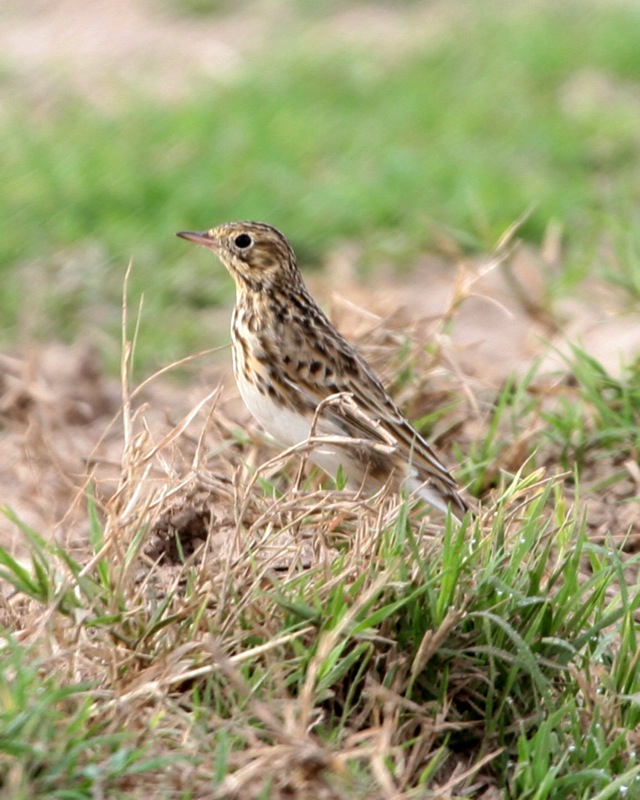
Wikimedia Commons
About the Short-billed Pipit
The Short-billed Pipit, Anthus paytensis, is a small passerine bird belonging to the family Motacillidae. This unobtrusive bird is primarily found in the open grasslands and arid regions of South America, ranging from Colombia in the north to southern Argentina. The species plays a vital role in the ecosystem by controlling insect populations through its diet. With its cryptic coloration, the Short-billed Pipit blends seamlessly into its environment, making it a challenge for birders to spot. Its presence indicates healthy grassland habitats, as it thrives in areas with minimal human disturbance. The Short-billed Pipit engages in partial migratory behavior, with some populations moving northward during the austral winter months. In particular, birds breeding in southern Argentina may move towards the central parts of the continent, following the availability of food resources. During the breeding season, the male Short-billed Pipit performs display flights, characterized by short, fluttering bursts above its territory, a common behavior among pipits that serves to establish territorial boundaries and attract females. Its role in the food chain as both predator and prey highlights its ecological significance. Predators such as raptors and mammals rely on the pipit for sustenance, while the bird itself helps regulate the populations of insects and other small invertebrates. The species is not currently under significant threat, although habitat degradation poses a potential future risk. Conservation of open grasslands is crucial to maintaining stable populations of the Short-billed Pipit. Birdwatchers and ecologists alike value this species not just for its ecological importance but also for the subtle beauty it brings to the grassland landscapes.
The Short-billed Pipit belongs to the family Motacillidae, within the order Passeriformes. These birds typically live average 2-3 years with a max recorded of 7 years..
How to Identify a Short-billed Pipit
Identifying the Short-billed Pipit requires a keen eye for distinguishing subtle field marks. The adult pipit exhibits a brown and buff plumage, perfectly suited for blending into its grassland habitat. The bird's upperparts are streaked brown, while the underparts are paler, with some streaks on the breast. A distinctive feature is its short bill, which is shorter and slightly stouter than that of similar pipit species. There is minimal sexual dimorphism, making males and females visually similar. Juveniles resemble adults but possess more pronounced streaking on their underparts. In flight, the Short-billed Pipit's silhouette is defined by its relatively elongated body and narrower wings, but its flight pattern is more fluttery compared to stronger fliers like larks. When perched, it often adopts an upright posture, characteristic of pipits. Confusion may arise with the Yellowish Pipit, but the latter typically shows more yellow on the underparts and a slightly longer bill. Attention to the bill size and overall coloration helps in making accurate identification in the field.
Having trouble telling birds apart? Upload a photo to our bird identification tool for an instant species match.
Short-billed Pipit Habitat and Range
Preferred Habitat
The Short-billed Pipit primarily inhabits open grasslands and savannas, often preferring areas with short grasses and scattered shrubs. It can be found at various elevations, ranging from sea level up to 3000 meters in the Andes. The bird favors less disturbed areas away from urban centers, although it can occasionally be observed in pasturelands where livestock grazing maintains short grass. During the non-breeding season, some individuals may shift to more arid regions where insect availability remains stable. The Short-billed Pipit is largely absent from densely forested areas, wetlands, and urban environments, reflecting its strong preference for open landscapes.
Geographic Range
The Short-billed Pipit's range spans much of South America, where it can be found from northern Colombia down to southern Argentina and Chile. It breeds primarily in the southern parts of its range, including the Pampas and Patagonia regions of Argentina. Outside the breeding season, some populations migrate northward, reaching as far as northern Argentina, Bolivia, and southern Brazil. The pipit is generally more abundant in the south, with population density decreasing towards the northern limits of its range. Migration corridors include open plains and valleys, where the birds can refuel while in transit. Though largely resident, the species exhibits some geographic variation in movement patterns, depending on local environmental conditions.
Want to know which birds visit your area? Browse our backyard birds by location guides for region-specific species lists.
What Does the Short-billed Pipit Eat?
The Short-billed Pipit's diet consists primarily of insects and other small invertebrates, which it actively forages for on the ground. Beetles, grasshoppers, and caterpillars form the bulk of its diet, supplemented by spiders and occasional seeds. Seasonal changes in food availability drive shifts in its diet, with a higher reliance on insects during the breeding season to meet the nutritional demands of raising young. The pipit employs a 'run-and-pick' foraging technique, characterized by short runs interspersed with quick pecks to capture prey. It forages primarily during the early morning and late afternoon, avoiding the midday heat. Prey size typically ranges from small to medium insects, ensuring energy-efficient foraging.
Short-billed Pipit Behavior and Social Structure
The Short-billed Pipit exhibits a range of behaviors that reflect its adaptability to grassland environments. It is generally solitary or found in loose flocks, especially outside the breeding season. Males establish territories during the breeding season, often marked by display flights and songs. These aerial displays involve quick ascents followed by a series of fluttering descents, serving both to assert territorial claims and attract mates. The pipit shows moderate territorial aggression, defending its area against other males through song and occasional chases. In the presence of predators, such as falcons, the pipit employs a cryptic freeze behavior, relying on its plumage to blend into the surroundings. Its daily activity pattern includes periods of active foraging interspersed with rest, particularly during the hottest parts of the day when it seeks shade.
Short-billed Pipit Nesting and Reproduction
The Short-billed Pipit builds its nest on the ground, typically hidden among grasses and small shrubs. The nest itself is a simple cup made from dry grasses and other plant materials, lined with finer materials such as hair or feathers. Clutch size generally ranges from 2 to 4 eggs, which are pale brown with darker speckles. The female undertakes the majority of incubation duties, lasting around 12 to 14 days. After hatching, both parents participate in feeding the chicks, which fledge approximately 10 to 12 days after hatching. The species typically raises one brood per year, although favorable conditions may lead to a second. Parental care extends until the fledglings are sufficiently independent.
Short-billed Pipit Sounds and Vocalizations
The Short-billed Pipit's song is a series of soft, melodious trills and whistles, often delivered during display flights. The pitch is medium to high, with a rhythmic quality that can be likened to a distant, muted jingling. Its primary call note is a sharp 'tsip', used in communication between individuals. Alarm calls are more abrupt and buzzy, alerting others to potential threats. During the dawn chorus, the pipit's song can be heard as part of the broader symphony of grassland birds, contributing to the ambient soundscape of its habitat. The song's subtlety and complexity make it a pleasing addition to the natural soundscape.
Interesting Facts About the Short-billed Pipit
- 1The Short-billed Pipit can cover significant distances during its partial migrations, traveling up to 2000 kilometers in search of food.
- 2Its camouflage is so effective that even experienced birders may overlook it when it remains still among grasses.
- 3The Short-billed Pipit contributes to pest control in agricultural areas by consuming large quantities of insects.
- 4During the breeding season, males may perform up to 50 display flights a day to attract females.
- 5Unlike many birds, the Short-billed Pipit often remains silent in the presence of predators, relying on its camouflage for protection.
Short-billed Pipit Conservation Status
The Short-billed Pipit is currently classified as Least Concern by the IUCN, with stable population trends across most of its range. However, ongoing threats such as habitat loss due to agricultural expansion and land-use changes pose potential risks to its long-term stability. Conservation efforts are focused on preserving grassland habitats, with initiatives to establish protected areas and promote sustainable land management practices. Historical data suggest that while some local populations have declined due to habitat encroachment, others have remained resilient. Ensuring the conservation of grasslands will be critical in maintaining healthy populations of the Short-billed Pipit.
Other Motacillidae Species

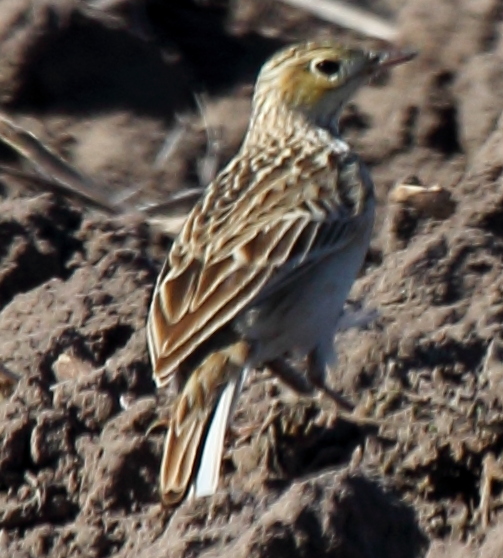


Birds Similar to the Short-billed Pipit
These species are often confused with the Short-billed Pipit due to similar appearance or overlapping range.

