
Sprague's Pipit
Anthus spragueii
Order: Passeriformes / Family: Motacillidae
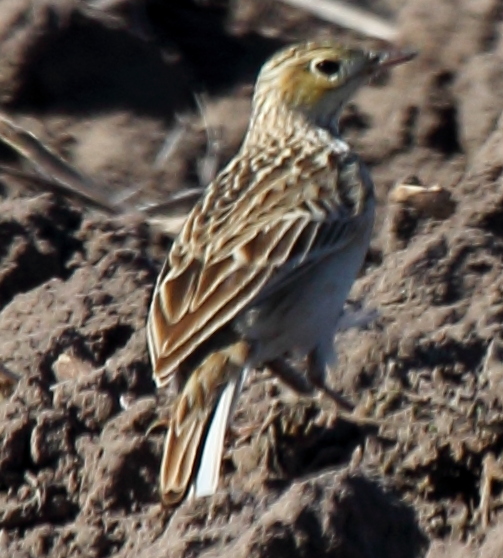
Wikimedia Commons
About the Sprague's Pipit
The Sprague's Pipit (Anthus spragueii) is a small grassland songbird native to the North American prairies. Its presence signifies healthy grassland ecosystems, acting as an indicator species. This unassuming bird is often overlooked due to its inconspicuous plumage and secretive behavior. It primarily inhabits native prairie grasslands, preferring areas with tall, dense vegetation that offer concealment from predators. Seasonal changes influence its behavior, including a remarkable aerial display during the breeding season. The Sprague's Pipit is of significant ecological importance, contributing to the control of insect populations as it feeds on a variety of arthropods. Geographically, it is primarily found in the Great Plains regions of the United States and Canada, including North Dakota, South Dakota, Montana, and Manitoba. Conservation efforts are crucial for its survival, as grassland habitats continue to decline due to agricultural expansion and urban development. During the breeding season, males perform a unique aerial song display to attract females, a behavior that is both captivating and indicative of their presence in a given area. These displays involve a spiraling ascent, often reaching heights over 50 meters, while delivering a continuous series of sweet, melodious notes. In winter, the Sprague's Pipit migrates to southern regions, including Texas and northern Mexico, seeking milder climates and abundant food sources. This seasonal migration is essential for its survival, allowing it to exploit different resources throughout the year. The ecological role of the Sprague's Pipit extends beyond its immediate environment; it serves as a critical component of the prairie food web. By preying on insects, it helps maintain a balanced ecosystem. Its decline would likely signal broader environmental issues affecting the grasslands. As such, this species is a focal point for conservation initiatives aimed at preserving North America's diminishing native prairies.
The Sprague's Pipit belongs to the family Motacillidae, within the order Passeriformes. These birds typically live typically 3 years, with a maximum recorded lifespan of 5 years..
How to Identify a Sprague's Pipit
The Sprague's Pipit is a small, sparrow-sized bird with a length of about 15 cm and a wingspan of approximately 25 cm. Its plumage is predominantly brown with streaks that provide excellent camouflage against the grassland backdrop. The underparts are a pale buff with fine streaking, while the back and wings show a more pronounced pattern of brown and black streaks. Males and females are similar in appearance, though males might appear slightly larger during the breeding display due to their puffed-out chest. Juveniles resemble adults but have fresher, more defined streaking. In flight, the Sprague's Pipit exhibits a distinctive silhouette with rapid wingbeats followed by short glides on downcurved wings, a behavior that can aid in identification. The bird's head is adorned with a faint eyebrow stripe, and its bill is slender and pointed, typical of insectivorous species. Differentiating the Sprague's Pipit from similar species like the American Pipit can be challenging, but its high-pitched song and preference for native prairies rather than open fields provide useful clues.
Having trouble telling birds apart? Upload a photo to our bird identification tool for an instant species match.
Sprague's Pipit Habitat and Range
Preferred Habitat
Sprague's Pipits are closely associated with undisturbed native grasslands, preferring areas with tall grasses that provide cover from predators. These grasslands typically feature a mix of grass species such as bluestem and needlegrass. The bird thrives in areas away from human disturbance, making it rare in urban settings. It occupies elevations ranging from lowland prairies to rolling uplands, though it avoids mountainous regions. Seasonal habitat shifts occur during migration when the pipit moves to southern grasslands and agricultural fields. Despite these shifts, the bird maintains a strong preference for native prairie habitats, relying on them for breeding and foraging.
Geographic Range
During the breeding season, Sprague's Pipits inhabit the northern Great Plains, extending from southern Canada, including Alberta, Saskatchewan, and Manitoba, to the northern United States, notably Montana, North Dakota, and South Dakota. As autumn approaches, they migrate southward to wintering grounds in the southern United States and northern Mexico, including Texas and parts of New Mexico. Migration corridors primarily follow the central flyway, with the birds traveling in small, loose flocks. Population density is highest in areas with extensive, undisturbed prairie habitats, though these areas are decreasing due to agricultural practices and development.
Want to know which birds visit your area? Browse our backyard birds by location guides for region-specific species lists.
What Does the Sprague's Pipit Eat?
The diet of the Sprague's Pipit primarily consists of insects and other arthropods, making it an important player in controlling insect populations. Common prey includes beetles, grasshoppers, and caterpillars. During the breeding season, the pipit increases its consumption of protein-rich insects to support the energetic demands of raising young. In winter, when insects are less abundant, the bird supplements its diet with seeds from various grasses and weeds. Foraging behavior involves walking methodically through the grass, pecking at insects on the ground or just above it. The pipit typically feeds during daylight hours, with peaks in activity during the early morning and late afternoon.
Sprague's Pipit Behavior and Social Structure
Sprague's Pipits exhibit solitary behavior outside of the breeding season, but during the breeding season, males become highly territorial. They perform elaborate aerial displays to establish territory and attract mates, characterized by a spiraling ascent and a continuous, melodious song. These displays can last several minutes and are often repeated throughout the day. The pipit is generally a ground-dwelling bird, walking through tall grasses while foraging. Its response to predators includes a preference for remaining hidden within dense vegetation, though it may take flight if closely approached. The bird's daily activities are diurnal, with periods of rest during the hottest part of the day.
Sprague's Pipit Nesting and Reproduction
Sprague's Pipits build their nests on the ground, hidden within tall grasses to protect against predators. The nest is a small, cup-shaped structure composed of grass stems and lined with finer plant materials. Preferred nesting sites are undisturbed patches of native prairie. The female lays a clutch of 3-5 eggs, which are incubated for about 13-15 days. Both parents participate in feeding the young, which fledge approximately 12 days after hatching. Typically, the species has one brood per year, although in optimal conditions, they may attempt a second.
Sprague's Pipit Sounds and Vocalizations
The primary song of the Sprague's Pipit is a high-pitched, sweet series of notes delivered during the male's aerial display. The song is continuous and melodious, often described as a series of tinkling notes resembling a musical instrument. Call notes are simpler, consisting of short, sharp 'chip' sounds used for communication between mates or signaling alarm. During the dawn chorus, males are particularly vocal, contributing to the rich soundscape of the grasslands. The pipit's song is a key identifier, distinct from other grassland birds due to its rhythm and pitch.
Interesting Facts About the Sprague's Pipit
- 1Sprague's Pipit can remain airborne for up to 30 minutes during its aerial song display, reaching heights over 50 meters.
- 2This bird is one of the few North American species entirely dependent on native prairies for breeding and foraging.
- 3Sprague's Pipit has a unique song that consists of over 10 different note types, varying in pitch and rhythm.
- 4The species was named after American ornithologist Isaac Sprague, who first collected specimens in the mid-19th century.
- 5Due to its cryptic plumage and elusive behavior, Sprague's Pipit is often heard before it is seen.
- 6In winter, the pipit can be found in mixed flocks with other grassland species such as meadowlarks and horned larks.
- 7Sprague's Pipit's preference for remote, undisturbed areas makes it a challenging subject for birdwatchers and researchers.
Sprague's Pipit Conservation Status
The Sprague's Pipit is currently listed as vulnerable by the IUCN, with populations declining due to habitat loss and fragmentation. Primary threats include agricultural expansion, urban development, and conversion of native grasslands into cropland. Conservation efforts focus on preserving and restoring prairie habitats and implementing sustainable agricultural practices. Historically, this species was more widespread, but large-scale habitat changes have resulted in significant population declines. Continued research and habitat protection are crucial to prevent further losses.
Other Motacillidae Species


Birds Similar to the Sprague's Pipit
These species are often confused with the Sprague's Pipit due to similar appearance or overlapping range.

