
South Georgia Pipit
Anthus antarcticus
Order: Passeriformes / Family: Motacillidae

Wikimedia Commons
About the South Georgia Pipit
The South Georgia Pipit, scientifically known as Anthus antarcticus, holds the distinction of being the only songbird native to the remote island of South Georgia, a British Overseas Territory in the southern Atlantic Ocean. This small yet resilient bird has adapted to some of the harshest conditions on the planet, thriving in an environment where few other land birds dare to venture. The South Georgia Pipit plays a crucial ecological role, serving as a primary insectivore in its habitat and thus helping to maintain the ecological balance on the island.
South Georgia itself is a rugged and mountainous island, characterized by its glacial and tundra-like landscapes. The pipit is often found near the coast, where tussock grass provides both cover and a rich feeding ground. Unlike its relatives found in more temperate zones, the South Georgia Pipit must withstand extreme cold and face the challenges of breeding in a landscape dominated by glaciers and exposed to the frigid winds of the Southern Ocean.
The ecological significance of the South Georgia Pipit is considerable, particularly given its status as an endemic species. It is the only passerine on the island, and its presence is indicative of the relatively low levels of predation by invasive species, thanks to successful eradication programs. The bird's insectivorous diet makes it an important regulator of insect populations on the island. During the breeding season, these pipits are especially active, foraging tirelessly to feed their young, and ensuring that their population remains stable in an unforgiving environment.
Beyond its ecological role, the South Georgia Pipit is a subject of scientific interest due to its unique adaptations to life in a polar environment. The bird's ability to thrive in a habitat that combines both Antarctic and sub-Antarctic elements makes it a fascinating study for understanding avian resilience and adaptation. Observations have shown that the bird's population health is closely linked to the availability of ice-free breeding grounds, which is an area of concern in the context of climate change.
The South Georgia Pipit belongs to the family Motacillidae, within the order Passeriformes. These birds typically live typically 5-7 years, with some individuals living up to 10 years..
How to Identify a South Georgia Pipit
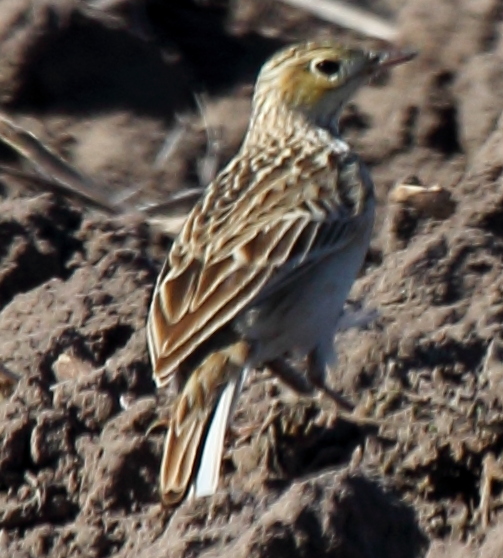
The South Georgia Pipit is a small, plump bird, measuring around 16 to 18 centimeters in length. Its plumage is predominantly brown and streaked, providing excellent camouflage against the tussock grass and rocky shores of its habitat. Adult pipits display a brown upper body with darker streaks, while their underparts are a pale buff with fine streaking on the breast. During the breeding season, males and females are similar in appearance, making sex differentiation in the field challenging.
Juveniles closely resemble adults but can be slightly paler with less defined streaking, especially on the breast. The bird has a slender bill, well-adapted for its insectivorous diet, and long legs suited for its terrestrial lifestyle. In flight, the South Georgia Pipit exhibits a distinctive, undulating motion, with rapid wingbeats interspersed with short glides. This flight pattern, coupled with its characteristic high-pitched song, aids in field identification.
Observers may confuse the South Georgia Pipit with other pipit species if encountered outside its restricted range. However, its unique habitat and the absence of other similar species on South Georgia largely prevent confusion. Its perching posture, typically on low rocks or tussock mounds, gives it a commanding view of its surroundings, making it easier to spot despite its effective camouflage.
Having trouble telling birds apart? Upload a photo to our bird identification tool for an instant species match.
South Georgia Pipit Habitat and Range
Preferred Habitat
The South Georgia Pipit thrives in coastal and sub-Antarctic tundra habitats, primarily on the island of South Georgia. It prefers areas with dense tussock grass, which offers both food and protection from the elements. This bird typically resides at elevations ranging from sea level up to the lower slopes of the island's rugged mountains, generally not exceeding 200 meters.
Tussock grasslands provide crucial nesting sites and foraging grounds, while the adjacent rocky shores serve as additional feeding areas. The bird's presence is largely restricted to regions where invasive predators have been controlled or eradicated, allowing it to maintain stable populations. Unlike many pipit species, the South Georgia Pipit does not inhabit urban areas, as human presence on the island is minimal and confined to research stations.
Seasonal habitat shifts are minimal due to the bird's non-migratory nature, although breeding territories are typically established in areas offering the best shelter and food availability. The bird's resilience to harsh weather conditions is a testament to its adaptability within this isolated and inhospitable environment.
Geographic Range
The South Georgia Pipit is an endemic species confined to the island of South Georgia in the southern Atlantic Ocean. Its range is limited to this isolated island, making it one of the few land birds found so far south. Unlike many migratory pipit species, Anthus antarcticus is sedentary, remaining on South Georgia year-round.
During the breeding season, the pipit is found throughout the coastal regions of the island, particularly favoring areas where tussock grass is abundant. These regions provide not only shelter but also ample foraging opportunities. While the bird does not migrate, its range within the island may shift slightly with changing weather patterns and the availability of food resources.
Population density is highest in areas where invasive predators have been effectively managed, highlighting the success of conservation efforts. The absence of other similar songbird species on the island makes the South Georgia Pipit's presence even more significant as a unique representative of its family in this remote location.
Want to know which birds visit your area? Browse our backyard birds by location guides for region-specific species lists.
What Does the South Georgia Pipit Eat?
The South Georgia Pipit primarily subsists on a diet of insects and other small invertebrates, making it a crucial insectivore on the island. Its foraging behavior is characterized by a methodical search through tussock grass and coastal areas, where it picks insects from vegetation and the ground.
During the warmer months, the bird actively hunts for a variety of arthropods, including beetles, flies, and moth larvae, which are abundant in the tussock grass ecosystem. The pipit's slender bill is perfectly adapted for capturing these small prey items. In winter, when insect availability decreases, the bird may rely more on scavenging from the intertidal zone, feeding on amphipods and other marine invertebrates washed ashore.
Feeding occurs throughout the daylight hours, with peaks in activity during early morning and late afternoon. The bird's ability to exploit a range of food sources across different habitats ensures its survival in an environment where food can be scarce.
South Georgia Pipit Behavior and Social Structure
The South Georgia Pipit exhibits a solitary lifestyle outside of the breeding season, displaying territorial behavior that is more pronounced during nesting periods. Males establish territories through song and displays, often selecting areas with optimal food resources and nesting sites.
Courtship involves a series of aerial displays, where the males sing while performing undulating flight patterns. These displays not only attract females but also serve to reinforce territorial boundaries. During the breeding season, the pipit becomes more social, with pairs cooperating to raise their young.
The pipit is diurnal, with most activity concentrated during daylight hours. It forages actively, searching for insects and small invertebrates. When predators, such as skuas, are present, the pipit employs a combination of alarm calls and evasive flight maneuvers to avoid capture. Flocking is not typical outside of breeding pairs, as the bird remains largely solitary or in small family groups.
South Georgia Pipit Nesting and Reproduction
The South Georgia Pipit constructs its nest on the ground, often hidden within dense tussock grass to protect it from predators and harsh weather. The nest is a cup-shaped structure, carefully woven from grass stems and lined with softer materials such as feathers and moss.
Females lay a clutch of two to four eggs, with the incubation period lasting approximately 14 days. Both parents share responsibilities, with the female primarily incubating the eggs, while the male provides food. After hatching, the chicks remain in the nest for about two weeks before fledging.
Parental care continues post-fledging, with both adults feeding and protecting the young until they are independent. Typically, the South Georgia Pipit raises one brood per year, although favorable conditions may occasionally allow for a second.
South Georgia Pipit Sounds and Vocalizations
The South Georgia Pipit is known for its distinctive song, a series of high-pitched, melodious notes that can be heard echoing across the island's tundra. The song consists of several repeated phrases, each lasting a few seconds, and is often delivered from a prominent perch.
In addition to its primary song, the pipit also produces a variety of call notes used for communication between mates and to alert others to potential threats. Alarm calls are sharper and more urgent, serving as a warning to both the caller's mate and any nearby pipits.
During the dawn chorus, the pipit's song is particularly prominent, contributing to the overall soundscape of the island's avian community. The song is not only a means of communication but also an essential part of the bird's territorial and courtship behavior.
Interesting Facts About the South Georgia Pipit
- 1The South Georgia Pipit is the only songbird native to the Antarctic region, making it a unique member of its family.
- 2Despite its small size, the South Georgia Pipit has adapted to survive in one of the harshest climates on Earth.
- 3Conservation efforts on South Georgia have successfully eradicated invasive rats, allowing pipit populations to thrive.
- 4The pipit's song is a key feature of its territorial behavior, particularly during the breeding season.
- 5South Georgia Pipits rely heavily on tussock grass habitats, which provide essential food and nesting resources.
- 6These pipits are non-migratory, remaining on South Georgia throughout the year, which is unusual for a pipit.
- 7The successful conservation of the South Georgia Pipit serves as a model for invasive species management on islands.
South Georgia Pipit Conservation Status
The South Georgia Pipit is currently listed as Least Concern by the IUCN, owing to recent conservation successes in controlling invasive species on South Georgia. Population trends are stable, a significant improvement following the eradication of rodents that previously threatened its breeding success. Primary threats to the pipit included predation by invasive rats and mice, which disrupted its ground-nesting habits. Conservation efforts have focused on habitat restoration and predator eradication, allowing the pipit's population to recover. Continued monitoring and habitat protection are vital to ensure the pipit's long-term survival. The bird's restricted range makes it susceptible to environmental changes, particularly those related to climate change, which could impact its habitat and food sources.
Other Motacillidae Species



Birds Similar to the South Georgia Pipit
These species are often confused with the South Georgia Pipit due to similar appearance or overlapping range.
