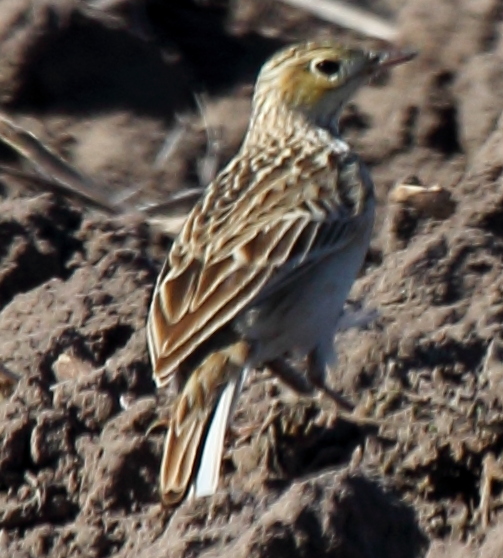
Anthus rupestris
Anthus rupestris
Order: Passeriformes / Family: Motacillidae

Wikimedia Commons
About the Anthus rupestris
The Anthus rupestris, commonly known as the rock pipit, is a member of the Motacillidae family. This songbird is primarily found along the rocky shores and cliffs of Europe, where it plays a significant role in the coastal ecosystem. Its presence is most notable in regions like the British Isles, the Scandinavian coastlines, and parts of western Europe. Rock pipits contribute to the ecological balance by controlling insect populations and serving as prey for larger avian predators. During the breeding season, which typically spans from April to July, the rock pipit is highly territorial, establishing its preferred nesting sites among the crevices of rocky outcrops. In winter, it may move to lower altitudes or more sheltered coastal areas, though it generally remains within the same geographic range. Its adaptability to harsh environments underscores its importance as a resilient species within its native habitats. The rock pipit is well-adapted to its niche, thriving where few other birds can endure the salty, windswept conditions of its preferred coastal haunts.
The Anthus rupestris belongs to the family Motacillidae, within the order Passeriformes. These birds typically live average 4 years, with a maximum recorded of 7 years..
How to Identify a Anthus rupestris
The adult rock pipit is characterized by its streaked brownish-gray plumage, which provides excellent camouflage against rocky backgrounds. Its underparts are heavily streaked, with a pale belly that contrasts with the darker upperparts. Juveniles resemble adults but often have a slightly more muted appearance with more pronounced streaking. Males and females are similar in appearance, though males may exhibit slightly brighter coloration during the breeding season. In flight, the rock pipit displays a distinctive fluttering motion with rapid wingbeats, and its tail is often fanned out, showing white edges. This species can be confused with the meadow pipit, but the rock pipit is generally larger and darker, with a more robust build. When perched, the rock pipit often adopts a horizontal posture, with its head held level and its tail flicking up and down-a behavior that aids in its identification.
Having trouble telling birds apart? Upload a photo to our bird identification tool for an instant species match.
Anthus rupestris Habitat and Range
Preferred Habitat
The rock pipit predominantly inhabits rocky coastal regions, favoring cliffs, tidal zones, and rocky beaches. It thrives in elevations ranging from sea level to several hundred meters above, particularly on sea-facing cliffs where wave action keeps predators at bay. Seasonal shifts in habitat are minimal, though during harsh weather, some individuals may seek sheltered bays or estuaries. While primarily associated with rural environments, rock pipits can occasionally be found in urban coastal areas where suitable rocky substrates exist.
Geographic Range
The rock pipit's breeding range extends across the rocky coastlines of northern and western Europe, including the British Isles, Iceland, and the coasts of Norway, Sweden, and Denmark. It is a resident bird in many of these areas, though some populations may exhibit short-distance migrations within Europe, moving to more temperate regions during the colder months. Population densities are highest along the rugged coastlines of Scotland and Ireland, where suitable habitats are abundant.
Want to know which birds visit your area? Browse our backyard birds by location guides for region-specific species lists.
What Does the Anthus rupestris Eat?
The diet of the rock pipit consists primarily of small invertebrates, such as insects and marine invertebrates, which it forages from the rocky intertidal zones. It employs a methodical foraging technique, picking insects and larvae from crevices and seaweed. During breeding season, its diet may expand to include small crustaceans and mollusks, providing essential nutrients for chick rearing. Rock pipits typically feed throughout the day, adjusting their activity based on tidal patterns to exploit the riches of the intertidal zone.
Anthus rupestris Behavior and Social Structure
Rock pipits are solitary or found in pairs during the breeding season, establishing territories that they defend vigorously. Courtship displays involve males singing and performing aerial displays to attract females. Outside of breeding, they may form loose flocks, especially when feeding. In response to predators, these birds rely on their cryptic plumage and swift flight to evade capture. Daily activity peaks at dawn and dusk, with periods of foraging and resting interspersed throughout the day.
Anthus rupestris Nesting and Reproduction
Rock pipits construct cup-shaped nests made from grasses, seaweed, and moss, typically placed in rock crevices or among boulders to provide protection from predators and harsh weather. Females lay 4-5 eggs per clutch, with an incubation period of about 13-14 days. Both parents participate in feeding the chicks, which fledge approximately 14-16 days after hatching. Rock pipits may produce two broods per year, depending on food availability and weather conditions.
Anthus rupestris Sounds and Vocalizations
The rock pipit's song consists of a series of melodious trills and whistles, often delivered from a prominent perch or during flight. Its call notes are sharp and metallic, used for communication between individuals. Alarm calls are harsher and more urgent, alerting others to potential threats. During the dawn chorus, the rock pipit's song rings out clear and persistent, a defining sound of its coastal habitat.
Interesting Facts About the Anthus rupestris
- 1Rock pipits are one of the few bird species adapted to nesting in sea caves and crevices, utilizing these spaces for protection.
- 2The rock pipit's preference for intertidal zones means it has a unique diet compared to other pipits, relying heavily on marine insects.
- 3During courtship, male rock pipits perform intricate flight displays, often singing while hovering in place to attract females.
- 4While many pipits migrate long distances, the rock pipit generally remains close to its breeding grounds year-round.
- 5Rock pipits have been observed using their sharp beaks to break open small shells, a rare behavior among songbirds.
- 6The species' adaptability to harsh coastal conditions has allowed it to thrive in environments where few other birds can survive.
- 7Rock pipits contribute to the health of coastal ecosystems by controlling insect populations and providing food for predators.
Anthus rupestris Conservation Status
The rock pipit is currently classified as Least Concern by the IUCN, with stable population trends across its range. The primary threats include habitat loss due to coastal development and climate change impacts on sea levels. Conservation efforts focus on protecting coastal habitats and monitoring populations to ensure continued stability. Historical data suggest that populations have remained relatively stable, benefiting from the preservation of natural coastal environments.