
Black-faced Babbler
Turdoides melanops
Order: Passeriformes / Family: Leiothrichidae

Wikimedia Commons
About the Black-faced Babbler
The Black-faced Babbler (Turdoides melanops) is a member of the Leiothrichidae family, known for its gregarious nature and striking appearance. This bird inhabits the dry, open woodlands and thornveld regions primarily across Namibia, Botswana, and northern South Africa. It plays a significant ecological role in these habitats by participating in seed dispersion and pest control. The Black-faced Babbler's presence in these regions is vital for maintaining the balance of insect populations, as it feeds on a variety of arthropods. Its preference for mixed-species foraging flocks enhances its role in the ecosystem, as it facilitates interspecies interactions that can lead to increased biodiversity. During the breeding season, which occurs in the southern hemisphere's summer months, the Black-faced Babbler becomes more territorial. Its social structure shifts from large, wandering flocks to more cohesive family groups. The Black-faced Babbler exhibits fascinating seasonal behaviors, including increased vocal activity during dawn and dusk. This timing coincides with cooler temperatures and the activity peaks of its prey. The bird's adaptability to varying environmental conditions showcases its resilience. It can thrive in both wet and dry seasons, making it a constant presence in its native range. The Black-faced Babbler's ecological significance extends beyond its immediate environment. As a seed disperser, it contributes to the regeneration of native vegetation. Its activities help maintain the integrity of the savanna ecosystem, ensuring the survival of numerous plant and animal species.
The Black-faced Babbler belongs to the family Leiothrichidae, within the order Passeriformes. These birds typically live typically 5-7 years, with some individuals living up to 9 years..
How to Identify a Black-faced Babbler
Identifying the Black-faced Babbler involves noting its distinct dark facial markings, which contrast sharply with its lighter gray-brown body. Adult babblers have a uniform grayish-brown plumage with a notable black mask that covers the face. The eyes are surrounded by bare skin, adding to the bird's unique look. Juveniles differ slightly, possessing a duller overall coloration and less pronounced facial markings. Both male and female Black-faced Babblers appear similar, making visual sex differentiation challenging. However, during the breeding season, subtle behavioral cues may aid in distinguishing between sexes. In flight, the Black-faced Babbler presents a rounded silhouette with broad wings and a relatively long tail. Its perching posture is upright and alert, often seen in groups perched on low branches or foraging on the ground. The bird's vocalizations, along with its physical traits, further assist in identification. Confusion with similar species is possible, particularly with other Turdoides babblers that share overlapping ranges. Key identifying features include the distinct facial mask and its specific vocal repertoire.
Having trouble telling birds apart? Upload a photo to our bird identification tool for an instant species match.
Black-faced Babbler Habitat and Range
Preferred Habitat
The Black-faced Babbler predominantly inhabits arid savannas and thornveld regions, favoring areas with scattered trees and bushy understory. It thrives in elevations ranging from sea level to about 1,500 meters. During the dry season, these birds may congregate near water sources, yet they do not rely heavily on such areas due to their diverse diet. In urban areas, their presence is less common, although they can occasionally be found in parks and large gardens that mimic their natural habitat. Unlike some passerines, the Black-faced Babbler does not exhibit significant seasonal habitat shifts, maintaining its preference for dry, open woodlands throughout the year.
Geographic Range
The Black-faced Babbler's range is concentrated in southern Africa, where it is primarily found in Namibia, Botswana, and northern regions of South Africa. The bird's distribution is patchy, with population density hotspots in areas where suitable habitat conditions exist. Unlike many migratory birds, the Black-faced Babbler is largely sedentary, with movements primarily dictated by local environmental conditions. Its breeding territories often overlap with non-breeding areas, eliminating the need for long-distance migrations. While its range does not extend into coastal areas, it can be found in inland regions with suitable arid landscapes.
Want to know which birds visit your area? Browse our backyard birds by location guides for region-specific species lists.
What Does the Black-faced Babbler Eat?
The diet of the Black-faced Babbler primarily consists of insects and other small arthropods. This bird actively forages on the ground, using its strong beak to turn over leaves and debris in search of prey. During the rainy season, when insect abundance increases, the diet expands to include a wider variety of insects. In addition to insects, the babbler occasionally consumes small fruits and seeds, particularly when insect prey is scarce. Its foraging technique is both methodical and opportunistic, often involving group coordination to flush out hidden insects. The Black-faced Babbler's feeding schedule is crepuscular, with peak activity occurring during the cooler morning and late afternoon hours.
Black-faced Babbler Behavior and Social Structure
Social by nature, the Black-faced Babbler often forms flocks ranging from small family groups to larger assemblies. These groups maintain a loose territorial structure, with boundaries defended through vocalizations and displays. During the breeding season, pair bonds strengthen, and territoriality becomes more pronounced. Courtship displays involve mutual preening and soft calls between potential mates. Flocking patterns vary with food availability, and the babbler frequently joins mixed-species foraging groups to enhance foraging success. In response to predators, the Black-faced Babbler exhibits a variety of alarm calls, often accompanied by mobbing behavior to deter threats. Daily activity patterns are largely diurnal, with peaks during dawn and dusk.
Black-faced Babbler Nesting and Reproduction
Black-faced Babblers build cup-shaped nests using grass, twigs, and other plant materials. These nests are typically situated in dense shrubbery or low trees, providing both concealment and protection from predators. A typical clutch consists of two to three eggs, with both parents sharing incubation duties over a period of about 14 days. After hatching, chicks remain in the nest for approximately 14-16 days before fledging. The parental roles extend beyond feeding, as adults also engage in teaching fledglings essential survival skills. The Black-faced Babbler often raises two broods per year, depending on environmental conditions.
Black-faced Babbler Sounds and Vocalizations
The primary song of the Black-faced Babbler is a series of melodious, flute-like notes delivered in a rhythmic pattern. Pitch and quality vary, but the overall tone remains soft and pleasant. Call notes include sharp whistles and clicks, used for communication within the group. Alarm calls are more abrupt and harsh in tone, serving to warn conspecifics of impending danger. During the dawn chorus, the babbler increases its vocal output, contributing to the acoustic landscape of its habitat. Comparatively, its vocalizations are less complex than those of some sympatric passerines, yet they remain distinctive in their own right.
Interesting Facts About the Black-faced Babbler
- 1The Black-faced Babbler is often seen engaging in 'anting,' a behavior where birds use ants to clean their feathers.
- 2Despite its name, the Black-faced Babbler is not entirely black, but its facial mask is a key identification feature.
- 3These babblers can live in groups of up to 20 individuals, showcasing their highly social nature.
- 4The Black-faced Babbler's vocal repertoire is less varied than some passerines, yet it includes over a dozen distinct calls.
- 5This species contributes to pest control by consuming a variety of insects harmful to crops.
- 6Black-faced Babblers are known for their cooperative breeding system, where related individuals help raise young.
- 7The bird's adaptability allows it to thrive in both natural and modified landscapes, indicating its ecological resilience.
Black-faced Babbler Conservation Status
Currently, the Black-faced Babbler enjoys a status of Least Concern according to the IUCN. Its population exhibits stability, with no significant declines reported. Primary threats include habitat loss due to agricultural expansion and human encroachment, although the species' adaptability mitigates some of these impacts. Conservation efforts focus on habitat protection and the establishment of nature reserves in key areas. Historically, the Black-faced Babbler has maintained stable numbers, largely due to its broad tolerance for habitat variability.
Other Leiothrichidae Species

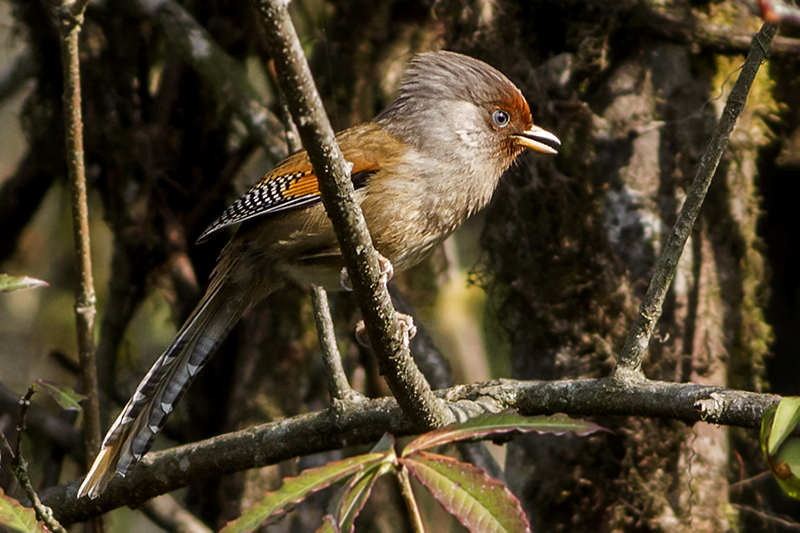

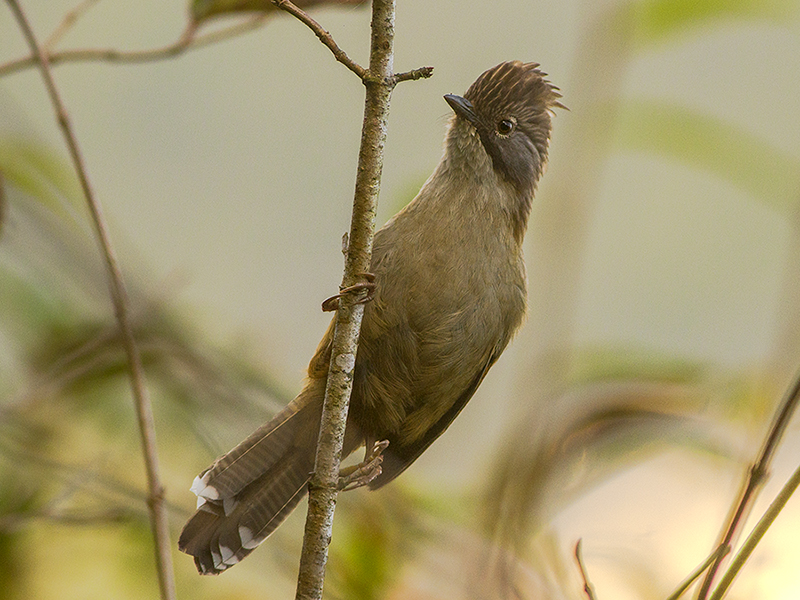
Birds Similar to the Black-faced Babbler
These species are often confused with the Black-faced Babbler due to similar appearance or overlapping range.

