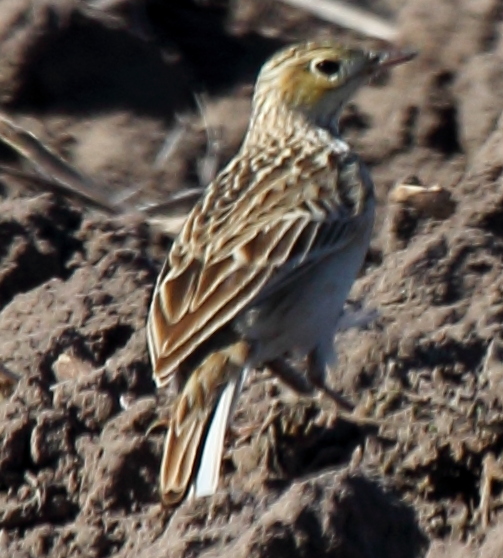
Black-headed Wagtail
Motacilla feldegg
Order: Passeriformes / Family: Motacillidae

Wikimedia Commons
About the Black-headed Wagtail
The Black-headed Wagtail, scientifically known as Motacilla feldegg, belongs to the family Motacillidae. This small passerine bird is instantly recognizable by its distinctive black head, a feature that sets it apart from other wagtails. Found primarily in southeastern Europe and parts of Asia, the Black-headed Wagtail thrives in open habitats such as wetlands, meadows, and agricultural fields. Its presence signifies a healthy ecosystem, often indicating areas rich in insect life. The bird plays a crucial role in controlling insect populations, thus maintaining ecological balance. During the breeding season, usually from April to July, the Black-headed Wagtail becomes more conspicuous, as males perform display flights and sing to attract mates. This wagtail is migratory, traveling to sub-Saharan Africa during the winter months. Its migratory patterns are complex, involving long journeys across varied terrains. The Black-headed Wagtail’s adaptability allows it to thrive in different environments, from the flat wetlands of the Danube Delta to the cultivated lands of Turkey and the floodplains of Iraq. In winter, it occupies a range of habitats in Africa, from dry savannas to irrigated fields. This adaptability is a testament to its ecological resilience. The Black-headed Wagtail also exhibits interesting seasonal behaviors. In breeding territories, it shows strong site fidelity, often returning to the same location year after year. During migration and wintering, it forms loose flocks, which provide safety in numbers and increase foraging efficiency. Its role as an insectivore is vital, as it helps suppress pest populations in agricultural areas. The Black-headed Wagtail's bright plumage and lively presence make it a favorite among birdwatchers and ornithologists, providing both aesthetic pleasure and insights into avian ecology.
The Black-headed Wagtail belongs to the family Motacillidae, within the order Passeriformes. These birds typically live average 4 years, with a maximum recorded of 6 years..
How to Identify a Black-headed Wagtail
The Black-headed Wagtail is a small bird, approximately 16-18 cm in length, with a wingspan of 25-30 cm. Adult males are unmistakable, sporting a jet-black head that sharply contrasts with their vivid yellow underparts and olive-green back. The tail is predominantly black with white outer feathers, a characteristic feature of wagtails. Females and juveniles appear somewhat duller, with a more muted yellow coloring and a greyish head instead of black. This dimorphism aids in identification during field observations. In flight, the Black-headed Wagtail displays a distinctive tail wagging motion, a behavioral trait common to all wagtail species. Its flight silhouette is slender and elongated, with rapid, undulating movements. When perched, it often adopts a horizontal stance, frequently bobbing its tail up and down. This wagtail could be confused with similar species like the Yellow Wagtail (Motacilla flava), but the Black-headed Wagtail's distinct head coloring is a definitive identifying trait.
Having trouble telling birds apart? Upload a photo to our bird identification tool for an instant species match.
Black-headed Wagtail Habitat and Range
Preferred Habitat
The Black-headed Wagtail inhabits a variety of open and semi-open habitats, favoring wetlands, meadows, and agricultural lands. It often nests near water sources, such as riverbanks and marshes, where insects abound. In higher altitudes, it can be found up to 2,000 meters, particularly in the mountainous regions of its range. During winter, it shifts to more arid habitats in sub-Saharan Africa, including savannas and irrigated fields. The wagtail also adapts to human-modified landscapes, frequently seen in rural farmlands and occasionally in urban parks and gardens. This adaptability makes it a widespread species, able to exploit different environments effectively.
Geographic Range
The breeding range of the Black-headed Wagtail extends from southeastern Europe through the Balkans, into Turkey, and reaching as far east as Iran. Key countries include Romania, Bulgaria, Greece, and parts of the Middle East such as Iraq. During migration, it travels through the Mediterranean and Middle Eastern regions, using established corridors that benefit from favorable stopover sites. In winter, the Black-headed Wagtail migrates to sub-Saharan Africa, with significant populations found in countries like Nigeria, Sudan, and Ethiopia. While generally widespread, certain areas serve as population density hotspots, particularly during breeding in the Danube Delta and wintering in the Ethiopian Highlands.
Want to know which birds visit your area? Browse our backyard birds by location guides for region-specific species lists.
What Does the Black-headed Wagtail Eat?
The Black-headed Wagtail primarily feeds on insects, making it an effective control agent in its habitats. Its diet mainly includes beetles, flies, and caterpillars, which it catches by foraging on the ground or in low vegetation. During summer, it incorporates a higher proportion of aquatic insects, reflecting its preference for wetland habitats. In winter, when insect availability decreases, it adapts by also consuming seeds and small invertebrates. The wagtail employs a distinctive foraging technique, walking briskly across the ground while picking prey items. It often forages alone or in small groups, primarily during early morning and late afternoon when insect activity peaks.
Black-headed Wagtail Behavior and Social Structure
The Black-headed Wagtail exhibits a range of fascinating behaviors. It is typically found in pairs or small family groups during the breeding season, when it becomes territorial. Males engage in elaborate courtship displays, involving song flights and tail-wagging rituals to attract females. Outside the breeding season, the wagtail becomes more social, forming loose flocks that facilitate foraging and protection. It exhibits strong site fidelity, often returning to the same breeding and wintering territories year after year. The wagtail displays an alert response to predators, using its sharp alarm calls to warn conspecifics. Its daily activity pattern involves active foraging during the cooler parts of the day, followed by periods of rest and preening.
Black-headed Wagtail Nesting and Reproduction
The Black-headed Wagtail constructs a cup-shaped nest, typically on the ground, concealed by grass or shrubs. It uses materials like grasses, rootlets, and hair to create a soft lining. Nests are often located close to water, taking advantage of abundant food resources. The female lays a clutch of 4-6 eggs, which she incubates for about 11-14 days. During this period, the male assists by bringing food to the nesting site. Once hatched, the chicks fledge in approximately 12-14 days, after which they remain dependent on their parents for a short period. The wagtail usually raises one to two broods per year, depending on environmental conditions.
Black-headed Wagtail Sounds and Vocalizations
The Black-headed Wagtail's primary song consists of a series of sharp, high-pitched notes delivered in a rapid sequence. This song is typically heard during the breeding season, often from a prominent perch. Its call notes are short and metallic, serving as contact calls between individuals. Alarm calls are higher and more urgent, often used to alert others to potential threats. During the dawn chorus, the wagtail's song blends with those of other species, creating a lively acoustic environment. Its vocal repertoire, though less complex than some songbirds, effectively serves its communicative needs.
Interesting Facts About the Black-headed Wagtail
- 1The Black-headed Wagtail can cover over 3,000 kilometers during its migratory journey from Europe to Africa.
- 2Despite their small size, Black-headed Wagtails are known to be aggressive in defending their territories from intruders.
- 3The species was first described by German naturalist Johann Friedrich Naumann in the 19th century.
- 4Black-headed Wagtails can often be seen performing a characteristic tail-bobbing motion, even when standing still.
- 5In some cultures, the wagtail is considered a harbinger of rain, as it often appears before storms.
- 6The wagtail's name, 'Motacilla,' is derived from the Latin 'movere,' meaning to move, referencing its constant movement.
- 7Black-headed Wagtails play a crucial role in agriculture by controlling pest populations naturally.
Black-headed Wagtail Conservation Status
The Black-headed Wagtail is currently listed as 'Least Concern' on the IUCN Red List, reflecting its stable population trend. However, habitat loss due to agricultural intensification and wetland drainage poses a threat. Conservation efforts focus on preserving key breeding and wintering habitats, particularly wetlands, which are crucial to its survival. Historically, populations have fluctuated with changes in land use practices, but current efforts aim to stabilize and enhance habitat quality.