
Black Laughingthrush
Garrulax lugubris
Order: Passeriformes / Family: Leiothrichidae

Wikimedia Commons
About the Black Laughingthrush
The Black Laughingthrush (Garrulax lugubris) is a captivating member of the Leiothrichidae family, celebrated for its glossy black plumage and complex vocal abilities. This bird primarily inhabits the tropical and subtropical montane forests across Southeast Asia, with its presence noted in countries such as Malaysia, Thailand, and Indonesia. As a social species, the Black Laughingthrush often moves in small groups, exhibiting a range of vocalizations that include whistles, mimics, and melodic calls. These birds play a significant role in their ecosystem as seed dispersers and insect controllers, contributing to forest health and balance. Throughout the year, these birds maintain a relatively stable presence in their preferred habitats, but they may shift altitudinally in response to seasonal changes in food availability. While the Black Laughingthrush is not highly migratory, it demonstrates localized movements that correlate with food resources and breeding activities. Their adaptability to both primary and secondary forest conditions exemplifies their resilience, yet they remain susceptible to habitat loss due to deforestation and land-use changes. Conservation efforts are essential to ensure the continued survival of this species, highlighting the importance of maintaining forest integrity. The Black Laughingthrush's role as both a predator and prey links it intricately with other forest inhabitants, underscoring its ecological significance. For bird enthusiasts and researchers alike, the Black Laughingthrush offers a remarkable example of avian adaptation and communication within the rich biodiversity of Southeast Asian forests.
The Black Laughingthrush belongs to the family Leiothrichidae, within the order Passeriformes. These birds typically live average 6 years with a max recorded of 9 years.
How to Identify a Black Laughingthrush
The Black Laughingthrush is easily identified by its glossy black plumage that covers most of its body, giving it a sleek appearance. Adults sport a uniform black coloration with a slightly lighter throat and chest, which contrast with their bright yellow eyes. The beak is strong and dark, suited for their varied diet. Juveniles are similar in appearance but may appear slightly duller with a more subdued eye color. Males and females exhibit minimal sexual dimorphism, making them difficult to distinguish in the field. One might confuse this species with other dark-plumaged laughingthrushes; however, the absence of white or rufous markings and the distinct black coloration set it apart. In flight, the Black Laughingthrush displays broad, rounded wings, and its tail is moderately long and rounded, providing a distinctive silhouette. When perched, they often hold their tails slightly cocked, and their posture is upright and alert, reflecting their inquisitive nature.
Having trouble telling birds apart? Upload a photo to our bird identification tool for an instant species match.
Black Laughingthrush Habitat and Range
Preferred Habitat
The Black Laughingthrush thrives in the lush, humid environments of montane forests, typically found at elevations ranging from 300 to 2,000 meters. These forests provide dense canopy cover, abundant foliage, and a rich supply of food. In Malaysia and Thailand, they frequent both primary and well-established secondary forests, showing some adaptability to habitat alterations. During different seasons, they may shift between elevations, descending to lower altitudes during colder months when food is more accessible. While primarily forest dwellers, they occasionally venture into adjoining plantations or wooded gardens, though they tend to avoid heavily urbanized areas.
Geographic Range
The Black Laughingthrush's range is primarily confined to the biodiverse regions of Southeast Asia, including peninsular Malaysia, southern Thailand, and Sumatra in Indonesia. This bird is typically non-migratory, maintaining its presence year-round in these areas. However, some altitudinal movements occur within their range, particularly in response to seasonal fruiting patterns of their preferred food sources. Population densities are generally higher in regions where forest conditions remain relatively undisturbed, but they can be locally abundant in suitable habitats.
Want to know which birds visit your area? Browse our backyard birds by location guides for region-specific species lists.
What Does the Black Laughingthrush Eat?
The diet of the Black Laughingthrush is diverse and primarily consists of insects, fruits, and small invertebrates. They forage actively, often seen hopping through undergrowth or along branches, searching for prey. During the breeding season, insects such as beetles and caterpillars form a significant part of their diet, providing essential protein for growing chicks. In contrast, during fruiting seasons, they may consume a higher proportion of fruits and berries, aiding in seed dispersal. Their varied diet allows them to adapt to seasonal changes in food availability, ensuring their survival throughout the year.
Black Laughingthrush Behavior and Social Structure
Black Laughingthrushes exhibit highly social behavior, often moving in small flocks that engage in communal foraging. These groups exhibit a complex social structure, maintaining tight-knit relationships through vocal communications. Territorial behavior is evident during the breeding season when pairs become more aggressive in defending their nesting areas. Courtship involves a series of vocal duets and displays of plumage, strengthening pair bonds. When faced with predators, they often rely on group vigilance and alarm calls to alert each other of danger. Their active nature persists throughout the day, with peak activity occurring during early morning and late afternoon.
Black Laughingthrush Nesting and Reproduction
Black Laughingthrushes construct cup-shaped nests using twigs, leaves, and grasses. They prefer to situate these nests within dense shrubbery or low tree branches, providing concealment from predators. A typical clutch consists of two to three eggs, which are incubated primarily by the female. The incubation period lasts approximately 14 days, after which both parents participate in feeding the chicks. Fledging occurs around 12 to 14 days post-hatching, and the young remain dependent on parental care for several weeks thereafter. In favorable conditions, the Black Laughingthrush may raise two broods per year.
Black Laughingthrush Sounds and Vocalizations
The vocal repertoire of the Black Laughingthrush is both varied and melodious, featuring a mix of whistles, chatters, and mimicry. Their primary song is a series of clear, melodic whistles that can be heard echoing through the forest. Call notes are sharp and can vary in pitch, serving purposes such as communication within groups or alerting to danger. Alarm calls are harsher, acting as an immediate warning to conspecifics. During the dawn chorus, their vocalizations contribute to the symphony of sounds that characterize their habitat, creating an auditory tapestry unique to Southeast Asian forests.
Interesting Facts About the Black Laughingthrush
- 1The Black Laughingthrush can mimic the calls of other bird species, showcasing its vocal adaptability.
- 2These birds are known to form mixed-species foraging flocks, increasing feeding efficiency.
- 3Their melodious calls can be heard over several hundred meters, making them prominent vocalists of the forest.
- 4Black Laughingthrushes are cooperative breeders, with older offspring sometimes helping to rear the new brood.
- 5Their strong, black beaks are adapted for cracking tough fruit shells, showcasing their dietary versatility.
- 6The species exhibits a unique behavior known as 'anting,' where they use ants to rid their feathers of parasites.
- 7In the wild, Black Laughingthrushes have been observed using tools, such as sticks, to extract insects from crevices.
Black Laughingthrush Conservation Status
The Black Laughingthrush is currently listed as Least Concern by the IUCN, with populations considered stable in much of its range. However, habitat loss due to deforestation and agricultural expansion poses a significant threat. Conservation efforts focus on preserving primary forests and establishing protected areas to mitigate these impacts. Historical population trends indicate stability, but continued vigilance is necessary to ensure that these birds remain abundant in their natural habitats.
Other Leiothrichidae Species


Birds Similar to the Black Laughingthrush
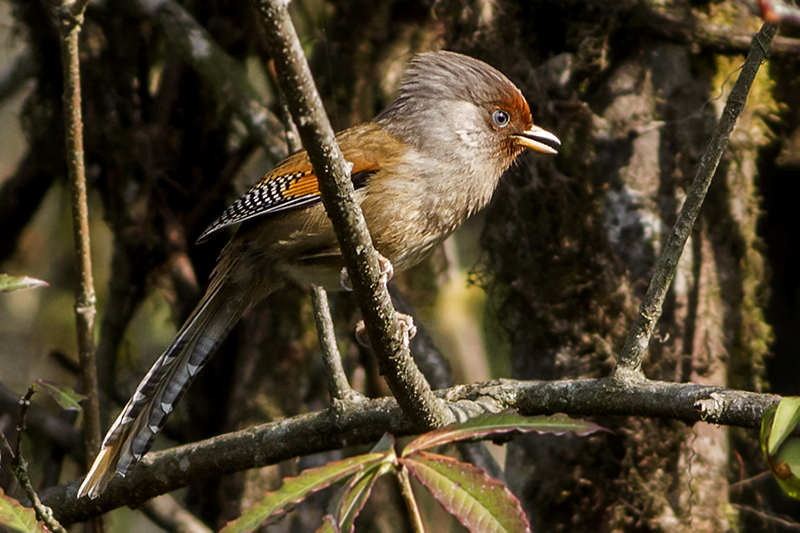
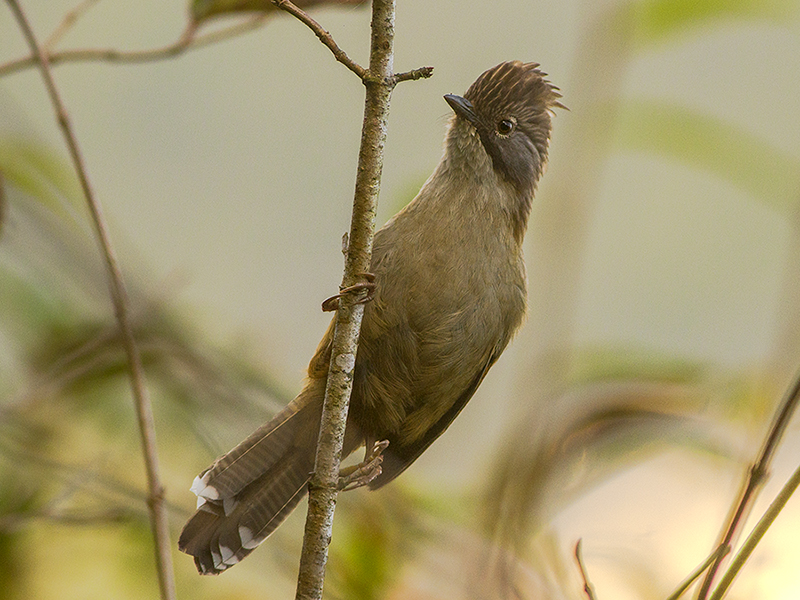
These species are often confused with the Black Laughingthrush due to similar appearance or overlapping range.

