
Black Storm-Petrel
Oceanodroma melania
Order: Procellariiformes / Family: Hydrobatidae

Wikimedia Commons
About the Black Storm-Petrel
The Black Storm-Petrel (Oceanodroma melania) is a fascinating seabird that inhabits the Pacific Ocean, specifically the eastern North Pacific from California to Peru. Known for its striking black plumage, this species thrives in marine environments, often seen skimming the ocean surface in search of food. The species plays a crucial role in the marine ecosystem, acting as both predator and prey. Its presence indicates healthy fish populations, as it primarily feeds on small fish and squid.
These birds breed on offshore islands, with notable colonies on Mexico's Guadalupe Island and the Gulf of California islands. The Black Storm-Petrel is a nocturnal breeder, utilizing darkness to avoid predators. This behavior reflects their adaptability and survival strategies in the wild. During non-breeding seasons, they disperse widely across the ocean, showcasing their remarkable long-distance flying capabilities.
Ecologically, Black Storm-Petrels are important for nutrient cycling. By feeding at sea and returning to land to breed, they transfer oceanic nutrients to terrestrial environments. This nutrient transfer supports island ecosystems, aiding plant growth and benefiting other wildlife. The species' migratory patterns also contribute to the connectivity of marine and coastal ecosystems.
While not currently endangered, the Black Storm-Petrel faces threats from human activities. Oil spills, plastic pollution, and climate change impact their feeding grounds and breeding sites. Conservation efforts focus on habitat protection and reducing bycatch in fisheries as essential measures to ensure their continued survival.
The Black Storm-Petrel belongs to the family Hydrobatidae, within the order Procellariiformes. These birds typically live average lifespan is about 15 years, with a maximum recorded of 24 years..
How to Identify a Black Storm-Petrel
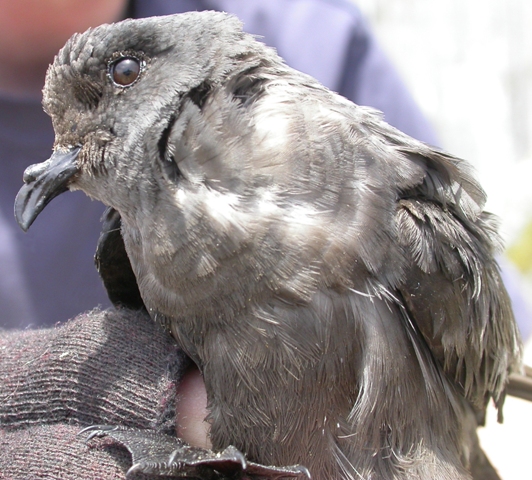
The Black Storm-Petrel is distinguishable by its entirely dark plumage, which appears almost black in color. Its wings are long and narrow, with a wingspan of approximately 46-51 cm. The tail is slightly forked, aiding in maneuverability while flying close to the ocean's surface. Adults display no significant sexual dimorphism, making males and females visually indistinguishable in the field.
Juvenile Black Storm-Petrels closely resemble adults but may exhibit slightly duller plumage. Observers should note the bird's characteristic flight pattern, which involves rapid wingbeats interspersed with gliding. This flight behavior, along with its dark coloration, helps differentiate it from similar species like the Least Storm-Petrel, which is smaller and has different flight dynamics.
In silhouette, the Black Storm-Petrel's wings appear sharply angular, and its body is compact, contributing to its agile movements. When perched, often on rocky outcrops of breeding islands, their posture is upright and alert, maintaining a watchful eye for potential threats. This species' nocturnal habits and choice of isolated nesting sites further reduce opportunities for confusion with other seabirds.
Having trouble telling birds apart? Upload a photo to our bird identification tool for an instant species match.
Black Storm-Petrel Habitat and Range
Preferred Habitat
Black Storm-Petrels are typically found in marine environments, specifically pelagic zones of the eastern North Pacific. They prefer open ocean waters away from coastal influence, often seen far from shore. During the breeding season, they favor rocky offshore islands, where they nest in crevices and burrows.
Their habitat preferences shift slightly with the seasons. While breeding, they stay close to island environments, but in non-breeding periods, they venture into vast oceanic expanses. These seabirds are rarely found in urban areas, as their life cycles are closely tied to the ocean and isolated islands.
Elevation is not a significant factor for Black Storm-Petrels, given their reliance on marine habitats. However, they do nest at varying elevations on islands, from sea level to higher rocky terrains, depending on site availability and predator pressures. The species' absence from terrestrial and freshwater habitats underscores its preference for oceanic conditions.
Geographic Range
The Black Storm-Petrel is primarily distributed along the eastern Pacific Ocean. Its breeding range extends from southern California's Channel Islands down to the Baja California peninsula, with significant populations on islands such as Guadalupe and the Gulf of California islands.
During the non-breeding season, these birds are highly pelagic, dispersing across the open Pacific Ocean. They can be found as far south as Peru, indicating their vast migratory range. Migration corridors include coastal and offshore waters, where they follow ocean currents and food availability.
Population density hotspots occur around breeding islands, where they congregate in large numbers during the breeding season. The species is less common near continental coastlines, as they prefer the relative safety and resource availability of island and open ocean habitats. Despite their wide range, Black Storm-Petrels maintain specific breeding sites, reflecting strong site fidelity.
Want to know which birds visit your area? Browse our backyard birds by location guides for region-specific species lists.
What Does the Black Storm-Petrel Eat?
Black Storm-Petrels primarily feed on small fish, squid, and planktonic crustaceans. Their diet consists of prey items typically less than 10 cm in length, which they capture by skimming the ocean surface.
These birds exhibit a unique foraging technique known as surface seizing, where they pick prey from the water while in flight. This method allows them to exploit a range of food sources without diving, conserving energy. They often feed during dawn and dusk, capitalizing on the increased availability of prey near the ocean surface during these times.
Seasonal diet variations occur, with shifts in prey availability influencing their foraging behavior. During breeding, they focus on nutrient-rich prey to support energy demands for nesting and chick rearing. The Black Storm-Petrel's feeding strategy and diet play a significant role in marine food webs, as they help regulate fish and squid populations.
Black Storm-Petrel Behavior and Social Structure
Black Storm-Petrels exhibit fascinating behavioral patterns that ensure their survival in the open ocean. They are highly social, often forming loose flocks when foraging, which may assist in locating food sources over vast expanses of water.
Territorial behavior is minimal, given their pelagic lifestyle, but they become more territorial during the breeding season. Courtship displays involve vocalizations and aerial maneuvers, with pairs forming strong long-term bonds. Nesting sites on islands are fiercely defended against intruders, contributing to colony cohesion.
Their response to predators is primarily evasive, using their agile flight to avoid aerial threats. They are vigilant, especially near breeding sites, where nocturnal habits provide some protection. Daily activity patterns align with prey availability, leading to increased activity during early morning and late evening.
Overall, Black Storm-Petrels demonstrate a blend of social and solitary behaviors, adapted to the challenges of their oceanic environment. Their interactions within colonies and during flights reflect complex social structures and survival strategies.
Black Storm-Petrel Nesting and Reproduction
Black Storm-Petrels nest in crevices and burrows on rocky islands, demonstrating a preference for sites that offer protection from predators. Nest construction involves minimal materials, mainly utilizing existing cavities in rocks.
The breeding season occurs from late spring to early summer, with females laying a single egg per clutch. Both parents share incubation duties, which last approximately 50 days. The egg's white color provides camouflage against the rocky substrate, enhancing survival chances.
Upon hatching, the chick remains in the nest for about 65-70 days, during which time both parents provide regurgitated food. The fledging period is critical, as young storm-petrels must develop strong flight skills to survive at sea.
Parental roles are equitable, with both sexes involved in feeding and protection. Typically, the Black Storm-Petrel produces one brood per year, although some may attempt a second if conditions allow. Their nesting habits highlight a life strategy focused on maximizing offspring survival in a challenging environment.
Black Storm-Petrel Sounds and Vocalizations
The Black Storm-Petrel's vocalizations are primarily nocturnal, comprising rapid, repetitive chattering calls. These sounds are most often heard at breeding colonies during courtship and territorial interactions. The rhythm and quality of their calls resemble a high-pitched, wavering trill.
In addition to their primary song, Black Storm-Petrels emit softer contact calls when foraging in groups. Alarm calls are sharp and brief, designed to alert colony members of potential danger.
While not known for a dawn chorus, these birds vocalize regularly at night, especially during the breeding season. Their sounds serve as an auditory marker of their presence, useful for locating nesting sites in the dark.
Compared to other seabirds, Black Storm-Petrel calls are less varied but play a crucial role in maintaining social bonds and defending territories.
Interesting Facts About the Black Storm-Petrel
- 1The Black Storm-Petrel can fly more than 300 miles in a single day while foraging over the open ocean.
- 2These birds possess a special gland that allows them to excrete excess salt, enabling them to drink seawater.
- 3The Black Storm-Petrel's dark plumage provides camouflage against ocean waves, helping them evade predators.
- 4Despite their small size, Black Storm-Petrels can travel vast distances, sometimes reaching the Galapagos Islands.
- 5Black Storm-Petrels are known to follow ships, taking advantage of disturbed waters to find food more easily.
- 6They are among the few bird species that breed exclusively on offshore islands, avoiding mainland predators.
- 7The species' scientific name, Oceanodroma melania, translates to 'black sea runner,' reflecting their agile flight.
Black Storm-Petrel Conservation Status
The Black Storm-Petrel is currently classified as Least Concern by the IUCN, although specific populations face localized threats. The overall population trend appears stable, but ongoing threats could alter this status. Primary threats include oil spills, which contaminate their feeding areas, and plastic pollution, which poses ingestion risks. Climate change impacts, such as rising sea levels and ocean warming, threaten their breeding habitats and food availability. Conservation efforts focus on habitat protection, particularly safeguarding breeding islands from human disturbance and introduced predators. Monitoring programs aim to assess population health and address emerging threats. Historically, population changes have been linked to environmental conditions and human activity. Continued conservation efforts are essential to maintain stable populations and protect the Black Storm-Petrel's crucial role in marine ecosystems.
Other Hydrobatidae Species



Birds Similar to the Black Storm-Petrel
These species are often confused with the Black Storm-Petrel due to similar appearance or overlapping range.
