
Christmas Island Frigatebird
Fregata andrewsi
Order: Suliformes / Family: Fregatidae
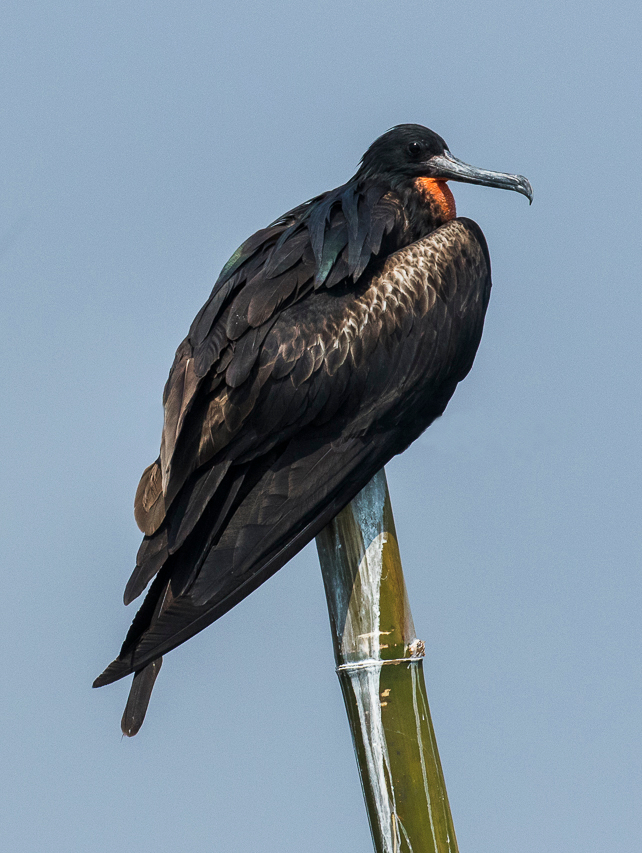
Wikimedia Commons
About the Christmas Island Frigatebird
The Christmas Island Frigatebird, scientifically known as Fregata andrewsi, is an iconic seabird native to Christmas Island, a small Australian territory in the Indian Ocean. This species, notable for its aerial prowess and lengthy wings, plays a vital role in the island's ecosystem. The Christmas Island Frigatebird is among the most visually striking members of the family Fregatidae, recognized for its considerable size, with a wingspan reaching over 2.3 meters. This frigatebird is primarily found in the tropical climate of Christmas Island, which provides the necessary environment for its breeding and foraging activities. Its presence is a key indicator of the island's marine health, as it relies heavily on the surrounding waters for sustenance. The species exhibits a fascinating adaptation to its environment, engaging in kleptoparasitism, a behavior where it often steals food from other seabirds. This technique, while seemingly aggressive, underscores its role in the intricate food web of the island's marine ecosystem.
The ecological significance of the Christmas Island Frigatebird extends beyond its immediate environment. As a top predator in its habitat, it helps maintain the balance of species populations, preventing overpopulation of smaller fish and marine organisms. Its breeding success is directly linked to the health of the marine ecosystem, making it a valuable indicator species for monitoring environmental changes. During the breeding season, the island becomes a hub of activity, with these birds displaying their distinctive courtship behaviors. Males inflate their bright red gular pouches to attract females, creating a vibrant spectacle against the backdrop of the island's lush forests.
The Christmas Island Frigatebird's survival is intimately connected to the preservation of its habitat. Human activities, such as deforestation and pollution, pose significant threats to its nesting grounds and food sources. Conservation efforts focused on protecting the island's unique ecosystem are crucial for the continued survival of this species. Understanding the frigatebird's role in the broader ecological context highlights the importance of sustainable environmental practices to ensure the health of both the Christmas Island Frigatebird and the ecosystem it inhabits.
The Christmas Island Frigatebird belongs to the family Fregatidae, within the order Suliformes. These birds typically live average 30 years, with some living up to 40 years..
How to Identify a Christmas Island Frigatebird
Identifying the Christmas Island Frigatebird involves noting several distinctive features. Adult birds exhibit predominantly black plumage that reflects a subtle green and purple sheen in sunlight. This glossy appearance is enhanced by their long, deeply forked tails and elongated wings, which contribute to their impressive wingspan of over 2.3 meters. Males and females can be distinguished by their sexual dimorphism; males showcase a vivid red gular pouch, which they inflate during courtship displays, while females possess a white breast patch and lack the red gular sac. Juvenile frigatebirds are brownish with paler heads and gradually acquire the adult plumage over several years.
In flight, the Christmas Island Frigatebird displays a characteristic silhouette, marked by its slender body, elongated wings, and forked tail. This bird's flight is buoyant and effortless, often soaring on thermals for hours. When perched, it maintains an upright posture, with its long tail often draped over branches. Unlike other seabirds, frigatebirds lack waterproof plumage, which prevents them from diving into the water to catch prey. Instead, they rely on their impressive aerial abilities to snatch prey from the ocean surface or engage in kleptoparasitic behavior, stealing food from other birds.
While similar in appearance to other frigatebird species, the Christmas Island Frigatebird can be distinguished by its habitat and specific plumage details. Its unique combination of black plumage, striking red gular pouch in males, and specific geographic range helps differentiate it from other members of the Fregatidae family. Observers should note these key characteristics when identifying this rare and remarkable seabird.
Having trouble telling birds apart? Upload a photo to our bird identification tool for an instant species match.
Christmas Island Frigatebird Habitat and Range
Preferred Habitat
The Christmas Island Frigatebird inhabits the coastal and forested regions of Christmas Island, particularly favoring the island's primary rainforest areas for nesting. This tropical environment provides the necessary conditions for breeding, with dense foliage offering protection and seclusion for nests. The frigatebirds predominantly occupy elevations ranging from sea level to about 360 meters, which encompasses the island's varied topography. These birds require proximity to open ocean waters, as their primary foraging activities occur above the sea.
Seasonal shifts in habitat utilization are minimal, given the species' year-round residency on Christmas Island. However, some individuals may extend their range slightly offshore during non-breeding periods, taking advantage of the nutrient-rich waters for enhanced foraging opportunities. The Christmas Island Frigatebird does not typically venture into urban areas, maintaining a preference for undisturbed natural environments.
Conservation of their habitat is crucial, as deforestation and human encroachment pose significant threats to their breeding and roosting sites. Protecting the island's forests and surrounding marine areas ensures the continued survival of this unique frigatebird species and the preservation of its natural habitat.
Geographic Range
The Christmas Island Frigatebird's range is largely confined to Christmas Island, where it breeds and resides year-round. This island, located in the eastern Indian Ocean, serves as the primary breeding ground for the species. The frigatebirds utilize the island's dense forests for nesting, while the surrounding ocean waters provide essential foraging grounds.
Unlike other migratory seabirds, the Christmas Island Frigatebird exhibits limited migratory behavior. It remains within the vicinity of Christmas Island throughout the year, with some individuals occasionally venturing slightly further afield into the broader Indian Ocean. This limited range underscores the species' reliance on the island's unique ecosystem and marine resources for survival.
Population density of the Christmas Island Frigatebird is concentrated on the island itself, making it a crucial area for conservation efforts. The restricted range highlights the species' vulnerability to habitat degradation and environmental changes, emphasizing the importance of protecting the island's natural resources to ensure the frigatebird's continued existence.
Want to know which birds visit your area? Browse our backyard birds by location guides for region-specific species lists.
What Does the Christmas Island Frigatebird Eat?
The diet of the Christmas Island Frigatebird primarily consists of fish and squid, which it captures from the ocean surface. These birds rely on their exceptional flying abilities to forage, as they cannot dive due to their lack of waterproof feathers. Instead, they skillfully snatch prey while in flight, often targeting schools of fish that come near the surface.
Kleptoparasitism is a noteworthy aspect of their feeding strategy; the Christmas Island Frigatebird frequently harasses other seabirds, such as boobies and terns, to steal their catch. This behavior, while opportunistic, plays a significant role in the frigatebird's ability to thrive in its environment. During the breeding season, adults may increase their foraging efforts to meet the demands of growing chicks, which require a steady supply of food.
Seasonal variations in diet are minimal, given the bird's year-round presence on Christmas Island. However, changes in oceanic conditions, such as shifts in sea surface temperature and prey availability, can influence foraging success. Monitoring these factors is crucial for understanding the long-term sustainability of the frigatebird's food resources and the overall health of the marine ecosystem.
Christmas Island Frigatebird Behavior and Social Structure
The Christmas Island Frigatebird exhibits a range of intriguing behaviors, particularly during the breeding season. These birds are highly social, often seen in large flocks soaring above the island or resting in communal roosts. Their social structure becomes particularly evident during courtship, when males gather in groups to perform elaborate displays. Males inflate their bright red gular pouches and produce drumming sounds by rapidly vibrating the pouch, all to attract the attention of females flying overhead.
Territoriality is not a prominent trait among Christmas Island Frigatebirds, as they often nest in close proximity to one another in the island's dense forests. However, individual pairs may defend their immediate nest site from intruders. The frigatebirds' daily activity patterns revolve around foraging and resting, with peak activity occurring during early morning and late afternoon when prey is more abundant.
In response to predators, the Christmas Island Frigatebird relies on its exceptional flight capabilities to evade potential threats. While their size and aerial agility make them difficult targets, eggs and chicks are vulnerable to introduced predators such as rats and cats. Conservation efforts are crucial to mitigate these threats and protect the breeding success of this remarkable seabird.
Christmas Island Frigatebird Nesting and Reproduction
Nesting for the Christmas Island Frigatebird occurs exclusively on Christmas Island, where they utilize the island's dense primary rainforests and coastal cliff areas. They construct simple nests using twigs and other vegetation, often placed on the branches of tall trees or shrubs. The selection of nesting sites is influenced by the availability of suitable foliage and proximity to food resources.
The Christmas Island Frigatebird typically lays a single egg per breeding season. Both parents share the responsibility of incubation, which lasts approximately 50-55 days. After hatching, the chick remains in the nest for several months, with parents taking turns foraging for food and tending to the young. The extended fledging period, often lasting up to six months, ensures the chick gains sufficient strength and skills to survive independently.
Parental care is a critical aspect of the frigatebird's reproductive strategy, as the harsh oceanic environment demands significant investment in the survival of each offspring. The species typically raises one brood per year, underscoring the importance of successful nesting efforts for maintaining population stability.
Christmas Island Frigatebird Sounds and Vocalizations
The Christmas Island Frigatebird is not known for elaborate vocalizations; instead, it relies on a series of mechanical sounds and calls, particularly during courtship. Males produce a distinctive drumming noise by vibrating their inflated red gular pouches. This sound, coupled with clicking and rattling noises, forms part of their complex display to attract females.
Beyond the breeding season, the frigatebird remains relatively silent, with occasional low croaks or grunts exchanged between individuals in flight or at roosting sites. Alarm calls are infrequent, as these birds rely more on their aerial agility to avoid predators rather than vocal warnings.
The acoustic environment of the frigatebird's habitat, dominated by the sounds of the ocean and other seabirds, means their vocalizations are adapted for close-range communication rather than long-distance signaling. This adaptation reflects their social and reproductive behaviors, emphasizing visual and mechanical displays over auditory signals.
Interesting Facts About the Christmas Island Frigatebird
- 1The Christmas Island Frigatebird has the largest wingspan-to-body-weight ratio of any bird, allowing it to soar effortlessly for long periods.
- 2Despite their size, frigatebirds cannot swim or dive; they rely on aerial skills to snatch prey from the water's surface.
- 3Males inflate their red gular pouches, which can reach the size of a soccer ball, to attract females during courtship.
- 4The species is named after Christmas Island, where it is endemic, highlighting its limited geographical distribution.
- 5Christmas Island Frigatebirds can remain airborne for days, even sleeping while on the wing, thanks to their exceptional flight adaptations.
- 6These birds can reach speeds of up to 150 km/h while pursuing prey or engaging in aerial displays.
- 7Frigatebirds have been observed engaging in cooperative kleptoparasitism, working together to steal food from other birds.
Christmas Island Frigatebird Conservation Status
The Christmas Island Frigatebird is currently listed as Critically Endangered by the IUCN. This status reflects a declining population trend, primarily due to habitat loss and degradation on Christmas Island. Deforestation for phosphate mining and development has reduced the availability of suitable nesting sites, while introduced species such as rats and cats pose significant threats to eggs and chicks. Conservation efforts are underway to mitigate these threats, including habitat restoration and predator control programs. Establishing protected areas on the island plays a crucial role in safeguarding the frigatebird's breeding and foraging habitats. Historical population data indicates a significant decline over recent decades, emphasizing the urgent need for continued conservation action. These efforts aim to stabilize the population and ensure the long-term survival of this unique seabird. Collaborative initiatives involving local communities, governments, and conservation organizations are essential for addressing the complex challenges facing the Christmas Island Frigatebird and preserving its critical role in the island's ecosystem.


