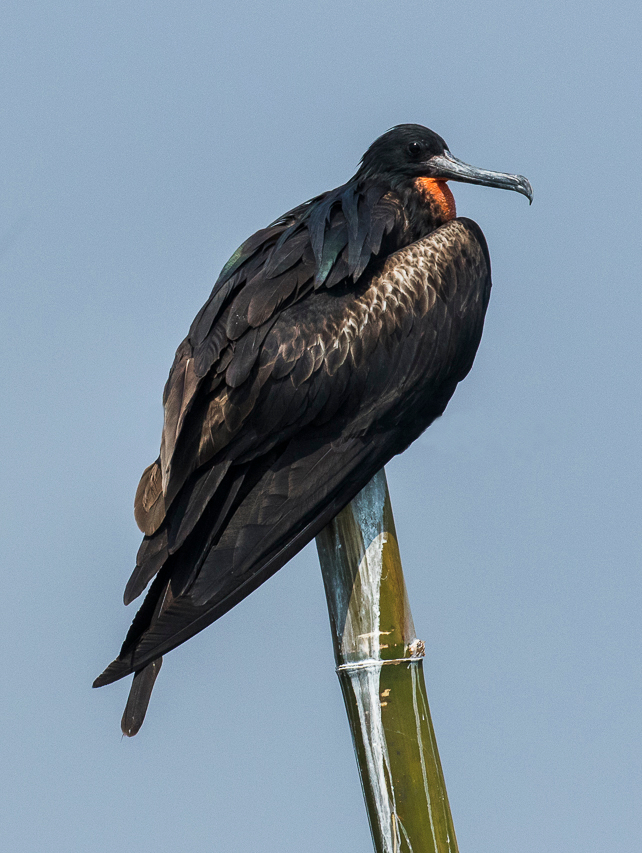
Lesser Frigatebird
Fregata ariel
Order: Suliformes / Family: Fregatidae

Wikimedia Commons
About the Lesser Frigatebird
The Lesser Frigatebird, scientifically known as Fregata ariel, is a remarkable seabird belonging to the family Fregatidae. These birds are highly esteemed in ornithological circles for their acrobatic flight capabilities and striking appearance. Found predominantly in tropical and subtropical oceans, the Lesser Frigatebird plays a significant role in marine ecosystems. They are typically seen soaring over coastal waters in regions such as the Indian Ocean, the western Pacific Ocean, and parts of the Atlantic. Lesser Frigatebirds exhibit a marked adaptability, residing in both remote island settings and areas closer to human activity. Their ecological role includes both predation and scavenging, impacting fish populations and the broader marine food web. The Lesser Frigatebird is a kleptoparasitic feeder, often stealing food from other seabirds, a behavior that influences interspecies interactions. Seasonally, these birds showcase remarkable migratory patterns. During breeding seasons, they congregate on remote islands like Christmas Island in the Indian Ocean and the Galápagos Islands in the eastern Pacific. These breeding sites are crucial for the species, ensuring the continuation of their lineage. Outside of breeding seasons, they disperse widely across tropical oceans, often covering vast distances. This seasonal behavior aligns with the availability of prey, indicating their adaptive strategies for survival. Lesser Frigatebirds contribute to the ecological balance by regulating fish populations and serving as indicators of oceanic health. Their presence often signifies rich marine biodiversity. As they migrate, they also assist in nutrient cycling, an essential process for maintaining the vitality of ocean ecosystems. Their reliance on specific breeding sites makes them vulnerable to environmental changes, highlighting the importance of conservation efforts in preserving these critical areas.
The Lesser Frigatebird belongs to the family Fregatidae, within the order Suliformes. These birds typically live typically 30 years, occasionally living up to 40 years..
How to Identify a Lesser Frigatebird
The Lesser Frigatebird is identifiable by its long wingspan, dark plumage, and deeply forked tail. Adult males are predominantly black with a subtle greenish sheen on their feathers, while females have a distinct white throat patch. Juveniles display a more mottled appearance, with a mix of brown and white on their underparts. One of the key distinguishing features of the Lesser Frigatebird is its long, hooked bill, adapted for snatching prey mid-flight. Males and females can be differentiated by size, with females generally being larger. The flight silhouette of a Lesser Frigatebird is unmistakable, characterized by its angular, pointed wings and aerodynamic form. In flight, they appear almost effortlessly suspended, often gliding on thermal currents. Lesser Frigatebirds rarely perch, but when they do, they are seen roosting on tree branches or rocky ledges, adopting a hunched posture. This species can be confused with other frigatebird species such as the Great Frigatebird. However, the Lesser Frigatebird is smaller and lacks the extensive red throat pouch seen in the larger species. When observing these birds, note the subtle differences in plumage and size to ensure accurate identification.
Having trouble telling birds apart? Upload a photo to our bird identification tool for an instant species match.
Lesser Frigatebird Habitat and Range
Preferred Habitat
Lesser Frigatebirds inhabit tropical and subtropical marine environments, primarily frequenting coastal and pelagic zones. They are commonly observed around coral reefs, atolls, and oceanic islands. During breeding seasons, they prefer isolated islands with minimal human disturbance. These birds do not typically venture inland, as their life revolves around the oceans. In terms of elevation, they remain at sea level, rarely seen over land unless roosting or nesting. Seasonal habitat shifts occur as they migrate between breeding colonies and feeding grounds. Though they are not urban dwellers, their presence near coastal regions can overlap with human activities such as fishing and tourism.
Geographic Range
The Lesser Frigatebird has a broad geographical range, found in the tropical zones of the Indian and Pacific Oceans, as well as parts of the Atlantic. During the breeding season, they concentrate in colonies on islands such as Aldabra in the Seychelles, Christmas Island in the Indian Ocean, and the Galápagos Islands. After breeding, they disperse widely, utilizing extensive oceanic corridors that span across thousands of kilometers. Lesser Frigatebirds are known to traverse areas off the coasts of Australia, Southeast Asia, and East Africa. Population density hotspots include these breeding islands and nearby marine regions rich in fish stocks. Unlike some migratory species, Lesser Frigatebirds do not follow strict north-south migration paths, instead opting for more expansive oceanic dispersal patterns. This wide-ranging behavior allows them to exploit different marine resources throughout the year, adapting to changing oceanographic conditions.
Want to know which birds visit your area? Browse our backyard birds by location guides for region-specific species lists.
What Does the Lesser Frigatebird Eat?
The diet of the Lesser Frigatebird primarily consists of flying fish and squid, both of which they capture by swooping down to the water's surface. They are adept at snatching prey mid-air, a skill that sets them apart from other seabirds. During non-breeding seasons, their diet diversifies to include other marine species such as smaller fish and crustaceans. Their kleptoparasitic behavior involves harassing other birds, like boobies and terns, forcing them to regurgitate their catches. This feeding strategy is vital during periods of scarcity, allowing them to exploit the efforts of other avian hunters. Despite their reliance on other birds for food, Lesser Frigatebirds remain agile predators, capable of catching live prey with precision. They are diurnal feeders, actively hunting during daylight hours when prey visibility is optimal. The size of their prey ranges from small fish to larger squid, depending on availability. Seasonal fluctuations in diet ensure they meet their nutritional needs throughout the year.
Lesser Frigatebird Behavior and Social Structure
Lesser Frigatebirds exhibit fascinating behaviors that reflect their adaptability and social structures. These birds are highly social, often seen in large flocks during migration and while foraging. Their social structure during breeding seasons becomes more complex, as they form dense colonies where males perform elaborate courtship displays. These displays involve inflating their bright red gular sacs and engaging in aerial maneuvers to attract females. Lesser Frigatebirds are aggressive in defending their territories, particularly around nesting sites. They exhibit kleptoparasitic tendencies, frequently pursuing other seabirds to steal food. This behavior underscores their competitive nature and ability to adapt to available resources. In terms of daily activity, Lesser Frigatebirds are primarily diurnal, engaging in foraging excursions and social interactions from dawn to dusk. Their response to predators is strategic; they often rely on agility and speed to evade threats rather than confront them directly. Flocking patterns during migration are loosely organized, with birds maintaining visual contact over open waters.
Lesser Frigatebird Nesting and Reproduction
The nesting habits of the Lesser Frigatebird involve constructing minimalistic nests, often on low-lying shrubs or rocky outcrops on remote islands. The nests are made from twigs and leaves, with both males and females participating in construction. A typical clutch consists of a single egg, reflecting their low reproductive rate. Incubation lasts around 40-50 days, during which both parents share responsibilities. After hatching, chicks remain in the nest for several months, receiving constant care and feeding from their parents. The fledging period is long, often extending up to six months before juveniles gain independence. Parental roles are clearly defined; males initially take on more incubation duties, while females focus on feeding. Lesser Frigatebirds typically have one brood per year, emphasizing the importance of successful breeding seasons. The choice of nesting location is crucial, as it provides protection from predators and ensures proximity to food sources.
Lesser Frigatebird Sounds and Vocalizations
The Lesser Frigatebird's vocalizations are not as prominent as those of songbirds, but they do produce a range of sounds, primarily during courtship and territorial displays. Their primary call consists of a series of low, guttural croaks and rattling sounds. These calls serve to communicate with mates and deter rivals. Alarm calls are sharp and abrupt, alerting other colony members to potential threats. During the dawn chorus, their vocalizations become more frequent, as they engage in social interactions and establish dominance hierarchies. The Lesser Frigatebird's sounds are less melodious compared to other bird species, but they play a vital role in their social dynamics.
Interesting Facts About the Lesser Frigatebird
- 1Lesser Frigatebirds can remain airborne for days, using their long wings to glide across vast oceanic distances.
- 2Their kleptoparasitic behavior is so effective that they can steal up to 40% of their food from other birds.
- 3The bright red throat pouch of male Lesser Frigatebirds is inflated during courtship displays, making them more attractive to females.
- 4Despite being expert fliers, Lesser Frigatebirds rarely swim or immerse themselves in water, as their plumage is not waterproof.
- 5Lesser Frigatebirds can reach speeds of up to 35 kilometers per hour during flight, making them one of the fastest seabirds.
- 6Juvenile Lesser Frigatebirds take several years to reach full adult plumage, undergoing multiple molts during their development.
- 7The species' name, ariel, is derived from the Arabic word for 'flying swiftly,' reflecting their agile flight capabilities.
Lesser Frigatebird Conservation Status
The Lesser Frigatebird is currently listed as Least Concern by the IUCN, although specific populations face threats from habitat loss and climate change. Human activities such as fishing and tourism can disrupt breeding colonies, leading to declines in local populations. Conservation efforts focus on protecting critical breeding sites and mitigating human impacts. Historical population changes have shown fluctuations, often linked to environmental factors and human intervention. Efforts to preserve their habitat are crucial, as these areas serve as breeding and roosting grounds essential for their survival. Awareness and research initiatives aim to monitor population trends and address emerging threats.