Cyclarhis flavipectus
Cyclarhis flavipectus
Order: Passeriformes / Family: Vireonidae
About the Cyclarhis flavipectus
The Rufous-browed Peppershrike (Cyclarhis flavipectus) is a small passerine bird in the Vireonidae family, known for its distinctive rufous eyebrow and cheerful song. This species is widely distributed across Central and South America, ranging from Mexico to Argentina. It inhabits a variety of environments, including tropical and subtropical forests, woodlands, and even urban areas with sufficient tree cover. The Rufous-browed Peppershrike plays a vital ecological role as both a predator of insects and a disperser of seeds, contributing to the health of the ecosystems it inhabits. During the breeding season, which varies across its range, the bird becomes more vocal and conspicuous, often perching on exposed branches to sing its melodious song. In regions like the Andes, it occupies elevations from sea level to about 2,500 meters, adapting to a range of climatic conditions. This adaptability has allowed the Rufous-browed Peppershrike to thrive in diverse habitats, from humid lowland forests to drier montane and cloud forests. Its presence is a testament to the rich biodiversity of the Neotropics, where it contributes significantly to the intricate web of life. Throughout the year, the Rufous-browed Peppershrike's diet shifts to accommodate seasonal variations in food availability, demonstrating its resilience and adaptability in the face of changing environmental conditions.
The Cyclarhis flavipectus belongs to the family Vireonidae, within the order Passeriformes. These birds typically live average 5-7 years, with a maximum recorded of 10 years..
How to Identify a Cyclarhis flavipectus
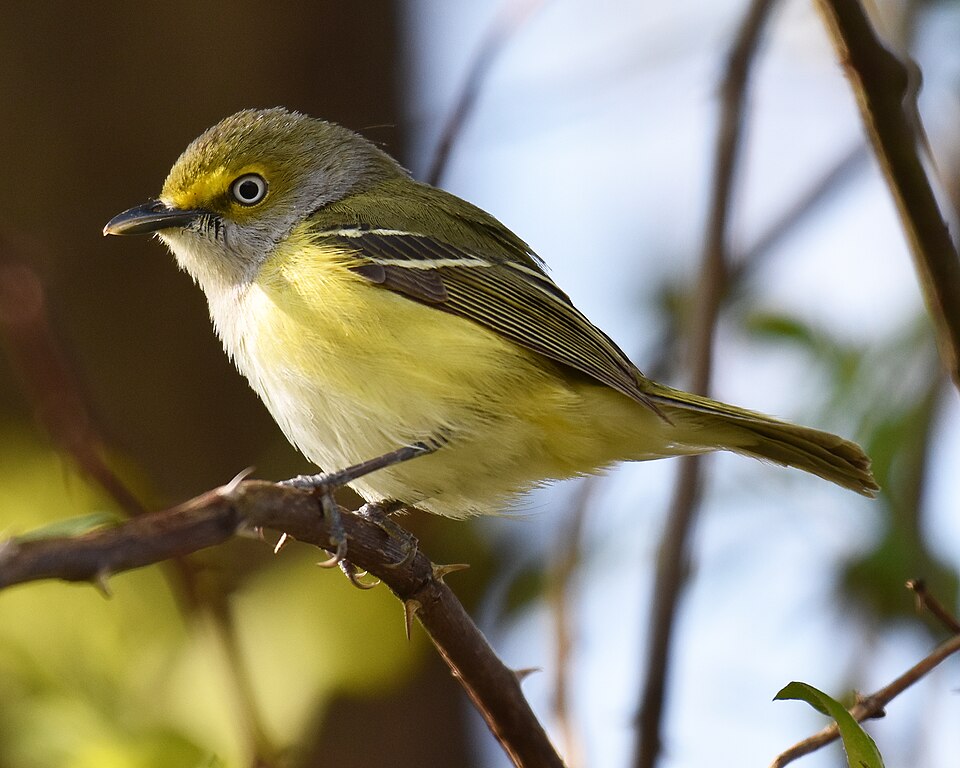
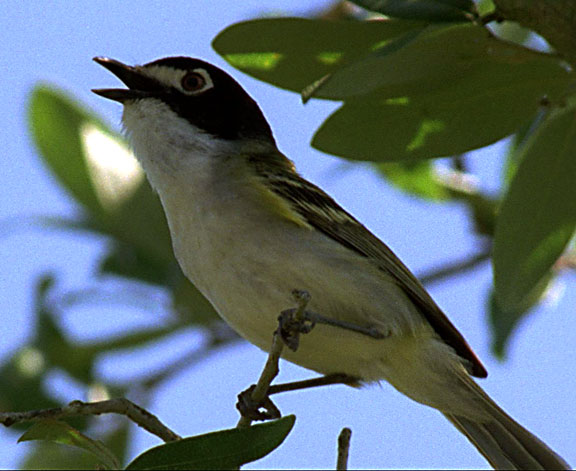
The Rufous-browed Peppershrike is recognized by its olive-green upperparts and bright yellow underparts. The most distinctive feature is its rufous eyebrow, which stands out against its grayish face and crown. The bill is stout and slightly hooked, typical of shrike-like birds, aiding in insect capture. Juveniles display a duller plumage compared to adults, with less pronounced rufous on the eyebrow. There is minimal sexual dimorphism, though males may exhibit slightly brighter coloration. In flight, the bird's short, rounded wings and slightly notched tail are evident. When perched, the Rufous-browed Peppershrike often adopts an upright stance, showcasing its bold facial markings. It can be confused with other vireos, but the combination of its rufous brow and robust bill distinguishes it from similar species.
Having trouble telling birds apart? Upload a photo to our bird identification tool for an instant species match.
Cyclarhis flavipectus Habitat and Range
Preferred Habitat
The Rufous-browed Peppershrike thrives in a variety of habitats, primarily favoring tropical and subtropical forests. It is commonly found in the understory and mid-levels of both primary and secondary growth forests. In the Andes, it occupies elevations from sea level to around 2,500 meters. While it is primarily a forest dweller, the Rufous-browed Peppershrike can adapt to urban environments, particularly in parks and gardens with dense tree cover. During the wet season, it may venture into more open areas, taking advantage of the abundance of insects. Its versatility in habitat selection highlights its adaptability to various environmental conditions, ensuring its presence across a wide range of landscapes.
Geographic Range
The Rufous-browed Peppershrike's range extends from southern Mexico through Central America, including countries like Guatemala and Costa Rica, down into South America. It is found in Colombia, Venezuela, Brazil, Bolivia, and into northern Argentina. The species does not undertake long-distance migrations, although it may exhibit some local movements in response to food availability and environmental conditions. In regions such as the Amazon basin, it is a year-round resident, taking advantage of the constant food supply. Population densities tend to be higher in areas with a mosaic of forest types, such as the Atlantic Forest of Brazil, where its melodic song frequently fills the air.
Want to know which birds visit your area? Browse our backyard birds by location guides for region-specific species lists.
What Does the Cyclarhis flavipectus Eat?
The Rufous-browed Peppershrike's diet primarily consists of insects and other arthropods, which it gleans from foliage and tree branches. During the breeding season, its diet is heavily insectivorous, providing protein-rich meals for its young. In the non-breeding season, it supplements its diet with fruits and berries, becoming an important seed disperser. The bird employs a methodical foraging technique, moving deliberately through the canopy to locate hidden prey. The Rufous-browed Peppershrike favors small to medium-sized insects, including caterpillars, beetles, and spiders, and typically feeds throughout the day, with peaks in activity during the cooler morning and late afternoon hours.
Cyclarhis flavipectus Behavior and Social Structure
The Rufous-browed Peppershrike exhibits a predominantly solitary or paired lifestyle, especially during the breeding season when it becomes territorial. Males sing persistently to establish and defend their territory, using their song as a primary means of communication. Courtship involves vocal displays and subtle physical interactions, with pairs maintaining strong bonds. Outside the breeding season, the Rufous-browed Peppershrike may join mixed-species foraging flocks, enhancing its foraging efficiency and reducing predation risk. Its response to predators includes remaining motionless or retreating into dense foliage. The bird's daily activity pattern involves active foraging interspersed with periods of rest, often in shaded cover during the heat of the day.
Cyclarhis flavipectus Nesting and Reproduction
The Rufous-browed Peppershrike constructs a cup-shaped nest using twigs, grass, and plant fibers, often lined with softer materials for insulation. Nests are typically placed in the fork of a tree branch, concealed by foliage to protect against predators. The female lays a clutch of two to four eggs, which she incubates for about 12 to 14 days. Both parents participate in feeding the chicks, which fledge approximately 14 to 16 days after hatching. The species usually raises one to two broods per year, depending on environmental conditions and food availability. Parental care extends beyond fledging, with adults continuing to feed and protect their young as they learn to forage independently.
Cyclarhis flavipectus Sounds and Vocalizations
The Rufous-browed Peppershrike's song is a rich, melodious series of whistled notes, often described as 'whee-chew, whee-chew.' This song is repeated at intervals and serves both as a territorial call and as a mechanism for mate attraction. Its calls include harsh scolding notes used in alarm situations, alerting other birds to potential threats. During the dawn chorus, its song is a prominent feature, cutting through the morning air with clarity and resonance. The bird's vocal repertoire is distinctive and easily recognizable, aiding bird watchers and researchers in identifying the species by sound.
Interesting Facts About the Cyclarhis flavipectus
- 1The Rufous-browed Peppershrike is known for its distinctive 'whee-chew' song, which can be heard from great distances.
- 2Despite its small size, the Rufous-browed Peppershrike has a powerful beak that can crack open hard insect exoskeletons.
- 3This species was first described scientifically in the early 19th century, reflecting its long-standing intrigue among ornithologists.
- 4The Rufous-browed Peppershrike is often seen perched high in trees, scanning for prey with its keen eyesight.
- 5It participates in mixed-species foraging flocks, a behavior that enhances its survival through cooperative vigilance.
- 6The species is adaptable to urban environments, often found in city parks and gardens with ample tree cover.
- 7Rufous-browed Peppershrikes are known for their resilience, thriving in both heavily forested and fragmented landscapes.
Cyclarhis flavipectus Conservation Status
According to the IUCN, the Rufous-browed Peppershrike is listed as a species of Least Concern, with a stable population trend. Its wide distribution and adaptability to various habitats contribute to its resilience. However, habitat destruction, particularly deforestation in the Amazon and Atlantic Forests, poses a threat. Conservation efforts focus on preserving critical habitats and promoting sustainable forestry practices. Despite these challenges, the Rufous-browed Peppershrike remains a common sight in many parts of its range, benefiting from protected areas and wildlife corridors that facilitate its movement across fragmented landscapes.