
Black-capped Vireo
Vireo atricapilla
Order: Passeriformes / Family: Vireonidae
Wikimedia Commons
About the Black-capped Vireo
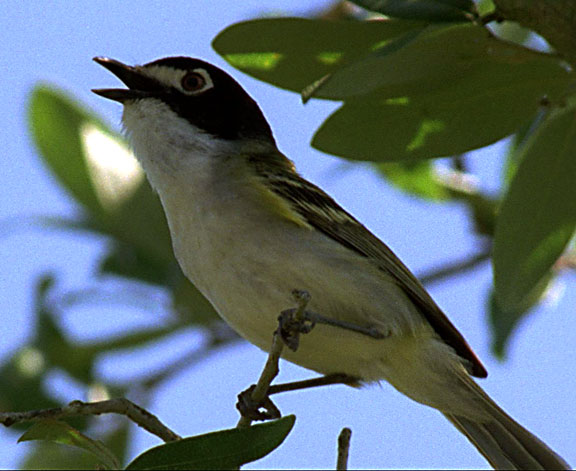
The Black-capped Vireo, scientifically known as Vireo atricapilla, is a small songbird celebrated for its distinctive black cap and white spectacles. This species is primarily found in the south-central United States and northern Mexico, thriving in scrubby habitats where it plays a crucial role in the ecosystem as both a predator of insects and a source of food for larger predators. The Black-capped Vireo prefers oak-juniper woodlands and chaparral regions, generally at elevations ranging from 300 to 1,500 meters. Its presence indicates healthy scrubland ecosystems, as it requires a particular balance of open areas and dense thickets to nest and forage. During the breeding season, which typically spans from April to July, the Black-capped Vireo engages in elaborate courtship displays. Male vireos sing persistently to defend their territories and attract mates. This period also sees the bird partaking in essential activities such as building nests and rearing young. The vireo's ecological role extends beyond its immediate environment, as it helps regulate insect populations and serves as prey for raptors and other larger birds. Seasonally, the Black-capped Vireo migrates to its wintering grounds in western Mexico, where it inhabits tropical deciduous forests and coastal scrublands from August to March. This migration highlights the bird's adaptability to different habitat types, although it remains closely associated with areas that provide ample shelter and foraging opportunities. The Black-capped Vireo's survival is closely tied to its habitat's health, making it a key indicator species for environmental changes. Conservation efforts are crucial for this species, as habitat loss and fragmentation pose significant threats to its population. In recent years, concerted actions have been taken to preserve its breeding and wintering habitats, which are vital for maintaining the vireo's numbers and ensuring its continued role in various ecosystems.
The Black-capped Vireo belongs to the family Vireonidae, within the order Passeriformes. These birds typically live average lifespan is 5 years, with a maximum recorded of 12 years..
How to Identify a Black-capped Vireo
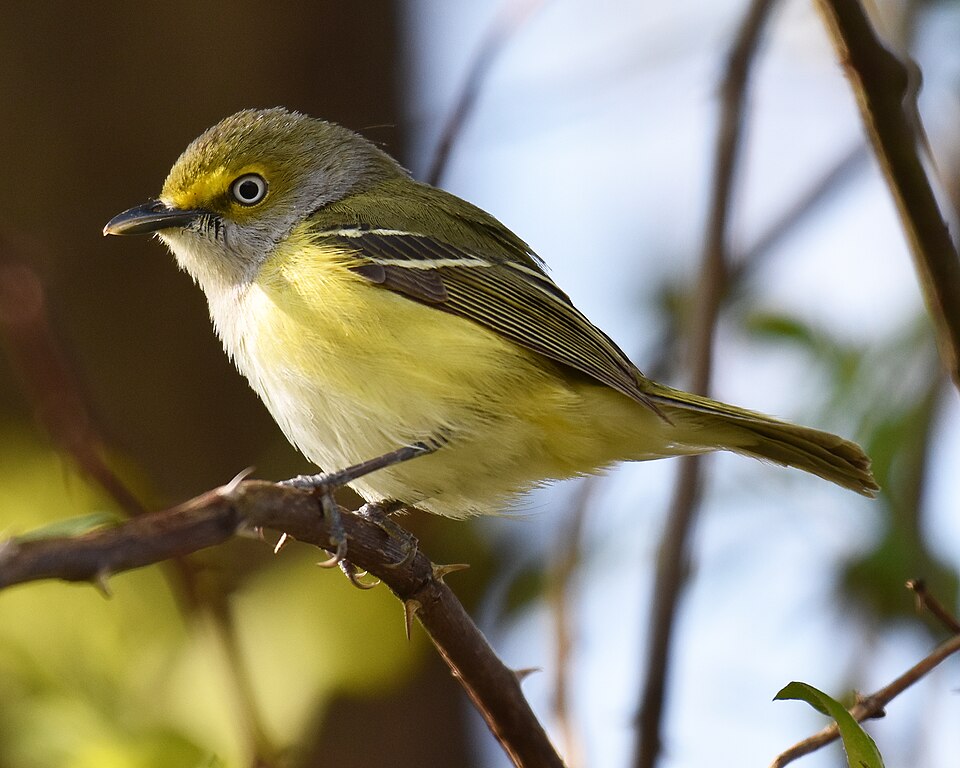
The Black-capped Vireo is easily identified by its striking black cap, which contrasts sharply with its white spectacles and olive-green upperparts. Adult males tend to have a more pronounced black cap, while females and juveniles display a more subdued grayish-black cap. The underparts are white, often with a faint yellow wash on the flanks. In flight, the Black-capped Vireo shows short, rounded wings and a slightly notched tail. This flight silhouette is typical of small vireos and can help differentiate it from similar species. The perching posture is upright, and the bird often flicks its tail while singing or calling. Juvenile Black-capped Vireos resemble females but have more brownish tones on the upperparts and less distinct head markings. During the breeding season, males and females can be distinguished by subtle differences in their head coloration and behavior, with males being more vocal and active in territorial defense. The Black-capped Vireo can be confused with the similar-looking White-eyed Vireo, but the latter lacks the black cap and has a more prominent yellow wash on its sides. Careful observation of plumage details and listening for the distinct song and calls can aid in proper identification.
Having trouble telling birds apart? Upload a photo to our bird identification tool for an instant species match.
Black-capped Vireo Habitat and Range
Preferred Habitat
The Black-capped Vireo predominantly inhabits oak-juniper woodlands and dense chaparral in the Edwards Plateau of Texas and similar regions in northern Mexico. These habitats offer a mix of open areas for foraging and dense thickets for nesting. Elevations range from 300 to 1,500 meters, though the bird prefers mid-elevation areas where vegetation is dense but not impenetrable. During the winter months, this vireo shifts to tropical deciduous forests and coastal scrublands in western Mexico. While it is not typically found in urban environments, the vireo occasionally inhabits disturbed areas that mimic its preferred natural habitats. Seasonal habitat shifts are driven by nesting requirements and food availability, emphasizing the need for conservation efforts focused on preserving diverse habitat types.
Geographic Range
The Black-capped Vireo's breeding range is primarily in the south-central United States, notably in central and western Texas and parts of Oklahoma. Its range extends southward into northern Mexico, including the states of Coahuila, Nuevo León, and Tamaulipas. During the non-breeding season, the vireo migrates to western Mexico, occupying areas from southern Sinaloa to western Oaxaca. Migration corridors typically follow the Sierra Madre Oriental, providing essential stopover habitats. Population density is greatest in regions with extensive oak-juniper woodlands, where the bird's habitat preferences align with available resources. Conservation efforts aim to protect these critical areas from development and degradation.
Want to know which birds visit your area? Browse our backyard birds by location guides for region-specific species lists.
What Does the Black-capped Vireo Eat?
The Black-capped Vireo primarily feeds on insects and other arthropods, making it an important insectivore in its ecosystem. Its diet includes caterpillars, beetles, and spiders, which it gleans from foliage and branches. During the breeding season, the vireo's diet shifts to include more protein-rich prey to support the nutritional needs of its chicks. Foraging occurs mainly in the early morning and late afternoon, with the bird actively moving through vegetation in search of food. Seasonal changes in diet reflect the availability of different prey types, with the vireo adapting its foraging techniques to exploit the most abundant resources. During migration and wintering periods, the vireo may also consume small fruits and berries, supplementing its diet when insect availability decreases.
Black-capped Vireo Behavior and Social Structure
The Black-capped Vireo exhibits distinct social and territorial behaviors, especially during the breeding season. Males are highly territorial, singing persistently from prominent perches to establish and defend their territories. These territories are typically several acres in size and provide both nesting sites and feeding grounds. Courtship displays involve males singing and performing short flights to attract females. Once paired, Black-capped Vireos remain monogamous for the duration of the breeding season. The bird is generally solitary outside the breeding season, although small flocks may form during migration. Its response to predators includes mobbing behavior, where both adults and juveniles join forces to drive away intruders. Daily activity patterns involve foraging actively in the morning and late afternoon, with periods of rest and preening during the hottest parts of the day.
Black-capped Vireo Nesting and Reproduction
The Black-capped Vireo builds cup-shaped nests in dense shrubbery or low branches, using materials such as grass, bark strips, and spider webs for binding. These nests are typically located 1-3 meters above the ground, well-concealed by foliage. A typical clutch consists of 3-5 eggs, which are white with brownish speckles. The incubation period lasts about 14-17 days, primarily carried out by the female. After hatching, both parents take an active role in feeding the chicks, which fledge approximately 10-12 days after hatching. The Black-capped Vireo may produce two broods per year, depending on environmental conditions and food availability. Parental care continues for several weeks post-fledging, ensuring the young birds learn essential survival skills.
Black-capped Vireo Sounds and Vocalizations
The primary song of the Black-capped Vireo is a series of short, melodic phrases, often described as a rapid jumble of notes with a sweet, warbling quality. This song is used by males to establish territories and attract mates during the breeding season. The vireo also produces a variety of call notes, including sharp 'chip' sounds used for communication between mates and to alert others of predators. Alarm calls are louder and more insistent, serving as a warning to both chicks and neighboring birds. The Black-capped Vireo participates in the dawn chorus, with males singing more frequently in the early morning hours. Its vocalizations can be compared to other vireos, though its song is typically faster-paced and more varied.
Interesting Facts About the Black-capped Vireo
- 1The Black-capped Vireo's nests are often parasitized by the Brown-headed Cowbird, leading to conservation control efforts.
- 2Male Black-capped Vireos typically hold territories of about 2-4 acres, vigorously defending them from rivals.
- 3Despite their small size, Black-capped Vireos can travel over 600 miles during migration to their wintering grounds.
- 4This vireo's song can include over 30 different note combinations, making it highly versatile.
- 5The Black-capped Vireo prefers habitats that have undergone some disturbance, such as fire or grazing, to maintain the open structure it favors.
- 6Young Black-capped Vireos begin to sing only a few weeks after fledging, learning from adults.
- 7This species was once considered Endangered, but effective conservation efforts have led to a reclassification.
Black-capped Vireo Conservation Status
The Black-capped Vireo is currently listed as Near Threatened on the IUCN Red List, with populations showing signs of recovery due to targeted conservation efforts. Primary threats include habitat loss due to urbanization, agricultural expansion, and fire suppression, leading to unsuitable habitat conditions. Conservation measures focus on habitat restoration and protection, including prescribed burns to maintain open woodland structures. Historically, the population faced severe declines, but recent efforts have stabilized numbers, particularly in Texas. Ongoing research and management are critical to ensuring the long-term viability of this species and its habitats.
Other Vireonidae Species


Birds Similar to the Black-capped Vireo
These species are often confused with the Black-capped Vireo due to similar appearance or overlapping range.
