
Bell's Vireo
Vireo bellii
Order: Passeriformes / Family: Vireonidae

Wikimedia Commons
About the Bell's Vireo
The Bell's Vireo, scientifically known as Vireo bellii, is a small, inconspicuous songbird belonging to the family Vireonidae. This bird is primarily found in North America, where it plays a significant role in the ecosystems it inhabits. One of the most distinct features of the Bell's Vireo is its complex and persistent song, which can be heard throughout its range. Despite its muted coloration, the Bell's Vireo is a bird of considerable interest to ornithologists and birdwatchers alike due to its fascinating behaviors and ecological significance.
This species is often found in shrubby habitats, which include riparian thickets, overgrown fields, and scrublands. These environments provide the Bell's Vireo with ample opportunities for foraging and nesting. By consuming insects, the Bell's Vireo helps control pest populations, contributing to the ecological balance within its habitat. Additionally, as a prey species for larger birds and mammals, it serves as a vital component of the food web.
During the breeding season, which spans from late spring to early summer, Bell's Vireos establish territories in favorable habitats across the central and southwestern United States. Males are particularly vocal during this time, using their song to attract mates and defend their territories. As the seasons change, the Bell's Vireo migrates to its wintering grounds, which extend into Mexico and Central America. The migration itself is a remarkable journey for such a small bird, demonstrating its resilience and adaptability to changing conditions.
The Bell's Vireo's presence in various regions highlights its importance in maintaining local biodiversity. For instance, in riparian areas of the southwestern United States, its nesting activities can influence the distribution and abundance of other species. Through its interactions with the environment and other organisms, the Bell's Vireo exemplifies the interconnectedness of ecosystems.
The Bell's Vireo belongs to the family Vireonidae, within the order Passeriformes. These birds typically live average lifespan is 4-5 years, with a maximum recorded at 7 years..
How to Identify a Bell's Vireo
Identifying a Bell's Vireo in the field requires attention to subtle details. Adult Bell's Vireos are small songbirds, measuring about 4.5 to 5 inches in length. They have a gray to olive-gray upper body, with the underparts being lighter, often with a yellowish tinge on the sides. A key feature is their faint white eye ring and a short, slightly hooked bill, typical of vireos.
Juvenile Bell's Vireos may appear somewhat duller than adults, lacking the subtle yellow wash on the sides seen in some mature birds. Both male and female Bell's Vireos exhibit similar plumage, making visual sex differentiation challenging in the field.
Bell's Vireos can sometimes be confused with other small songbirds, such as the Warbling Vireo. However, the Warbling Vireo generally has a more uniform coloration and lacks the distinct white eye ring of the Bell's Vireo. In flight, Bell's Vireos display a rounded wing shape and a somewhat erratic flight pattern. When perched, they often hold a slightly upright posture, which, combined with their constant vocalizations, makes them more noticeable despite their plain appearance.
Having trouble telling birds apart? Upload a photo to our bird identification tool for an instant species match.
Bell's Vireo Habitat and Range
Preferred Habitat
The Bell's Vireo inhabits a diverse array of scrubby and shrubby environments, particularly favoring lowland regions. It is frequently found in riparian thickets, overgrown fields, and areas with dense understory vegetation. These habitats provide essential cover and foraging opportunities for the Bell's Vireo, as well as suitable sites for nesting.
In terms of elevation, the Bell's Vireo is generally found at lower altitudes, although it can be present in foothill regions as long as the habitat conditions are suitable. Seasonal habitat shifts occur as the Bell's Vireo migrates from its breeding grounds in the central and southwestern United States to its wintering areas in Mexico and Central America.
In urban environments, Bell's Vireos may be present in parks or gardens that mimic their natural habitat, although they are generally more prevalent in rural areas where suitable habitat is more abundant. The bird's reliance on specific habitat types makes it particularly susceptible to changes in land use and habitat degradation.
Geographic Range
The Bell's Vireo's breeding range is primarily concentrated in the central and southwestern United States, with significant populations in states such as Kansas, Oklahoma, Texas, and Arizona. This range extends into northern Mexico, where similar habitat conditions exist.
During the winter months, the Bell's Vireo migrates south to its wintering grounds, which include parts of Mexico and Central America, particularly in regions like the Yucatán Peninsula and southern Mexico. This migration follows specific corridors that provide necessary resources along the way, including stopover sites with ample food and cover.
Population density hotspots for the Bell's Vireo are typically found in areas with abundant shrubby vegetation, particularly along riparian corridors and in regions with extensive brushland. However, the distribution of these populations can vary significantly from year to year based on habitat availability and environmental conditions. Despite its broad range, the Bell's Vireo's population trends can be influenced by factors such as habitat loss and climate change.
Want to know which birds visit your area? Browse our backyard birds by location guides for region-specific species lists.
What Does the Bell's Vireo Eat?
The Bell's Vireo primarily feeds on a diverse array of insects, which form the bulk of its diet. This includes caterpillars, beetles, grasshoppers, and various other arthropods. The bird's insectivorous diet plays a crucial role in controlling insect populations within its habitat.
Seasonal changes can affect the Bell's Vireo's diet, particularly during migration when the bird may consume more fruit to meet its energy needs. Foraging techniques typically involve gleaning insects from leaves and branches or capturing them in mid-air with agile, acrobatic maneuvers.
Prey size varies, with the Bell's Vireo targeting small to medium-sized insects that can be easily handled and consumed. The bird's feeding schedule is most active during the early morning and late afternoon, aligning with peak insect activity periods. This feeding strategy ensures the bird maximizes its food intake while conserving energy during the hotter parts of the day.
Bell's Vireo Behavior and Social Structure
The Bell's Vireo exhibits intriguing social and territorial behaviors, particularly during the breeding season. Males establish and defend territories through persistent singing, which serves to attract females and deter potential rivals. These territories are crucial for nesting and foraging, and the male's song plays a pivotal role in their maintenance.
Courtship displays are subtle but involve both visual and acoustic elements, with males often performing flight displays and engaging in duet-like songs with potential mates. Although Bell's Vireos are primarily solitary birds outside the breeding season, they may join mixed-species flocks during migration to increase foraging efficiency and predator avoidance.
The Bell's Vireo's response to predators includes alarm calls and evasive maneuvers. The bird remains vigilant, often using dense vegetation as cover to avoid detection. Daily activity patterns include periods of intense foraging interspersed with rest, with the bird being most active during the cooler parts of the day. This behavioral adaptability aids in its survival across diverse and changing environments.
Bell's Vireo Nesting and Reproduction
Bell's Vireos construct cup-shaped nests, meticulously woven from grass, bark strips, and plant fibers. These nests are usually located in dense shrubbery or low trees, often suspended from a horizontal forked branch. Such nesting sites provide concealment from predators and shelter from the elements.
A typical clutch consists of 3 to 5 eggs, which are incubated by both parents over a period of about 12 to 14 days. The incubation responsibilities are shared, with the female often taking the night shift to keep the eggs warm.
Once hatched, the young are fed by both parents and fledge approximately 10 to 12 days after hatching. Parental care continues for several weeks post-fledging, as the juveniles learn essential survival skills. The Bell's Vireo may produce two broods per year, depending on environmental conditions and resource availability. This reproductive strategy allows the species to maximize its reproductive success within its breeding season.
Bell's Vireo Sounds and Vocalizations
The primary song of the Bell's Vireo is a complex series of rapid, high-pitched phrases that can be described as a mix of scolds and whistles. This song often lasts several seconds and is repeated persistently throughout the day, particularly during the breeding season.
Call notes include a sharp "chee" or "cheedle," used in various contexts, such as maintaining contact with a mate or signaling alarm. The alarm call is typically more abrupt and harsher in tone, serving as a warning to other birds of potential threats.
During the dawn chorus, the Bell's Vireo's song can be particularly prominent, as males sing vigorously to establish and defend their territories. The song's complexity and variability make it a distinctive feature of the bird, often compared to a hurried conversation.
Interesting Facts About the Bell's Vireo
- 1Bell's Vireo was named after John Graham Bell, an American taxidermist and collector who worked with Audubon.
- 2Despite its plain appearance, the Bell's Vireo's song is remarkably complex and can be heard over long distances.
- 3The Bell's Vireo often builds its nest in thorny shrubs, utilizing the thorns for additional protection against predators.
- 4This species is known for its territorial persistence, with males defending their territory with relentless singing.
- 5The Bell's Vireo's migration covers thousands of miles, showcasing its remarkable endurance and navigational skills.
Bell's Vireo Conservation Status
The Bell's Vireo is currently classified as Least Concern by the IUCN, although certain populations face threats. The primary challenges include habitat loss and degradation due to agricultural expansion and urban development, which reduce suitable breeding and foraging areas. Conservation efforts focus on preserving and restoring riparian and shrubland habitats, essential for the species' survival. Historically, populations have fluctuated with changes in land use, but targeted conservation actions have helped stabilize numbers in some areas. The ongoing monitoring of populations and habitats ensures that the Bell's Vireo remains a vibrant part of its ecosystems. Efforts to educate the public about the importance of riparian habitat protection also contribute to the bird's long-term conservation.
Other Vireonidae Species
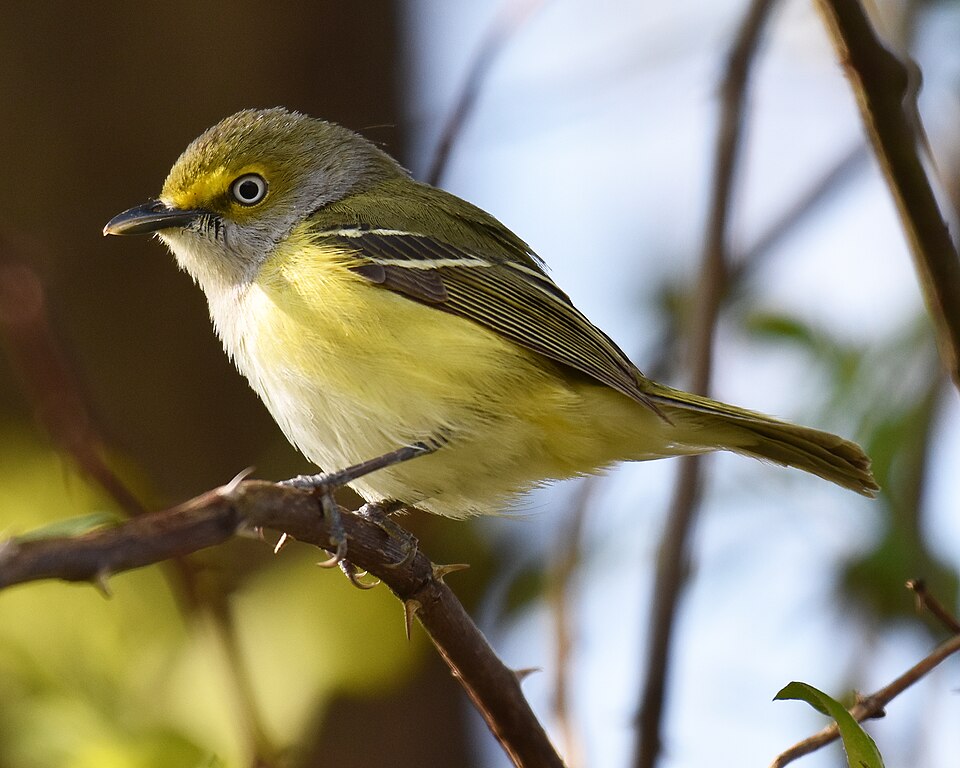
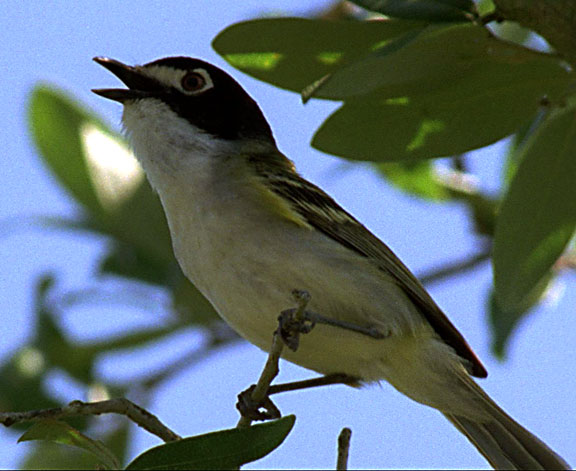


Birds Similar to the Bell's Vireo
These species are often confused with the Bell's Vireo due to similar appearance or overlapping range.
