Cyclarhis flaviventris
Cyclarhis flaviventris
Order: Passeriformes / Family: Vireonidae
About the Cyclarhis flaviventris
The Yellow-browed Shrike-Vireo, scientifically known as Cyclarhis flaviventris, is a striking bird within the Vireonidae family, renowned for its vigorous vocalizations and colorful appearance. Native to the Neotropical regions, this bird is predominantly found in the tropical and subtropical forests of Central and South America. Its population thrives in countries such as Panama, Venezuela, Colombia, and Ecuador, where dense forest canopies provide essential shelter and nesting opportunities. The species plays a crucial ecological role in these regions as both a consumer of insects and a seed disperser, contributing to forest health and biodiversity.
This shrike-vireo exhibits seasonal variations in behavior, particularly during the breeding season when its vocal activity peaks, and its territorial nature becomes more pronounced. The Yellow-browed Shrike-Vireo's role extends beyond mere presence; it actively participates in the ecological dynamics of its habitat by controlling insect populations and aiding in seed dispersal, which helps maintain the intricate balance of the ecosystems it inhabits.
Its significance to the ecosystem is evident not only in its ecological contributions but also in its status as an indicator species. Changes in its population trends can signal shifts in habitat health, prompting conservation efforts. The species' adaptability to various forest types, from lowland rainforests to montane forests, underscores its resilience and the critical importance of preserving forest environments to ensure its continued survival.
The Cyclarhis flaviventris belongs to the family Vireonidae, within the order Passeriformes. These birds typically live average 4-6 years, with a maximum recorded of 9 years..
How to Identify a Cyclarhis flaviventris
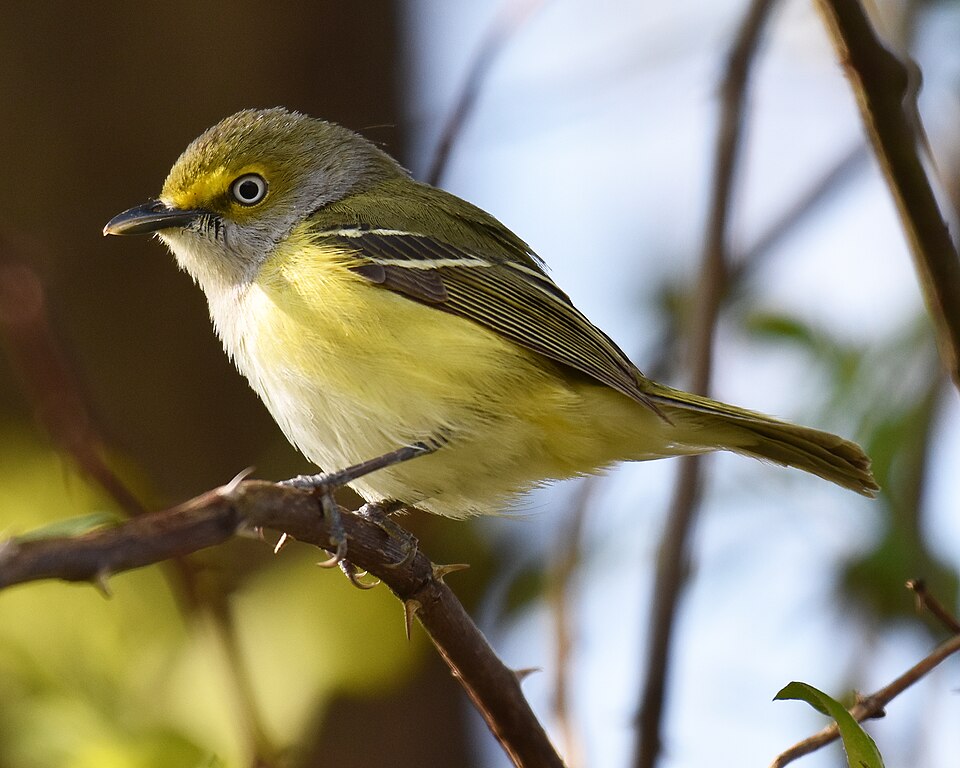
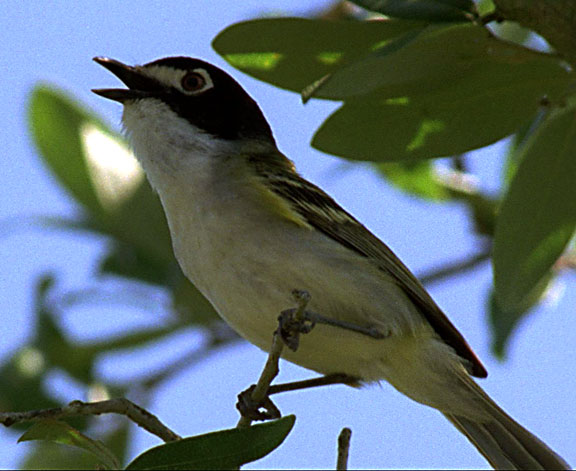
The Yellow-browed Shrike-Vireo is easily recognized by its striking plumage and distinct facial markings. Adults feature olive-green upperparts that provide excellent camouflage in their forested habitats, contrasting sharply with their bright yellow underparts. The most distinguishing field mark of this species is the prominent yellow brow stripe above the eye, which gives the bird its common name.
Males and females are similar in appearance, making gender differentiation in the field challenging. Juvenile birds, however, tend to have a duller coloration overall, lacking the vivid yellow of the adults, which can lead to misidentification. Observers may confuse this species with other vireos, such as the Red-eyed Vireo, but the Yellow-browed Shrike-Vireo's distinctive brow stripe and thicker bill help differentiate it.
In flight, the Yellow-browed Shrike-Vireo displays a strong, direct flight pattern, often moving between trees with deliberate wing beats. When perched, it often adopts a slightly upright posture, which, along with its robust bill and striking head markings, aids in identification.
Having trouble telling birds apart? Upload a photo to our bird identification tool for an instant species match.
Cyclarhis flaviventris Habitat and Range
Preferred Habitat
Cyclarhis flaviventris predominantly inhabits tropical and subtropical forests. It thrives in both primary and secondary growth forests, often favoring areas with dense canopy cover. This species can be found at elevations ranging from sea level up to 1,500 meters, though it is most commonly observed in lowland rainforests.
The Yellow-browed Shrike-Vireo shows a preference for forest edges and clearings, where it can forage more easily. Seasonal habitat shifts occur primarily during the breeding season as the bird seeks out optimal nesting sites, often in more secluded areas of the forest. While it is rarely found in urban settings, it may occasionally venture into rural areas near forested regions.
Geographic Range
The Yellow-browed Shrike-Vireo's range extends across much of Central and South America. During the breeding season, it is commonly found in Panama and western Colombia, favoring the humid lowland forests in these regions. The range extends southward into Venezuela and Ecuador, where it inhabits similar forested environments.
This species does not undertake long migrations, instead engaging in short-distance movements that correlate with seasonal changes in food availability and breeding requirements. While not considered migratory, some local populations may show altitudinal shifts, moving to lower elevations during certain times of the year. High population densities are often recorded in areas with abundant food and suitable nesting sites, making forest conservation crucial to its survival.
Want to know which birds visit your area? Browse our backyard birds by location guides for region-specific species lists.
What Does the Cyclarhis flaviventris Eat?
The diet of the Yellow-browed Shrike-Vireo primarily consists of insects, which it forages for in the mid to upper canopy. Its robust bill is well-suited for capturing caterpillars, beetles, and other small invertebrates. During certain seasons, when insect populations decline, the bird supplements its diet with various fruits and berries, playing a role in seed dispersal.
Foraging behavior involves meticulous inspection of foliage, branches, and twigs, often employing a methodical approach to uncover hidden prey. The bird exhibits a diurnal feeding schedule, with peak activity occurring during the cooler morning and late afternoon hours, allowing it to exploit both insects and fruits as they become available.
Cyclarhis flaviventris Behavior and Social Structure
The Yellow-browed Shrike-Vireo exhibits a range of behaviors that reflect its adaptive strategies for survival and reproduction. It is generally a solitary or paired bird, especially during the breeding season when it becomes highly territorial. Males are known for their persistent singing, which serves both to establish territory and attract mates.
Courtship displays are subtle, often involving mutual feeding or synchronized movements with the potential mate. Despite their solitary nature, these birds may join mixed-species foraging flocks outside the breeding season, enhancing their foraging efficiency.
In response to predators, the Yellow-browed Shrike-Vireo relies on its cryptic coloration and quick flight to evade detection. Its daily activity patterns include vigorous morning singing followed by periods of foraging, rest, and occasional territorial disputes.
Cyclarhis flaviventris Nesting and Reproduction
The nesting behavior of Cyclarhis flaviventris involves constructing cup-shaped nests, often placed high in the forest canopy to minimize predation risks. These nests are intricately woven using plant fibers, spider webs, and other natural materials, providing a secure environment for the eggs and chicks.
Typically, the female lays a clutch of two to three eggs, which she incubates for about 14 to 16 days. Both parents share responsibilities during the nesting period, with the male often providing food while the female incubates. After hatching, the chicks remain in the nest for approximately another 16 to 18 days before fledging. This species may raise one or two broods per year, depending on environmental conditions and food availability.
Cyclarhis flaviventris Sounds and Vocalizations
The Yellow-browed Shrike-Vireo is known for its loud and melodious song, characterized by a series of clear, whistled notes that rise and fall in pitch. The song often begins with a high-pitched introductory whistle followed by a series of variable notes. Its call notes are sharp and insistent, serving as contact calls between mates or alerts to intruders.
Alarm calls are harsher and more rapid, indicating the presence of predators or other threats. During the dawn chorus, this bird's song stands out for its complexity and volume, filling the forest with its vibrant sound. Compared to other vireos, its vocalizations are distinctive and easily recognizable once learned.
Interesting Facts About the Cyclarhis flaviventris
- 1The Yellow-browed Shrike-Vireo can sing up to 20 different song variations, displaying impressive vocal versatility.
- 2Despite its striking appearance, its coloration provides excellent camouflage in the dappled light of the forest canopy.
- 3Cyclarhis flaviventris plays a crucial role in controlling insect populations, aiding in the balance of forest ecosystems.
- 4This species is known to join mixed-species flocks outside of the breeding season, enhancing its foraging success.
- 5The Yellow-browed Shrike-Vireo is one of the few birds that can recognize individual human faces, showing remarkable intelligence.
- 6During courtship, the male often presents food to the female as a part of its mating ritual, strengthening pair bonds.
- 7Its nests are so well camouflaged that they are often only discovered by following the bird back to its nest site.
Cyclarhis flaviventris Conservation Status
The IUCN currently lists the Yellow-browed Shrike-Vireo as a species of Least Concern, indicating a stable population trend. However, the primary threat to its habitat is deforestation due to agricultural expansion and logging, which could impact its populations in the long term. Conservation efforts focus on habitat preservation and the establishment of protected areas within its range. Historically, this species has shown resilience, adapting to changes in habitat structure, but continuous monitoring is essential to ensure it remains widespread and abundant across its range.